The Kekulé Problem
“The Kekulé Problem” is a 2017 nonfiction essay by writer Cormac McCarthy for the Santa Fe Institute. It was his first published work of nonfiction. He theorizes about the nature of the unconscious mind and its separation from human language. The unconscious, according to McCarthy, “is a machine for operating an animal” and that “all animals have an unconscious.” McCarthy goes on to postulate that language is purely a human cultural creation, and not a biologically determined phenomenon. (Wikipedia)
“You may have read a thousand books and be able to discuss any one of them without remembering a word of the text.”
“The unconscious wants to give guidance to your life in general but it doesn’t care what toothpaste you use.”
“The unconscious seems to know a great deal. What does it know about itself? Does it know that it’s going to die? What does it think about that?”
The essay checked a lot of my boxes: awareness, consciousness, ego, thoughts.
Down-and-out and lonely
“It’s [hard] to get a man to understand something, when his community and identity depends on his not understanding it. […] Instead of tie-dyed shirts, they donned red “MAGA” hats. Instead of being young adventurers running away from their parents, these “front-row Joes” (as he calls them) tended to be people who were “retired or close to it” and “estranged from their families or otherwise without children”; they also had “plenty of time on their hands.” What they found was that “Trump had, in a surprising way, made their lives richer.” His rallies gave them a “reason to travel the country, staying at one another’s homes, sharing hotel rooms and carpooling. Two had married—and later divorced—by Trump’s second year in office. […] Trump’s status as both a “rock star” and, simultaneously, a persecuted victim made him an attractive leader for this kind of movement.”
How Trumpists Prey on Loneliness, and Loneliness Preys on Trumpists
The Show Me State

Muscle Shoals Sound Studios
Barb and her sister are in Destin, FL this week and on the way down they stopped in Muscle Shoals, AL for a class reunion. Including a tour of the studio where the Rolling Stones recorded Wild Horses (and Brown Sugar) in December of 1969. The tour included the toilet where Keith Richards reportedly wrote Wild Horses, and an invoice for the recording sessions.


“It’s too late”
AL.com: Dr. Brytney Cobia said all but one of her COVID patients in Alabama did not receive the vaccine. The vaccinated patient, she said, just needed a little oxygen and is expected to fully recover. Some of the others are dying. In Alabama, state officials report 94% of COVID hospital patients and 96% of Alabamians who have died of COVID since April were not fully vaccinated.
“One of the last things they do before they’re intubated is beg me for the vaccine. I hold their hand and tell them that I’m sorry, but it’s too late. I hug their family members and I tell them the best way to honor their loved one is to go get vaccinated and encourage everyone they know to do the same.”
“They cry. And they tell me they didn’t know. They thought it was a hoax. They thought it was political. They thought because they had a certain blood type or a certain skin color they wouldn’t get as sick. They thought it was ‘just the flu’. But they were wrong. And they wish they could go back. But they can’t. So they thank me and they go get the vaccine. And I go back to my office, write their death note, and say a small prayer that this loss will save more lives.”
Landslide
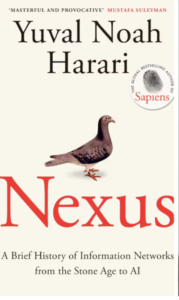
Landslide: The Final Days of the Trump Presidency by Michael Wolff
To say that I “couldn’t put this book down,” is a time-worn cliche. And let’s face it, I can put just about any non-fiction book down. But I read this book in 24 hours which is really fast for me. I picked this book because I like the way Michael Wolff writes. I’ll let others judge his reporting, but the man knows how to tell a story. In Landslide, he comes as close as anyone could to making sense of the chaos and madness of Donald Trump’s final days. This book reads like a thriller (or a horror story).
The first book I read by Mr. Wolff was Burn Rate: How I Survived the Gold Rush Years on the Internet (1998).
“God might be like a wave front”
“God might be like a wave front, moving into an unknowable future; human souls might be like neurons, cells of God’s own intelligence. . . Whatever God was, Virgil seriously doubted that he worried too much about profanity, sex, or even death.”
— Rough Country (John Sandford)
“A new America”
“Almost all historians agree that a major historical turning point took place between roughly 1968 and 1974—a “revolution,” a “renaissance,” a “fracture,” a “shock wave,” a point after which “everything changed,” creating a “new America.” Maurice Isserman and Michael Kazin, for example, argue that the Sixties ushered in a moment of historical rupture on the scale of the American Civil War, dividing the twentieth century into a pre- and post-Sixties world, a change from which “there is no going back, any more than the lost world of the antebellum South could have been restored after 1865.”
— The Upswing ( Robert D. Putnam)
“The Christian Right Is in Decline”
New York Times: “P.R.R.I.’s 2020 Census of American Religion, based on a survey of nearly half a million people, shows a precipitous decline in the share of the population identifying as white evangelical, from 23 percent in 2006 to 14.5 percent last year. […] In 2020, as in every year since 2013, the largest religious group in the United States was the religiously unaffiliated.” […] “In addition to shrinking as a share of the population, white evangelicals were also the oldest religious group in the United States, with a median age of 56.” […] “This sense of ownership of America just runs so deep in white evangelical circles. The feeling that it’s slipping away has created an atmosphere of rage, resentment and paranoia.” […] “If they can’t own the country, they’re ready to defile it.”