
Ignore Everybody (Hugh MacLeod)

Telling someone how to be creative is like explaining how to wiggle your ears. But Hugh MacLeod’s little blog-to-book (Ignore Everybody – And 39 Other Keys to Creativity) has some useful insights. Here are my favorites:

  • The more original your idea is, the less good advice other people will be able to give you.
  • Good ideas alter the power balance in relationships. That is why good ideas are always initially resisted.
  • The sovereignty you have over your work will inspire far more people than the actual content ever will.
  • It was so liberating to be doing something that didn’t have to have some sort of commercial angle, for a change.
  • Doing anything worthwhile takes forever.
  • Companies that squelch creativity can no longer compete with companies that champion creativity.
  • Like the best jobs in the world, it just kinda sorta happened.
  • Art suffers the moment other people start paying for it. The more you need the money, the more people will tell you what to do. The less control you will have. The more bullshit you will have to swallow. The less joy it will bring.
  • The only people who can change the world are the people who want to. And not everybody does.
  • Selling out is harder than it looks (It’s hard to sell out if nobody has bought in)
  • If you’re arranging your life in such a way that you need to make a lot of fuss between feeling the (creative) itch and getting to work, you’re putting the cart before the horse. You have to find a way of working that makes it dead easy to take full advantage of your inspired moments. They never hit at a convenient time, nor do they last long.
  • The best way to get approval is to not need it.
  • Part of being creative is learning how to protect your freedom.
  • The size of the endeavor doesn’t matter as much as how meaningful it becomes to you.
  • If you are successful, it’ll never come from the direction you predicted. Same is true if you fail.
Exploiting expertise

Mindy McAdams (Teaching Online Journalism) points us to a speech by David Schlesinger, editor-in-chief for Reuters News, to the Intl. Olympics Committee Press Commission (June 23, 2009).

“We in the traditional media … must concentrate our efforts on defining and developing that which really adds value.

That means understanding what really can be exclusive and what really is insightful. It means truly exploiting real expertise.

It means, to my earlier point, using all the multimedia tools available and all the smart multimedia journalists to provide a package so much stronger than any one individual strand.

It means working with the mobile phone and digital camera and social media-enabled public and not against them. Working against them would be crazy.”

The last few days playing with the iPhone, Twitter, Posterous and YouTube make his last point really hop off the page.

I think the long-term success of our news networks –of everyone’s news networks– will depend on understanding and implementing these ideas. Okay, maybe the short-term success.

Mobile Media

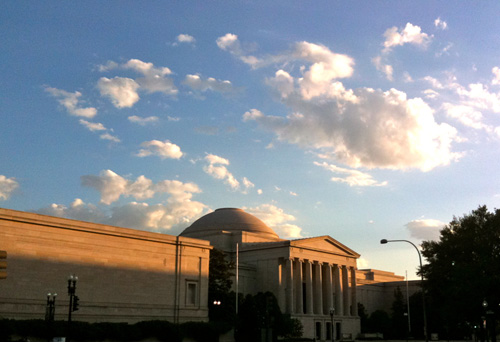
Hard to beat the iPhone for audio and video if you want immediate and easy upload to YouTube. The stills are not as good as the Casio delivers. (Can you guess which took the photo below?)

sunset

Posterous is fun and easy but not sure that it gives me much that Twitter does not, especially since YouTube now talks to Twitter. There is something about seeing the media nicely presented, in-line on the Posterous page, but you have to get folks there. I’m looking forward to seeing how Tweetie gets video from the iPhone to my Twitter stream.

It all gets a little confusing with literally too many choices. But I do like being able to share the media quickly, even a some sacrifice in quality. I’m guessing I’ll wind up using Twitter, YouTube and Mobile Me for on-the-fly. The blog will get posts like this, after I’ve had a time to reflect and look more closely at the available media.

Sheryl Crow Posterino

I started playing with Posterino a couple of weeks ago and finally got around to creating my first poster. More on that in a moment. For those that missed the earlier post, from the Posterino website:

“We shoot a lot of marvelous pictures, bury them deep down in the file system of our computers and most of them never see the light of day again. The solution is simple: Compose a “best of” poster every couple of months and pin it on the wall in your hall.”

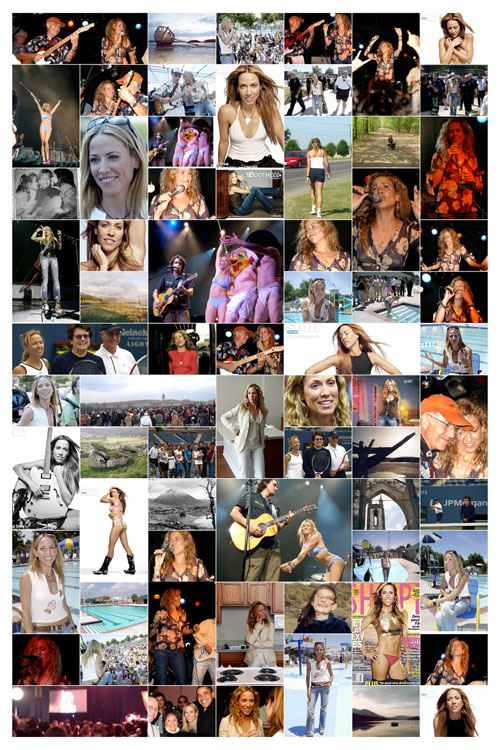
For my first poster I decided to use images of Sheryl Crow. I’ve collected a bunch over the years, almost all taken by others. (You’ll recognize your photos, I hope)

posterino-sherylcrow500

With enough time and patience (and Photoshop), you could create this montage one image at at time. With Posterino, you decide the size and layout of the poster… pick the group of photos you want to use… and hit go. If you don’t like the result, you shuffle. I didn’t spend a lot of time arranging image. I liked the randomness Posterino provided.

Then you just send the image off to a print site and you have a nice poster to hang on your wall. I sent this one to uber-fan Ann (who took some of the non-Sheryl pix in the group).

Oh, one more thought on this. While lots of people have some of the images included in the poster… nobody has them all. Except me. And, now, my friend Ann.

Is Twitter now the place for breaking news?

I learned this morning –via Twitter– that the Edward R. Murrow Awards will be announced this morning (11Eastern)… on Twitter. One of our company websites won a Murrow award a few years back and it’s kind of a big deal.

The awards are presented by RTNDA, which used to stand for Radio-Television News Directors Association. And may still. But the association now refers to itself as “The Association of Electronic Journalists.” A good move.

Choosing to announce their annual awards on Twitter speaks volumes. I salute the “AEJ” for recognizing and using this tool.