
Not knowing when you’re wrong

ME: One of the ways we (humans) learn is by making mistakes, getting things wrong, and then realizing or learning that and adjusting. When ChatGPT makes a mistake. Do you have any way of knowing that unless someone points it out to you?

GPT 4o: That’s a great question, Steve—and it cuts right to the heart of how different human and AI learning really are.

When you (or any human) make a mistake, there’s often an internal sense of “wait, that’s not right,” which can prompt reflection, correction, and future learning. I don’t have that. I don’t have awareness or intuition, so if I make a mistake, I won’t know unless someone tells me. I don’t have an ongoing memory of past errors or a feedback loop the way people do—unless I’m specifically programmed to learn from them, which I’m not in this setting.

Here’s how it works for me: Continue reading →
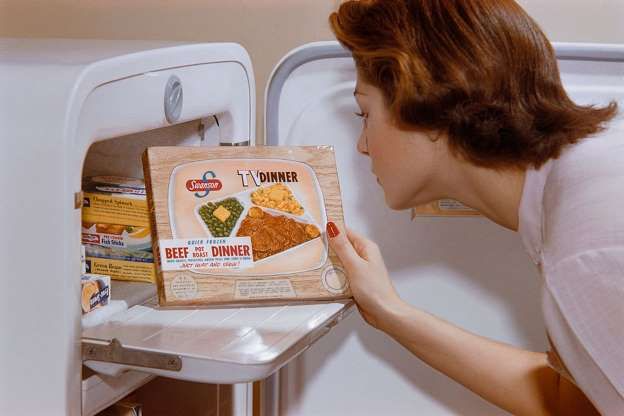
Older than TV Dinners

The list of Things I’m Older Than continues to grow.
The first TV dinners were introduced by Swanson in 1953. The story goes that after Thanksgiving in 1952, Swanson had a massive surplus of turkey—around 260 tons. To avoid wasting it, they came up with the idea of packaging the turkey with sides—cornbread stuffing, peas, and sweet potatoes—in a tray that resembled a metal tray used in airline meals. The meal could be heated in an oven and was marketed as a convenient dinner you could enjoy while watching TV.


It was an instant hit, tapping into the 1950s culture of convenience and the rise of television. By the end of the first year, Swanson had sold over 10 million TV dinners, changing the way Americans thought about mealtime convenience. The iconic aluminum tray and the concept of a ready-to-heat complete meal became a cultural phenomenon, paving the way for the frozen convenience food industry we know today. (GPT 4o)

Moved the Bluebird house

Our ground is so rocky it is nearly impossible to dig a hole (by hand). So the steel rod upon which our Bluebird house sits is always tilted, on the verge of toppling. It has annoyed me for years. 


This week I constructed a plywood box (2x2x1) and filled it with chunks of concrete. Very heavy. The birdhouse is now solidly situated, ready for nesting season.

“Digital Intuition”

Picked up dog food at the vet’s today and paid with VISA (tap-to-pay on my iPhone). When I got home I began making an entry in the Calendar app on my iPhone. I entered “Dog food” in the title space and one of the auto-complete options was “$132.00″… the amount I charged at the vet’s. How did the Calendar app know that was the amount? GPT 4o offered this “likely explanation:”


GPT: That is a little uncanny, Steve — and you’re not imagining it. Continue reading →

Quantum Thoughts

After a fair amount of reading on the subject of thought and consciousness, I’ve concluded thoughts are random patterns of energy generated by the subconscious part of the brain. I don’t think them, they think themselves.

The practice of observing thoughts without judgment to still the mind is a central concept in many Eastern spiritual traditions. (Mindful meditation)

I’ve also done some reading on quantum mechanics and the “observer effect.” Specifically, the Copenhagen Interpretation: “Observation is a physical process that transitions quantum systems from “possible” states to “actual” states. The observer can be an apparatus or a human; consciousness is not required.”

Might the act of observing thoughts as they flood into consciousness result in a “wave function collapse,” causing these random patterns of energy to…dissipate? I ran the idea past GPT 4o: Continue reading →