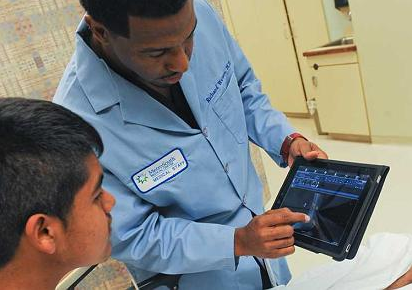
“Spending some time meditating may improve the integrity and efficiency of certain connections in the brain, according to a new study. When a group of participants meditated regularly over the course of a month, brain scans showed increased nerve connections in the areas that govern reward processing and decision making. The authors of the study hope this particular kind of meditation can be adapted to help those conditions with manifestations in the same area of the brain, such as ADD, addiction, and dementia.”
Attachments
My pal Keith pinged me this morning to let me know there was a problem with this website. I raised the hood to discover that all content (posts, pages, media, etc) was gone. Eight years of posts. About 5,000. I have a back-up from about 3 weeks ago, but still…
Not so long ago this would have sent me to DEFCON 5. But I’ve been reading about ego and how we become attached to and identify with things and ideas, and I found I was eerily calm. What if all my clever posts and the rest vanished forever?
I spent a few minutes considering this and realized they were/are nothing more than footnotes on a past that no longer exists (except in my head). What’s happening this moment is more important (and real).
What have we learned, grasshopper? That we are not our thoughts, OR our blog posts.
Hattie (10 weeks)
Almost (not quite) house broken. Sleeping through the night. Chewing the shit out of everything. And Lucy (5 year old Golden) is ready to play.
Hattie on front steps
Scott Adams: “Editors are the chefs of the Internet.”
Scott Adams points to Newser to illustrate what he sees as the future of the Internet:
“Newser works, I believe, because somewhere in their back kitchen is an editor who has an uncommon feel for what stories to highlight, how to summarize them in a folksy voice, and in what order and combination they should appear. There’s some genius happening there. When I read news from other places, I often come away feeling deflated. When I read Newser, I always leave in a good mood. That’s why I return so often. It’s a mood enhancer masquerading as some sort of news site.
And that’s your future of the Internet. The cost of content, such as this blog, and my comic strip, will continue to approach zero. The art will happen with the editing. Others have made the obvious point that editing will be important for the future of the Internet. All I’m adding is the notion that most editors have skill, but few are artists. The world of print publishing is driven by editors who are exceptionally skilled. But they aren’t artists. Newser is edited by an artist. He or she isn’t giving me information; he’s adjusting my mood. That’s art. That’s the future.”
I don’t think I’ve ever visited Newser but I’m headed there now. Like thousands of others.
I’m back. And I wasn’t impressed by Newser but Mr. Adam’s point is a good one, nonetheless.
Life is good

ColorSplash hours of iPad fun
ColorSplash, originally uploaded by smays.
Readability
Facebook. One more time.
Yesterday I created a Facebook account. This is the third, possibly the fourth, time I have attempted Facebook. I say “attempted” because I have never quite “gotten” Facebook. I think I understand social networks as well as the next person but this platform has just never been a good fit for me. So why give it another shot?
A couple of reasons. One, I’d like to better understand why FB is home to half a billion people around the world. Two, social networking has become a bigger part of my job and I can’t properly support clients without a feel for Facebook.
Connecting and communicating with people you know seems to be at the core of Facebook. I send you a “Friend Request” and, if you accept it, I can see some for all of what you’re doing on Facebook, depending on how you have your privacy settings configured. If you don’t accept, I’m blocked.
I’ve had lots of conversations with Facebook users in an effort to understand it (without actually using it). A common theme goes something like this:
Jane is miffed that Bill refused to accept (or ignored?) her friend request. He doesn’t want her to be part of his online life and she’s not happy about it. She thought they were, well, friends.
In the next breath, Jane is explaining why she is getting creeped out by the co-worker who keeps sending her friend requests. The irony is completely lost on Jane.
Some Facebook users deal with this by just accepting all friend requests and ignoring the stuff from the not-really-friends. Others just ignore the requests.
I don’t plan on spending any more time on Facebook than is necessary to understand how it works. I’ll auto post from my blog, YouTube, Twitter and all the rest. So, there will be no shortage of stuff on my “wall,” but it all originates from somewhere else where anyone can see what I’m up to. But that’s clearly less convenient that seeing all within the Facebook compound.
How will I handle “friend” requests (assuming I get any)? I’ll probably ignore them unless we already have an online connection (and I probably won’t give you a kidney, either).
So I’m headed off to Facebook with the same enthusiasm as for my first boy-girl dance party mom made me attend (on Bill Wicker’s patio). I didn’t dance there either.