
Bullshit jobs
David Graeber is a Professor of Anthropology at the London School of Economics. There’s so many interesting ideas in this essay. Here are a few of my favorites.
“What would happen were this entire class of people to simply disappear?”
I stopped for a few seconds to think of the jobs I had (DJ, postal inspector, middle manager, web monkey) and confess nothing very bad would have happened if they disappeared.
“Say what you like about nurses, garbage collectors, or mechanics, it’s obvious that were they to vanish in a puff of smoke, the results would be immediate and catastrophic. A world without teachers or dock-workers would soon be in trouble, and even one without science fiction writers or ska musicians would clearly be a lesser place. It’s not entirely clear how humanity would suffer were all private equity CEOs, lobbyists, PR researchers, actuaries, telemarketers, bailiffs or legal consultants to similarly vanish. … It’s as if someone were out there making up pointless jobs just for the sake of keeping us all working.”
“The ruling class has figured out that a happy and productive population with free time on their hands is a mortal danger (think of what started to happen when this even began to be approximated in the ‘60s). And, on the other hand, the feeling that work is a moral value in itself, and that anyone not willing to submit themselves to some kind of intense work discipline for most of their waking hours deserves nothing, is extraordinarily convenient for them.”
“Technology has been marshaled, if anything, to figure out ways to make us all work more. In order to achieve this, jobs have had to be created that are, effectively, pointless. Huge swathes of people, in Europe and North America in particular, spend their entire working lives performing tasks they secretly believe do not really need to be performed. … Given the choice between less hours and more toys and pleasures, we’ve collectively chosen the latter.”
Drone video: Prairie Garden Trust (George Kopp)
The chief danger to freedom of thought
“The chief danger to freedom of thought and speech at this moment is not the direct interference of … any official body. If publishers and editors exert themselves to keep certain topics out of print, it is not because they are frightened of prosecution but because they are frightened of public opinion. In this country intellectual cowardice is the worst enemy a writer or journalist has to face. … The sinister fact about literary censorship in England is that it is largely voluntary.”
— George Orwell (via Brain Pickings)
Best “desk” ever?
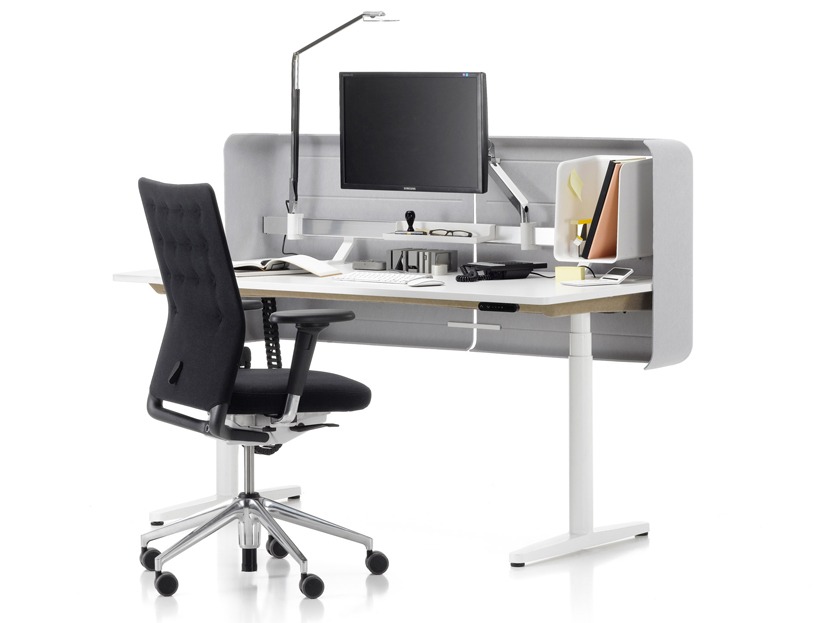
More photos of this endlessly flexible work-space.
Railroad Crossing
People who don’t read books
I encounter far more people who rarely/never read a book, than those read regularly. The stats below seem to support my anecdotal findings.
- 50% – U.S. adults who are unable to read an 8th grade level book
- 33% – U.S. high school graduates who will never read a book after high school
- 42% – College students who will never read another book after they graduate
- 80% – U.S. families who did not buy a book this year
- 70% – Adults that have not been in a book store in the past 5 years
- 57% – Books started that aren’t read to completion
I found these at statisticbrain.com. The post gives the source for these stats as something called Read Faster, Reading Stats and and “Research Date: of April 28, 2013. I confess these are hard for me to believe so if anyone can call bullshit (with sources), please do. Now, here’s my nasty little secret:
I feel a little… superior… to people who don’t read books. I know I shouldn’t but an informed opinion just somehow seems more… valid?
The Rabbit Hole of Stuff
This post by Leah McClellan “spoke to me” (as the saying goes.) Like so many of us, she “fell into the rabbit hole called stuff” and her house was “bulging and sinking at the same time.”
I still have way too much stuff in my life but I can do something about that. (Barb, on the other hand, likes her stuff and plans to keep it). From Ms. McClellan’s post:
1. The stuff you can buy is a distraction that won’t help you reach your goals
2. Stuff creates a false sense of self
3. Stuff can blind you
4. Material stuff keeps you busy with…material stuff
5. Stuff distracts us from ourselves
New blog theme
Posting here feels like the mother who keeps her son’s room just as it was when he went away to college. It feels good just to come in and sit on the bed for a few minutes. I (briefly) considered abandoning this blog when I got caught up in Google+. Which is where I spend most of my online time these days. But — like a high school yearbook — it’s fun to flip through the pages here once in a while.
In the eleven years since I started posting things here, I’ve changed themes numerous times. Getting progressively minimalist over time. The current theme/framework is Genesis (by STUDIOPRESS). Gonna be hard to get more bare bones.
Going Clear
Going Clear grabbed and held (and disturbed) me as few (non-fiction) books have. “Couldn’t put it down” is usually a cliche, but…
Reading this incredible story is as close to being in a cult as I’m ever likely to be. For my money, Scientology is far more frightening (and dangerous) than the Taliban.
Tom Cruise figured prominently in the second half of the book so I had to go back and take one more look at this video.