
Those last few minutes before the sun goes down.
The Jackpot
William Gibson defines the Jackpot Years from The Peripheral [ m1k3y on Vimeo.]
“No comets crashing, nothing you could really call a nuclear war. Just everything else, tangled in the changing climate: droughts, water shortages, crop failures, honeybees gone like they almost were now, collapse of other keystone species, every last alpha predator gone, antibiotics doing even less than they already did, diseases that were never quite the one big pandemic but big enough to be historic events in themselves.”
Twenty Thirty: The Real Story of What Happens to America
I confess to a love-hate relationship with stories about the apocalypse. Cringe-watching through my fingers, if you will. Thought it might be fun to collect a few of my favorites here. We’ll start with a couple of excerpts from Albert Brooks’ Twenty Thirty: The Real Story of What Happens to America.
In the summer of 2018 two things happened. A heat wave swept over the East Coast, unprecedented in the United States, and caused temperatures to remain close to 105 during the day for almost six weeks. Global warming was not challenged anymore, not after the Lambert Glacier in Antarctica melted three hundred years before anyone thought it would. Sure, there were a few scientists who would say man had nothing to do with it, but it didn’t matter anymore, it was happening. Sometimes during very cold winters, there were still people who pooh-poohed global warming altogether. “Look outside, it’s a blizzard,” they would say. But of course the terrible winters were a sign of even further erosion. And when the eastern seaboard had forty-five consecutive days above one hundred degrees, skeptics melted away, along with everything else.
And something else happened late that summer. The United States had always said that the likelihood of a nuclear or biological attack was greater than fifty percent. And people always thought about it the same way they thought about earthquakes: They knew something was coming, but what could they do? Well, it wasn’t a nuclear attack, but on August 15, 2018, people started getting sick with flulike symptoms in San Francisco. Before anyone realized it, a smallpox virus had contaminated the city. The government’s best guess was that five or six terrorists had come into the country already infected with the disease and worked their was crowded streets, department stores, schools, supermarkets — everywhere it could be spread. Before it was over, twenty thousand people were the city came to a halt, the stock market fell fifty percent, and the fear level increased tenfold.
And as though things were bad enough, Mr. Brooks tosses in an earthquake.
So this was “the big one.” This was the one scientists said in 2010 had a fifty percent chance of happening in the next thirty years. Fifty-fifty. Red or black. The San Andreas Fault had not moved substantially in over three hundred years. “Overdue” was an understatement.
The initial shake was a 9.1. The first aftershock was an 8.7. The second was an 8.2. The third, an 8.0, was bigger than anything that had ever been predicted.
Los Angeles was not prepared for this. No city could be. No freeway was drivable, no buildings were okay, and many came down completely. Ninety-eight percent of the property in Los Angeles County was severely damaged.
The death toll was close to fifty thousand and the number of injured was incalculable. First reports said up to half a million people were seriously hurt. Hospitals could do nothing. They were damaged beyond repair; all they tried to do was keep the patients who were already there alive.
And then, after all was said and done, after all of the damage and death and destruction, there was one looming issue. Where in God’s name would the money come from to fix America’s largest city? For a country so deeply in debt, this seemed like an impossible task.
“Only This Moment I” (Julien Rivoire)
Clown by Pawel Kuczynski
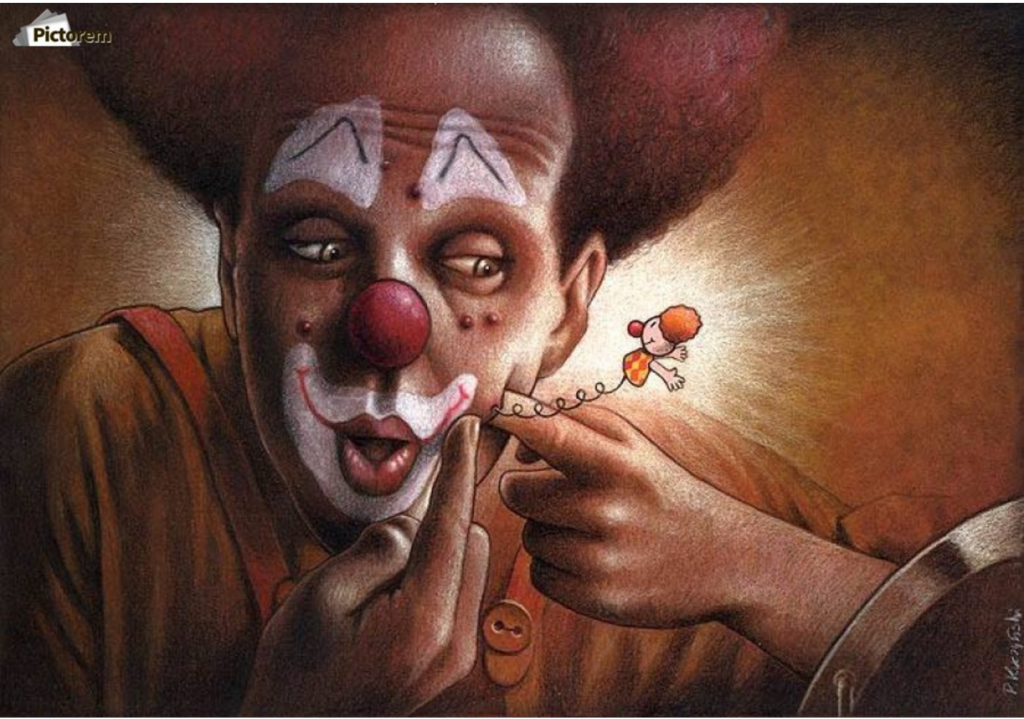
Pawel Kuczynski graduated Fine Arts Academy in Poznan has been rewarded with more than 100 prizes and distinctions creating thought-provoking illustrations that comment on social, economic, and political issues through satire. More »
12 Inevitable Tech Forces That Will Shape Our Future
YONGJUN QIN
Ruckus Cruiser
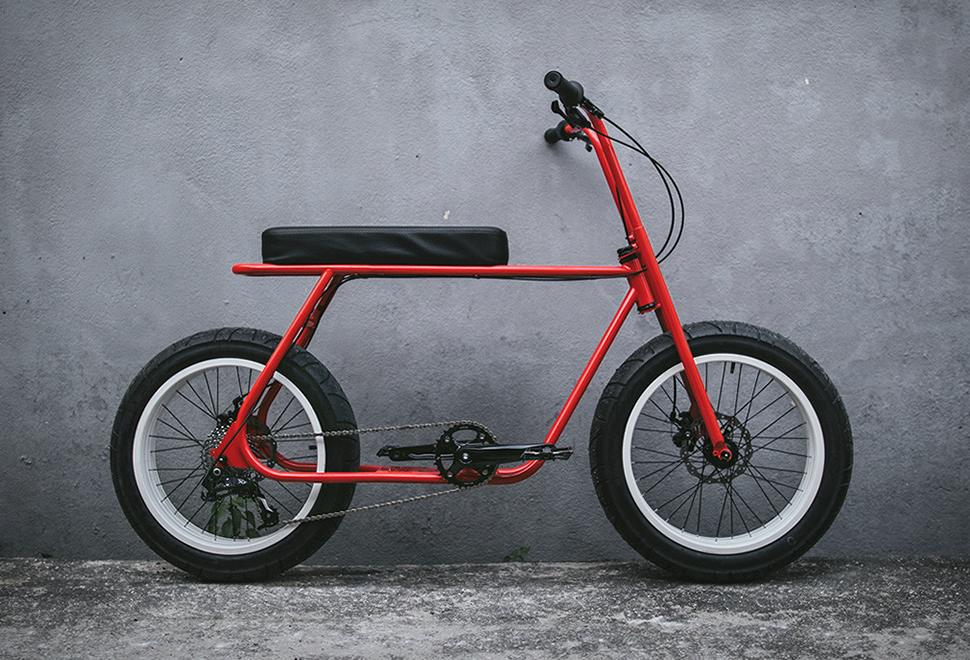
“The cool bike is a throwback to when time moved slower and bicycles were fun things meant to take you to a happier place. The extra-long custom lounge seat with room to fit another passenger brings the social back to bicycling. Available with drivetrain options that include one with an electric motor.”
UPDATE: Someone just pointed out this bike is priced at $1,000. Hardly the bike for everyman. Nevermind.