The Upswing

The Upswing: How America Came Together a Century Ago and How We Can Do It Again

“In a sweeping overview of more than a century of history, drawing on his inimitable combination of statistical analysis and storytelling, Robert Putnam analyzes a remarkable confluence of trends that brought us from an “I” society to a “We” society and then back again.” (Amazon)

I’m only a few chapters into this book and remain skeptical America can ever be a “We” society again. Perhaps the authors can convince me before I’m done. I’ll post a few excerpts without comment because… I wouldn’t know what to say.

“Buoyed by his landslide victory in 1964, LBJ moved to the left on issues of race and inequality, beginning to open an ideological divide that would widen steadily for the next half century. Nevertheless, across LBJ’s far-reaching Great Society initiatives (the War on Poverty, Civil Rights, Voting Rights, Medicare/Medicaid, federal aid to education, and immigration reform—the very issues at the core of intense party polarization in our own period, a half century later), all major bills were supported by majorities or substantial minorities within both parties. On average, these bills were supported by 74 percent of congressional Democrats and 63 percent of congressional Republicans, a fact forgotten by later Republicans who would rail against the leftist extremism of the Great Society programs.”

“This increasing affective polarization has influenced even attitudes to intermarriage. Between 1960 and 2010 opposition to one’s offspring marrying an out-partisan rose from 4 percent to 33 percent among Democrats and from 5 percent to 49 percent among Republicans. This partisan prejudice shows up both in online dating and in actual marriages, as people are increasingly choosing their partners on the basis of political affiliation, even more than on the basis of education or religious orientation. Over the last half century marriage across racial and religious lines has become much more common than either used to be, whereas marriage across party lines has become much less common. This increasing agreement between husband and wife about politics in turn strengthens the inheritance of party identity by the next generation, since we know that children are more likely to inherit party identity when both parents agree politically. In this very intimate way, over the last half century partisanship has gradually replaced religion as the main basis of “tribal” affiliation in America.” (Emphasis mine)

Memorial Day

A Distant Mirror: The Calamitous 14th Century

The Black Death was a bubonic plague pandemic occurring in Afro-Eurasia from 1346 to 1353. It is the most fatal pandemic recorded in human history, causing the death of 75–200 million people in Eurasia and North Africa, peaking in Europe from 1347 to 1351.

Plagues are (were?) something from history books and I never expected to live through one (assuming I live through this one). That, along with the whole “Dark Ages” thing has held a morbid fascination for me, so I looked around for a good book on the Middle Ages and came up with A Distant Mirror: The Calamitous 14th Century. It’s is a narrative history by the American historian Barbara Tuchman, first published in 1978. The main title, A Distant Mirror, conveys Tuchman’s thesis that the death and suffering of the 14th century reflect those of the 20th century, particularly the horrors of World War I.

I’m about halfway through the 600 page book and on almost every page I find some jaw-dropping parallel with the time we’re living through. Just one example: As businesses start opening up there’s lots of complaining they can’t find people willing to work (for minimum wage). The most-cited cause is the payments sent to people to help them through the pandemic. Now, from Tuchman’s book:

When death slowed production, goods became scarce and prices soared. In France the price of wheat increased fourfold by 1350. At the same time the shortage of labor brought the plague’s greatest social disruption— a concerted demand for higher wages. Peasants as well as artisans, craftsmen, clerks, and priests discovered the lever of their own scarcity. Within a year after the plague had passed through northern France, the textile workers of St. Omer near Amiens had gained three successive wage increases. In many guilds artisans struck for higher pay and shorter hours. In an age when social conditions were regarded as fixed, such action was revolutionary.

The response of rulers was instant repression. In the effort to hold wages at pre-plague levels, the English issued an ordinance in 1349 requiring everyone to work for the same pay as in 1347, Penalties were established for refusal to work, for leaving a place of employment to seek higher pay. and for the offer of higher pay by employers. Proclaimed when Parliament was not sitting, the ordinance was reissued in 1351 as the Statute of Laborers. It denounced not only laborers who demanded higher wages but particularly those who chose “rather to beg in idleness than to earn their bread in labor.” Idleness of the worker was a crime against society, for the medieval system rested on his obligation to work. The Statute of Laborers was not simply a reactionary dream but an effort to maintain the system. It provided that every able-bodied person under sixty with no means of subsistence must work for whoever required him. that no aims could be given to able-bodied beggars, that a vagrant serf could be forced to work for anyone who claimed him. Down to the 20th century this statute was to serve as the basis for “conspiracy” laws against labor in the long struggle to prevent unionization.”

Sound familiar? The most striking thing about the Middle Ages is how little has changed. Oh sure, technologies, economies, institutions, etc have evolved but 21st century man is just as venal and corrupt as in the 1300’s. As calamitous as the 14the century was, I find reading about it strangely reassuring. If humanity was able to survive that time, it might survive this one. Even if western democracy does not.

When you could buy a home for $7,000


This is the house were my brother and I grew up. Our parents purchased (newly constructed) the little two-bedroom/one-bath house for $7,000 in 1955. We’d been living in tiny rent houses and my mom was determined to own their own home. My father was terrified at taking on so much debt (30 year mortgage). I’m guessing it took them the full 30 to pay it off.

Beyond Burger vs. Impossible burger


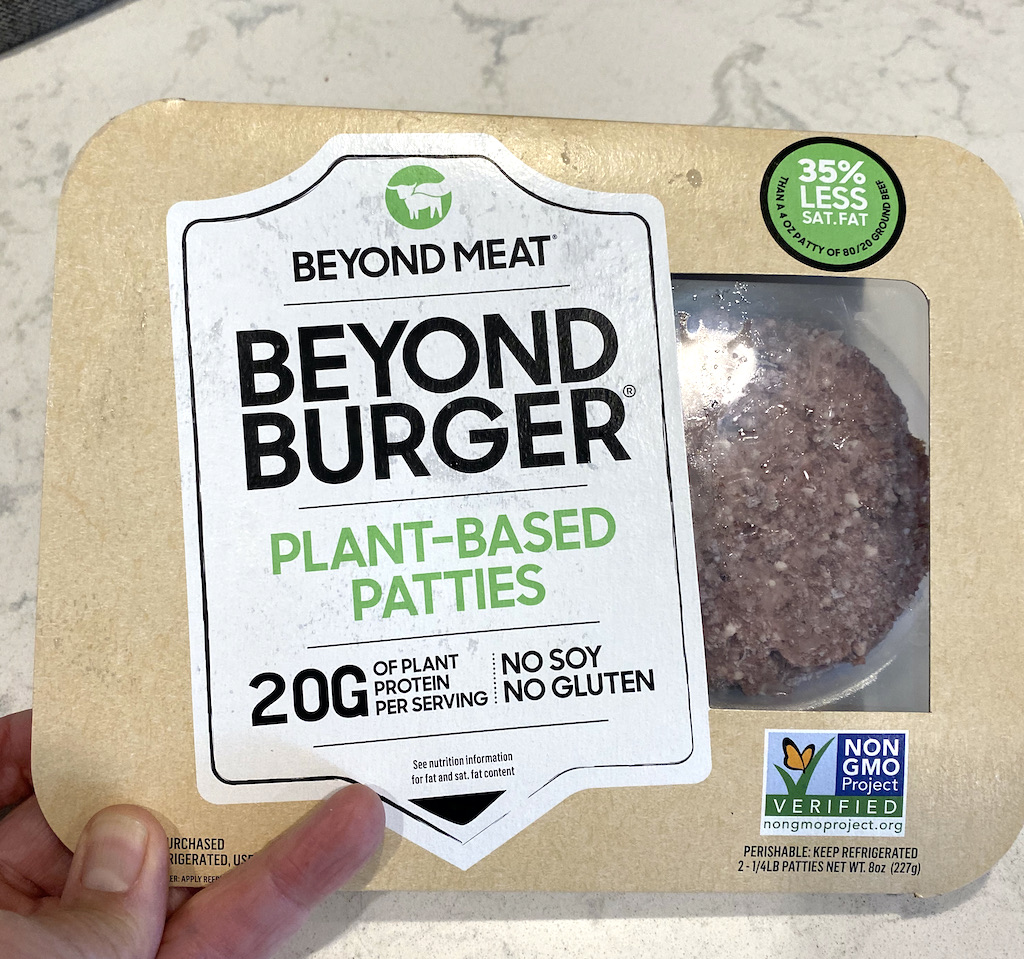
Been eating Impossible Whoppers for a while now but hadn’t tried the plant-based burger from the Beyond Meat folks. Spotted them in my local supermarket today and bought a package. Really quite good.

UPDATE: Found Impossible Burgers in my local supermarket. Unlike the pre-formed patties from Beyond, this was more like small package of ground beef and you make your own patties. Texture, mouth-feel, taste… all superior to the Beyond product.