Dan Shelley named RTDNA/F Executive Director

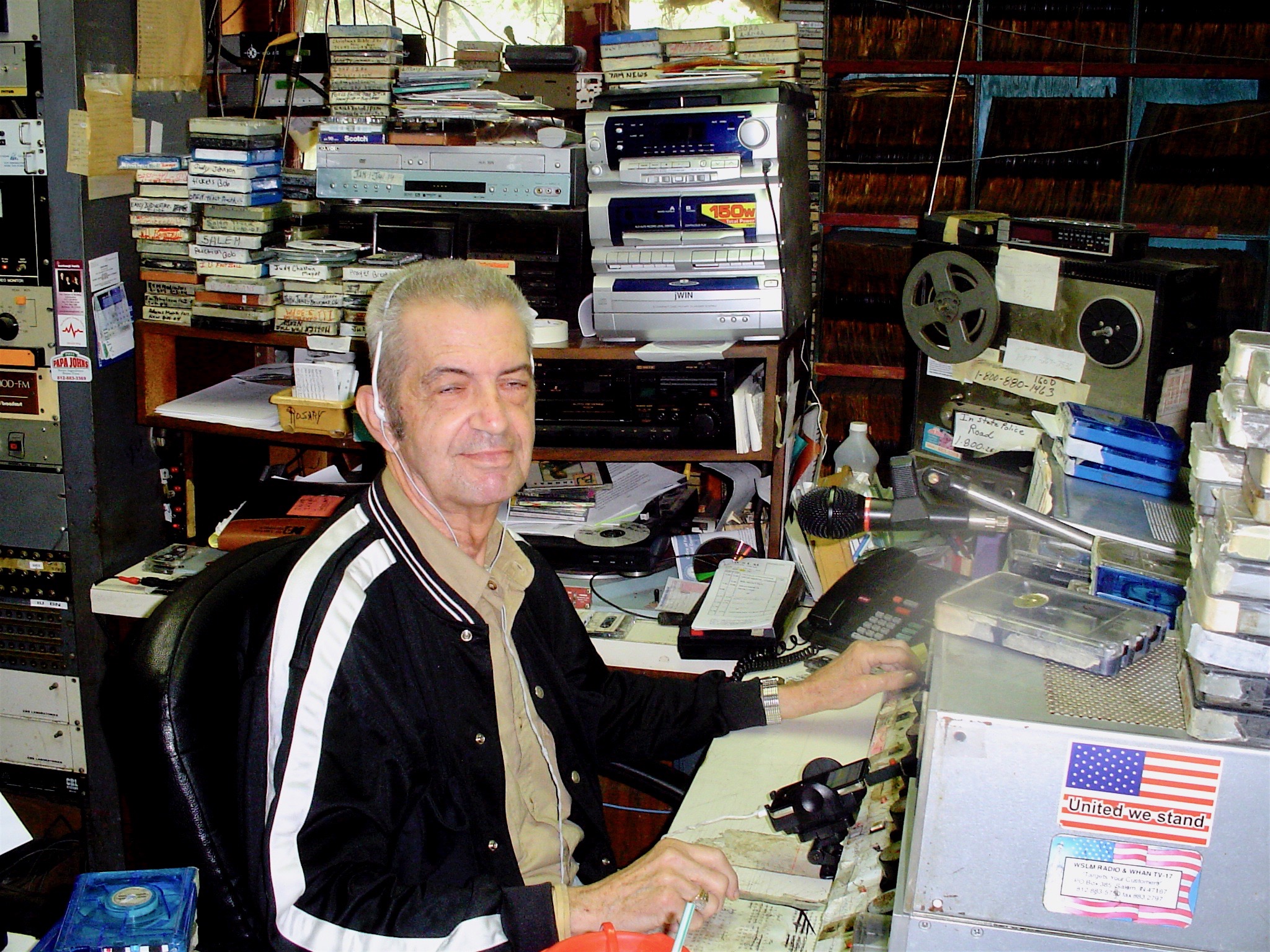
“The Radio Television Digital News Association and Foundation (RTDNA/F) today announced that longtime Association member, former Chairman of the Board and current Foundation Secretary/Treasurer Dan Shelley has been named Incoming Executive Director of the two organizations. Shelley begins work immediately and will assume the role of Executive Director in September.”

I met Dan in 1984 when he was news director at KTTS in Springfield, Missouri, and I was doing affiliate relations for The Missourinet (Dan’s the guy in the red tie). From Springfield Dan moved up to Milwaukee where he was news director of WTMJ for a few years before moving to New York to take over digital media for WCBS-TV. Then on to Radio One and, in 2015, iHeartMedia.

I interviewed Dan in 2005 when he was elected chairman of what was then RTNDA (Radio Television News Directors Association). They changed the name in 2009 because this digital thing just wasn’t going away. During that interview we talked about blogging, podcasting, satellite radio. For a little context, XM (satellite) Radio did it’s first broadcast in 2001; Facebook launched in 2004; podcasting became a thing that same year; YouTube started 2005; Twitter in 2006; and in January of 2007, Steve Jobs introduced the iPhone. Whew.

Media, journalism and Life As We Know It has undergone some big changes in the last dozen years. According to a 2016 Gallup Poll“Americans’ trust and confidence in the mass media ‘to report the news fully, accurately and fairly’ has dropped to its lowest level in Gallup polling history, with 32% saying they have a great deal or fair amount of trust in the media. This is down eight percentage points from last year.” 

I don’t see how he can possibly find the time but Dan says we’ll talk again. Boy, am I looking forward to that.

This post was updated on April 6, 2017 at 6:50 p.m.

Our extended self

I’m rereading Kevin Kelly’s The Inevitable: Understanding the 12 Technological Forces That Will Shape Our Future.

“If I re-google my own email (stored in a cloud) to find out what I said (which I do) or rely on the cloud for my memory, where does my “I” end and the cloud start? If all the images of my life, and all the snippets of my interests, and all of my notes and all my chitchat with friends, and all my choices, and all my recommendations, and all my thoughts, and all my wishes — if all this is sitting somewhere, but nowhere in particular, it changes how I think of myself. […] The cloud is our extended soul. Or, if you prefer, our extended self.”

The Inevitable (Kevin Kelly) (PDF)

The Perfect MacBook

My MacBook Pro is 3 1/2 years old. It’s the best computer I’ve ever owned. As far as I’m concerned, it’s perfect. So this week I purchased another one, almost exactly like it. (I won’t bore you with the specs) I bought it as a spare but my current machine will become the spare.

I’ve always thought the latest version of the MacBook was better than the one before. Until now. The newest model has a keyboard that just doesn’t feel as good as mine. The Touchpad is bigger than I want or need. And Apple saw fit to do away with the MagSafe connector on the power cord, which kept my box on the table instead of the floor countless times.

M.G. Siegler had similar thoughts a couple of years ago:

“I suspect this new MacBook will be the last laptop I end up buying. Again, that doesn’t mean the MacBook is dying anytime soon, but I believe this will be the pinnacle of the product. We’ll get spec bumps for years to come. But it will be the long, slow fade we just witnessed with the iPod.”

I don’t really fault Apple for this. Let’s say, for the sake of discussion, that Apple (or any company) succeeded in making The Perfect Laptop. I know, there’s no such thing but let’s say it was 99.99% perfection. And the following year — to meet shareholders expectations — they have to roll out a new model. They’ve got make some changes, right? Isn’t it much more likely those changes will make it worse than better? There’s probably a name for this phenomenon (If You Fuck With It Enough You Will Fuck It Up Syndrome?).

I think this is what happened with their latest MacBook Pro. I’m sure it’s a good laptop and lots of people will buy it and be very happy with it. Just not me.

So now I have two (nearly identical) laptops. One in the bag I take everywhere and one on the closet on hot standby.

Timeline of computer stuff

I’ve got a thing about calendars. That’s not quite right. I’ve got a thing about remembering knowing when things happened and I’m really bad at remembering stuff. Even important stuff. So I kept a journal for a while and when DayTimers came along I kept one with me all the time for meetings and notes and all the rest. I think I mentioned my DayTimer purge. These days Google Calendar is my tool-of-choice for keeping up with everything. With links to Google Drive. I came across the computer related list below while working on another project.

  • 1985 – First computer. Zenith with two 7.5 in floppy drives (no HD)
  • 1/6/89 – Jefferson City Computer Club meeting
  • 10/31/89 – Bought computer made by CompuAdd?
  • 12/6/89 – Rick Williams, MSC, Columbia, MO (1st ref?)
  • 4/21/92 – Purchased computer for $3,525.86. 33/386 4 meg; 101/VGA Samsung; 16 SCSI controller
  • 11/16/93 – Computer Concepts demo (?)
  • 11/16/92 – Switched to AmiPro (word processor/desktop publishing) on office computer
  • 6/20/94 – First “notebook” computer; purchased from Bill Bahr (Iowa) for $1700. Made by Toshiba. Base price: $1400; Fax/modem PCMCIA card: $300
  • 11/21/94 – MCI Internet service – $49.95 for software; $19.95/mo – 7 hours free; $3.00 per hour after that. 9600 baud/14400
  • 12/1/95 – Gateway 2000 computer, $3,100
  • 4/24/95 – Comdex, Atlanta, GA
  • 5/8/95 – New ISP (Internet Service Provider). Summit Information Services, Holts Summit, MO. $30/mo
  • 6/3/96 – Comdex, Las Vegas NV
  • 6/10/96 – Ordered IBM ThinkPad
  • 8/23/96 – Ordered ACT 3.0 (contact manager)
  • 4/20/98 – Comdex, Chicago, IL
  • 4/19/99 – Comdex, Las Vegas, NV
  • 7/1/99 – Shut down Straylight
  • 4/21/04 – Signed up for Gmail
  • 5/7/04 – First home wifi
  • 4/17/06 – First MacBook
  • 1/6/11 – Bought Google and Apple stock. 35 shares Google @ $569; 54 shares of Apple @ $368.03. Our investment guys talked us into selling some. “Too heavy in tech”
  • 6/15/11 – Google sent me a Chromebook to evaluate. Sent two for some reason.
  • 10/28/11 – Closed PayPal account
  • 6/15/12 – MacBook Pro delivered
  • 9/20/13 – First iPhone (5s?)
  • 11/14/14 – Began using Dropbox as primary cloud storage
  • 7/9/16 – Experimented with Evernote for notes/journaling
  • 3/20/20 – First Zoom call (COVID lockdown)
  • 7/18/21 – Subscribed to Spotify/Apple Music. CDs officially dead
  • 11/9/22 – First sustained use of ChatGPT. Blog posts begin
  • 5/12/23 – Retired Dropbox; consolidated into iCloud/Google Drive
  • 9/14/24 – TaxoPress plugin for blog taxonomy overhaul
  • 8/15/25 – BookBuddy library export (1,054 titles); taxonomy mega-project

“The whole world is on disability”

“Between 1996 and 2015, the number of working-age adults receiving disability climbed from 7.7 million to 13 million. The federal government this year will spend an estimated $192 billion on disability payments, more than the combined total for food stamps, welfare, housing subsidies and unemployment assistance.”

The percentage of people on disability in Dunklin County, Missouri (where I grew up) increased 33.7 percent since 2004. In Cole County, MO — where I now live — the increase was 40%.

“Disability has become a force that has reshaped scores of mostly white, almost exclusively rural communities, where as many as one-third of working-age adults live on monthly disability checks, according to a Washington Post analysis of Social Security Administration statistics.”

Washington Post

My first BBS

I joined my first BBS (bulletin board system) on November 18, 1994. It was called Fun City and was operated by Kevin Diehl.

(Wikipedia) A bulletin board system, or BBS, is a computer server running software that allows users to connect to the system using a terminal program. Once logged in, the user can perform functions such as uploading and downloading software and data, reading news and bulletins, and exchanging messages with other users through email, public message boards, and sometimes via direct chatting. Many BBSes also offer on-line games, in which users can compete with each other, and BBSes with multiple phone lines often provide chat rooms, allowing users to interact with each other. Bulletin board systems were in many ways a precursor to the modern form of the World Wide Web, social networks and other aspects of the Internet. Low-cost, high-performance modems drove the use of online services and BBSes through the early 1990s. Infoworld estimated there were 60,000 BBSes serving 17 million users in the United States alone in 1994, a collective market much larger than major online services like CompuServe.

State Farm Drive Safe & Save Mobile

If you don’t know this about me already, I’m not very concerned about privacy. I think you should have it if you want it and are willing to make the necessary sacrifices to get it, but it’s not a high priority for me. Might be someday. Not today. As Estelle Costanza said, “I’m out there, Georgie!” I’m willing to give up some (a lot of) privacy to get some conveniences.

That said, today I activated State Farm’s Drive Save & Save program. Keep a little Bluetooth beacon in my car that works with an app on my iPhone to track my driving. According to their website the track acceleration; braking; turns; mileage; speed and time of day (rush hour, late night, etc)

According to the marketing material (and my local agent) I’ll get an immediate 5% discount and another 20% if I don’t go above the national average of 12,000 miles a year. “More small discounts may be tallied if you prove to be a safe motorist, do not drive over 80 mph and avoid driving between midnight and 4 a.m.” I think I meet all of those goals but we’ll see.

I found this while googling around: “State Farm warns that some drivers already getting a low-mileage discount may see a rate hike. “If you currently receive a premium reduction for low estimated annual mileage (under 7,500 miles annually for personal use) and your vehicle is actually driven more than that, your premium may increase at a future policy renewal period.”

I know this kind of thing freaks a lot of people out. But not me. I’ll try it and if I don’t like the results I’ll stop. And if State Farm fucks me over, I’ll just switch providers.

Update (5/22/17): A couple of months ago I mentioned adding a little gizmo from my insurance company (State Farm) that tracks my driving and — depending on my grades — lowers my rates or saves me some money or something. As you can see from the screenshot below, I’m doing fine in a couple of categories and not so good in some others. I do jump off the line and brake too hard but was unaware of my hard turns. I put that on the MINI which handles so beautifully. I do zip around corners. So far all of this has saved me about $11 and change. But I am going to work on my starts/stops/turns.