Eldon Land Rover

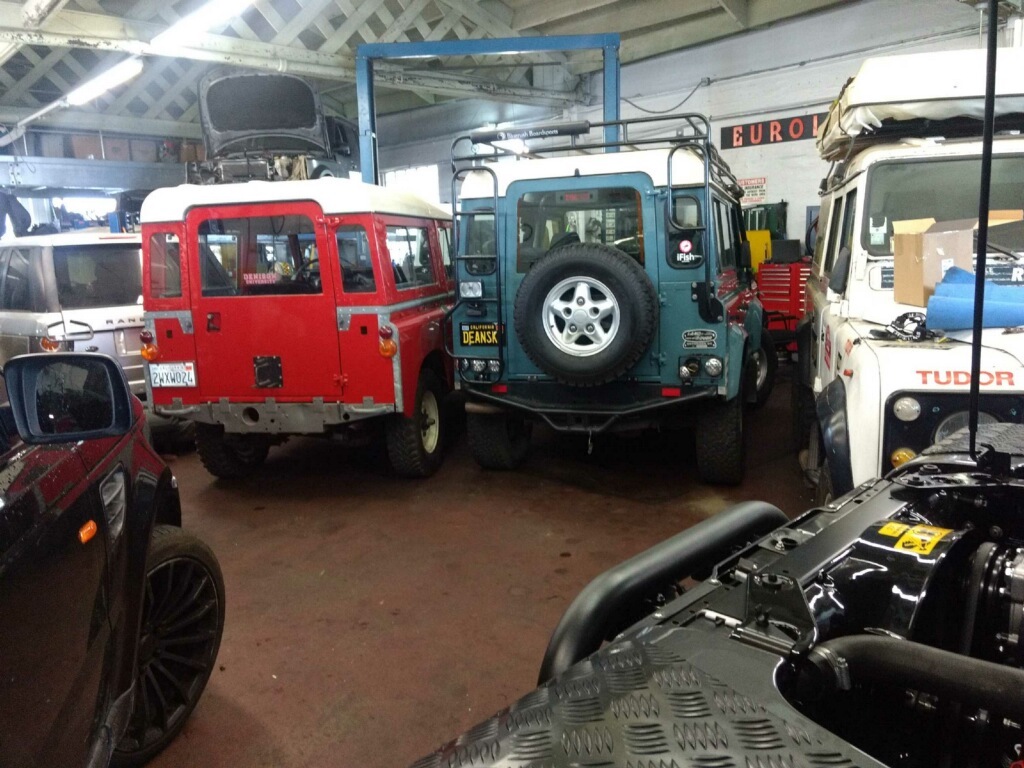
One of my coffee shop pals reported seeing an old Land Rover on the outskirts of Eldon, a small town about 30 miles south of Jefferson City. So I hopped in the car and drove down to see if I could find it.

The owner was a gentleman who passed away a month or so back. I introduced myself to a young man (a grandson?) who was getting things ready for an estate sale. I asked if I could take a look (and some photos) of the Land Rover. No problem. He said the owner (who was in his 80s when he died) bought the truck new. And small world that it is, it’s a 1979 Series III. Same year and model as mine.

The young man said there was a fender in the building, to replace the damaged one above.

The tub was filled with parts, old manuals, etc.

The old girl looked pretty rough. Someone with more knowledge and experience than me would know if this could be restored and what that might take. He said prior to the old man’s death, he had an offer of $2,500.

How to fix Facebook

The NYT asked nine experts how to “fix” facebook. Kevin Kelly (my favorite tech guru) offered the following suggestion:

“Facebook should reduce anonymity by requiring real verification of real names for real people, with the aim of having 100 percent of individuals verified.”

“Companies would need additional levels of verification, and should have a label and scrutiny different from those of people. (Whistle-blowers and dissidents might need to use a different platform.)”

“Facebook could also offer an optional filter that would keep any post (or share) of an unverified account from showing up. I’d use that filter.”

News is bad for you

“News items are bubbles popping on the surface of a deeper world.” I’m one week away from one full year without TV/Cable news. It stopped being an experiment a while back. It has been satisfying in ways I can’t really explain. This article takes a shot at it:

The daily repetition of news about things we can’t act upon makes us passive. […] Out of the approximately 10,000 news stories you have read in the last 12 months, name one that – because you consumed it – allowed you to make a better decision about a serious matter affecting your life, your career or your business.

News is to the mind what sugar is to the body. News is easy to digest. The media feeds us small bites of trivial matter, tidbits that don’t really concern our lives and don’t require thinking. That’s why we experience almost no saturation. Unlike reading books and long magazine articles (which require thinking), we can swallow limitless quantities of news flashes, which are bright-coloured candies for the mind.

Most news consumers – even if they used to be avid book readers – have lost the ability to absorb lengthy articles or books. After four, five pages they get tired, their concentration vanishes, they become restless. It’s not because they got older or their schedules became more onerous. It’s because the physical structure of their brains has changed.

Land Rover spare tire

Everyone agreed having the spare tire on the bonnet (hood) of the Land Rover looked cool… but it was just too heavy (for me). But removing the mount left some ugly holes. I’m pleased to report the guys at Lucra Cars came up with a nice solution.

If some future owner (assuming I won’t live forever) wants to put the spare back on the bonnet, he/she can remove these six bolts, attach the mount, and put the spare back where the Land Rover gods intended.

Radio stations no longer required to have local studios

Was fortunate to work in radio before “consolidation.” Even small towns might have two or three radio stations, each with different owners and management. After the rules changed, it soon became common for one company to own/operate ALL radio stations and automation (some software on a computer back in the 80s) made it possible to get rid of lots of on-air staff. But to call yourself a “Hooterville radio station,” you had to have a studio in Hooterville. No longer, it seems.

“Stations will still be required to keep a toll-free or local number staffed during normal business hours.”

Where a town once had a radio station with a tower and a transmitter and some DJs and maybe a news guy or two… now has an answering service.

“Because of the rule change, Newsmax Media CEO Christopher Ruddy predicted that “local news production could be moved to places such as New York and Washington as the big networks buy up local stations.”

Truth be told, that’s been happening for a long time. Some of that blood is on my hands but it’s an old story and too long to share. Let’s just say we stretched the definition of “local” to the breaking point. Glad I didn’t miss local radio when it was still local.

The Book of Dust

I simply could not put this book down. I tried. But then I’d read just a few lines of the next chapter… and the next… and it’s the middle of the night. This was gripping adventure story. Overlaid with a sense of impending doom (see above). Deeply religious people frighten me. That’s okay, Barb says, because most religious people are not that serious about it. Hmm.

The philosophical underpinning of this book is deeply concerned with how authoritarian regimes take power. […] The Magisterium’s most chilling weapon in its quest for domination is its League of St. Alexander. The League is a secret society for children whose members wear badges and attend extra church services, and they’re encouraged to inform on any adults they catch doing anything sinful or heretical. At Malcolm’s school, the headmaster tries to forbid his pupils from wearing the badges on school property. The students, drunk with power, promptly inform on him; he’s taken into the Magisterium’s custody and never heard from again. Continued…

Can’t wait for part two.