Thermometer tells company were to advertise

“This flu season, Clorox paid to license information from Kinsa, a tech start-up that sells internet-connected thermometers that are a far cry from the kind once made with mercury and glass. The thermometers sync up with a smartphone app that allows consumers to track their fevers and symptoms, making it especially attractive to parents of young children. The data showed Clorox which ZIP codes around the country had increases in fevers. The company then directed more ads to those areas, assuming that households there may be in the market for products like its disinfecting wipes.” (New York Times)

Another old Scout

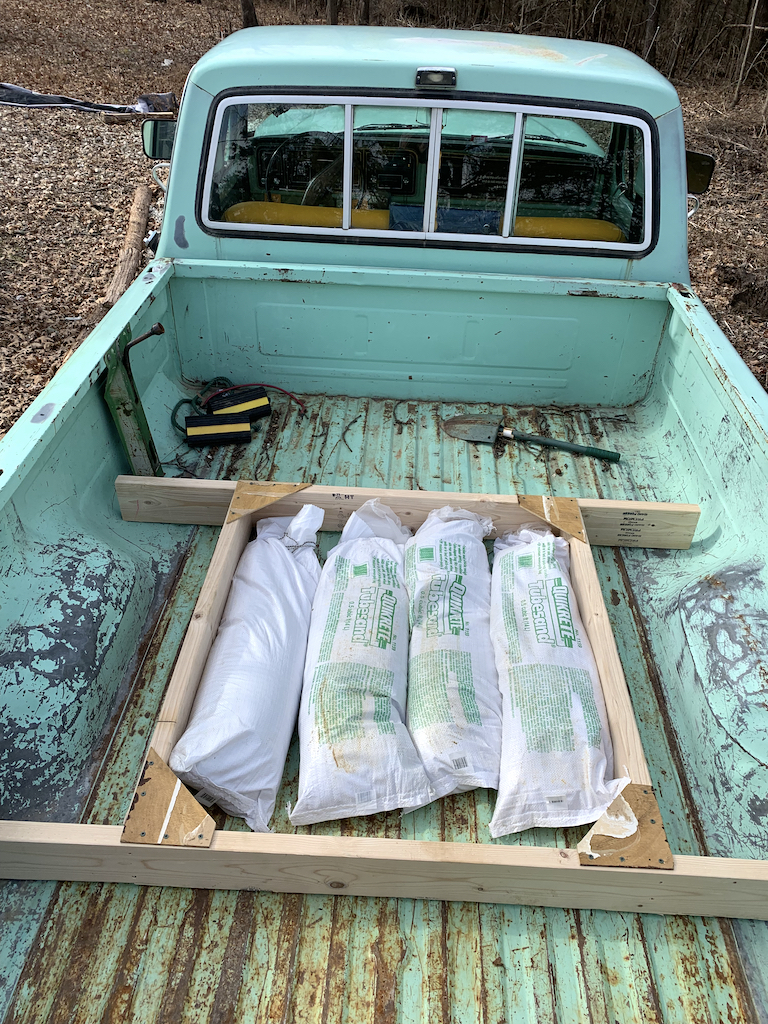
Paul Bandelier loves old cars but he’s got some sweet old trucks sitting outside his shop and I’ve fallen in ‘like’ with one. I’m hoping he finds a buyer for it before I brake down and buy the thing. Yesterday I stopped by his shop and introduced myself and he showed me his latest acquisition.

I can’t recall the year but he said he found it in Colorado and plans to “fix it up and find it a good home.”

Experience Self vs. Memory Self (Daniel Kahneman)

  • Being happy “in” you life, vs. being happy “about” your life
  • We don’t choose between experiences, we choose between memories of experiences
  • We don’t think of the future as experience, we think of the future as anticipated memories
  • Why do we give so much weight to memories, relative to the weight we give experiences?
  • We do not attend to the same things when we think about life and when we actually live.

“Social media is making the world a better place”

I gave up Twitter two years ago, never did Facebook and said goodbye to Google+ recently. Social media seemed only slightly less afflictive than opioid addiction. But this post by Kevin Drum offers a glimmer of hope:

The internet boasts an immediacy that allows it to pack a bigger punch than any previous medium. But this is hardly something new. Newspapers packed a bigger punch than the gossipmonger who appeared in your village every few weeks. Radio was more powerful than newspapers. TV was more powerful than radio. And social media is more powerful than TV.

Broadly speaking, the world is not worse than it used to be. We simply see far more of its dark corners than we used to, and we see them in the most visceral possible way: live, in color, and with caustic commentary.

The money quote: “If you want to make things better, you first have to convince people that something bad is happening. Social media does that.”

What Apple knows about its customers

A week ago Apple started allowing U.S. users to download all of their data from the company, following a GDPR-mandated feature for EU citizens that launched in May. A friend and long-time Apple user took them up on the offer and after almost a week he got it.

They have a lot of info on me.  Every item I purchased from Apple since 2003.  Every time I called Support.  Every time I had something repaired.  Every survey I replied to and how I answered.  Every app or song I downloaded and the IP address I downloaded it from.  Every time they sent me marketing email and if I opened it and what device I looked at it on.

Honestly, I’m not sure I want to know. Same for Amazon.

Forty Great Years

And we dated for six years before getting married. By my account, we never had a serious argument. (To her credit) If you’re only going to get one thing right in life, finding the right partner is at the top of the list.

Land Rover Santana

The history of Land Rover is rich and long and you can read about it here but the video above tells you all you need to know. My truck was assembled in Spain by the Santana Motor Company (which makes it something of a bastard to Land Rover purists). Over the last 18 months I’ve come across the abbreviation “CKD” but never knew what it meant until I found the following reference in the latest issue of Rovers Magazine:

Santana, or more formally, “Metalurgica de Santa Ana, SA,” started in 1956, and by 1958, had signed an agreement with Land Rover for CKD [Completely Knocked Down] kits; literally, a shipment of parts from Solihull that when assembled at their Lenares factory, avoided steep tariffs. Given their contemporary road conditions and weaker economy, the “Land Rover Santanas” provided the country with a workhorse that could tackle the challenging environment.

As Land Rover wound down Series III production, it chose to end its CKD agreement with Santana in 1983, just prior to the introduction of the 90/110 coil sprung models. Santana continued to manufacture its own version of the Series III with worthwhile enhancements. Santana introduced comfort features, such as better seats and a more stylish fascia, and by the 1980s, had created more contemporary styling than just the plastic grille and “safety dashboard” of the Series III. As Spain attracted more ex-pats and vacationers, Santanas became more lifestyle vehicles, although the Spanish police forces retained them for their use.

Ed Starr, the owner/operator of Resurrected Rovers, Chocorua, MM, has worked on them and become a fan. “Santana made some needed modifications to the Series Land Rovers to make them even better,” Ed noted. “They put an oil cooler on the base models before Land Rover introduced them on the MoD ones. A different sized oil bath filter made it easier to service. And, of course, they went to parabolic springs to improve the ride over the standard leaf spring. They’re just as easy to work on as a UK Series Rover.”

If your truck wasn’t one of the first hundred to roll off the assembly line in jolly old Solihull, England, well, it ain’t a real Rover, mate (to The Purists). You’d have to sneak in to the Tri Delt house to find a snobbier bunch of ladies.