“Child-safe and Disney-friendly”

“the future of any audio entertainment that is financed by advertisers is a future where the content is child-safe and Disney-friendly – a future specifically monitored by agents with agendas to ensure that the inoffensive, the harmless, and the docile float to the top of what’s “acceptable.” – Mark Ramsey (Hear 2.0)

Which only means that we’ll have to pay for the good stuff.

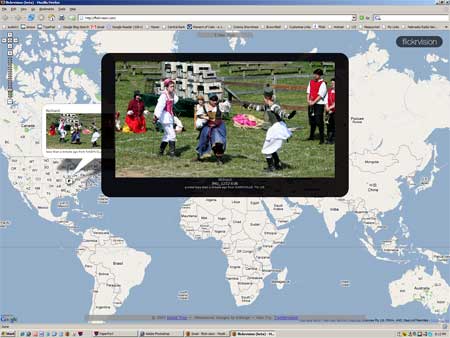
flickrvision

flickrvision

flickervision lets you see photos as they’re uploaded, with geographical location. Hard to stop watching. Like channel surfing but better. And at the risk of getting all “We are the world” on you… it reminded me that there are people just like me in every country, taking pix and putting them up for the rest of the world to see. Thanks to J. T. for the point.

Objective: 1,000 photos on flickr

That’s my goal. And I’m about half-way there. I’m using flickr to host images for the rebuild of The Basement Diaries which should be far enough along for a link by next weekend. A lot of the prints are 40 years old and weren’t great to begin with. But I’m not trying to win a contest, just share some memories with old friends.

And there is something so satisfying about getting these images out the shoe boxes and up on the web where anyone can find them. That means a lot of scanning (I might try one of the services I’ve read about). From now on, if  the image is worth keeping… it goes on flickr.

Journalists: How to feed the blog beast

Amy Gahran (The Right Conversation) offers some useful tips for reporters who are asked or required to blog. The first one is the best one: Don’t use your blog to post stories. Instead, use it to post complementary content around your stories.

Other nuggets from Ms. Gahran:

  • Blog as notepad. If you’re following an issue (maybe a local Superfund site) and you come across an interesting angle or tidbit that is relevant but doesn’t warrant its own story, instead of just jotting yourself a note about it, blog it. If possible, create a category or tag in your blog so interested community members can easily track that issue through your blog. That also makes it easy for you to find that note when you are ready to do a followup story.
  • Distributed reporting. So many meetings, so little time. Let’s say you can’t get to a public meeting about that Superfund site. So you post a blog item to let the community know the meeting’s happening and why you think it might matter. Toss out a couple of questions you’d ask if you were going. Invite your readers to attend the meeting, and maybe pose those questions. Ask them to post their notes — and the answers they received — in the comments. More fodder for you.
  • Community outreach. Pose open questions to your blog audience: What are their top concerns about that Superfund site? Agenda-setting works best when it works both ways.
  • Buzz builder. You’re working on a big investigative feature about that Superfund site. It’ll take you months to pull it together. You can drop hints about how that project is progressing — without giving away the farm or totally blowing it with your competition or sources.
  • Cutting room floor. Did your editor cut a particularly poignant anecdote or pithy observation from your latest story simply for space? Blog it! It’s already written, so why not make it work for you? Make sure you always link to the published story, of course.

Amazon launches podcast network

Amazon.com today officially launched the Amazon Podcasts network, an original podcast offering that features four channels of free content: Amazon BookClips, Music You Should Hear, Significant Seven and
Amazon Wire.

  • Amazon BookClips – A weekly podcast offering customers a free sneak peek at some of the most popular soon-to-be-released audiobooks.
  • Music You Should Hear – A free, weekly MP3 podcast whereby customers receive an MP3 recording featuring complete songs from developing and indie artists, selected by Amazon’s music editors.
  • Significant Seven – A monthly podcast in which book editors from Amazon.com talk about seven of the most exciting upcoming books before they are released.
  • Amazon Wire – An exclusive, biweekly podcast featuring interviews with some of today’s hottest authors, actors, directors and musicians.

All of these sound like something I would listen to regularly. Will the typical podcaster get rich? No. Will companies like Amazon find creative and profitable ways to use podcasting? Wait, wait… I know this one… [via Podcasting News]