Day One

Feels like I’ve been “retiring” for a long time. Months. Didn’t plan it that way but it sort of dragged out. I grew weary of talking and thinking about it and assumed others did. But a few people have asked about The First Day of the Death of Your Life so here’s a brief run down.

Got to the Soldier of Fortune Command Center (Coffee Zone) around 8:00 a.m. Shot the shit with my buddy Clyde for a couple of hours until he had to go to work. He’s supposed to be retired, too, but “doing nothing” is not an option for him.

Ran some errands and then drove to nearby city to have lunch with one of my house-mates from college. Back home for some (daylight!) fetch with Lucy and Hattie (the Golden Retrievers). A little meditation then off to the gym for 45 min. Really didn’t have much trouble filling the day but there was a noticeably different tempo. Almost anticipation. Probably what dogs experience when they find themselves on the other side of the “invisible fence.” Waiting for that shock that never comes.

Stay tuned.

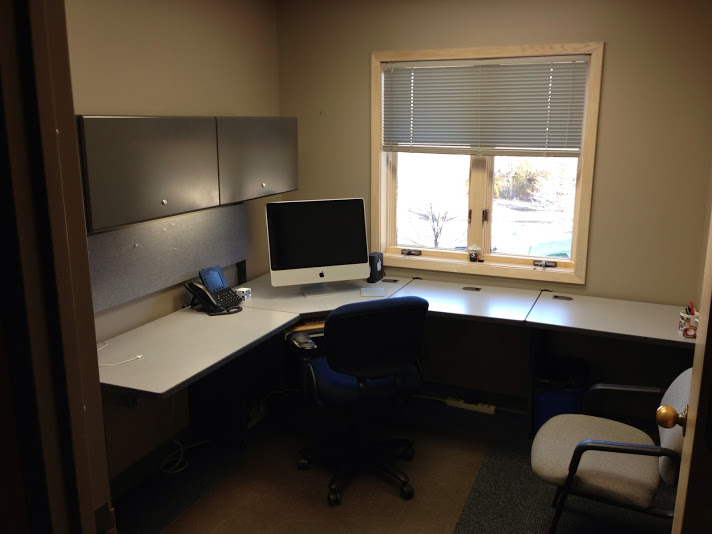
My offices

office

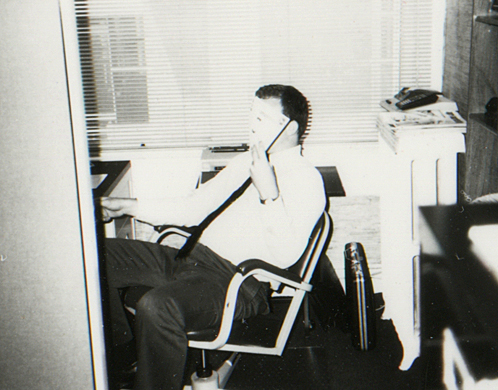
While cleaning out my office yesterday, I reflected on the spaces in which I’ve worked over the past 40 years. During my radio days I spent most of my hours in a studio (on-air or production). When I came to Learfield they didn’t have a real office but provided a tiny desk on a tiny sun porch attached to the old house.

sunporch

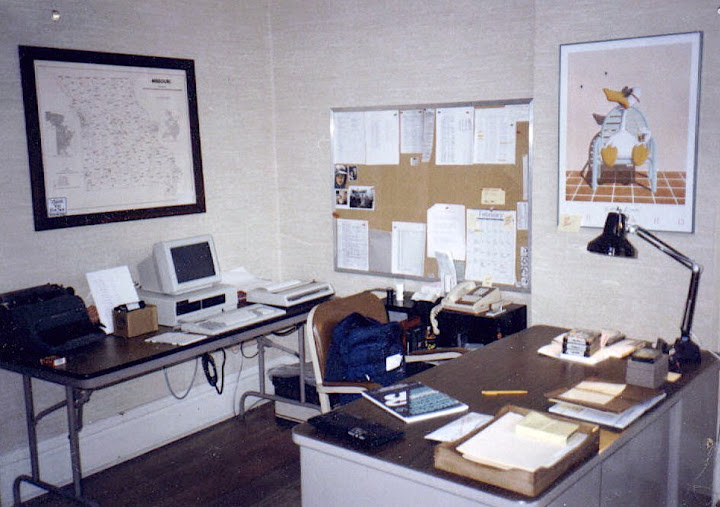
I don’t have a photo of my desk but it looked just like this one (in which Roger Gardner is hiding his face for some reason). I got a nicer space when Jim Lipsey and I each had a corner of a big old room in that same house.

mccarty_office

We eventually built the nice building we’re in now and I had a nice office just a couple of down from our CEO. That proximity mattered in those days (perhaps it still does). The carpet was a different color in these offices to visually make the point we were special.

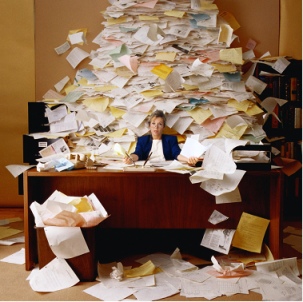
I suppose we once needed offices to put things like filing cabinets and typewriters and chairs for visitors. And we needed a private space to talk about things that others weren’t authorized to hear. My little office started feeling like a small prison cell (albeit with a big window).

In an era of smart phones and MacBooks, a building filled with little square rooms lining hallways seems… quaint. Hardly the best use of space. But then, where would I keep my stapler.

Walking slooowly toward the door

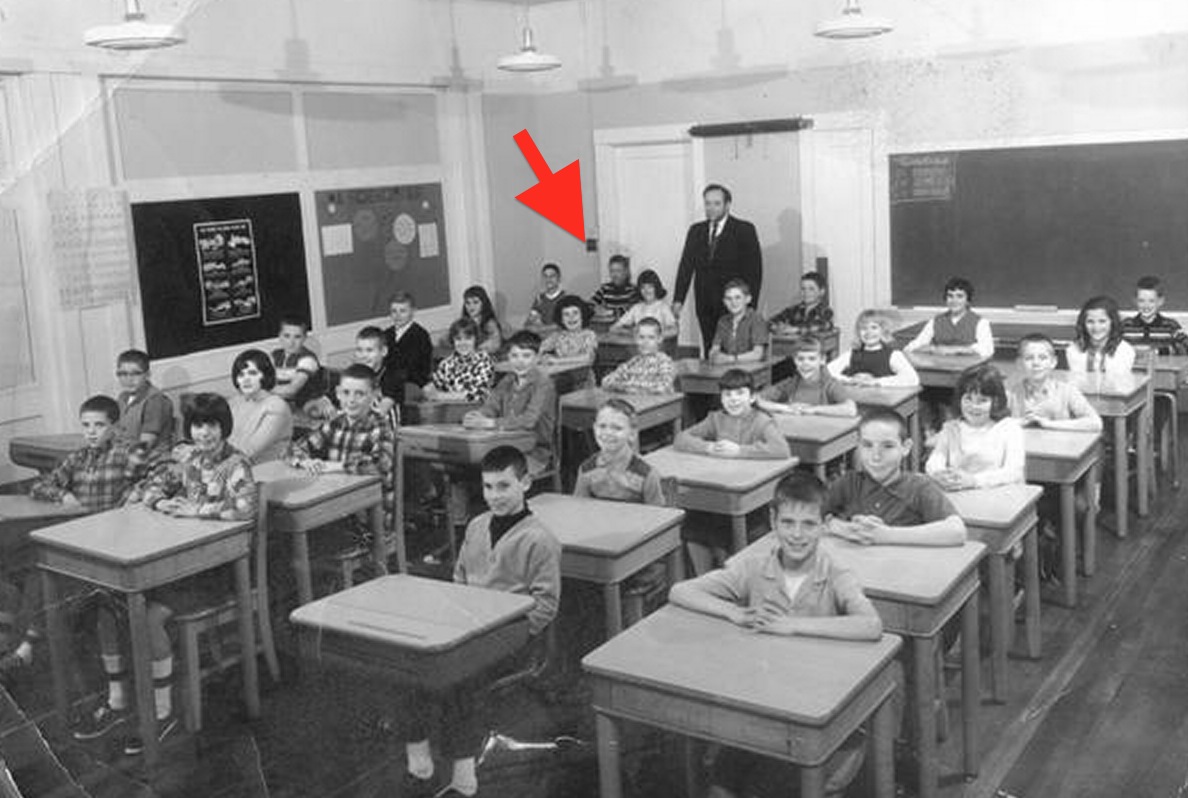
In grade school I became adept at timing a trip to the pencil sharpener (located next to the classroom door) so I arrived exactly at 3:00 p.m. and could bolt at the first sound of the bell and be the first one out the door.

I began a similar slow shuffle this week by announcing April 1, 2013 would be my last day of full-time employment at the company I have worked for the past 29 years.

Yes, that’s a lot of “notice,” but I won’t be 65 until next March and want to be sure to qualify for some of that great public health care for which the US is known and admired.

And there are a few things to hand off. Shoot, it’s going to take weeks to remember where I hid the master list of all the passwords for the company websites I’ve been tending.

I’m making an effort to not think of this move as retirement but haven’t come up with the right word. Sabbatical suggests I’ll be coming back to a full-time gig and that’s not likely. Freelancer has a sexy ring to it but sort of implies income. I have no interest in “consulting” anyone. So far, I like my buddy George’s suggestion: Soldier of Fortune!

The list of things I won’t be doing is pretty firm. No RV. No vegetable garden. No cruises.

“So, what are you going to do?” is a common question.

“I have no idea,” is a troubling answer for folks who have known me as a hopeless workaholic. And I understand their concern. I always insisted I would work until I dropped. This new let’s-see-what-happens Steve is a new and troublesome persona.

After driving the MINI Cooper that first time, I said, “Yes! No more cars that aren’t fun!” That’s sort of how I’m approaching this next chapter. Only fun and interesting stuff from this point on. (Not that making banners for the company websites wasn’t fun)

What bothers my friends, I think, is my lackadaisical attitude about this transition (metamorphosis?). I’m making an effort NOT to plan the rest of my life. I’ve come to believe such planning is folly (Planners scoff at this kind of talk). Planning is important, I suppose, if the outcome is important to you. But I’m trying accept any outcome (I’ll let you know how that goes).

As I walk verrry slooowly toward the pencil sharpener, I’ll probably share some of what I see and experience along the way. And I’m counting on those who have made the journey and bolted onto the playground to pass along their advice. I’d especially like to hear suggestions on interesting things to do, placed to go, people to meet. I might even take on a project or job along the way. (Will work for free if I can do it the way I want. $100K if you want to have some input)

P. O. Box: Fighting spam

I rented a post office box this week. The smallest size. Costs $42 a year. The post office is just a couple of blocks from The Coffee Zone, my morning hang-out. My plan is to check the box on Saturday mornings. If someone needs to reach me more often, there’s email.

“Home delivery” for us has been a box at the entry to where we live. Every night Barb brings up all the cataloges and 3rd class junk mail that cannot be stopped. Nine of ten pieces go into the trash. Nothing –absolutely nothing– needs to be delivered every day.

So I pursaded Barb to let me rent a PO Box.

The USPS will forward 1st class mail to the box but not the junk (“You’ll want to let them know your new address,” reminded the carrier.) Uh huh.

I’m unclear if all of the 3rd class spam will find me. I assume it will. The spammers just pay USPS for sticking some shit in my box. I got the smallest box in an effort to make it harder for them. If the piece is too large, they leave me a note and I can pick it up at the front desk. Right.

I don’t feel like I am giving up any convenience and I will have at least the illusion of some control.

Email Experiment

I’m going to try a little experiment next week. Beginning at midnight this Sunday (12-June), I’m only going to check email once a day. At 7:00 a.m. Central. I want to see if eliminating the distraction of checking and replying to email throughout the day allows me to be more productive. Those who need to reach me have options:

Co-workers can send me a private message on the company Yammer network. Or call. The rest of you can message me on Twitter (@smaysdotcom) or AIM (smaysdotcom). Google Chat would require me to keep Gmail open and I don’t want the temptation.

UPDATE: I’ve terminated my little experiment. After just 48 hours. Turns out I didn’t get that many emails and Gmail did such a good job or sorting and prioritizing, it really was less of an issue than I had assumed. Another revelation was that I send a lot more emails than I receive. I’ll have to think about that. I also became aware of how integrated my email is with my calendar and task manager.

If you want my attention, you must earn it

My pal Todd sent me an email yesterday with a link to a YouTube video. I asked why he didn’t just direct message me on Twitter or Google Chat.

“Email is easier for me,” was his reply. He was sharing something he thought was interesting so he gets to decide what works best for him. Right?

A lot of people screen their in-coming phone calls. This infuriates some callers who feel you have an obligation to take their call.

All of this got me thinking about who controls communications of this sort. The “sender” or the “receiver.”

Every evening our USPS mail box is filled with junk mail that we routinley throw in the dust bin (for my UK pals). I asked the mailman about this last week, if there is any easy way to stop 3rd class mail. He mumbled something about writing each of the senders. Yeah, right. In that instance, the direct mail people control the communication up to the point I shit-can the stuff.

I was intrigued by the decision of UNC professor Paul Jones to abandon email altogether:

“I spent 30 years investing in email,” Jones said. “The undergrads I teach use everything but email. Journalists use Twitter. You can use anything else to get in touch with me — text messages, AIM, G-chat, Facebook, Facebook chat … but I was investing too much into email and getting little back.”

I send a lot of email but don’t expect anyone to open and read what I send. It’s my responsibility to make the subject line so interesting and relavent to the recipient that she WANTS to read it.

This seems pretty cut-and-dried to me. You might want to communicate something to me, but you need my permission. I have to open the email (or snail mail); pick up the phone; grant your friend request.

It’s my attention. If you want some of it, you have to earn it.


When the net was young

A couple of nights ago I was browsing through some old Day-Timers (calendars) and came across a few memories from 1994:

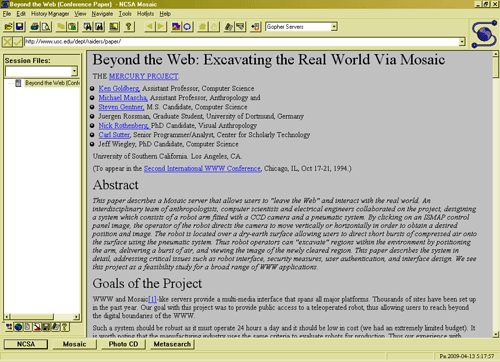
April 26 – A meeting with some folks at MOREnet and the University of Missouri J-School. My first look at a web browser (Mosaic). I was blown away. The Internet was a very different creature before the browser.

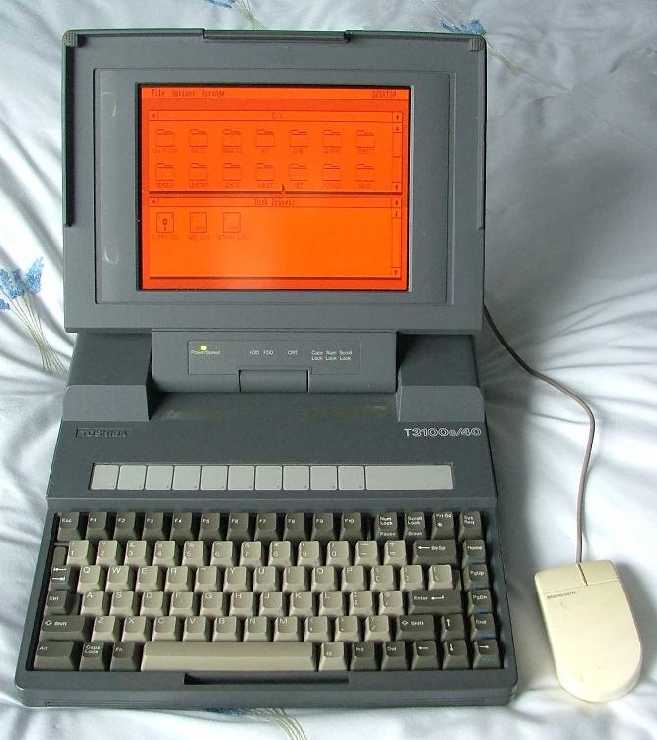
June 20 – Sent check to someone named Bill Bahr a check for $1,700 for a used Toshiba notebook computer. Base price was $1,400 plus $300 for a fax/modem PCMCIA card.

I think it was this one. It was a heavy mother but I was giddy at the idea of being able to take a computer with me on the road.

Everywhere media

Like many others, I followed news of the destruction of Joplin, Missouri, on Twitter. A tornado destroyed most of the southeast Missouri town and almost immediately videos and photos began showing up on YouTube, Facebook and Twitter.

It brought back memories of my radio days.

Our station had an old Army surplus radar that gave us something of a competitive edge when it came to storm coverage. We also relied on news from the National Weather Service that came in on a teletype. And the local weather spotters who radio’d eyeball reports in.

Then one night a big storm hit and I scurried out to the station only to discover power from the city was out. But we were able to broadcast thanks to a generator that just ran our transmitter and one studio. No radar, no teletype, zip.

So I started taking phone calls from listeners who described what was happening where they were. We did that for most of an hour.

Most old radio guys have lots of stories like that. Bad weather was radio’s time to shine.

When I started working for a statewide radio network in 1984, it was frustrating not to be able to talk directly to the listeners, especially when a big story –like a tornado– was breaking. We only got on the air if our affiliates chose to put us on the air.

Same deal for covering the story. If the story was hundreds of miles away, we had to rely on our affiliate stations to send us reports we then put on the statewide network. And many of them did/do a remarkable job.

Assuming the radio stations in Joplin are on the air, our newsroom was probably getting reports last night.

This is what I was thinking about last night as I watched my twitter feed fill up with links to video and photos and first-hand accounts of the “devastation” (a term that has now been used so many times as to be almost meaningless).

At least two of our reporters –one in Missouri and one in Wisconsin– were re-tweeting reports about the big storms in their respective states. I was glad to see that and not very worried about the accuracy. The sources they were re-tweeting were credible.

It reminded me of a story about the BBC which has “a special desk that sits in the middle of the newsroom and pulls in reports from Twitter, Facebook, Flickr, YouTube and anywhere else it can find information.”

Whatever the disaster… natural or man-made… someone is there with a video camera and within minutes the story is being “reported.” What this means for ‘traditional’ news organizations like ours is still being worked out but it’s clear it will never be like it was.