I had the privilege of working with Bob Priddy for 29 years. Last Saturday he was inducted in the the Missouri Broadcasters Association Hall of Fame (along with two others). You can listen to his full remarks here. The clip below runs 2 minutes. Bob Priddy remarks at MBA Hall of Fame Induction (PDF)
Category Archives: Radio
iHeartMedia files for bankruptcy
iHeartMedia, the country’s largest radio broadcaster with around 850 stations and a leading outdoor advertising company, is filing for bankruptcy after spending years trying to manage its $20 billion in outstanding indebtedness. (NPR)
During the 80’s I had a front-row seat as Clear Channel Communications (the name before the cutesy “iHeartMedia”) gobbled up radio stations and gutted them of everything that made them local. Most of the bad guys got rich and got out long ago but I have no illusions about “hometown radio” returning.
Realistic-sounding speech
Just over a year ago Google presented WaveNet, a new deep neural network for generating raw audio waveforms that is capable of producing better and more realistic-sounding speech than existing techniques. It’s gotten a LOT better and is now capable of producing natural sounding human voices.
Google is using it for Google Assistant but hard for an old radio guy like me not to imagine this tech replacing radio announcers (are there still radio announcers?)
Radio stations no longer required to have local studios
Was fortunate to work in radio before “consolidation.” Even small towns might have two or three radio stations, each with different owners and management. After the rules changed, it soon became common for one company to own/operate ALL radio stations and automation (some software on a computer back in the 80s) made it possible to get rid of lots of on-air staff. But to call yourself a “Hooterville radio station,” you had to have a studio in Hooterville. No longer, it seems.
“Stations will still be required to keep a toll-free or local number staffed during normal business hours.”
Where a town once had a radio station with a tower and a transmitter and some DJs and maybe a news guy or two… now has an answering service.
“Because of the rule change, Newsmax Media CEO Christopher Ruddy predicted that “local news production could be moved to places such as New York and Washington as the big networks buy up local stations.”
Truth be told, that’s been happening for a long time. Some of that blood is on my hands but it’s an old story and too long to share. Let’s just say we stretched the definition of “local” to the breaking point. Glad I didn’t miss local radio when it was still local.
Nobody’s listening to news on the radio
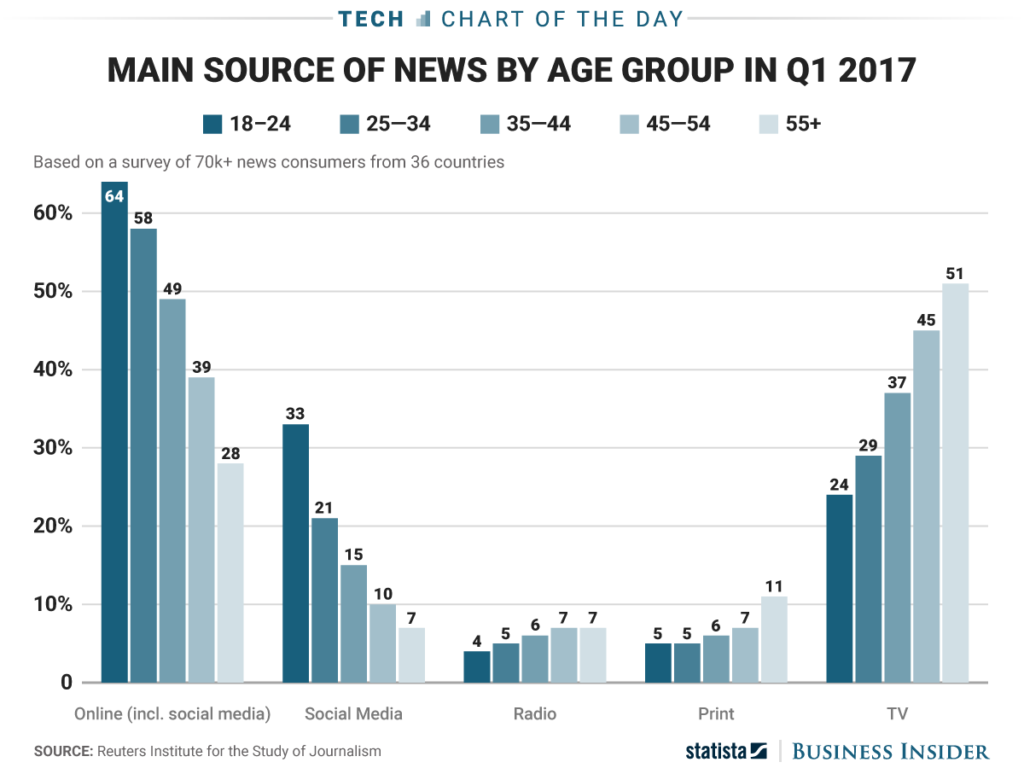
“Digital outlets serve as the main source of news for the majority of those under 35, including 64% of those between the ages of 18 and 24. Meanwhile, TV still reigns supreme for 51% of those over 55.” — Business Insider
Before magnetic recording tape
Reply
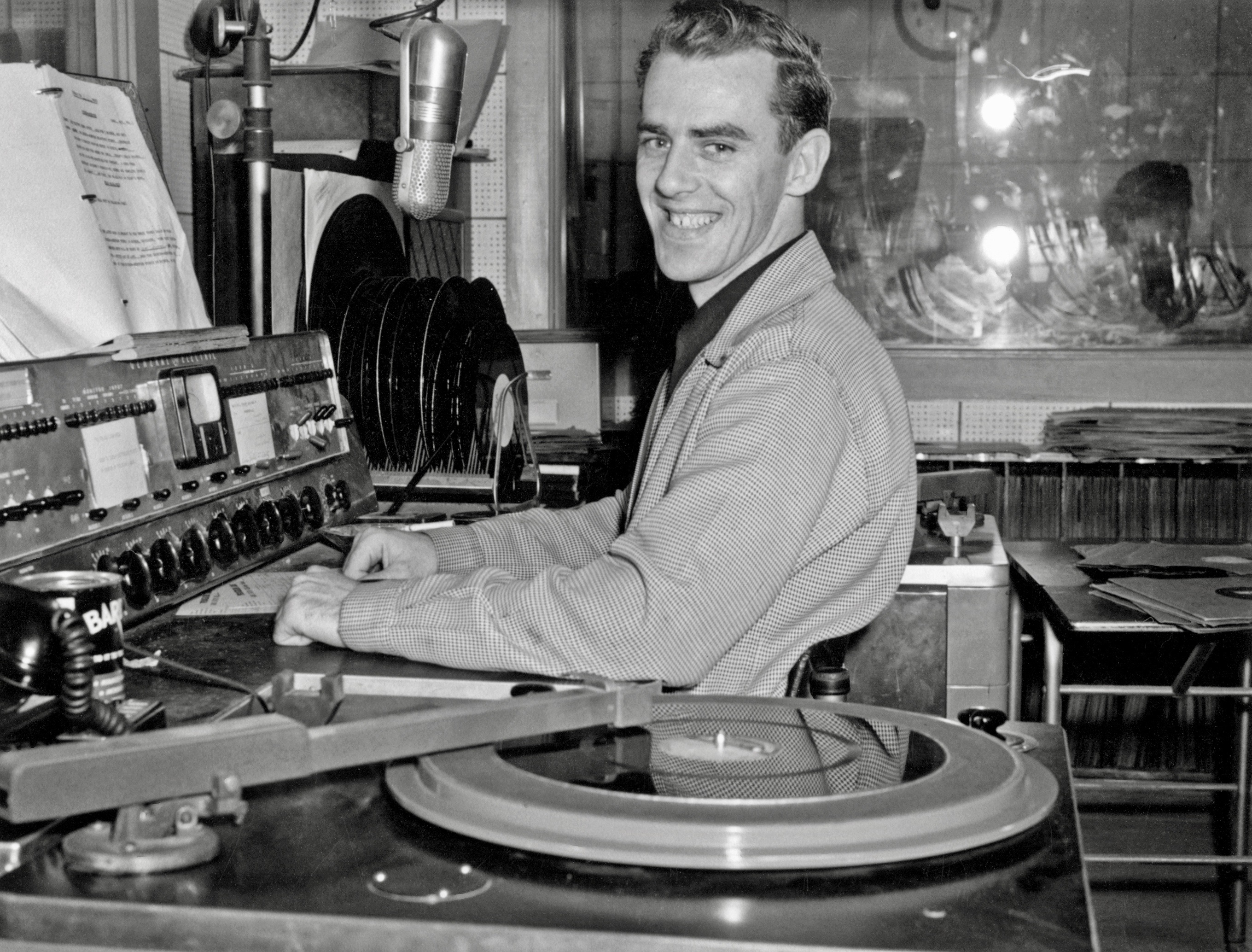
I’m not sure I’ve shared this photo of my old man. I’m blessed with a lot of great pics. It’s clear from this one how much he enjoys what he’s doing. Note the disc on the turntable in the foreground: just one track cut into the center of the disc. Probably a commercial. You can see more of these to the right of the control board. This is before magnetic tape and they “cut” these discs in the adjacent studio. If you fucked up while cutting, you put a piece of cellophane tape over that track and cut another one. I can’t even imagine trying find and cue these while doing a live shift. But the alternative was reading everything live. That would get old fast, for the announcer and the listener. Must have been an exciting time.
“Texas Ed” Pinner (WSLM)
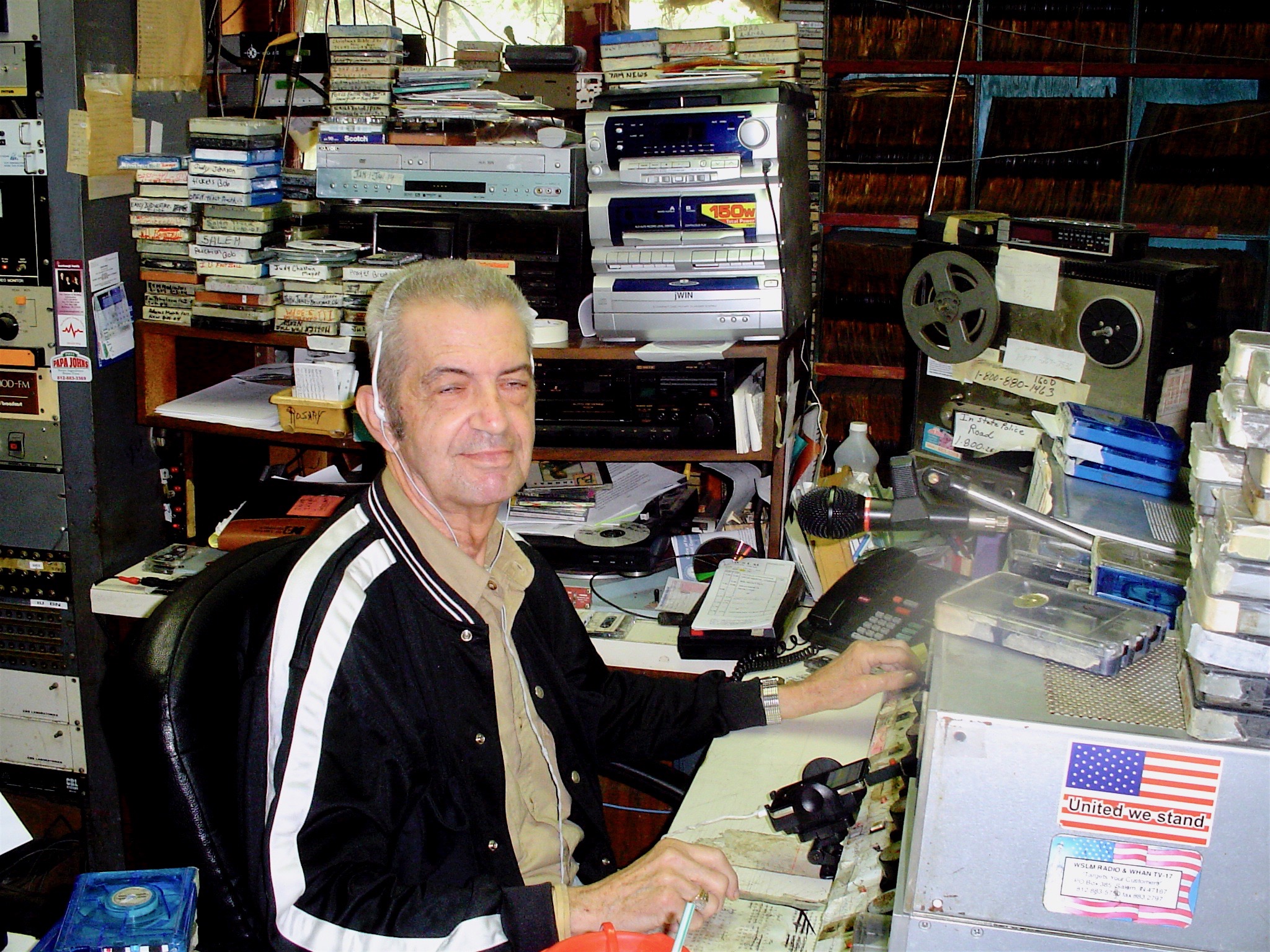
I have a lot of photos of radio folk but this might be my favorite. “Texas Ed” Pinner, WSLM, Salem, IN. There’s all this ancient tech jammed into every corner. Reel-to-reel deck; Fidelipac carts; CD players (alas, I don’t see any turntables) and propped up in front of the controls… almost too small to see… an early iPod. Texas Slip is playing the hits from his iPod. Sigh. (Photo by Mike Cady)
Portable cassette recorders
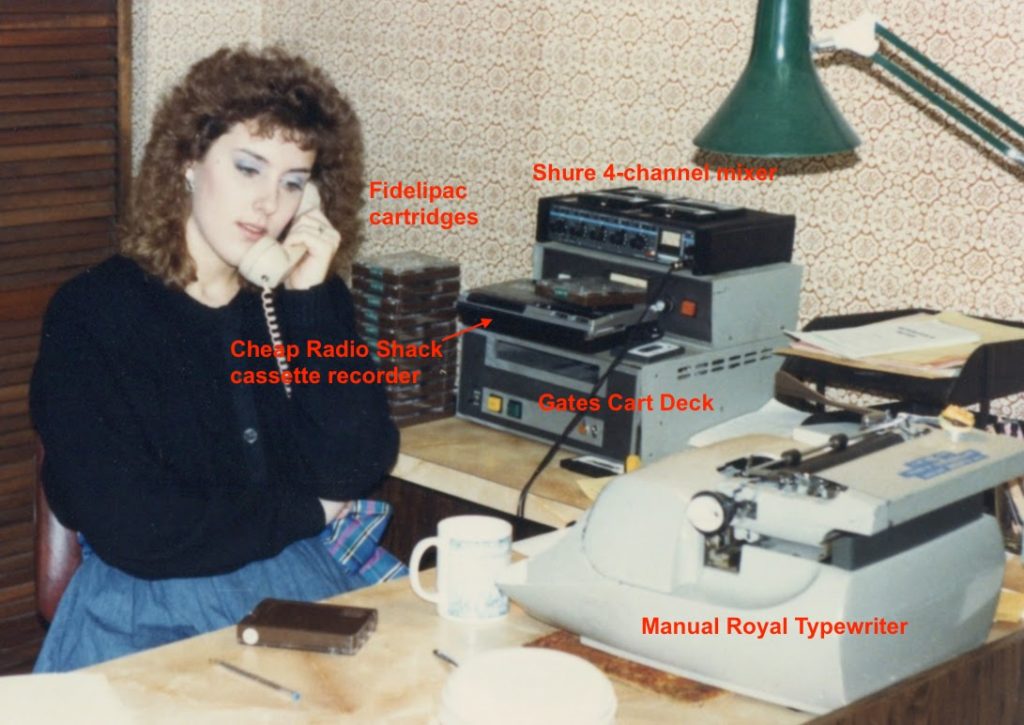
Came across this old photo (circa 1988) today and was — once again — struck by the gear we used. This is Lisa Wolfe, a reporter for The Missourinet.
The Radio Shack recorder is jacked into the Shure mixer which is wired into the big cart deck and the phone. So a reporter recorded audio from the phone (with a push-to-talk button in the hand piece); they then dubbed the audio bits they wanted to carts which they carried into the studio for newscasts. When they went into the field they unplugged the cassette recorder.
There were better recorders available but they were all much more expensive than the Radio Shack model which was damn near disposable. The problem was the buttons. Using the recorders as the did (endlessly starting, stopping, fast-forwarding, rewinding) trashed the buttons in no time.
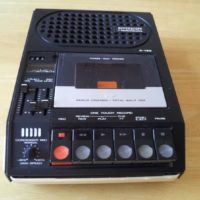
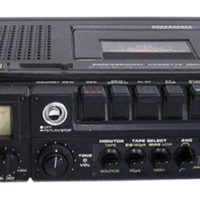

The early SuperScopes (by Marantz) were good but every time they came out with a new model with more features, the buttons got flimsier and flimsier. And the recorders got more and more expensive. And they were nearly impossible to repair. So… Radio Shack.
Thinking back on those days, it occurs to me the cassette recorder was — in some ways — the laptop computer of that day. In the sense that it was our main tool for creating the content of the day (for us): audio.
Of course you needed a radio station or (in our case) a network of radio stations. But we sort of took that for granted.
Woman falls out of chair while on the air
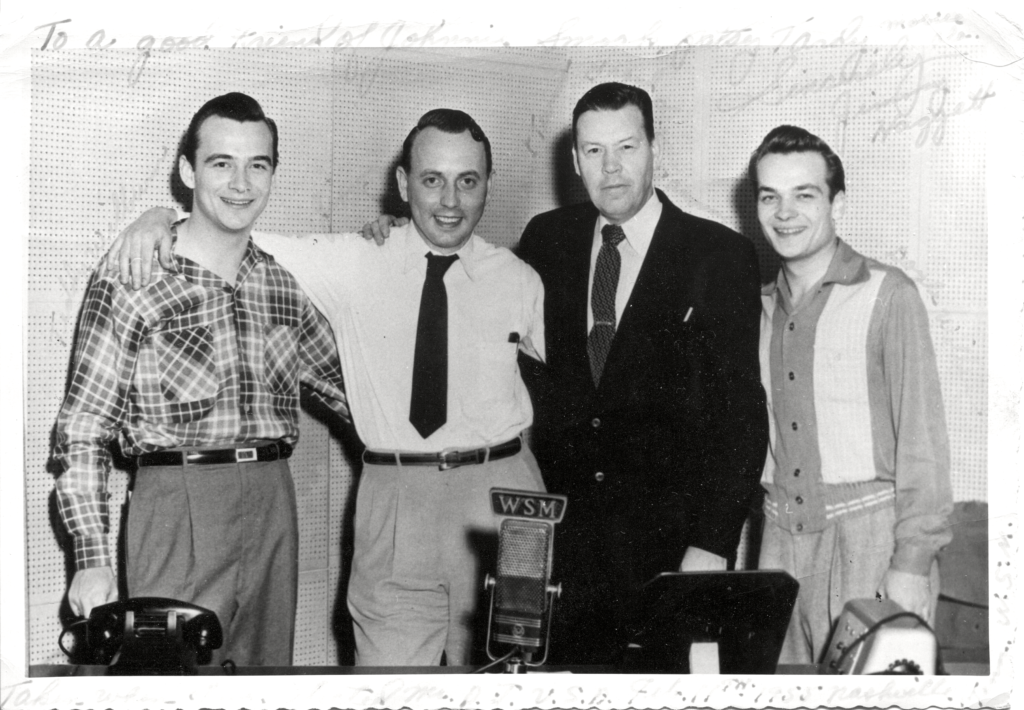
Jimmy Haggett at WSM
I have a fondness for old photos. Especially photos from the early days of radio. My friend Charles Isbell sent me some good ones this week. They were found in an old house being torn down in Caruth, Missouri. They feature Jimmy Haggett, a musician and DJ who worked northeast Arkansas and southeast Missouri in the 50s. He and my father worked at KBOA at one point. You can find a bio at the link above.
UPDATE from John Carpenter: “(These) Jimmy Haggett PR photos are all from Friday, February 11, 1955 at WSM Radio in Nashville. He’d been chosen “Mr. Disc Jockey, U.S.A.” for that month by the Country Music Disc Jockey Association. The award was noted in the March 1956 issue of “Cowboy Songs” magazine, in their “Disc Jockey Roundup” column: “A member of the CMDJA, Jimmy appeared over WSM, Nashville as ‘Mr. D.J., U.S.A.’ in February 1955, and appeared on Grand Ole Opry the following night.”
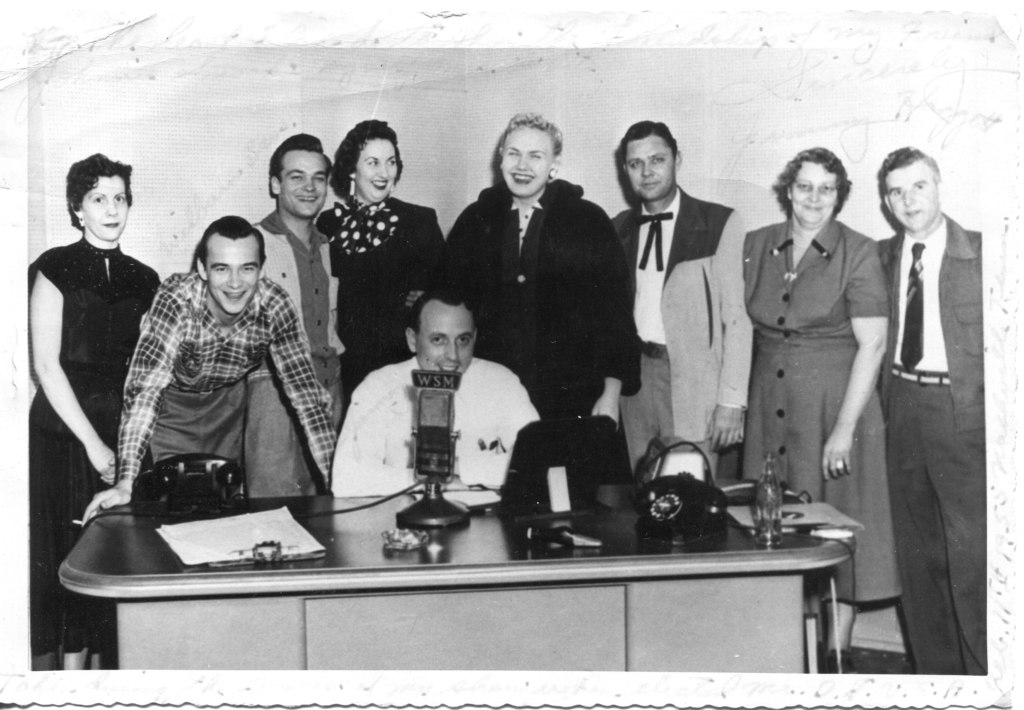
L-R: Unknown, Teddy Wilburn,Doyle Wilburn,unknown, Betty Jean and One Wheeler, unknown, unknown
As for the other people in the photos, two of the young men are The Wilburn Brothers (Teddy and Doyle). Looks like the photos were taken at WSM in Nashville, so perhaps some of the others are performers. If you recognize anybody, please leave a comment.
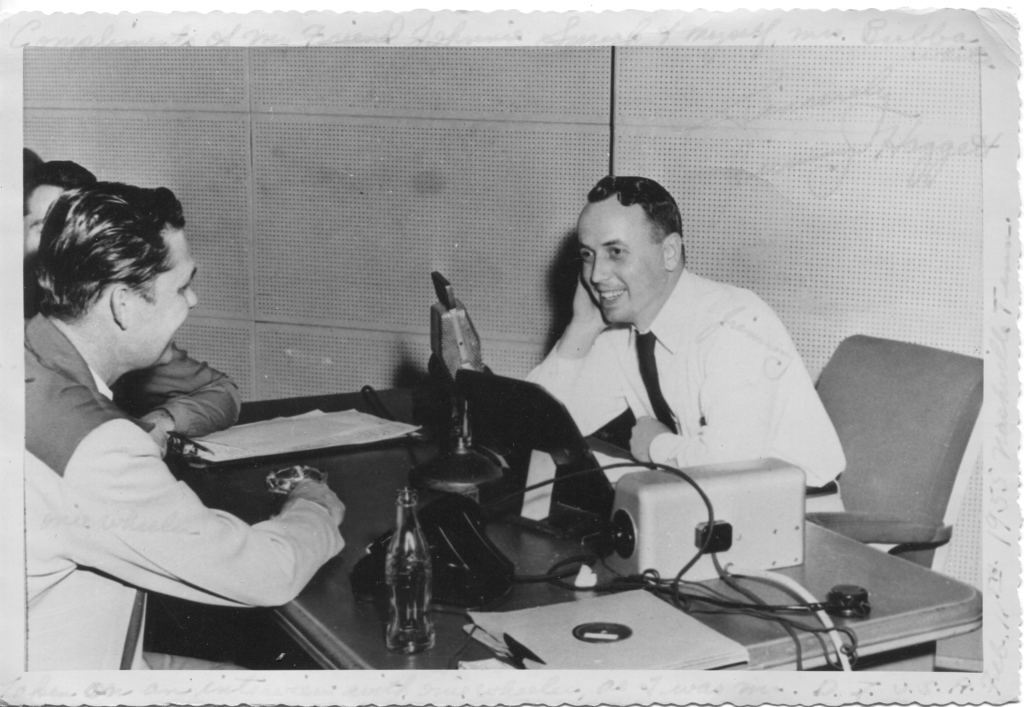
Interviewing Onie Wheeler. “Compliments of my friend Johnnie Smogh & myself, Mrs. Bubba White. Sincerely, Jimmy Haggett.”
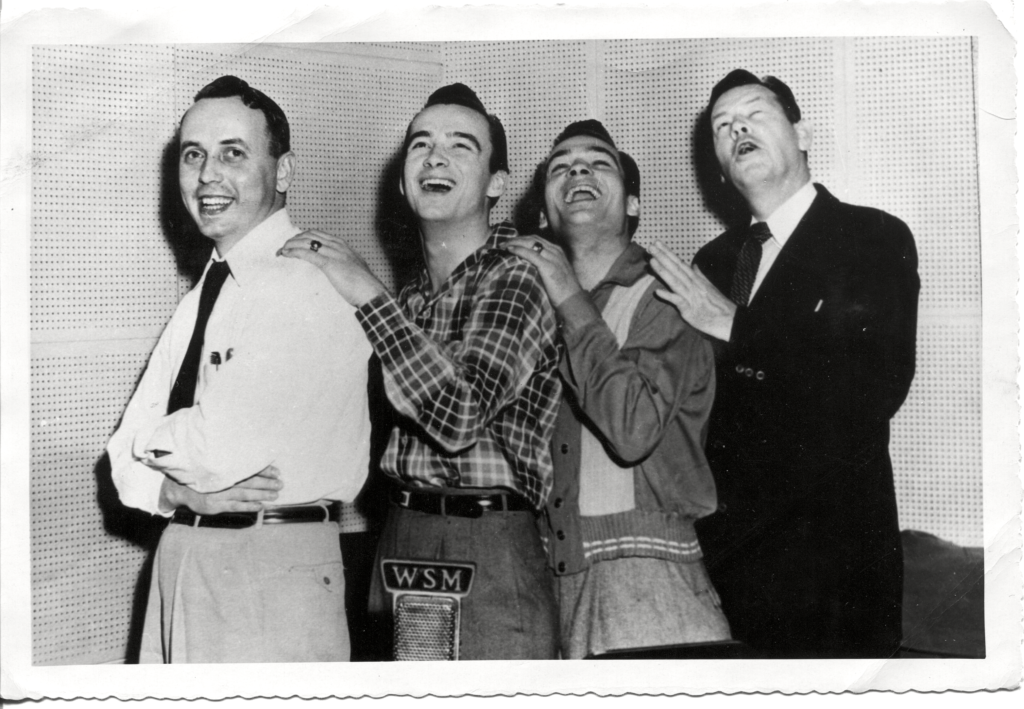
Jimmy with Teddy and Doyle in the photos above/below. Would like to know who the other gentleman is. Will work on it.