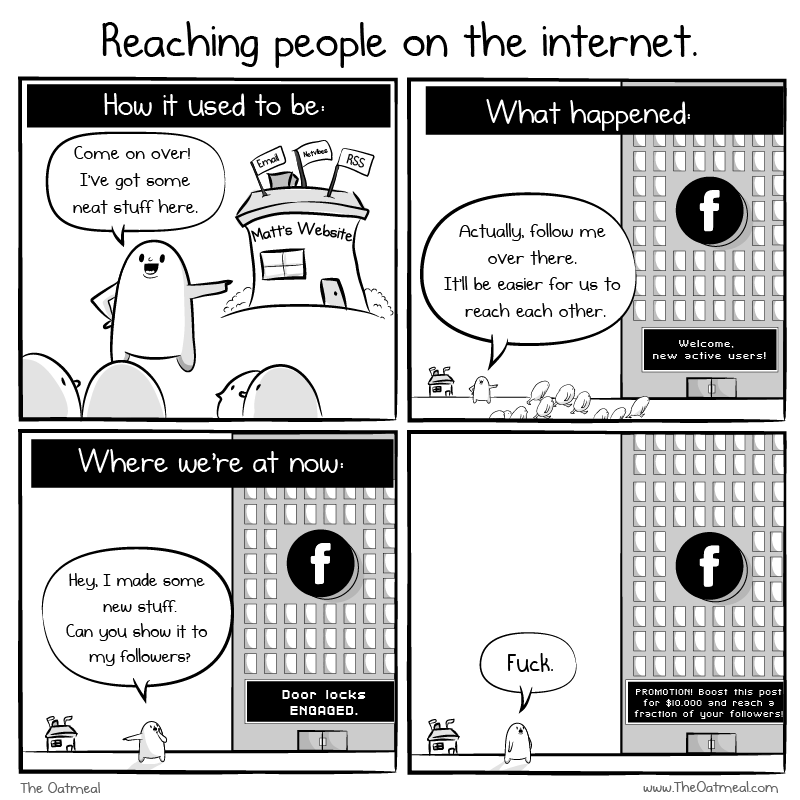
How to fix Facebook

The NYT asked nine experts how to “fix” facebook. Kevin Kelly (my favorite tech guru) offered the following suggestion:

“Facebook should reduce anonymity by requiring real verification of real names for real people, with the aim of having 100 percent of individuals verified.”

“Companies would need additional levels of verification, and should have a label and scrutiny different from those of people. (Whistle-blowers and dissidents might need to use a different platform.)”

“Facebook could also offer an optional filter that would keep any post (or share) of an unverified account from showing up. I’d use that filter.”

News is bad for you

“News items are bubbles popping on the surface of a deeper world.” I’m one week away from one full year without TV/Cable news. It stopped being an experiment a while back. It has been satisfying in ways I can’t really explain. This article takes a shot at it:

The daily repetition of news about things we can’t act upon makes us passive. […] Out of the approximately 10,000 news stories you have read in the last 12 months, name one that – because you consumed it – allowed you to make a better decision about a serious matter affecting your life, your career or your business.

News is to the mind what sugar is to the body. News is easy to digest. The media feeds us small bites of trivial matter, tidbits that don’t really concern our lives and don’t require thinking. That’s why we experience almost no saturation. Unlike reading books and long magazine articles (which require thinking), we can swallow limitless quantities of news flashes, which are bright-coloured candies for the mind.

Most news consumers – even if they used to be avid book readers – have lost the ability to absorb lengthy articles or books. After four, five pages they get tired, their concentration vanishes, they become restless. It’s not because they got older or their schedules became more onerous. It’s because the physical structure of their brains has changed.

Radio stations no longer required to have local studios

Was fortunate to work in radio before “consolidation.” Even small towns might have two or three radio stations, each with different owners and management. After the rules changed, it soon became common for one company to own/operate ALL radio stations and automation (some software on a computer back in the 80s) made it possible to get rid of lots of on-air staff. But to call yourself a “Hooterville radio station,” you had to have a studio in Hooterville. No longer, it seems.

“Stations will still be required to keep a toll-free or local number staffed during normal business hours.”

Where a town once had a radio station with a tower and a transmitter and some DJs and maybe a news guy or two… now has an answering service.

“Because of the rule change, Newsmax Media CEO Christopher Ruddy predicted that “local news production could be moved to places such as New York and Washington as the big networks buy up local stations.”

Truth be told, that’s been happening for a long time. Some of that blood is on my hands but it’s an old story and too long to share. Let’s just say we stretched the definition of “local” to the breaking point. Glad I didn’t miss local radio when it was still local.

Fear Culture, USA

Next month will be one year since I stopped watching TV/cable news (and listening to radio news). I feel… lighter? More awake? Difficult to describe.

Michael Amato explores this inescapable hold the media has on American life in Fear Culture, USA. His carefully staged photographs depict TVs glowing from corners in living rooms, gas stations, and other everyday environments. Sensationalist news stories beam from the screens, charging these otherwise untroubled scenes with a sense of doom. “Cable news projects fear into everyday environments,” Amato says, “and it can be very overwhelming.”

Old Safe

Stopped by a local locksmith this week to have a key made and spotted this old safe. It had been in someone’s barn for a while and they brought it in to have it opened to see what was inside. The locksmith drilled the safe and found what looked to me like one of the first iPods. Would love to know the story.

Unwanted keepsakes

Barb grew up with five brothers and sisters all sitting around a big dinning room table that was soaked in memories. After her parent died it sat in our basement for years. She was sure a niece or nephew (we are child-free) would want this — and other — treasures. They didn’t, for all of the reasons mentioned in this interesting story.

As baby boomers grow older, the volume of unwanted keepsakes and family heirlooms is poised to grow — along with the number of delicate conversations about what to do with them. According to a 2014 United States census report, more than 20 percent of America’s population will be 65 or older by 2030. As these waves of older adults start moving to smaller dwellings, assisted living facilities or retirement homes, they and their kin will have to part with household possessions that the heirs simply don’t want.

My parents grew up during the Depression (mom on a farm, pop in town) so when they could afford to buy some stuff, they did. And it was important to them.

The competitive accumulation of material goods, a cornerstone of the American dream, dates to the post-World War II economy, when returning veterans fled the cities to establish homes and status in the suburbs. Couples married when they were young, and wedding gifts were meant to be used — and treasured — for life.

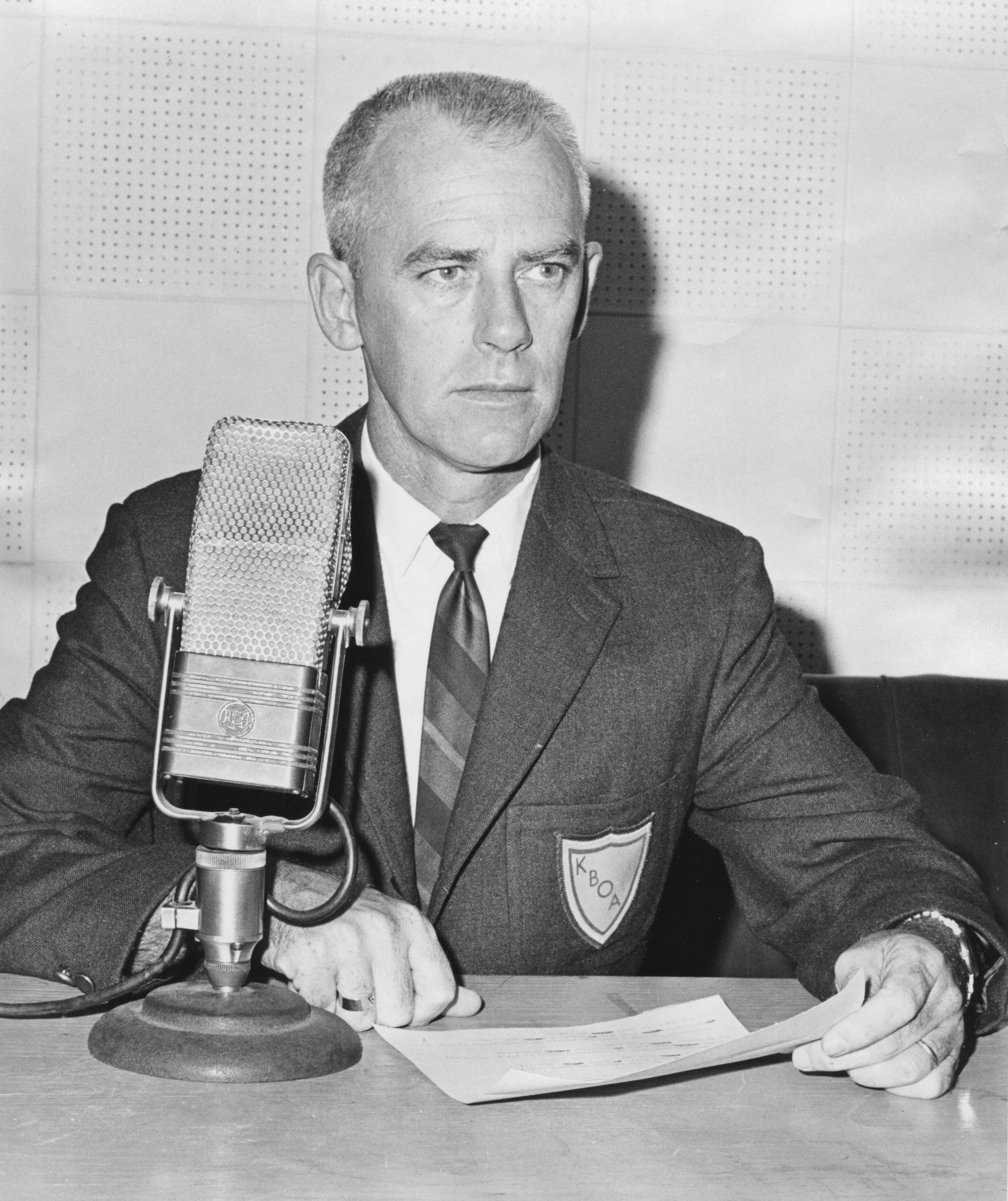
I’ve been looking around me as I write this, looking for things I’ll someday want to find a home for. Things with sentimental value. There’s an old microphone used at the station my father and worked at but any collector of radio memorabilia will be thrilled to have it.

As I’ve come to understand that my memories aren’t as real as I once thought them to be, the material items associated with those memories seem less valuable.

Four Arguments for the Elimination of Television

Four Arguments for the Elimination of Television (1978) is a book by Jerry Mander, who argues that many of the problems with television are inherent in the medium and technology itself, and thus cannot be reformed. From Wikipedia page:

“Television has effects, very important effects, aside from the content, and they may be more important. They organize society in a certain way. They give power to a very small number of people to speak into the brains of everyone else in the system night after night after night with images that make people turn out in a certain kind of way. It affects the psychology of people who watch. It increases the passivity of people who watch. It changes family relationships. It changes understandings of nature. It flattens perception so that information, which you need a fair amount of complexity to understand it as you would get from reading, this information is flattened down to a very reduced form on television. And the medium has inherent qualities which cause it to be that way.”