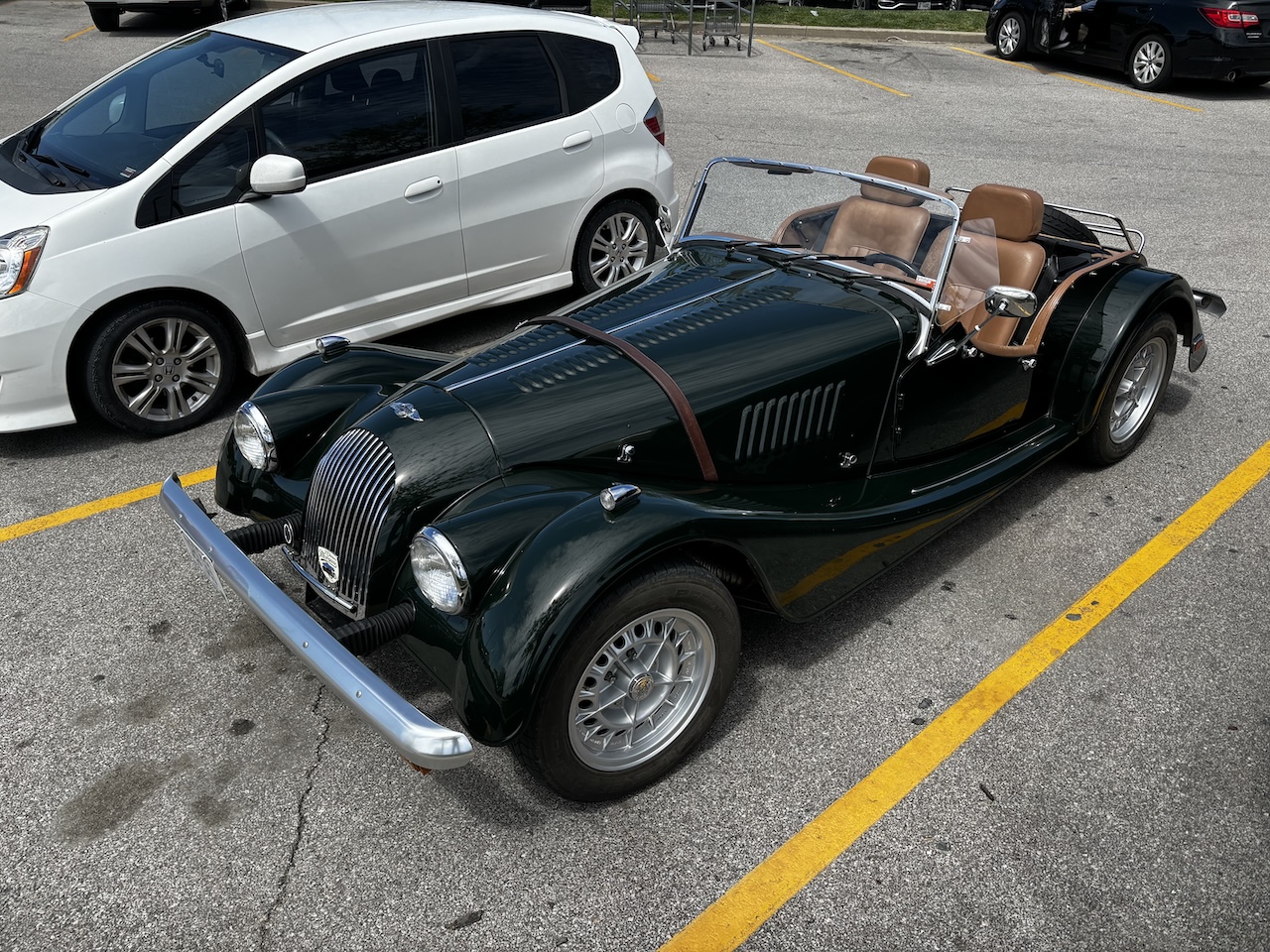
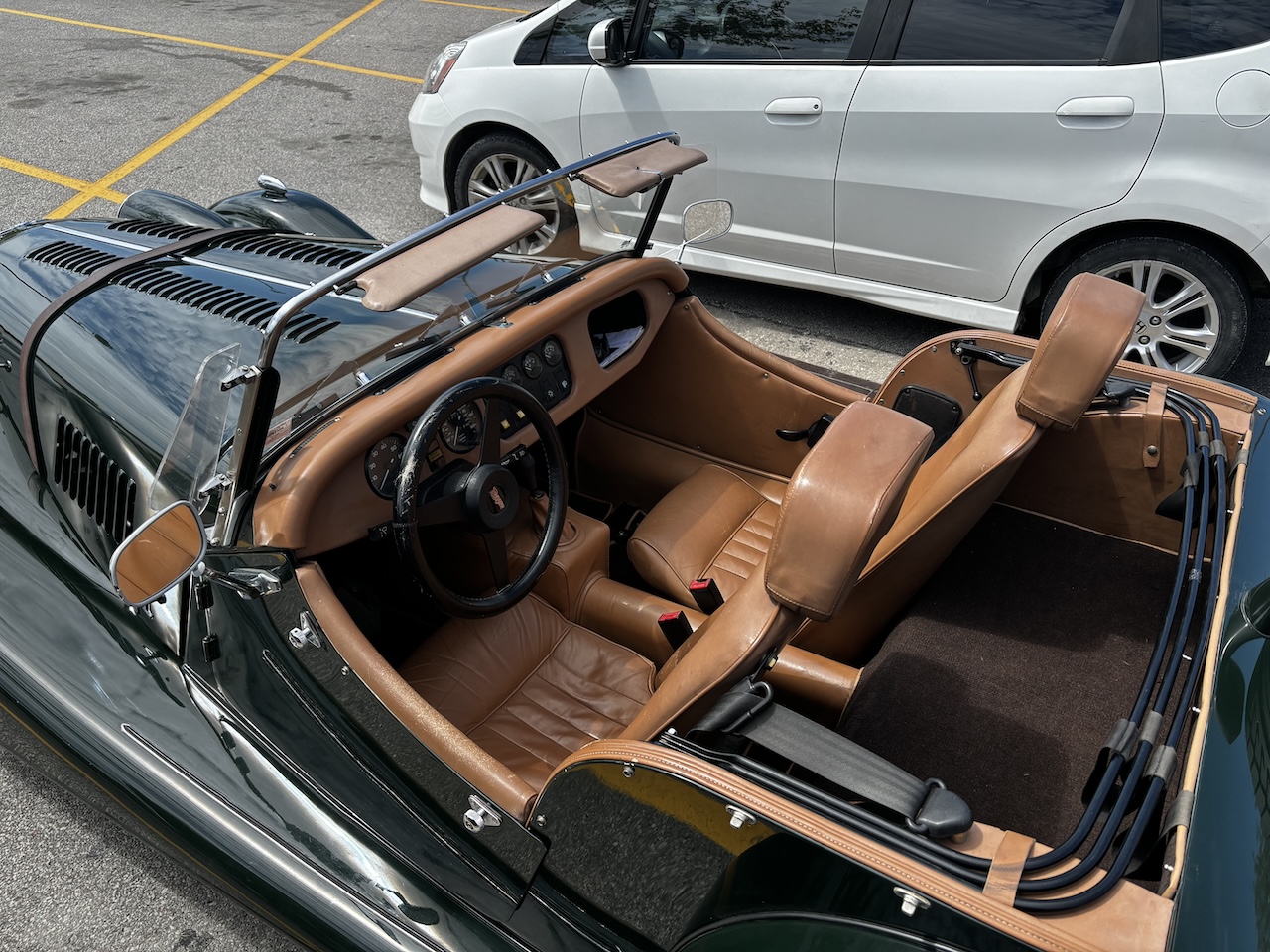
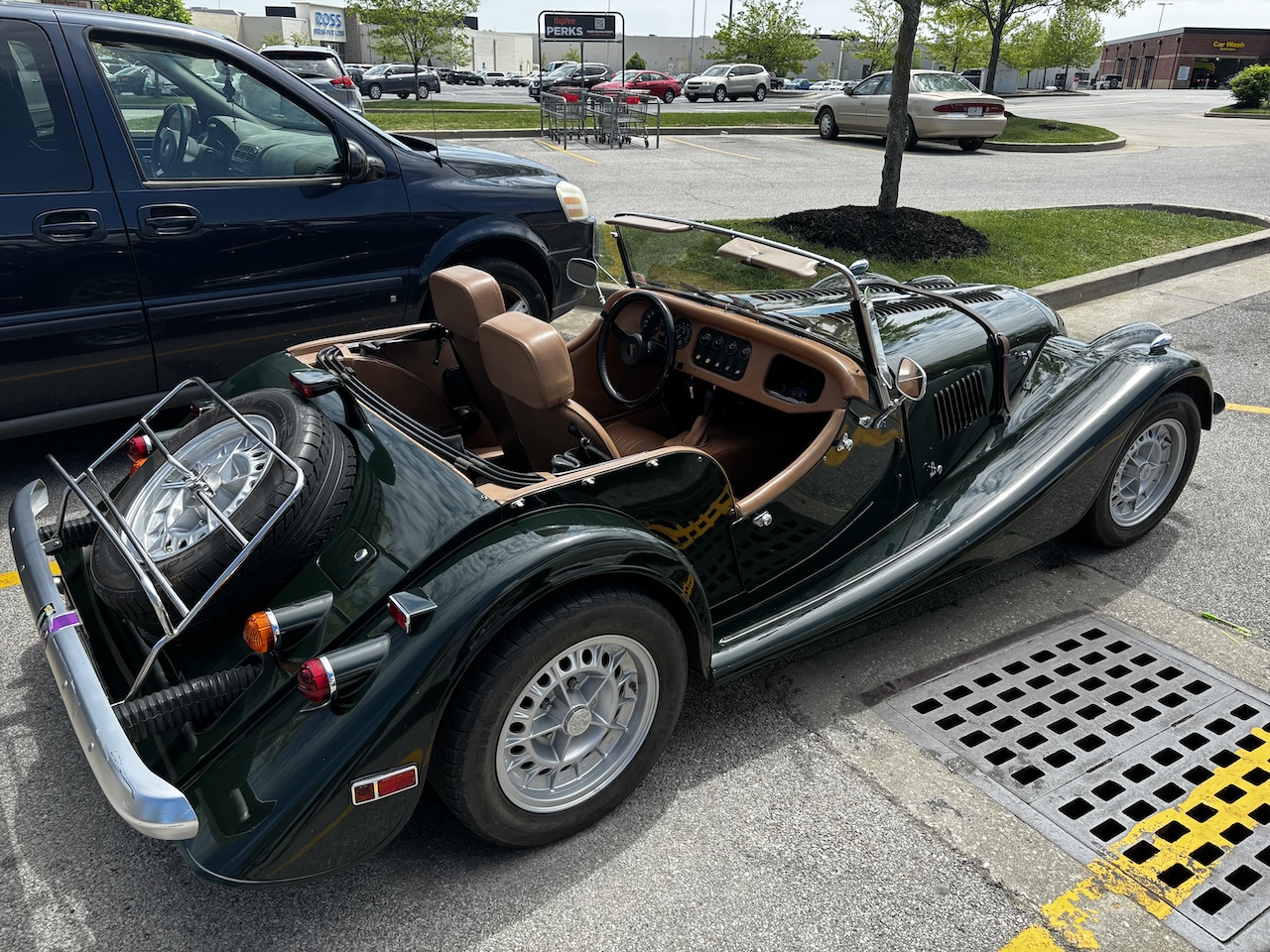
Spotted this beauty in the supermarket parking lot. I believe it is a Morgan +4.
Morgan Motor Company Limited is a British motor car manufacturer owned by Italian investment group Investindustrial. It was founded in 1910 by Henry Frederick Stanley Morgan. Morgan is based in Malvern Link, an area of Malvern, and employs approximately 220 people. Morgan produce 850 cars per year, all assembled by hand.[2] The waiting list for a car is approximately six months, but it has sometimes been as long as ten years.
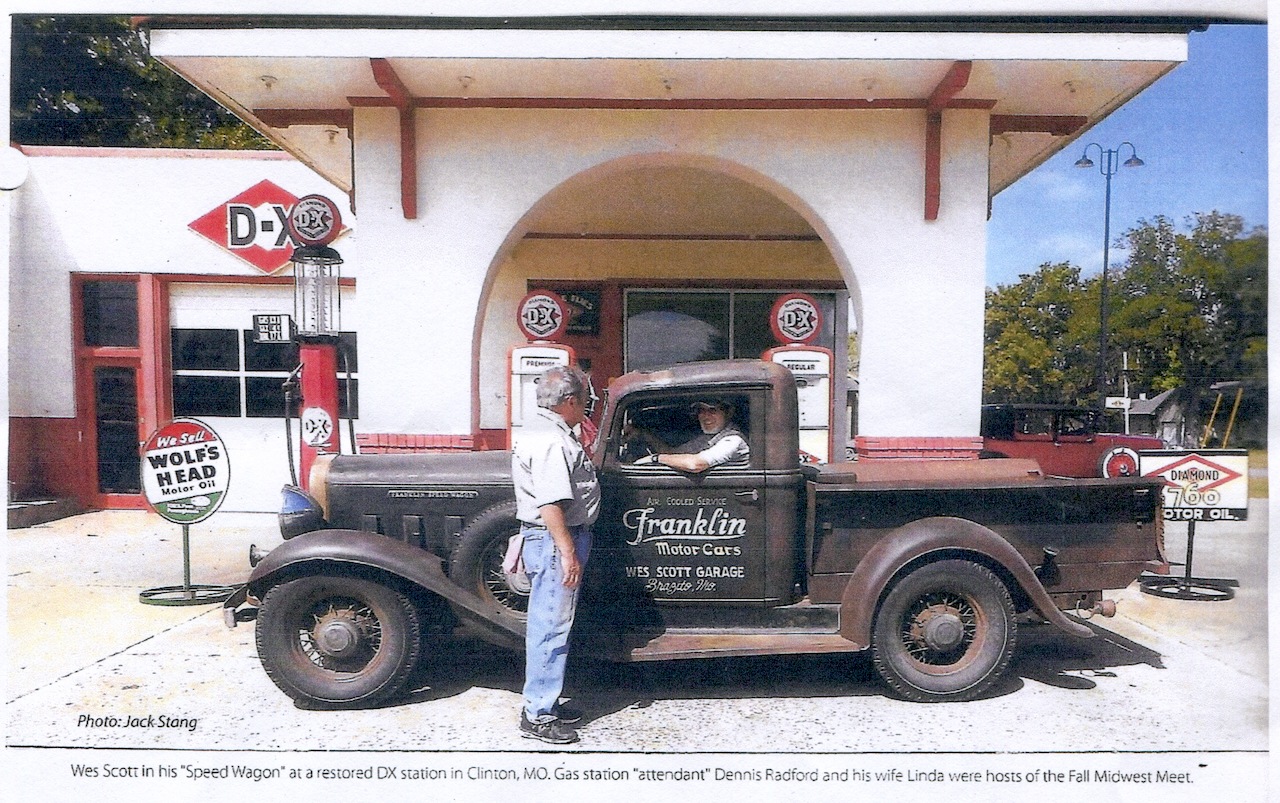
The following is from the Autumn 2015 issue of Air Cooled News (An Official Publication of The Franklin Club)
In 1933, The Reo Automobile Company shipped 800 leftover 1933 Reo “Flying Clouds” to the Franklin Automobile Company. Franklin engines were installed and they were sold as 1933 Franklin “Olympics.”
In 1934 Reo still had unsold “Flying Clouds” so they decided to cut them off behind the front door and build pickup trucks. It is possible that at least one of these pickup trucks was shipped to Franklin where an air cooled 1934 Franklin engine was installed and it was sold as a 1934 Franklin “Speed Wagon.” If that did happen, the truck cold have looked exactly like this one.
In 2012, Wes Scott traded a Model A truck for the remains of a 1933 Franklin “Olympic.” This would provide the chassis for the Franklin “Speed Wagon.” In 2013 Wes’ son Donald found a 1934 Reo Speed Wagon in Shaniko, Oregon. This would provide the cab.
The bed for the “Speed Wagon” came from a Reo pickup in West Plains, Missouri. Richard Harry of Wisconsin provided an extra set of fenders so pickup rear fenders could be made from two sets of sedan fenders.
Another Franklin Club member, Ed Joy of Idaho provided a nice green hood that matched what was left of the original paint on the cab. The goal was to make all the pieces look like they came on the truck originally and to build a truck that could be used and enjoyed. At the Fall Midwest Region Meet in Clinton, MO the comments ranged from “When are you going to paint it?” to “Don’t touch it we like it.”
Wes is going with “Don’t touch it.”
Wes’ garage/shop/farm is just about 20 minutes from where I live and some car buddies drove me down and introduced me. Wes was kind enough to let me record a little video (5 min) of his amazing collection of Franklins and Model A Fords.
This brief video barely scratched the surface (you should forgive the expression) of Wes’s amazing collection. I hope to have another opportunity share some more.
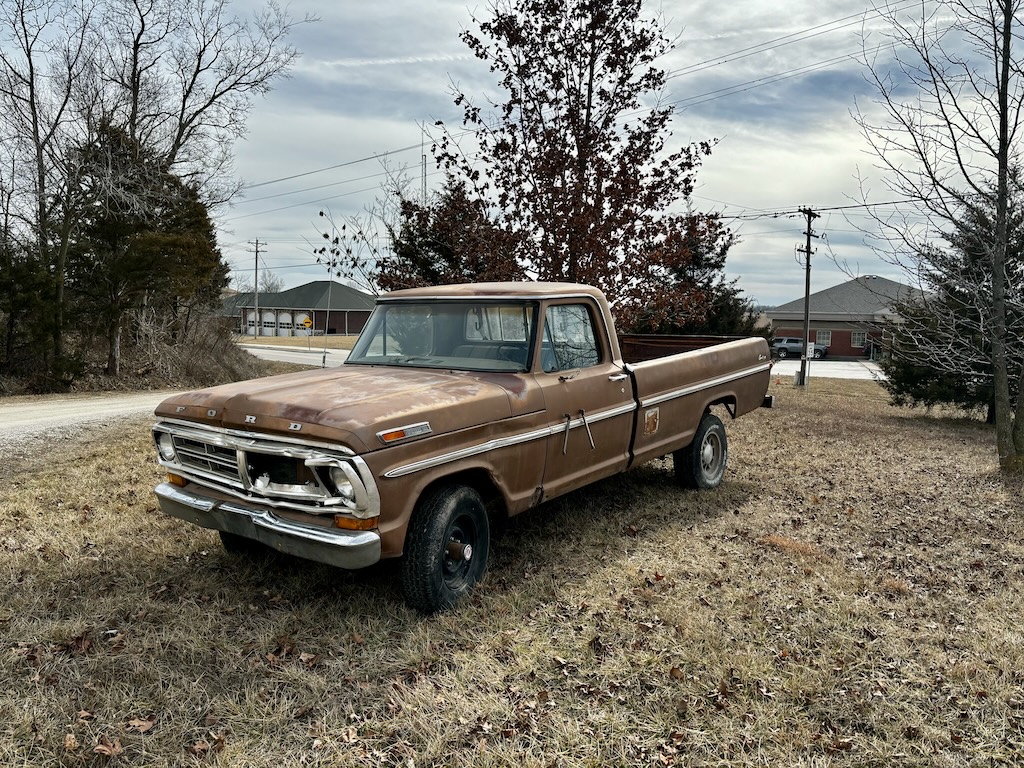
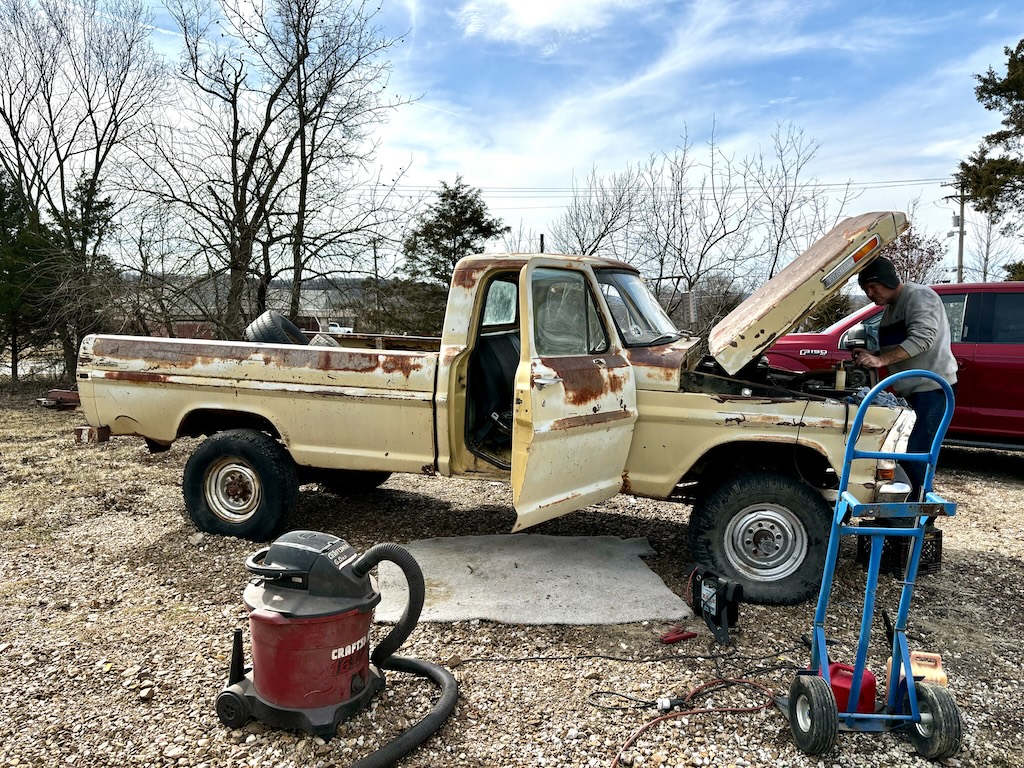
Two new arrivals at Paul’s Home for Vintage Pickups this week. Not really a home since they’ll both be snapped up once Paul has given them a little love. He makes sure they run and are safe to drive but not much more (well, new tires of course). The Brown Bomber is a 1972 Ford F-150 and The Yellow Peril is a 1970 Ford F-250.
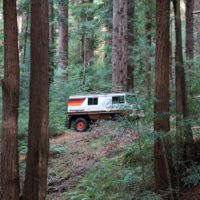
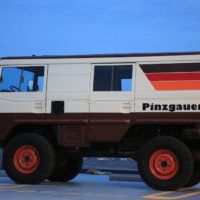
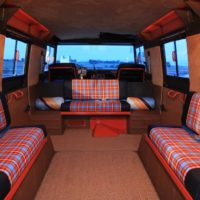
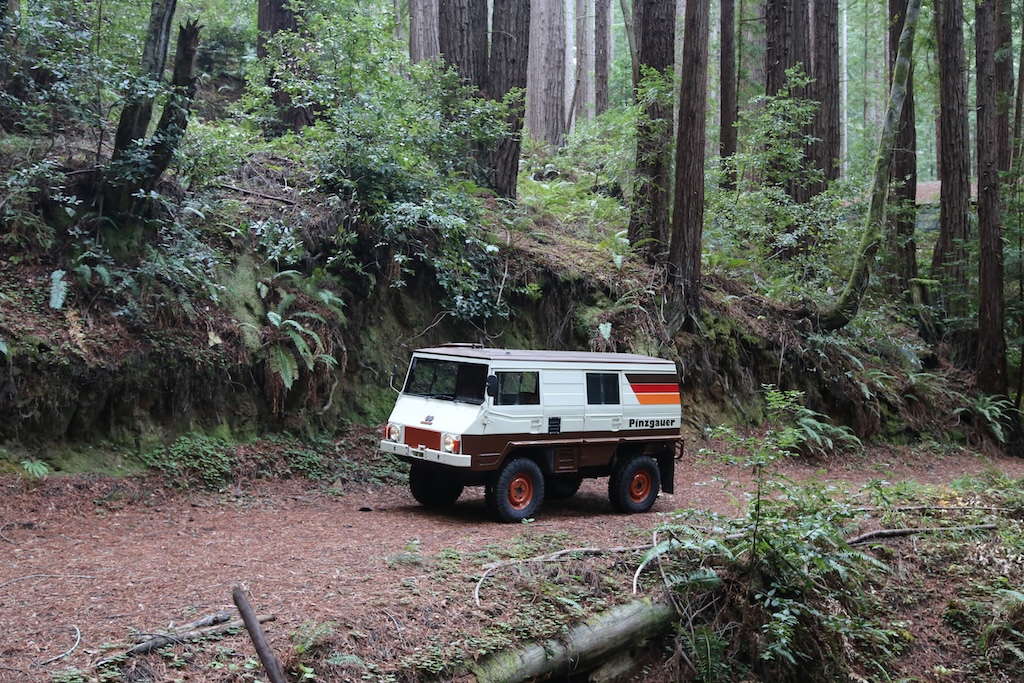
You’d have to look long and hard to find someone more knowledgable about exotic vehicles than Grayson Wolf. It was March of 2017 when Grayson started searching for what was to be my Land Rover. We’ve become friends in the the ensuing years and he is easily one of the most interesting people I have ever met. And a really good guy. Which brings us to the Pinzgauer project. I had never heard of a Pinzgauer.
(Wikipedia) “The Pinzgauer is a family of high-mobility all-terrain 4WD (4×4) and 6WD (6×6) military utility vehicles. The vehicle was originally developed in the late 1960s and manufactured by Steyr-Daimler-Puch of Graz, Austria, and was named after the Pinzgauer, an Austrian breed of cattle. They were most recently manufactured at Guildford in Surrey, England by BAE Systems Land & Armaments. It was popular amongst military buyers, and continued in production there throughout the rest of the century.”
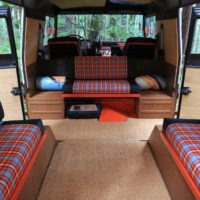
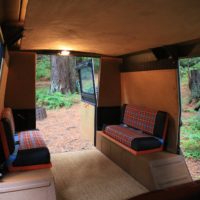
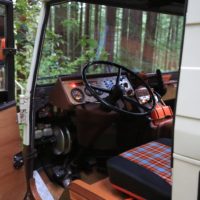
As you can see from the photos below, Grayson has converted this one for comfy off-roading.
His next project sounds even more interesting: Designing an off-road obstacle course for a customer.
A big ranch in Tomales Bay. Trying to design something fun, with great views, and some perceived risk (make the truck lean, teeter on three wheels, etc) without any actual risk of rolling or damaging the vehicle. (While I’ve never done one of these) I love all of the individual ingredients – operating heavy equipment, chainsaws, 4×4-ing, design work, and, most importantly, rolling trucks over while off roading – so I feel qualified :)
“One definition of a hypercar is a vehicle that nobody needs.”
While my tastes run toward beat-up older vehicles, I was fascinated by this article in The New Yorker. (“The World’s Fastest Cars — and the People Who Drive Them”). The term “hypercar” entered the lexicon in the two-thousands, when other carmakers (began) producing absurdly powerful, and prohibitively expensive, limited-edition models. Most have theoretical top speeds approaching or exceeding 300 m.p.h. And they get there quickly:
(The Rimac Nevera) accelerates faster than any road car ever made: zero to 60 m.p.h. in 1.74 seconds, and zero to a hundred in 3.21 seconds.
Think about that. You’re at a standing stop…you pin the accelerator and… one thousand one, one thousand… and you’re going sixty miles per hour.

 You’d have to look long and hard to find someone more knowledgable about exotic vehicles than