The Wish Book

People of a certain age remember flipping through the Sears Roebuck “mail order catalog.” A huge mother with not very good illustrations and descriptions of the products (no reviews). This memory floated back while browsing Amazon.

Kids called it the “wish book” because some of us got to flip through the toy section and pick things for Santa to bring us. That Santa had a relationship with Sears didn’t seem at all strange.

We could also find interesting stuff to covet in the back of magazines like Popular Mechanics and Popular Science. (“Allow four to six weeks for delivery”)

For immediate gratification, some cereal boxes included a “prize inside.” The better the prize, the worse the cereal.

Online grocery shopping

Online grocery shopping has been around for a while but I haven’t paid much attention. I have lots of time and tend to impulse-shop. But as I look for ways to avoid unnecessary exposure to crowds, I decided to give it a try.

Gerbes Supermarket (a Kroger brand) is about ten minutes from my house. You can shop via desktop browser or from a mobile app and they’ll deliver ($10) or you can schedule a time to pick up your order ($5). Looks like they’ll ship an order but I’m not sure that’s available locally.

I downloaded the iOS app and started shopping. Not the greatest UI I’ve ever seen but not bad. I found it a little confusing when updating my order but that might have been my lack of familiarity. I chose a pick-up window and they texted me reminders as well as notifications when one of the products I selected was out of stock.

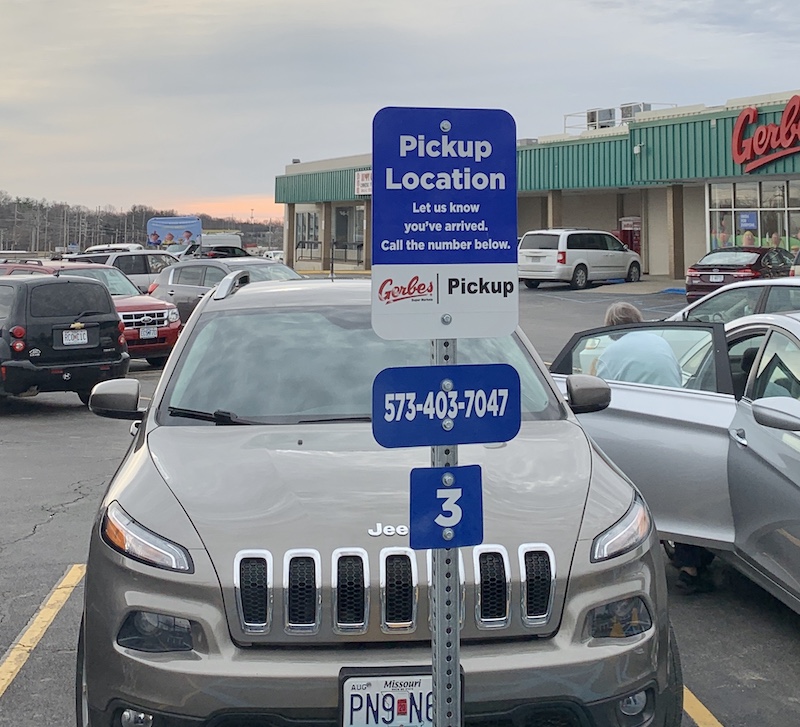
Our local store has three pick-up “stalls” (parking slots) with a phone number to let them know you’re waiting. A nice lady came out with my groceries and a list showing an item that was unavailable as well as a substitution (If I didn’t like it they’d take it back and adjust my credit card charge).

This seemed like a pretty good deal for five bucks. There will be times when I want to roam the aisles but for now, I’ll avoid the masses.

“How many more people have to die?”

What a closed rural hospital tells us about US healthcare


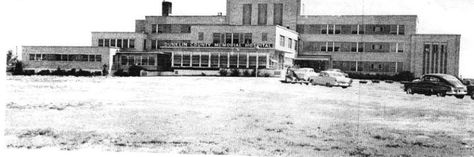
When I was growing up in Kennett, Missouri, in the ’50s and ’60s, the Dunklin County Memorial Hospital was… an institution. That’s where I had my tonsils removed and that’s where everybody went if you needed to be in the hospital. If you needed some kind of special treatment or care you probably went to one of the hospitals in Memphis, 100 miles away. The hospital closed last year, pushing the little town that much closer to… I’m not sure what.

“We’re having probably three to five more deaths a month without having the hospital here,” he said. “I had a 35-year-old patient who started having chest pain. He needed to get to an emergency room but died on the way to the hospital. There are multiple deaths due to not having emergency services, mostly from heart attacks and accidents. There’s nowhere to stabilise them. If they’re having a heart attack, they’re dying before they get to the hospital. Plus the infant mortality rate has increased since the hospital closed.”

It’s happening all over rural America. This article tells the story. As does RP.

UPDATE (5/15/20): Company announces plans to re-open hospital in Missouri’s poorest region. “Nine of the state’s ten poorest counties are in southeast Missouri, and the Bootheel is the state’s poorest region.”

The Golden Years

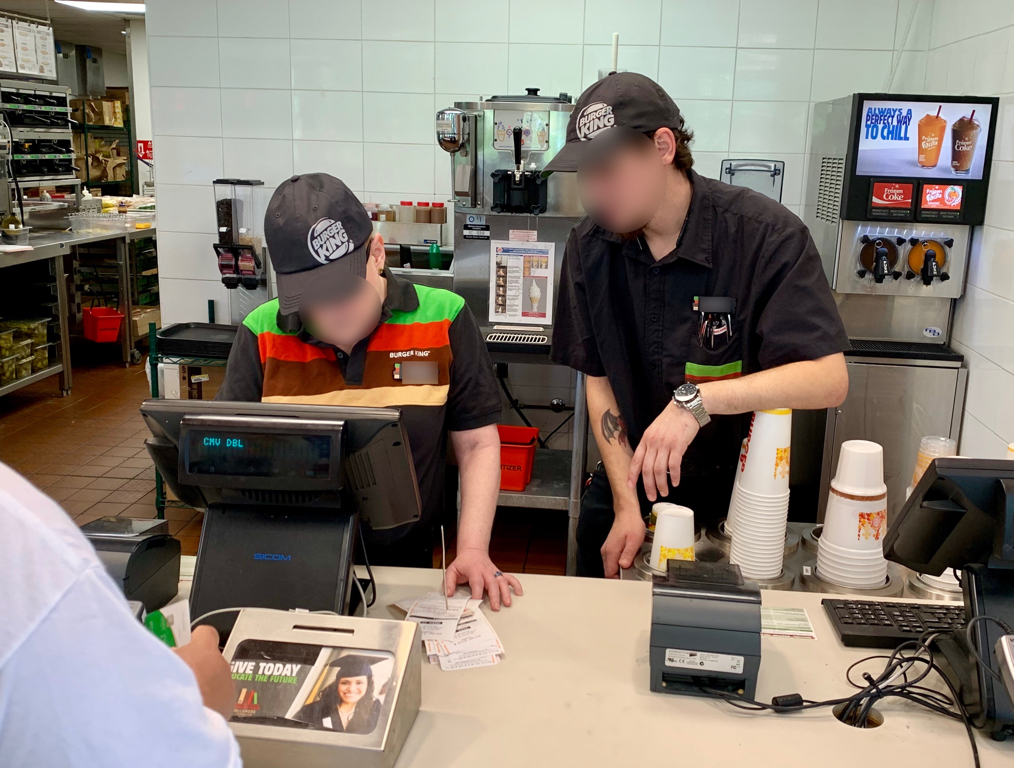
The Future of America is a pretty depressing headline but the alternative was “The Golden Years.” I should say up front I know nothing about these two people so everything that follows is baseless speculation. I took the photo standing in line at the local Burger King. The young (20-something?) man was showing the woman (60+) how to use the cash register. Let’s call them Opie and Aunt Bee.

A job “flipping burgers” long ago achieved cliche status and it’s nothing new to see a “senior citizen” behind the counter. As I watched the woman concentrate to figure out the register I couldn’t help thinking, “This woman is not doing this because she’s bored. She needs this job.” And she’s competing — to some extent — with people 40-50 years younger.

We’re told the jobs that built the American Middle Class in the previous century are gone or going away. Can there be enough fast food jobs (or their equivalent) for all of the young people with only a high school education and the growing army of seniors who didn’t save enough for retirement?

I didn’t see them at our local Burger King but McDonald’s has been replacing counter registers with self-serve kiosks. I’ve been thinking of “flipping burgers” as a job to be avoided but perhaps it will one day be a coveted gig.

Impossible Whopper

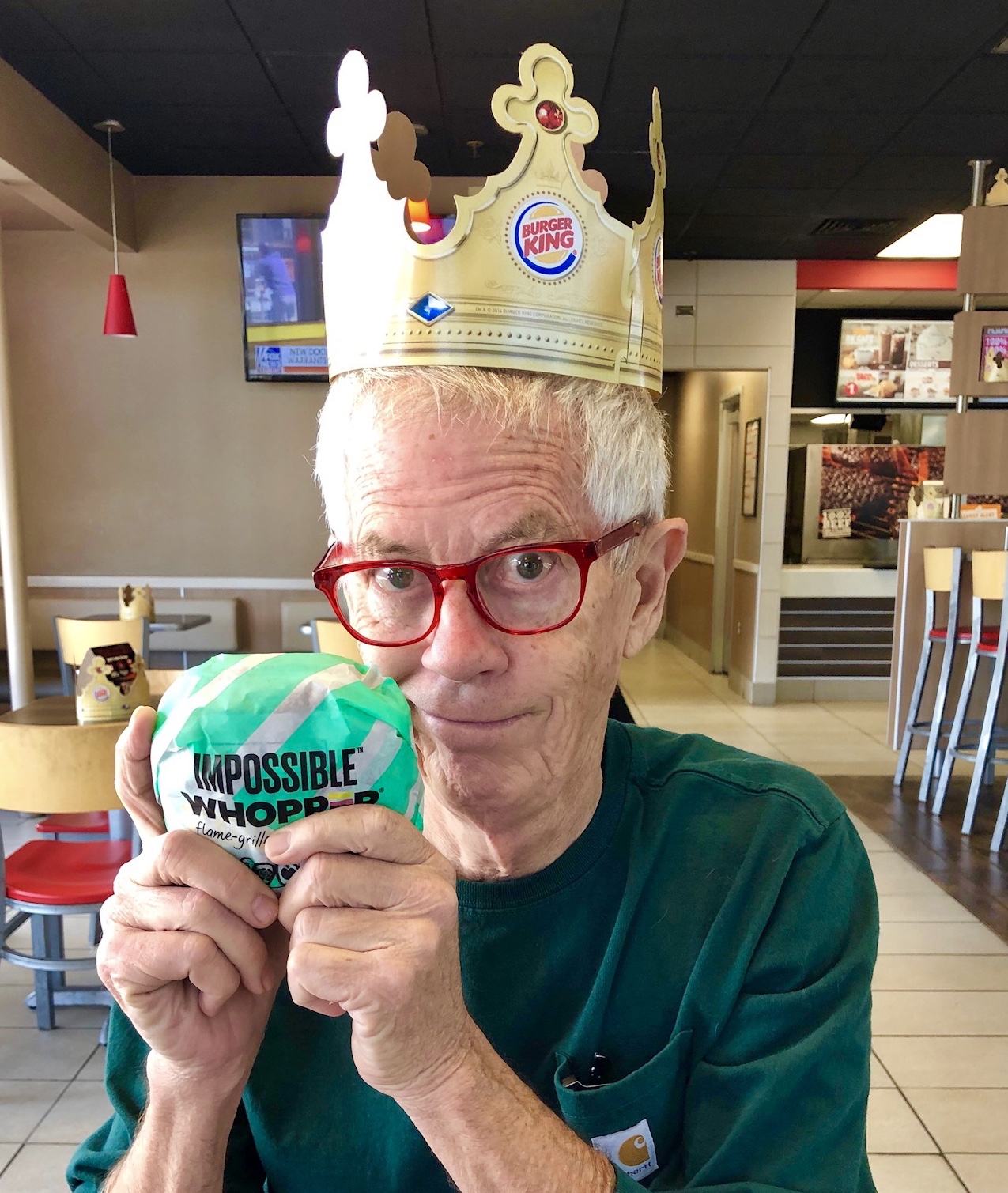
Burger King started serving the Impossible Whopper nationwide yesterday so my friend George and I drove to a nearby town to try one (our Burger King was destroyed by a tornado earlier this year but will re-open next month). I haven’t had a beef hamburger in six years so can’t say I remember what one tastes like but the sandwich BK served up was mighty close. I’ll be eating these a couple of times a week.

Calling card

“A visiting card, also known as a calling card, is a small card used for social purposes. Before the 18th century, visitors making social calls left handwritten notes at the home of friends who were not at home. By the 1760s, the upper classes in France and Italy were leaving printed visiting cards decorated with images on one side and a blank space for hand-writing a note on the other. The style quickly spread across Europe and to the United States. As printing technology improved, elaborate color designs became increasingly popular. However, by the late 1800s, simpler styles became more common.”

“By the 19th century, men and women needed personalized calling or visiting cards to maintain their social status or to move up in society. These small cards, about the size of a modern-day business card, usually featured the name of the owner, and sometimes an address. Calling cards were left at homes, sent to individuals, or exchanged in person for various social purposes. Knowing and following calling card “rules” signaled ones one’s status and intentions.” (Wikipedia)

Somewhere along the way these evolved into “business cards” and titles and fax numbers and addresses were added. Before contact databases it was common to have huge collections of these little pieces of cardboard.

When I retired I tossed a couple boxes of these (I think I shredded them). And then I realized how handy they can be. Instead of jotting down a phone number or email address on a scrap of paper that will be quickly lost, I keep a few of these in my pocket.

U.S. credit card debt

“Average individual credit card debt (in the U. S.) stands at $5,331 in 2019. Additionally, on a monthly basis, most Americans don’t pay their credit card balance in full every month – 55% don’t regularly pay in full.”

  • 83% of U.S. adults own at least one piece of plastic.
  • On average, U.S. consumers own three credit cards.
  • Total revolving debt stands at $1.04 trillion – that’s up from $857 billion in 2013.
  • The average interest Americans pay on their cards stands at 16.46%.

Source: TheStreet.com

More apps caught sending personal info to Facebook

Sam Schechner, reporting for The Wall Street Journal (Subscription required. Here’s John Gruber’s post):

“In the Journal’s testing, Instant Heart Rate: HR Monitor, the most popular heart-rate app on Apple’s iOS, made by California-based Azumio Inc., sent a user’s heart rate to Facebook immediately after it was recorded.

Flo Health Inc.’s Flo Period & Ovulation Tracker, which claims 25 million active users, told Facebook when a user was having her period or informed the app of an intention to get pregnant, the tests showed.

Real-estate app Realtor.com, owned by Move Inc., a subsidiary of Wall Street Journal parent News Corp , sent the social network the location and price of listings that a user viewed, noting which ones were marked as favorites, the tests showed.

None of those apps provided users any apparent way to stop that information from being sent to Facebook.”

So I’m thinking about apps that I use: TextGrabber, Scanner Pro et al. Are they sending my shit to Facebook (even though I don’t have an account?). Apple needs to stop this shit or at the ver least tell us which apps are doing this so we can delete them.