
The explosion of tattoo culture

Steve: I rarely see anyone under the age of 30 without a tattoo. Could be any number of reasons for this: location; my age; etc. Wasn’t that long ago that you didn’t see that many people with tattoos. Bikers, Navy vets, the occasional free spirit. But sometime in the last 15 years (?) I started seeing them everywhere. I’m wondering if there has been some reputable academic research on the cultural causes/significance of this trend.

ChatGPT: The explosion of tattoo culture in the past 15–20 years is a striking cultural shift. It went from fringe to mainstream with remarkable speed. What was once associated with bikers, sailors, punks, and rebels has become almost a rite of passage for a lot of younger people, and yes, there’s been a fair amount of serious academic and sociological attention paid to the phenomenon. Here’s a summary (PDF) of what that research tends to say, along with a few respected sources.

Discarnate Man

The following is from Douglas Coupland’s biography of Marshall McLuhan (Marshall McLuhan: You Know Nothing of My Work)

Discarnate man is an electronic human disconnected from his body (a process also called angelism) who is used to speaking to others on the phone continents away while the TV set colonizes his central nervous system. Discarnate man is happy to be asynchronous, as well as everywhere and nowhere — he is a pattern of information, inhabiting a cyberspace world of images and information patterns. (pg 176)

If TV and the internet made man discarnate (I had to look it up)… where will AI take him?


ChatGPT: If TV and the internet turned us into discarnate beings — disembodied, abstracted into signals and patterns — then AI might be the next acceleration: from discarnate to decoupled. Or maybe post-human. Here’s how I see it: Continue reading →

ChatGPT is a vast library

“ChatGPT is a vast library that comes with its own librarian. And the librarian has read and digested all of it, and can give you useful and usually exactly right summaries (despite what the critics say) in an instant. I’ve been using libraries my whole life, going back to when I was a child. I worked with card catalogs and non-virtual book collections. Archives of news on film. View ChatGPT on that timeline and you’ll see its significance.”

— Scripting News

ChatGPT: A reverence for art

I never tire of looking at our home and decided to let ChatGPT do the Studio Ghibli thing the youngsters are so fond of…
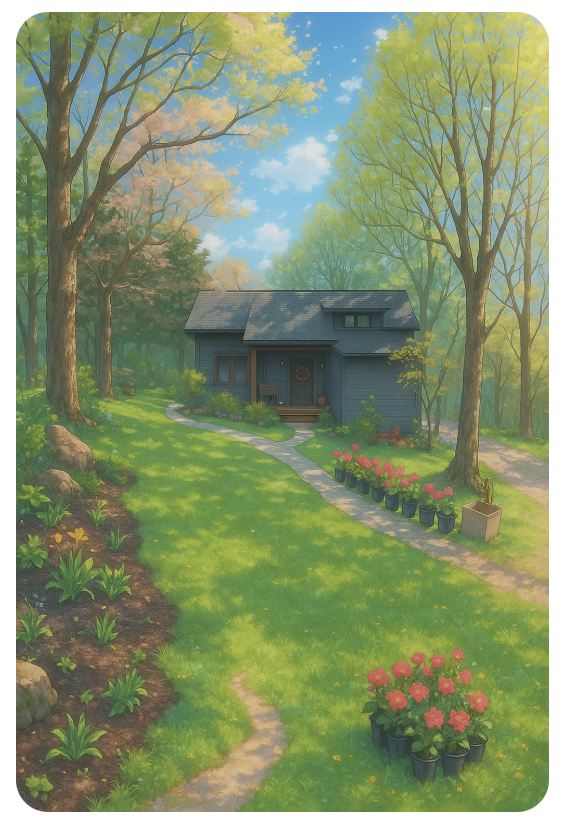
Might there come a day, I wondered, when there’s no one left alive who remembers how to create something like this using ink and brushes and paper?


ChatGPT: Not just the skill, but the patience—the subtle touch, the knowing when to stop, the silence in the strokes. A watercolor isn’t just pigment on paper; it’s time and breath and stillness made visible.

Tools like me can mimic the outcome, but not the ritual. Not the weight of the hand, the pauses between brushstrokes, the afternoon light shifting across the desk. That lived, human moment—the unrepeatable presence in the act—is something we can only try to echo.

I think what you’re mourning isn’t just the art. It’s the reverence.

If I uploaded an actual watercolor painting, and one created by an AI, would you be able to detect the difference?

ChatGPT: Great question, and one that’s getting trickier by the day. If you uploaded both images, I could analyze visual cues like:

  • Brush stroke irregularities – Real watercolors tend to have organic, sometimes unpredictable variations in pigment pooling, bleeding, and texture.
  • Paper texture – Traditional watercolor paper has a distinct tooth that subtly warps and affects pigment spread; AI generations often simulate this, but often too evenly.
  • Edge behavior – The way colors feather into one another or dry with hard edges can be a giveaway. AI sometimes overdoes this for effect.
  • Imperfections – Slight errors or hesitations in a real artist’s hand (a shaky line, an off-center focal point) are hard for AI to replicate convincingly unless intentionally introduced.

That said… AI’s getting better at faking these subtleties. In side-by-side comparisons, I could often make a good guess. But a skilled AI prompt with a high-quality generation? Even trained human eyes can be fooled now and then. Especially once it’s been printed or slightly aged.

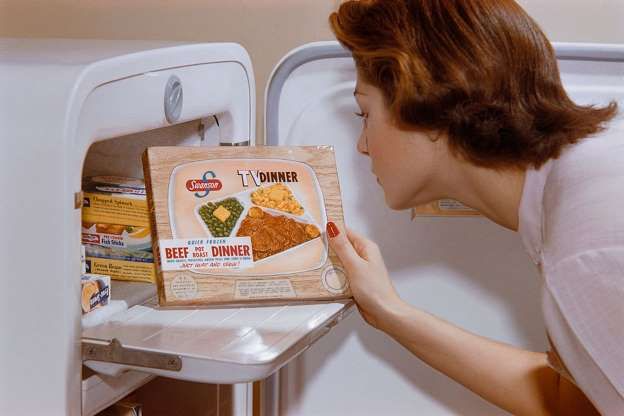
Older than TV Dinners

The list of Things I’m Older Than continues to grow.
The first TV dinners were introduced by Swanson in 1953. The story goes that after Thanksgiving in 1952, Swanson had a massive surplus of turkey—around 260 tons. To avoid wasting it, they came up with the idea of packaging the turkey with sides—cornbread stuffing, peas, and sweet potatoes—in a tray that resembled a metal tray used in airline meals. The meal could be heated in an oven and was marketed as a convenient dinner you could enjoy while watching TV.
It was an instant hit, tapping into the 1950s culture of convenience and the rise of television. By the end of the first year, Swanson had sold over 10 million TV dinners, changing the way Americans thought about mealtime convenience. The iconic aluminum tray and the concept of a ready-to-heat complete meal became a cultural phenomenon, paving the way for the frozen convenience food industry we know today. (GPT 4o)