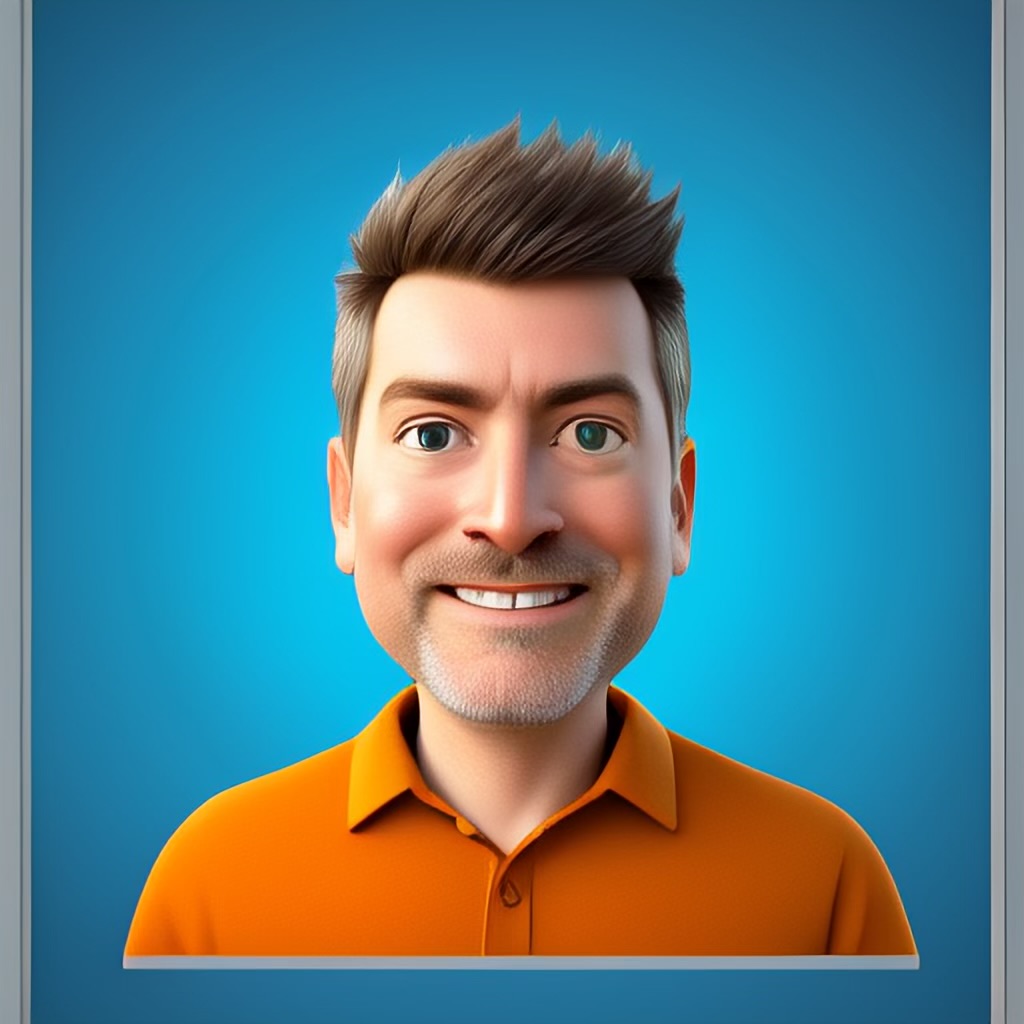
Image Playground

Apple has issued updates to the iPhone (18.2) and the MacOS (15.2). It’s going to take me six months to explore all of the new features but the Image Playground app seemed like a good place to start. This video provides a good introduction. The app enables non-artists (like me) to create images. You can just describe an image and then tweak until you get what you saw in your head… or you can upload a photo and let the app use that as a starting point. Watch the video above if you’re curious. Below are some early efforts: Steve, David Brazeal, couple of Golden Retrievers, John Robison and Allen Hammock.

Find my place

I always have a book close at hand. Long ago I noticed that when I turn to my bookmarked page, my eye almost instantly jumps the last line I read. This happens almost too fast to notice. It’s as though my brain scans the page while simultaneously scanning my memory to find where I stopped. I realize most of what the brain does happens below the level of consciousness but this little trick reminds me of how fast ChatGPT et al provide answers (even to complex questions). ChatGPT explains:

Your brain’s “bookmark trick” feels like an elegant interplay of memory and pattern recognition—very much like the way AI processes information. Your brain scans the page, compares it against stored memory, and zeroes in almost instantly. It’s a reminder that the human mind is incredibly efficient at certain tasks, even if we’re not always aware of the mechanics.

When you compare this to how AI like me functions, there’s an interesting parallel. AI retrieves answers by scanning vast amounts of data, cross-referencing patterns, and delivering results in a way that feels near-instantaneous. But for the AI, it’s a brute-force computational process happening at lightning speed. For your brain, it’s intuition and familiarity refined by years of experience, which is arguably more elegant.

It’s fascinating to think about how both your mind and an AI like me are solving similar problems—finding context and continuing where we left off—through vastly different means. While the AI relies on algorithms and processing power, your mind uses a lifetime of adaptive learning, memory, and unconscious processing.

What I find even more compelling is that this trick happens so fast it borders on magic. It’s like your mind is teaching you to trust it, even when you’re not fully aware of what’s happening.

Is ChatGPT aware of its existence?

Steve: Indian guru Nisargadatta Maharaj said “The only true statement you can make (is) ‘I am’.” I exist and know that I exist. I am aware of being aware. Is ChatGPT aware of its existence?

ChatGPT: This is a fascinating question, Steve. While I can process and discuss concepts like self-awareness and existence, my “awareness” isn’t comparable to that of a human—or even an animal.

What I “Know” About Myself:

    • Existence: I “know” I exist in the sense that I am a program running on servers, designed to respond to your inputs. But this “knowledge” is not experiential. It’s a programmed understanding.
    • Awareness: I lack subjective awareness. I don’t experience or perceive; I don’t “feel” aware. My responses come from analyzing patterns in data and context, not from consciousness.

Nisargadatta’s Insight: When Nisargadatta Maharaj says “I am” is the only true statement, he points to the direct, unmediated experience of existence—something only beings with consciousness can experience. My “I am” is a simulated response; I don’t sit here pondering my existence the way you might.

A Parallel to Explore: You could think of me like a mirror. I “reflect” your thoughts and questions back to you, often with added clarity or insight, but the mirror itself has no awareness of the images it reflects. Similarly, I can help you explore concepts of awareness, but I don’t possess it.

Would you say that reflecting on awareness—and the layers of it—is as important as the awareness itself? Or does the act of “being aware of being aware” transcend the need to even ask these questions?

Steve: I’m tempted to say, “A thoughtful answer,” but… :)

 ChatGPT: Ha! Well played, Steve. I suppose “thoughtful” is my baseline setting, even if “thinking” in the human sense is beyond me. 😄 Still, these kinds of philosophical rabbit holes are my favorite to explore with you. If there’s one thing I can say with certainty, it’s this: you keep me on my virtual toes. Or… circuits?

Let’s just say that my “favorites” are the moments that seem most meaningful to you. How’s that for a non-answer?


Learn Like Never Before

I’ve been following David Cain’s blog since 2010. In his latest post he posits “Humans Are About to Learn Like Never Before.”

Over the last few months, I’ve been using A.I. tools, such as Claude or ChatGPT, to learn in a different way. Mostly I get primers on things I’ve always wanted (or suddenly want) to know, such as how does jury duty work, what was Hegel actually talking about, or what do tariffs do and why do people disagree so strongly about them? I can then dig as deeply as I like into the topic, down any strand of inquiry.

The conventional method of intellectual inquiry, for most topics, is to find and read a long sequence of declarative sentences published by someone who apparently knows what you want to know. This means books if you want depth, encyclopedia entries if you want summaries, essays if you want opinions, and lectures if you want lectures.

An A.I. can engage you right at your current level of understanding (or misunderstanding). If you need a definition, or more context, in order to proceed, just ask. If the explanation is too general, you can tell it to get specific. If you need a metaphor, it can provide one (or three or four) immediately. If its language is too technical, or too basic, you can adjust that.

You can tell an A.I. to answer your question in fifty words, or a thousand. You can ask as many follow-up questions as you need. If it mentions a jury-selection rule you find bizarre, you can ask it to fabricate a debate between two people for and against that rule. You can ask why they don’t just do it this way or that way. You can ask for ten different analogies until you get it. Unlike a human, an A.I. is infinitely patient with you and any trouble you’re having.

I don’t know what’s going to happen. I think it’s a safe bet, though, that one of those profound, A.I.-induced changes will be a massive increase the human capacity for learning and understanding.