
“Big Brother” software knows if you’re happy

Microsoft is developing what a British newspaper (TimesOnline) describes as “Big Brother” software that will allow employers remotely to monitor their workers’ productivity, competence and physical well-being to a degree never before seen.

Among other data, wireless sensors will provide employers with workers’ heart rates and stress level, and determine whether they are smiling or frowning.

“The systems work not only through desktop or laptop computers but even through mobile phones or handheld PCs, meaning that even out of the office the employee can still be monitored. In its most advanced format, the system will monitor users’ private interests.

The system works by recording and analyzing what words and numbers are used or websites visited, and by watching the user’s heart rate, breathing, body temperature, facial expressions and blood pressure. The patent application explains: “The system can also automatically detect frustrations or stress in the user via physiological and environmental sensors and then offer or provide some assistance accordingly.”

This just seems to far-out and scary to be true. For the record… I am happier than I appear.
Why “old” media struggle online

Lost Remote’s Cory Bergman on why most TV stations haven’t done well online:

“I’ll give you these four reasons: 1) lack of investment in people and technology 2) unwillingness to take necessary risks 3) TV-driven power structure which results in the inability for web management to quickly allocate resources as they see fit and 4) a bizarre addiction to brand consistency, which limits creative ideas up and down the organization.”

I think these apply to most “old media” companies. Brand extension is not always the way to go.

Changing newsroom culture

“The feeling in newsrooms, especially among the people on the new-media side, seems to be that there are an awful lot of people within organizations that aren’t on board with a vision of changing for the future. Even when top management has developed a new corporate vision for a digital, multi-media and less print-centered future, and communicated it to “the troops,” implementation is being slowed by many people in the organization — including mid-level managers — who still don’t buy into the idea that a total transformation of the news organization is necessary.”

“Everyone’s got work to do to put out the “daily miracle,” but in an era when the old industry model is in decline, we can no longer afford to have a workforce where the majority are solely doing the work of “putting out the paper.”

“The smart news organization in 2008 will be the one that encourages innovation — no, requires it — from ALL its employees. It will get everyone involved: in planning meetings; in committees charged with specific research and/or implementation projects. It will create some time in the schedules of everyone in the organization to do the work of innovation, and make that an integral assignment.”

“Most importantly, it will develop a training program to teach new-media skills to those still lacking, and regularly bring in innovation and creativity experts to guide both managers and employees. With the latter, exposure to and interaction with those experts will be company-wide.”

— Steve Outing at Editor & Publisher

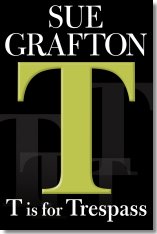
T is for Trespass

TrespasscovIf you’re a Sue Grafton fan and have not read her latest Kinsey Millhone mystery, you’re in for a treat. T is for Tresspass (#20 in the series) is about "identity theft; elder abuse; betrayal of trust; the breakdown in the institutions charged with caring for the weak and the dependent."

This was a real page-turner. Perfect for a snowy weekend.

“Hello, pussy”

That’s how Lou Gossett addresses David Caruso’s character before choking him into submission in An Officer and A Gentleman (1982). Later in the movie, Caruso has to be rescued from the bottom of the pool in a training exercise. Caruso is an acquired taste but I always found him one of the baddest dudes on the little screen. It hurt me to see him get humiliated.

But this post was going to be about Debra Winger, who made a bunch of bad movies but was really good in two: AOAAG and Urban Cowboy. And she was sort of okay in Black Widow.

I know squat about Hollywood but have to believe she had bad management. Her deep-throated sexiness and more-than-adequate acting chops should have taken her farther.

And for your comment hounds, how about the best drill instructors (or non-coms) in military movies? R. Lee Ermey  from Full Metal Jacket? Adolph Caesar from A Soldiar’s Story? Tom Berenger from Platoon?