
Author Archives: Steve Mays
“Software Is Media”
As software has moved from running on local machines to running in the browser a number of important things have happened. One of the most important changes is software has become media.
Like other forms of media, software produces an emotional reaction when we use it. Software needs to have a “voice.” It needs to be more than a simple utility. We need to feel something when we use software. The best software does this incredibly well.
Like media, the interfaces that present software to us need to be stylized, designed, and elegant. Software can be beautiful and the best software is beautiful.
And like media, the most important measurement for software today is the number of engaged users. The more engaged users a piece of software has, the more impactful it can be.
Once we’ve begun to treat some of the software in our lives as media, we are going to treat all the software in our lives as media. And the software that is ugly, void of emotion and voice will not work as well for us. So I believe all software is media and will be seen as such by its users.
Headphones (2010)
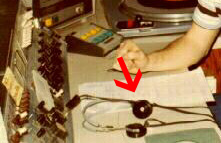 When I began working at KBOA in 1972, they were using the same basic style of headphones that they had been using for 20 years. WWII era Bakelite’s designed for durability, rather than fidelity or comfort.
When they became available (a couple of years later?) I bought a pair of Sennheiser HD 414’s. As I recall, I paid about $60 for them, out of my own pocket. A lot of money in those days (I was making about $14K when I left KBOA in 1984).
But they were wonderful. Light, soft foam ear pieces… and they sounded GREAT. The music sounded great and I sounded great. I looked forward to putting those headphones on.
In the nearly 40 years since, I have purchased a lot of what I considered to be the “tools of my trade.” Microhones; my first computer; digital audio recorders; laser printer; CD drive; video cameras; laptops; and –most recently– the iPad.
I have always looked on these purchases as investments. Not in my company, rather in me. I could have waited until the company thought it made sense to purchase these tools but I was impatient. And I was right. The things I learned (still learning) usually improved my skills and enhanced my value.
Most of my co-workers throughout the years took a different view. If the company wanted them to have and use the latest tools, the company should pay for them. Can’t argue with that.
But I’ve always thought of these purchases as the “carpenter’s tools.” A carpenter friend once explained to me that master carpenters would not think of using someone else’s tools. They took pride in the things they built and insisted on having and using their own tools, that went with them from job to job.
And, if you have a good accountant, you can take the expense as a deduction. Happy Tax Day.
Minnesota school replacing text books with iPads
The Gibbon-Fairfax-Winthrop (Minnesota) School Board approved $265,000 to purchase 230 iPads for students, upgrade all school buildings with Wi-Fi and provide technical training for everyone starting next year.
Apple Computer is providing the school with some assistance. If this works out, the school in Winthrop could become a model for the nation. Bet this isn’t the last time we see this.
Think of the possibilities.
Tests are on PW protected website. Software could determine right/wrong answers on the T/F and multiple choice questions. Huge time saver for teachers. Parents could see student’s answers to help them.
Scott Adams: Religion as road maps
“Religions are like different maps whose routes all lead to the collective good of society. Some maps take their followers over rugged terrain. Other maps have easier paths. Some of the travelers of each route will be assigned the job of being the protectors and interpreters of the map. They will teach the young to respect it and be suspicious of other maps.
“Okay,” I said, “but who made the maps in the first place?”
“The maps were made by the people who went first and didn’t die. The maps that survive are the ones that work,” he said.
At last, he had presented a target for me to attack. “Are you saying that all the religions work? What about all the people who have been killed in religious wars?”
“You can’t judge the value of a thing by looking only at costs. In many countries, more people die from hospital errors than religious wars, but no one accuses hospitals of being evil. Religious people are happier, they live longer, have fewer accidents, and stay out of trouble compared to nonreligious people. From society’s viewpoint, religion works.”
— From God’s Debris by Scott Adams