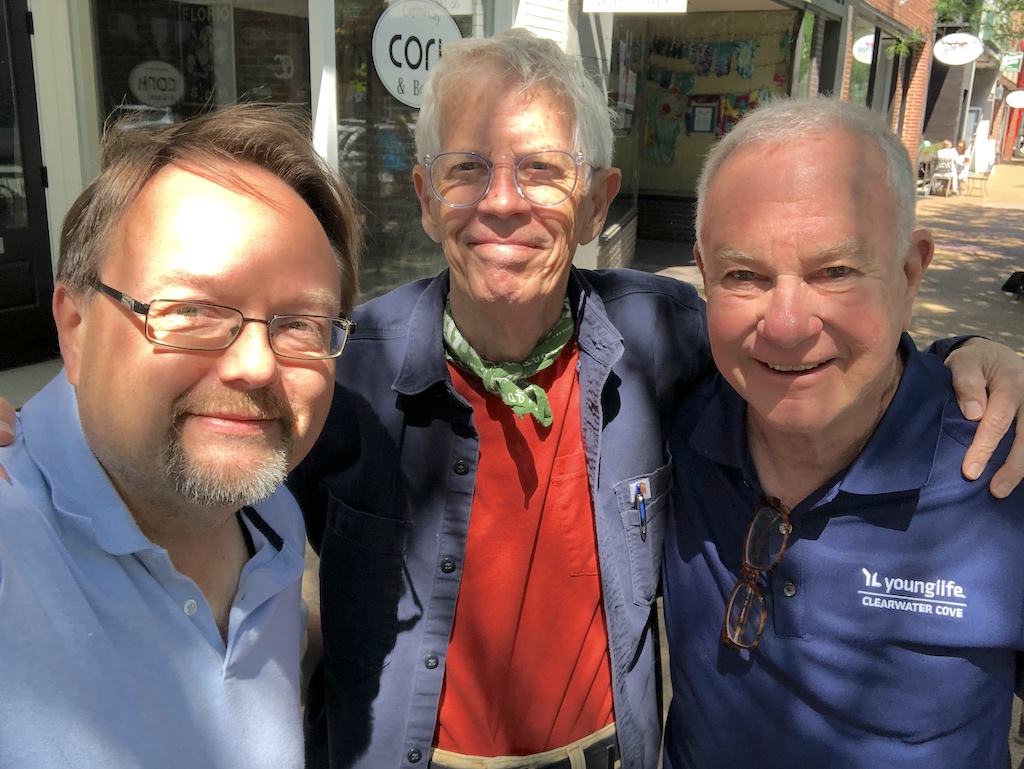
Delightful visit with Allen Hammock this morning. Allen and his “cyber twin,” Dan Arnall, guided Learfield’s early internet efforts. L-R: Allen, Mays, Lear.
Author Archives: Steve Mays
Wildlife: Snake!
Surrounded by woods, we usually seem some Copperhead snakes every spring and summer. I hate snakes. And when I see ’em, I kill ’em, lest they bite one of our dogs. Not that hard to chop off a head if you happen to have shovel or hoe handy (you never do). By the time you drag the dog inside and find an implement, the snake has escaped.
A couple of years ago I bought a “snake grabber” and keep it next to our deck since that’s where they tend to hang out. You can grab the bastards and lock the grabber while you find something to send them to snake heaven.
It’s an unpleasant experience and a while back I purchased a .22 revolver and loaded it with snake rounds. Instead of a single lead slug, it’s like a tiny shotgun shell filled with little pellets. Can’t miss, right? Well, yeah, you can. Once a year I take the pistol out and fire a round, just to keep in practice.
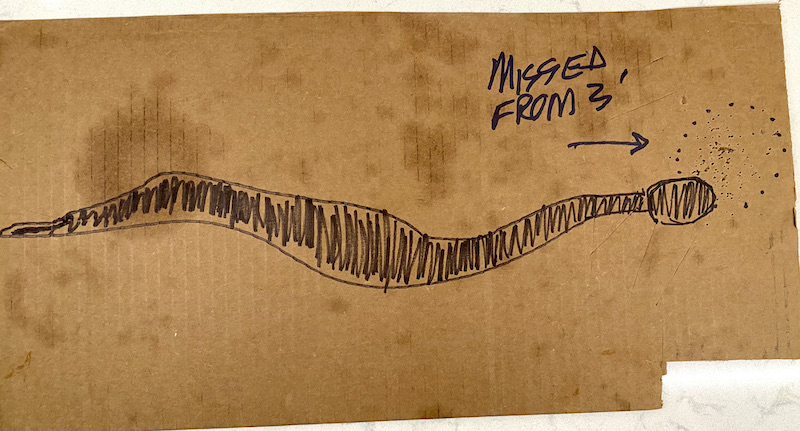
This was less than three feet away and I managed to miss the snake’s head. So our first line of defense will probably be the grabber and a shovel.
UPDATE June 5, 2021: Riley spotted a Copperhead early last evening. About 2 feet long. Used the snake grabber to hold the thing while I sent it to snake heaven with a shovel.
New sofa
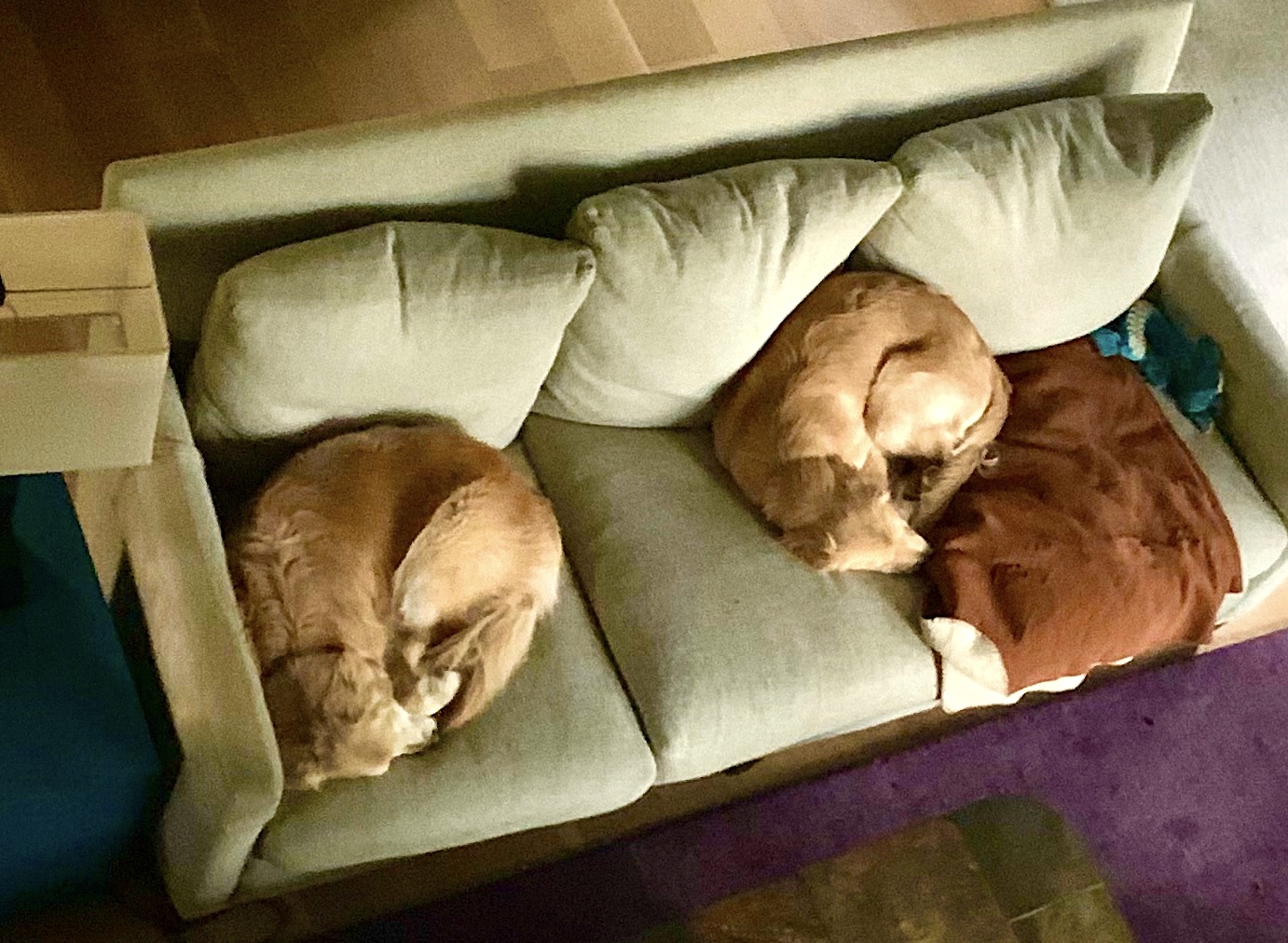
Our new sofa was delivered today. At first glance, you might not see much difference.The old sofa cushions (seat and back) were more like pillows. Stuffed with some kind of feathers, if I had to guess. 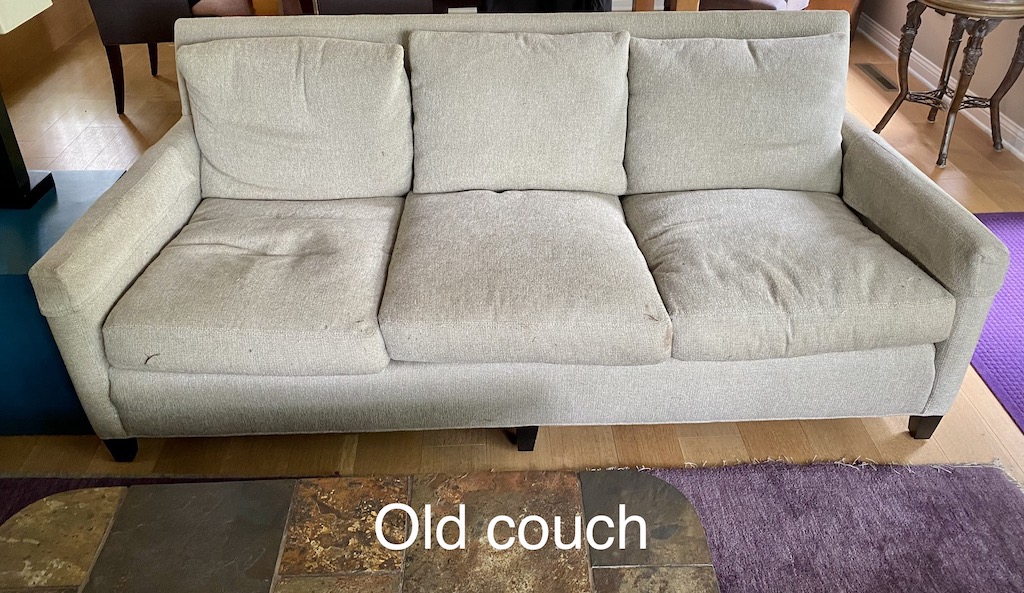 The new sofa is more firm. The seats and backs seem to be made of solid foam material.
The real test is yet to come.
The Upswing
The Upswing: How America Came Together a Century Ago and How We Can Do It Again
“In a sweeping overview of more than a century of history, drawing on his inimitable combination of statistical analysis and storytelling, Robert Putnam analyzes a remarkable confluence of trends that brought us from an “I” society to a “We” society and then back again.” (Amazon)
I’m only a few chapters into this book and remain skeptical America can ever be a “We” society again. Perhaps the authors can convince me before I’m done. I’ll post a few excerpts without comment because… I wouldn’t know what to say.
“Buoyed by his landslide victory in 1964, LBJ moved to the left on issues of race and inequality, beginning to open an ideological divide that would widen steadily for the next half century. Nevertheless, across LBJ’s far-reaching Great Society initiatives (the War on Poverty, Civil Rights, Voting Rights, Medicare/Medicaid, federal aid to education, and immigration reform—the very issues at the core of intense party polarization in our own period, a half century later), all major bills were supported by majorities or substantial minorities within both parties. On average, these bills were supported by 74 percent of congressional Democrats and 63 percent of congressional Republicans, a fact forgotten by later Republicans who would rail against the leftist extremism of the Great Society programs.”
“This increasing affective polarization has influenced even attitudes to intermarriage. Between 1960 and 2010 opposition to one’s offspring marrying an out-partisan rose from 4 percent to 33 percent among Democrats and from 5 percent to 49 percent among Republicans. This partisan prejudice shows up both in online dating and in actual marriages, as people are increasingly choosing their partners on the basis of political affiliation, even more than on the basis of education or religious orientation. Over the last half century marriage across racial and religious lines has become much more common than either used to be, whereas marriage across party lines has become much less common. This increasing agreement between husband and wife about politics in turn strengthens the inheritance of party identity by the next generation, since we know that children are more likely to inherit party identity when both parents agree politically. In this very intimate way, over the last half century partisanship has gradually replaced religion as the main basis of “tribal” affiliation in America.” (Emphasis mine)