While I’m grateful to the previous owners of the Jeep for all the good things they did for her, the camo paint job cannot be forgiven. But I’m fixing that, little by little.
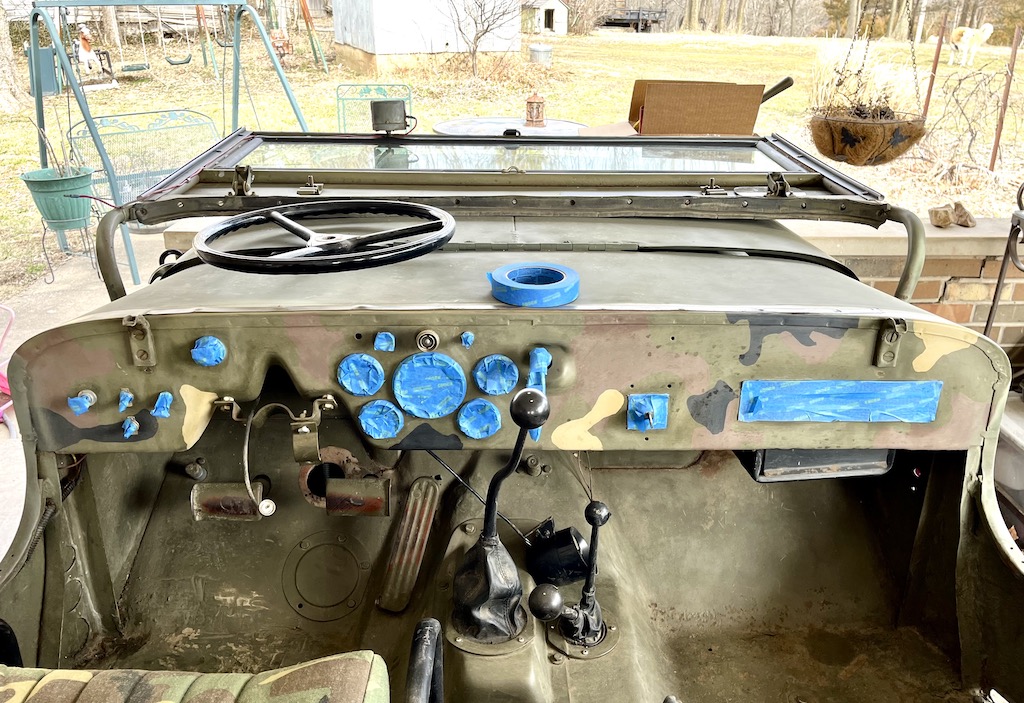
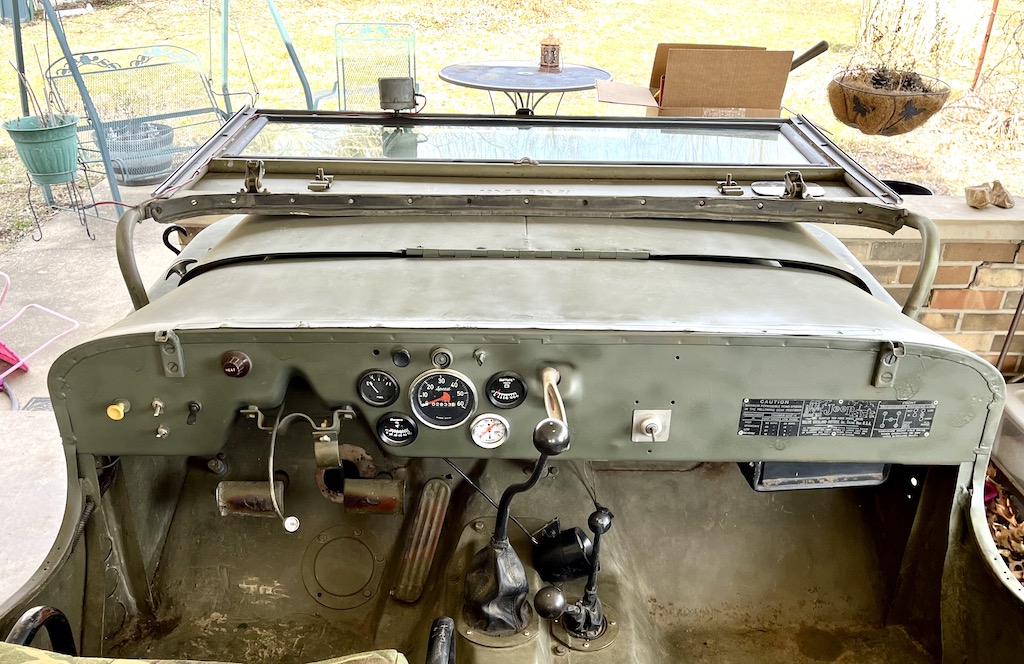
Today I painted the dash (does a Jeep have a dash?). Not sure why anyone thought the inside of the Jeep needed to be camouflaged. Probably just liked the camo look as much as I hate it.
The dark spots in the photo above are where the spray paint hasn’t completely dried. Only remaining camo is the cover of the seats and that will be taking care of next week. Tomorrow, weather permitting, we’ll give the roll bar a fresh coat leaving only the inside of the tub.
All of this will get much easier when we can drive/steer the Jeep. Next day or so?
We’ve grown accustomed to seeing old cars in period movies and vintage car shows but they never look real to me in those settings. This video (mute the awful music!) shows them as they were. These are images from my youth and –for me– it was a wonderful time.
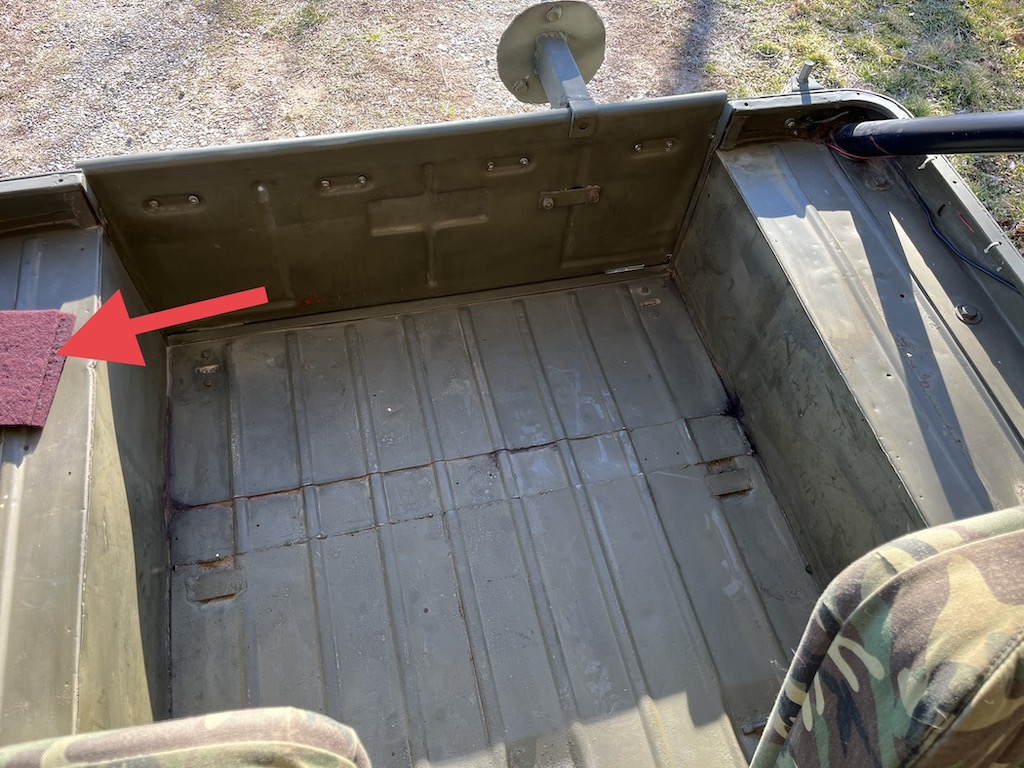
Sort of. I used the Shop-Vac to suck out the dust and gunk that had accumulated under the carpeting that lined the tub. Sponged it out in preparation for a coat of paint. Before that, however, Paul recommends going over the metal with Scotch-Brite pads (arrow).
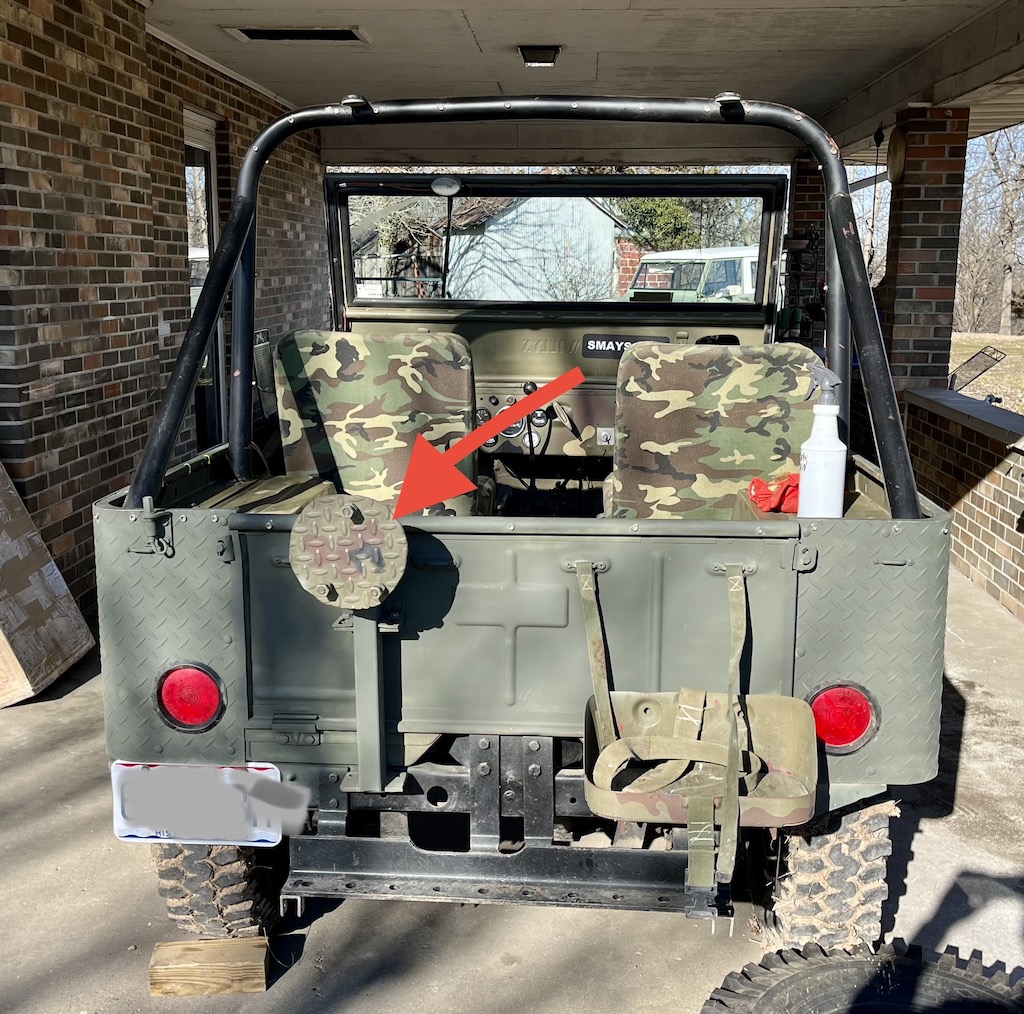
The tailgate has been bolted closed because a) it’s pretty much useless and b) to accommodate a mounting bracket for the spare (arrow). Paul is very particular about wheels and tires and has located a rim that matches the ones on the vehicle. Still need to paint the jerry can mount and I think I might keep a few gallons strapped to the back of the Jeep. Took the top off again because I plan to paint the roll bar at the first opportunity.
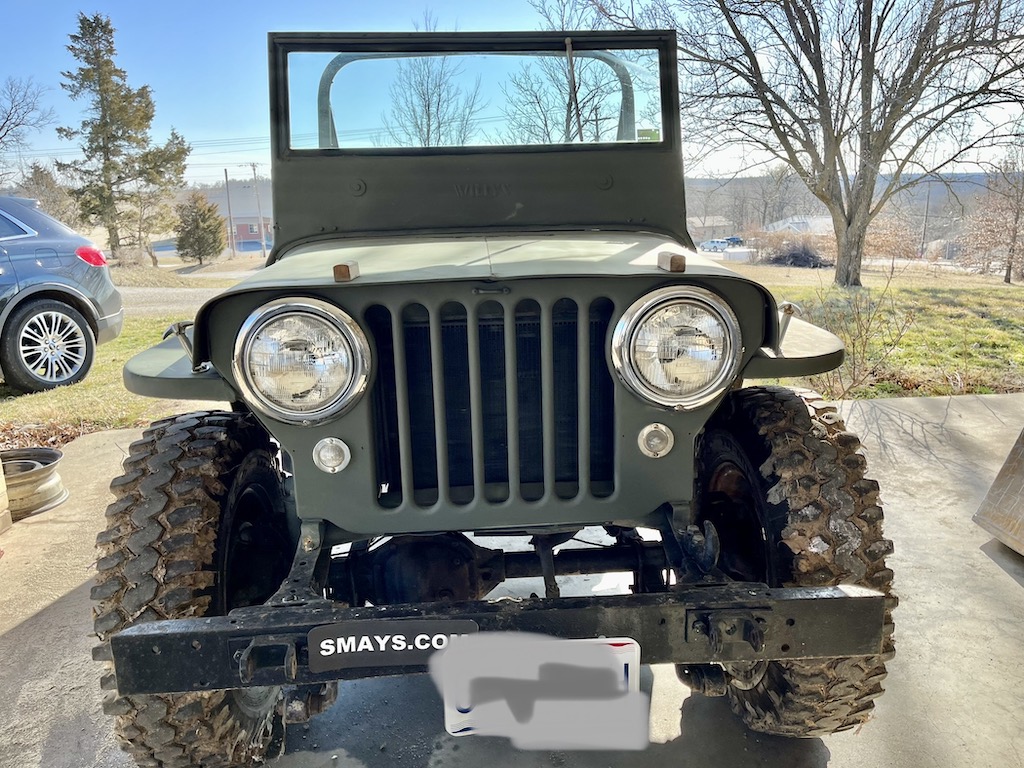
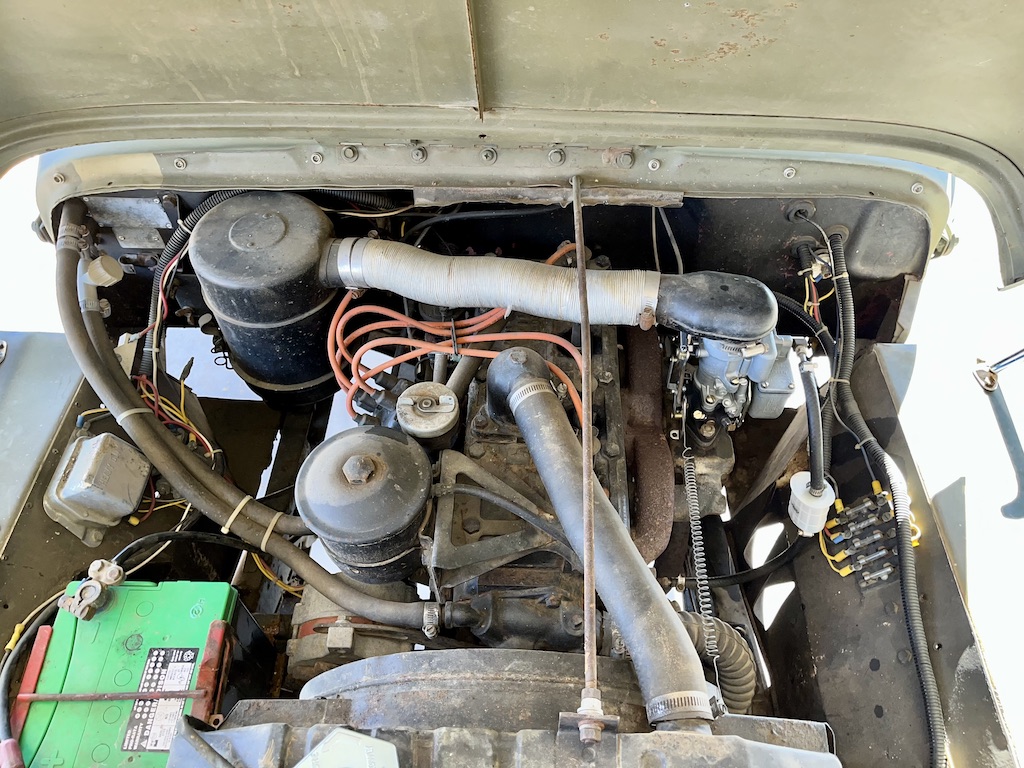
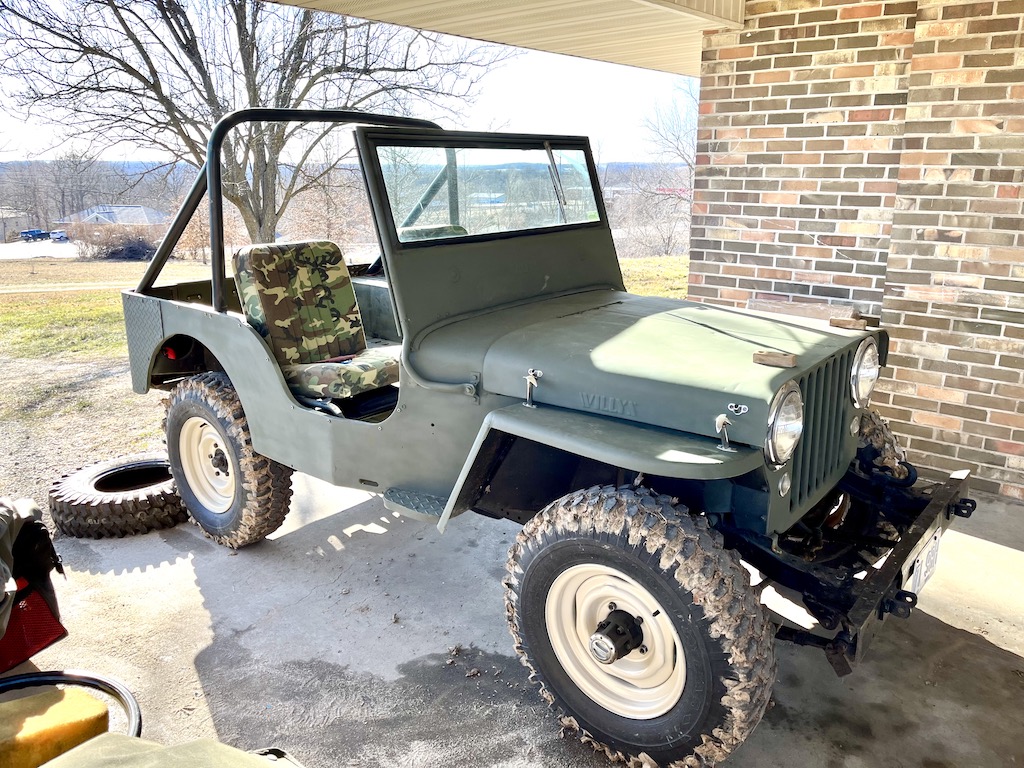
The remaining photos are just for fun. The iconic Jeep grill; the tidy little engine; and a nice 3/4 view. The steering box scheduled for deliver by end-of-day tomorrow so I might a wheel to get behind in the next week.
During my ~30 years in broadcasting I had numerous occasions to recruit and hire reporters. Because our newsrooms were small (3 or 4 people), reporters also anchored our reports. Which meant they had to be good journalists AND have good on-air delivery. A tough compromise at times.
I wonder if technology like 11ElevenLabs’ speech synthesis will (is) changing this. The audio below is a CNN story “read” by one of their voices. (see previous post for more on this technology)
I recently stumbled upon a Substack article by Ethan Mollick, a professor of management at the Wharton School of the University of Pennsylvania, titled “A quick and sobering guide to cloning yourself.”
“With just a photograph and 60 seconds of audio, you can now create a deepfake of yourself in just a matter of minutes by combining a few cheap AI tools. I’ve tried it myself, and the results are mind-blowing, even if they’re not completely convincing. Just a few months ago, this was impossible. Now, it’s a reality.”
As a former radio guy I was more interested in the audio portion of Professor Mollick’s experiment.
“Clone a voice from a clean sample recording. Samples should contain 1 speaker and be over a 1 minute long and not contain background noise. Currently works best on US-English accent.”
I created an account at 11ElevenLabs, picked a voice and uploaded some text from my blog bio.
For $5 a month (first month free) you can synthesize your own voice. I uploaded a recording of me reading that same bio.
Finally, I pasted in some text from one of my blog posts and my voice was “cloned.”
Just to be clear, the first audio is one of their “voices.” The the second audio is a recording of my voice. The real me, if you will. And the third audio is the synthesized Steve voice. I’m not sure someone could tell the difference. I sort of prefer the synthesized reading over my own. In two years (?), this technology will be so good it will be nearly impossible to tell real from cloned.

 During my ~30 years in broadcasting I had numerous occasions to recruit and hire reporters. Because our newsrooms were small (3 or 4 people), reporters also anchored our reports. Which meant they had to be good journalists AND have good on-air delivery. A tough compromise at times.