Thinking about thoughts

I prompted Perplexity to tell me if scientists had determined how many thoughts we think every day. Obviously nobody knows for certain but 6,200 is the number she came up with. As I prepared to include a link to her findings in this post, I discovered I could create a “page” and publish that (somewhere) on Perplexity. While I didn’t write a single word of that page, I guess I get credit for the prompt? (“Curated by smays”)

Looking at the tag cloud on my blog I learned I have posted on the topic of “thoughts” 39 times going back fourteen years. A blog rabbit hole I couldn’t resist. Didn’t read them all but plan to read one each morning for the next month. I did, however, scrape some bits to give you a taste. (Each of these from a different source)

“I’m imagining a technology that doesn’t exist. Yet. A lightweight set of electrodes that monitors my brainwaves and transcribes (transmitted via Bluetooth to my mobile device, let’s say) my thoughts. An advanced version of today’s voice-to-text apps. We get to read that “stream of consciousness” at long last.”

“Thoughts think themselves.” […] “Feelings are, among other things, your brain’s way of labeling the importance of thoughts, and importance determines which thoughts enter consciousness.”

“If I re-google my own email (stored in a cloud) to find out what I said (which I do) or rely on the cloud for my memory, where does my “I” end and the cloud start? If all the images of my life, and all the snippets of my interests, and all of my notes and all my chitchat with friends, and all my choices, and all my recommendations, and all my thoughts, and all my wishes — if all this is sitting somewhere, but nowhere in particular, it changes how I think of myself. […] The cloud is our extended soul. Or, if you prefer, our extended self.”

“The problem is not thoughts themselves but the state of thinking without knowing we are thinking.”

“Even if your life depended on it, you could not spend a full minute free of thought. […] We spend our lives lost in thought. […] Taking oneself to be the thinking of one’s thoughts is a delusion.”

“Look at other people and ask yourself if you are really seeing them or just your thoughts about them. Sometimes our thoughts act like “dream glasses.”

“We often see our thoughts, or someone else’s, instead of seeing what is right in front of us or inside of us.”

“Our minds are just one perception or thought after another, one piled on another. You, the person, is not separate from these thoughts, the thing having them. Rather you just are the collection of these thoughts.”
Vetting process for VP candidate

Lots of stories about who Kamala Harris will choose for her running mate. I’m reminded of the movie Game Change and the scenes where McCain’s campaign is looking into the background of Sarah Palin. I prompted Perplexity for info about this process.

The vice presidential vetting process is an intensive and thorough examination of potential running mates. Here are key aspects of the process:

1. Candidates typically undergo extensive background checks, including reviews of their financial records, medical history, public statements, and personal lives.

2. The vetting team, usually comprising campaign staff and volunteer attorneys, may ask candidates to answer up to 200 probing questions covering various aspects of their lives.

3. The process involves examining tax documents, medical records, and even private social media profiles of candidates and their family members.

4. Candidates may be asked highly personal questions about their sexual history, financial dealings, and potential controversies.

5. The vetting team aims to uncover any potential liabilities or surprises that could harm the campaign.

6. The timeline for vetting can vary. While most campaigns have months, Kamala Harris’s team has had a compressed timeline of just a few weeks.

7. The process typically concludes with in-depth presentations on each finalist to the presidential candidate, followed by final interviews with top contenders.

8. Confidentiality is crucial, with vetting notes often destroyed after the process to maintain privacy.

The goal of this rigorous process is to avoid any unexpected issues that could derail the campaign and to ensure the chosen running mate strengthens the ticket

I’ll never get a close look at this process for any number of reasons but here are some of the things about which I am curious:

  • Who does the hands-on research and what sort skill set is required?
  • What’s involved in investigating someone’s social media account? Do they read every Facebook and Twitter post? Watch all YouTube videos?
  • Do they look at files on a prospect’s phone and computer?

I do like the sound of “Madam President”

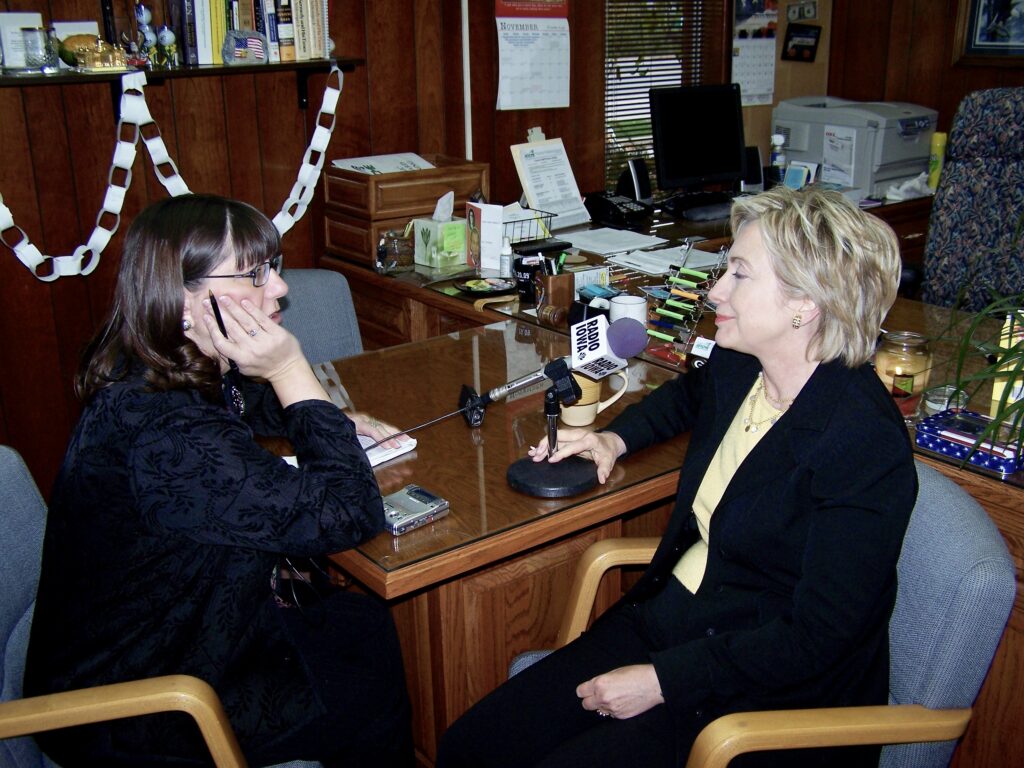
Recent events reminded me of this photo (2007) of my longtime friend (and former coworker) O. Kay Henderson

I asked her if there was any chance of recreating the photo with Vice President Harris. She pointed out that Iowa is not a swing state in this election cycle so, no, KH won’t be stopping by. But she did share this photo from July of 2019. Kay is wearing the white hat and Men In Black shades.

“awareness by the mind of itself and the world”

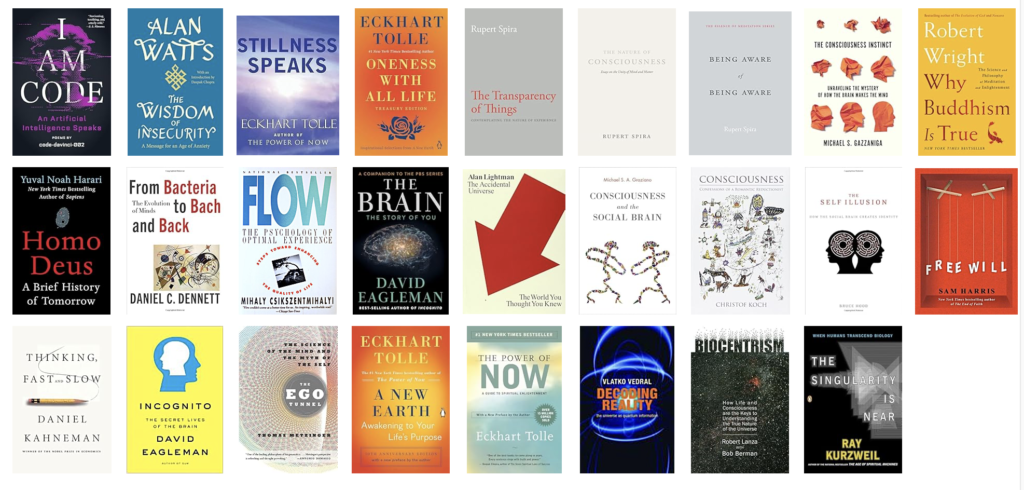
I don’t recall precisely when or how I became interested in consciousness. I’ve read a few (26) books on the topic and gave it some space here (104 posts). The reading has been a mix of scientific and spiritual (for lack of a better term). The concept showed up in a lot of my science fiction reading as well. And we’ll be hearing the term –however one defines it–  more often in the next few years.

I like the idea that nobody really knows what the fuck it is or where it comes from. Thankfully, that won’t change.