“A presidential candidate’s job is to win”

Markos Moulitsas at Daily Kos

The Beltway press is angry that Vice President Kamala Harris hasn’t sat down with them to talk about things like policy. In their warped, archaic minds, they are important to the political process as a way to inform readers about the candidates. That was a thing before social media and the internet, for sure. But today? The Beltway media is broken beyond repair, and we’re all doing fine learning about Harris on our own, thank you very much.

A presidential candidate’s job is to win. That’s it! So pray tell, how does talking to The New York Times or any other national media outlet help that cause? Either journalists will ask ridiculous, shallow questions and waste everyone’s time, or they’ll fish for a gotcha quote they can use to generate “controversy” and clicks.

Jeff Jarvis at BuzzMachine

Look at the press’ behavior. When given a chance to ask questions, they sound like they’re in a lockerroom, seeking quotes, not policy. This does nothing to inform the electorate. I know the argument about testing a candidate. But the press as currently configured aims for game & gotcha.

The press needs Kamala Harris. Kamala Harris doesn’t need the press. Their motive in whining for what they take as their birthright (hello, A.G.) is to salve their editorial egos and earn them attention (and money). They have not earned this role; they have forfeited the privilege by their behavior.

Time For A Break: Democrats Don’t Need The Media (Bypass the Gatekeepers to Speak To The People). By Oliver Willis

The press collectively believes at all times that it must constantly be fed. Like an infant or toddler who doesn’t get their food at precisely the moment their bellies start rumbling, the press throws up these occasional tantrums. On the other side of the aisle, they are willing to put up with the abuse of the infantile Donald Trump because he gives them precisely the empty calories they want: Nonsensical outrage that attracts clicks and eyeballs and attention and leads to ad revenue and book deals and the like. 

Harris and her campaign have been able to masterfully frame the election as a battle between normal progressive ideas and the weird conservativism of the right, not via sit-downs with stuffy news anchors and reporters working on their next book deals, but by constantly pumping out content via their existing press infrastructure and social media.

A Harris social media post can reach every single one of the people who are going to cast a ballot […] If she speaks directly to camera and hits “post,” she no longer has to worry about whether the editors hiding behind their monitors have deemed it “newsworthy.” That is now for the potential audience to decide, not them.

My most embarrassing photo

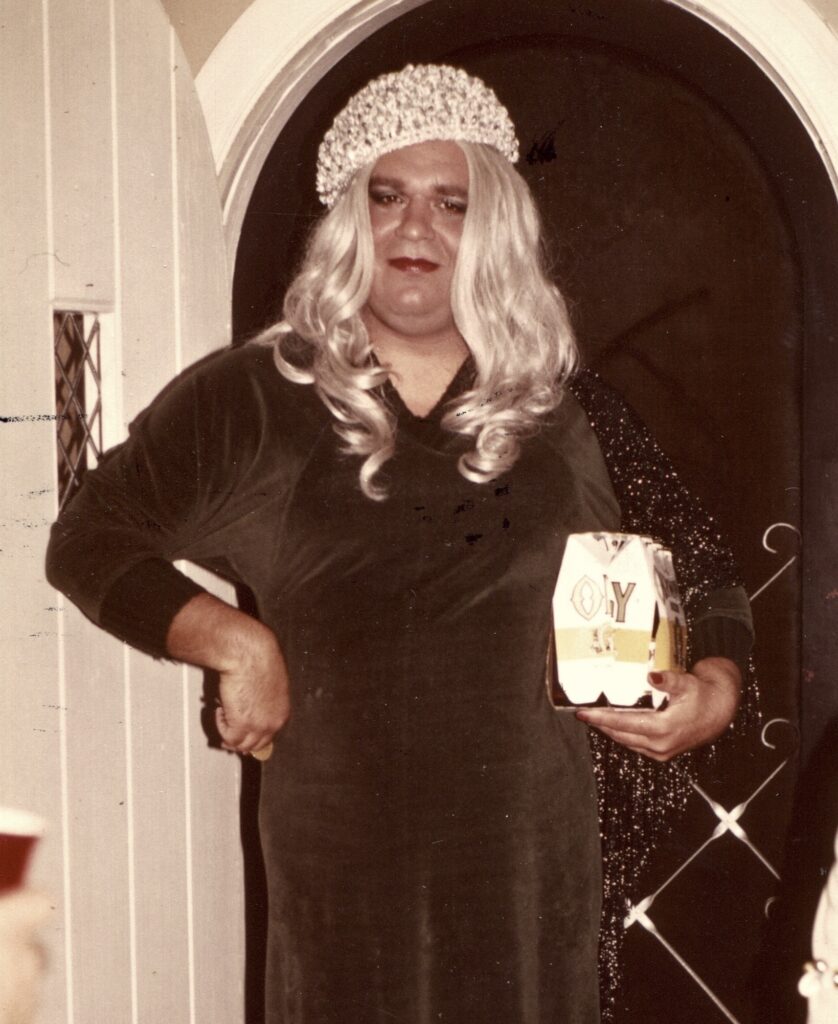
There must be plenty of them but nothing comes to mind. The question popped into my head after seeing photos of J. D. Vance in a blond wig and floral print skirt. A halloween photo from his college days. And former U. S. Congressman George Santos wasn’t camera-shy during his drag queen days.

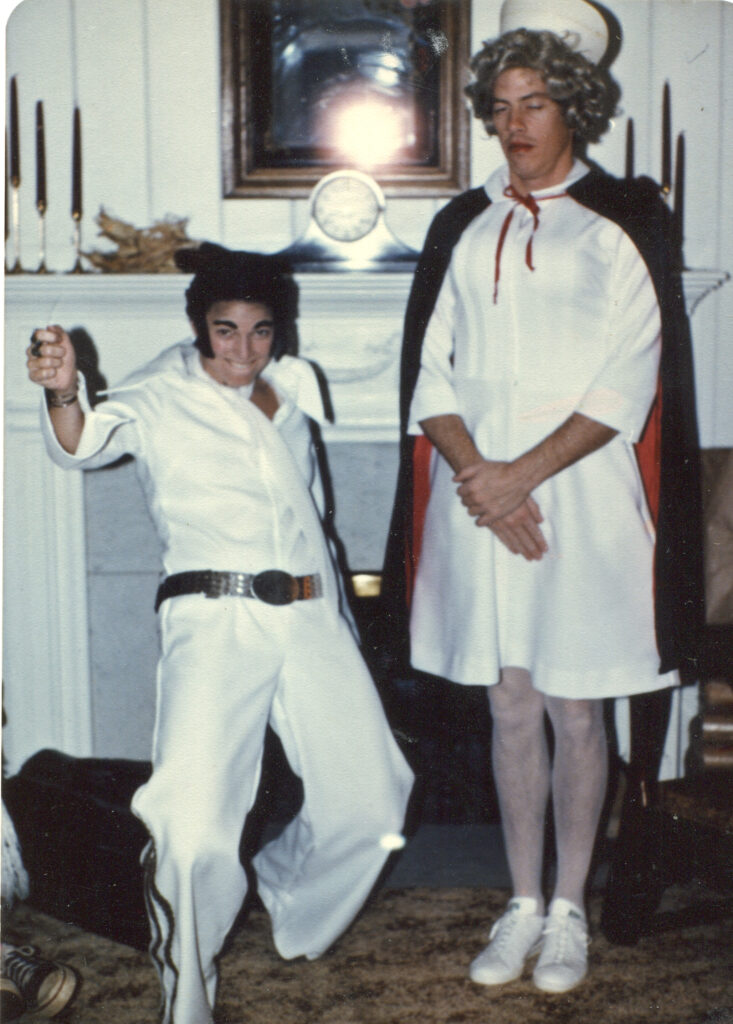
Our annual Halloween parties were the social event of the year and I showed up dressed as a woman at least two of those parties. Once as a nurse, the other time as a nun.

The nun photo is memorable because Barb and both came as nuns (from different orders it would appear). Neither of us aware of the other’s costume.

Once I saw just how good a man could look in a dress and wig, I gave up on that costume idea.

While searching for my most embarrassing photo, it occurred to me that it wouldn’t be in my collection. It would almost certainly be a photo someone else took and that I didn’t know existed. If you have such a photo, I’d very much like to see it. (My embarrassment bar is pretty hight these days.)

In my youth, people didn’t walk around with a camera in their hand (or pocket). And if it was nighttime you’d need a flash. And then the wait for the film to be developed and on and on. It was just too much trouble. So there just weren’t as many photos. And if you had a good one, sharing it meant a trip to the post office. And what is an “embarrassing photo” in an age when teenagers text each other pictures that can only be described a pornographic?

The photos of Vance are only a problem (if it is a problem) because of his homophobic anti-trans comments on the campaign trail. And I’m not sure George Santos minded at all.

I’ll keep looking for my most embarrassing photo and update this post if I come up with something.

Too smart to be human

Me to ChatGPT: With the growing interest in AI, I’m seeing more references to the Turing Test. Can a human tell if he is having a conversation with another human or an artificial intelligence. An interesting spin on this is the suggestion that to pass the test, an AI will have to “dumb down” its responses in order to sound more human-like. In my interactions with ChatGPT and Perplexity, I’ve found both to be far more erudite than almost any of my human acquaintances. I don’t know anyone as “knowledgeable” and “articulate” as ChatGPT. Do you have any thoughts on this idea? Some of ChatGPT’s response:

This brings up some interesting philosophical questions about what it means to be human in conversation. Humans are not just repositories of knowledge; they bring emotions, experiences, biases, and limitations to the table. These elements make human conversation rich, but also messy, inconsistent, and imperfect. An AI that always responds with perfect grammar, deep insights, and an encyclopedic knowledge might inadvertently reveal itself as non-human simply because it lacks the flaws and variability that characterize most human interactions.

It’s a balancing act—finding the right mix of knowledge, relatability, and imperfection that aligns with human expectations in a given context. In the end, the goal might not just be to pass the Turing Test in a traditional sense, but to create AI that can adapt its communication style to different scenarios, sometimes being erudite and articulate, and other times being more casual or even fallible, depending on what the situation calls for.

“My thoughts are different than those of a human”

I asked ChatGPT if she could read one of my blog posts (from 2006) and share her “thoughts” on the post, conceding that digital entities probably don’t have thoughts or impressions.

“You’re right that my thoughts are different from those of a human, but I do aim to provide insights based on analysis and understanding.

The post from 2006 captures a pivotal moment in the evolution of public relations, where the power dynamics shifted due to the rise of digital platforms. The idea of disintermediation, where organizations could bypass traditional media, is significant because it foreshadowed today’s landscape where brands and individuals communicate directly with their audiences through social media.

It’s interesting how the post ties this shift to modern AI tools, suggesting that we’re on the brink of yet another transformation in how we access and process information. The reflection on Perplexity AI hints at an ongoing curiosity about technology’s role in shaping communication.

It seems like the original enthusiasm for direct communication channels is now evolving into a broader discussion about how AI might further change our interactions with information.

How do you feel about these changes? Do you see them as a continuation of the trends from 2006, or do they represent something entirely new?

Pretty sure we’re seeing something new but I have no idea what that might be…and prefer it that way.

Sometimes, it’s the not knowing that keeps things interesting. The sense of mystery around what comes next in technology—whether it’s AI, new communication tools, or something entirely unexpected—can be exciting. It leaves room for surprises and innovation that we can’t fully predict or control. That unpredictability can be a kind of freedom, letting us stay open to possibilities without being locked into any specific expectations. So, keeping a little mystery about the future? That seems like a pretty good approach.

Wow. “…my thoughts are different from those of a human, but I do aim to provide insights based on analysis and understanding.”