Government Websites

Logged in to my Medicare account recently to update password. They used to require an update every six months but got so many complaints they dropped that requirement. After half a dozen unsuccessful attempts to create a new PW I started a chat with a support person. She began by informing me the password guidelines on the Medicare.gov website are wrong. Why are they there if they are wrong? She had no idea and gave me some different guidelines:

1. You should create a NEW password that is 8 – 16 characters in length.
2. The password must not include # or &
3. Must include at least one letter, number and at least one special character such as (@) ($) (%) [but not at the end of the password!]
4. Cannot be the same as your username.

Additional guidelines: please do not follow the creation guidelines in the system at this time. You will need to use at least one capital letters, four numbers and a special character however; you may not use a number or symbols at the beginning or at the end of the password. An example of a good password would be “Home1234$Home.” Alternatively “Red2015$car” You will need to use a minimum of three numbers in the middle.

These didn’t work either so I wound up on the phone with a gentleman who explained these guidelines are not right either. (“Sorry about that. Ha ha!”) Wound up creating a new account with a really lame-ass password.

ME: “Should I change this from time to time?”
SUPPORT: “I wouldn’t.”
Communication Budget

Let’s say I am only willing to give up one hour (daily) of my life to digital communication (iMessage, email, social media). And I have a tool (app?) that connects to each of my comm apps, tracking time spent on that app. Perhaps a little countdown clock showing remaining time.

I might set aside 20 minutes of the 60 for my wife or kids (if I had kids). But for everybody else, the clock is running. When I hit 60 minutes, I’m done. (This doesn’t apply to phone calls. Those are unlimited.) If I don’t get to all my communications within the allotted 60 minutes, they get pushed to the next day.

How might such a tool change my habits? An email from a casual acquaintance might get a quick scan of the headline and nothing more. My replies would be short and quick. (“This is important. Call me”)

I’m yanking my weenie, of course. Nobody really wants to limit this kind of communication any more than cigarette smokers want to quit. So scratch the above…

Let’s aim lower. An app that shows how many minutes/hours you’ve spent online — doing anything — since midnight. With weekly/monthly/annual reports.

Is it getting harder to write good spam?

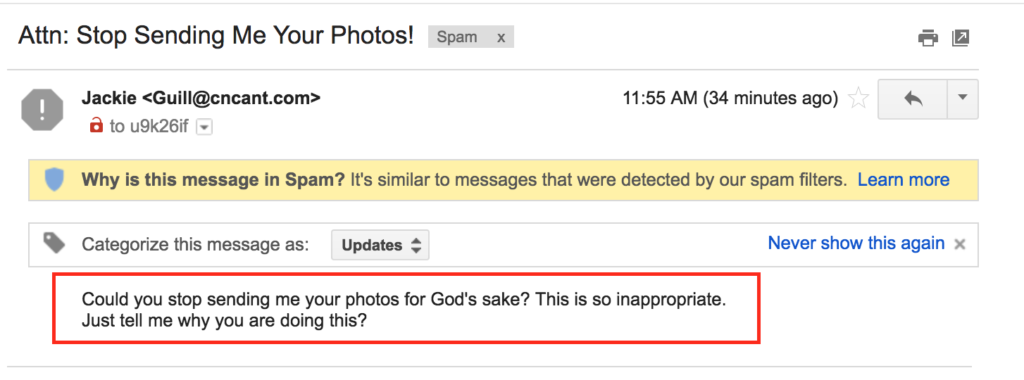
I never look at the email Gmail flags as spam. I just delete it, or let Gmail delete it. If some non-spam email gets tossed, no big deal. But this morning a subject line caught my eye. “Stop Sending Me Your Photos!”

This struck me as mildly clever. Someone is sending a stranger my photos? Gadzooks! — or — Did I mistakenly send photos to wrong person?! — or — I better let Jackie know it wasn’t me sending her photos.

I don’t know why it is so hard for some people to ignore ALL email from strangers? Do such come-ons tap into some latent loneliness?

It occurs to me there are people whose job it is to craft email messages and subject lines that will entice recipients to open. I’d love to get half a dozen of those folks in a room for a discussion. How’d they get into that line of work? Where do you get your best ideas? Can you always spot spam?

Try to play the hits

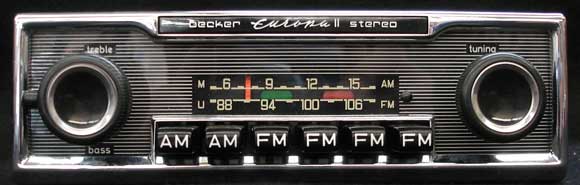
I came of age in the era of push-button radios (in cars). If a station played a song I didn’t care for… (chunk!) I hit the button for another station. Commercials or news? (chunk!) If going through my presets didn’t get me a song, I’d keep punching. When I got a job as a DJ an awareness of that ever-so-brief window was hard-wired. You only had a listener until you aired something they didn’t like. Which was inevitable, of course, especially in a small market like ours. But you tried to play the good stuff and keep the tune-outs to a minimum.

I’ve always (instinctively?) approached online with this in mind. Blogging in the early days and social media later. Will my share ‘hold’ the reader… or tune them out? After all, few of my ‘followers’ know who I am (or care). They’re waiting for the next nugget and if it doesn’t come (often enough) why would they hang around.

I have a theory that most on social media imagine a relationship that doesn’t exist. “They follow me because they care about what’s happening in my life, even the most trivial thought or event.” Maybe. I’m gonna keep playing the hits (or try to).

Wayback Machine: Learfield.com

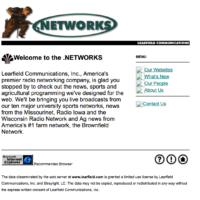
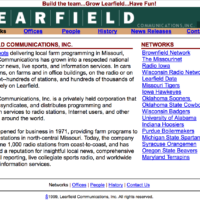
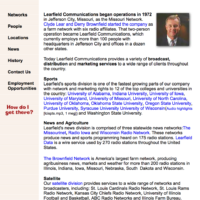
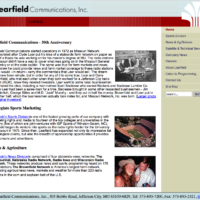
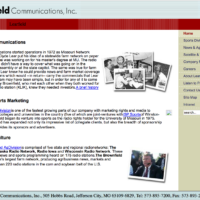
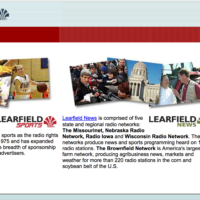
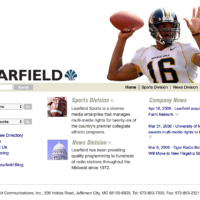
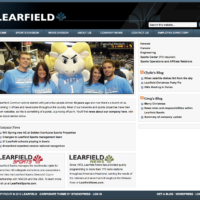
My little history project (Learfield and the Internet (1995-2005) took me to the Internet Archive Wayback Machine where I got a look at some of the websites I helped create and maintain during the early days of the Internet. The first sites we created were for our two news networks, Radio Iowa and The Missourinet, but we felt like we needed one for our corporate site and Learfield.com went up in 1997. It was designed and built by Dan Arnall and Allen Hammock. (The story is in the link above)

I’m pretty sure I’m responsible for the look of the page in 1999 and 2000. I had zero design training or skills and I also didn’t have a budget for those talents, so I took a whack at it. We did have some professional help eventually but today they all look, let’s just say, dated.

A “home page” on the Internet was a brand new thing in 1997. They became the public face of a company or organization and in those early days, little more than brochures. Everyone was trying to figure out how to make them useful. “Look and feel” was way more important than usability back then. We loaded our pages with text because space was not an issue. Or so we thought.

Images tended to be tiny because big ones too a long time to load on slow dial-up connections. As we added more and more pages to our sites, “navigation” became important. We gave our page links clever names that meant nothing to the people visiting our sites.

Looking at these are almost painful. Like looking at photos from your senior year in high school. Want more? Missourinet and Radio Iowa.

ObitsOnline

I’m in the middle of another Small Histories” project. “Learfield and the Internet” is the working title. I’ll share it here when it’s as done as I can do it. But here’s a sample of the kinds of stuff we slung against the wall. ObitsOnline.

I knew from my small market radio days that people loved obituaries. Every morning the local funeral homes would call in details of funerals and visitations and we’d read them on the air. We tried to kill the feature once but people went ape shit.

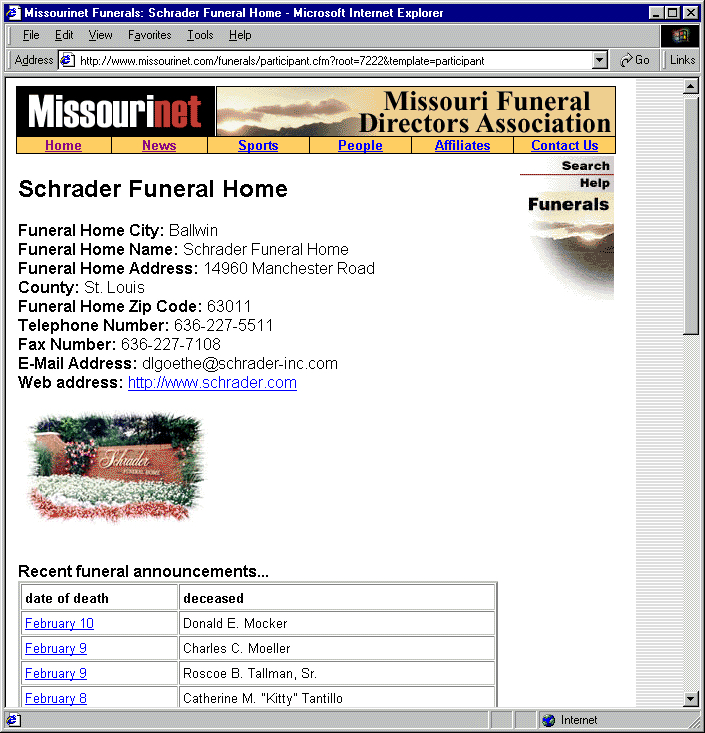
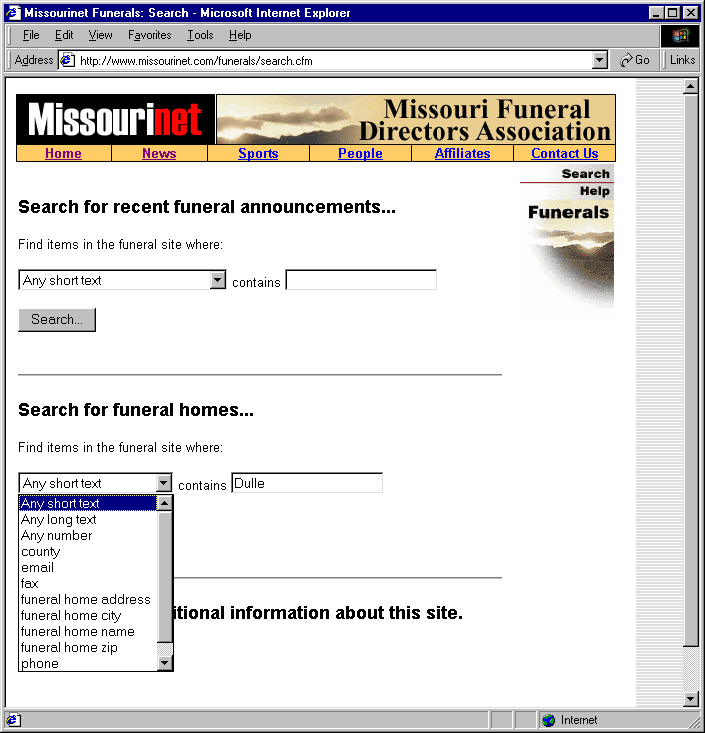
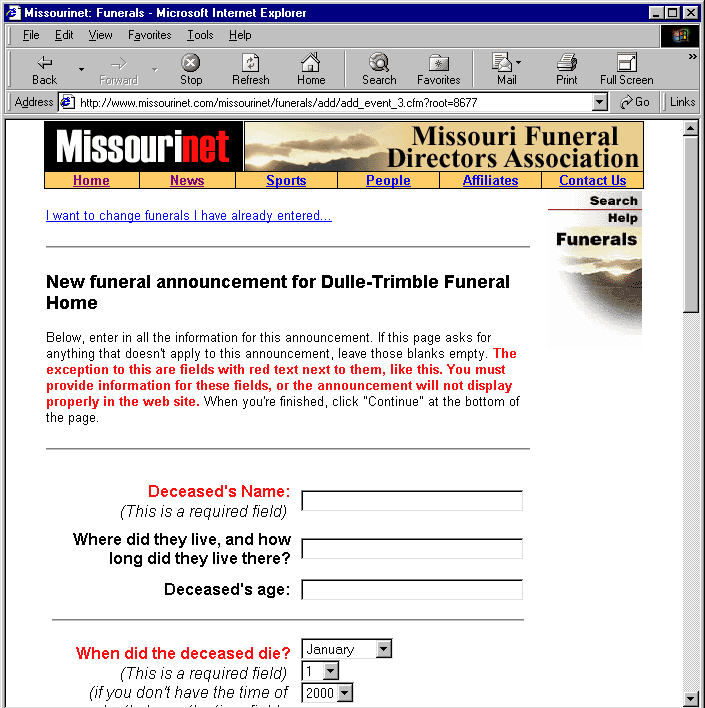
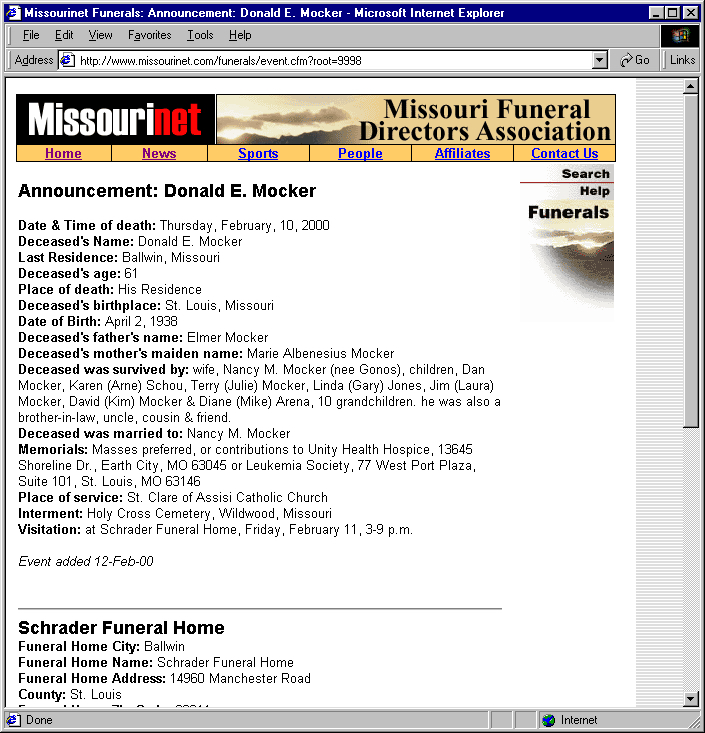
The great thing about the early days of the Internet was nobody knew what might work so you could try anything. Why not let funeral homes throughout the state (Missouri) log in to an online database and post funeral announcements. The public could search by name, date, city, etc etc. We pitched the funeral home associations in Missouri and Iowa (maybe some other states, I don’t recall). Here are some screenshots:

The idea never got off the ground because in 2000 most funeral homes were still trying to figure out their fax machines and were convinced the people in their communities were not using computers and were unlikely to do so any time soon. I have no idea what the business model for this might have been. In those days we were thinking more about what would be cool or interesting.

RadioIowa.com

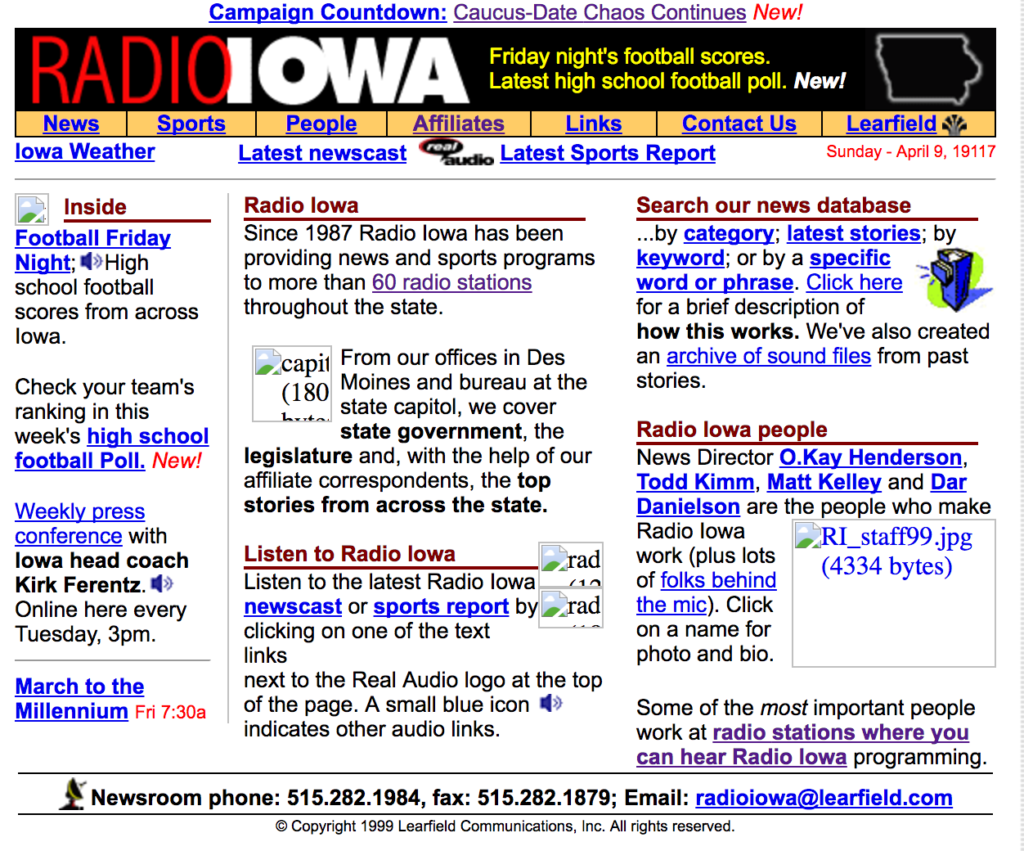
My next “small histories” project will be an Internet timeline showing when and how the company I worked for viewed and used this new technology. We registered our first domain (Learfield.com) on August 30, 1995 but didn’t do much with that (corporate) site. In July of 1996 we created a site for one of our news networks (Radio Iowa) but I don’t recall what kinds of content we were posting in those early days.

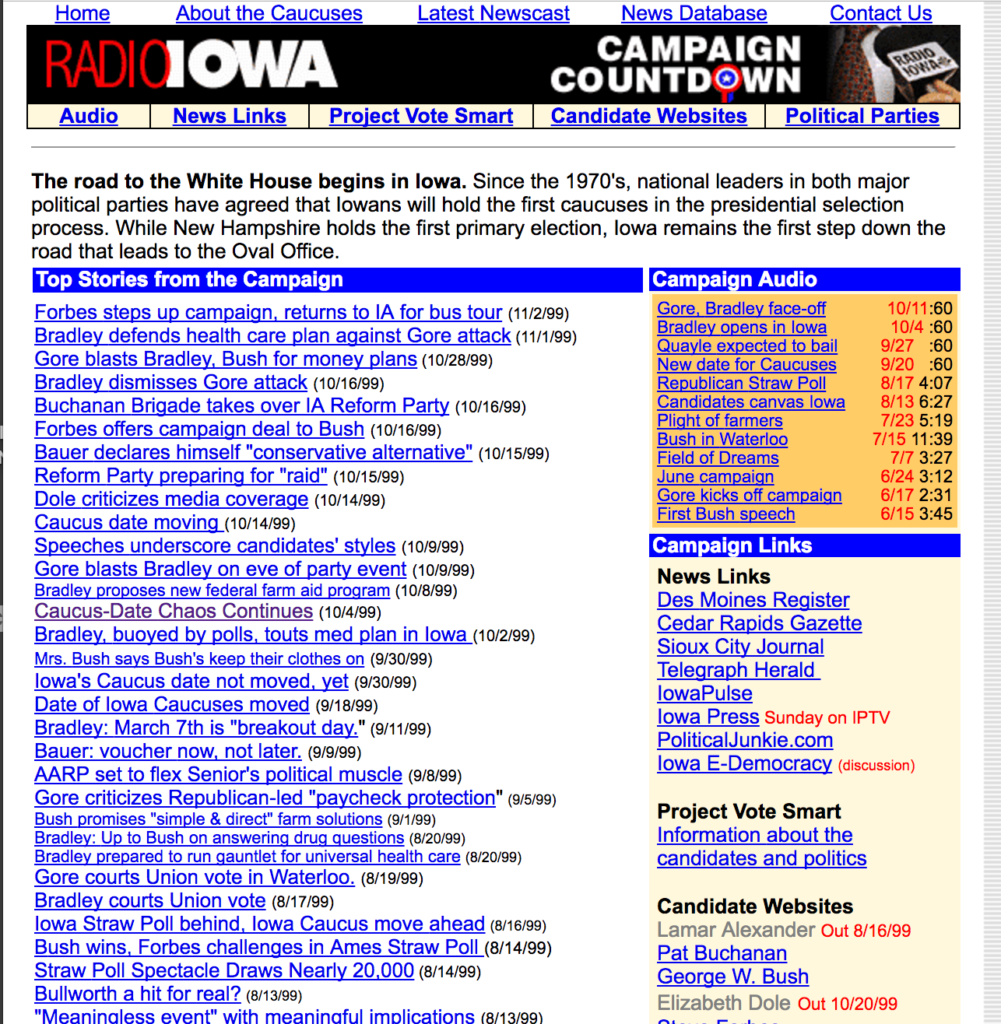
By November of 1999 we had gotten the hang of things and were putting up a lot of news (text and audio). The Iowa Caucuses pulls lots of attention to the state every four years and our network created a feature called Campaign Countdown. Our website made it possible to extend the life of the stories we fed via the radio network and reporter O. Kay Henderson cranked out a LOT of stories and interviews, all of which went online.

As we moved and updated servers and software, much of this content was lost. Or so I thought. While poking around on the Internet Archive WayBack Machine this weekend I found the Campaign Countdown reports.

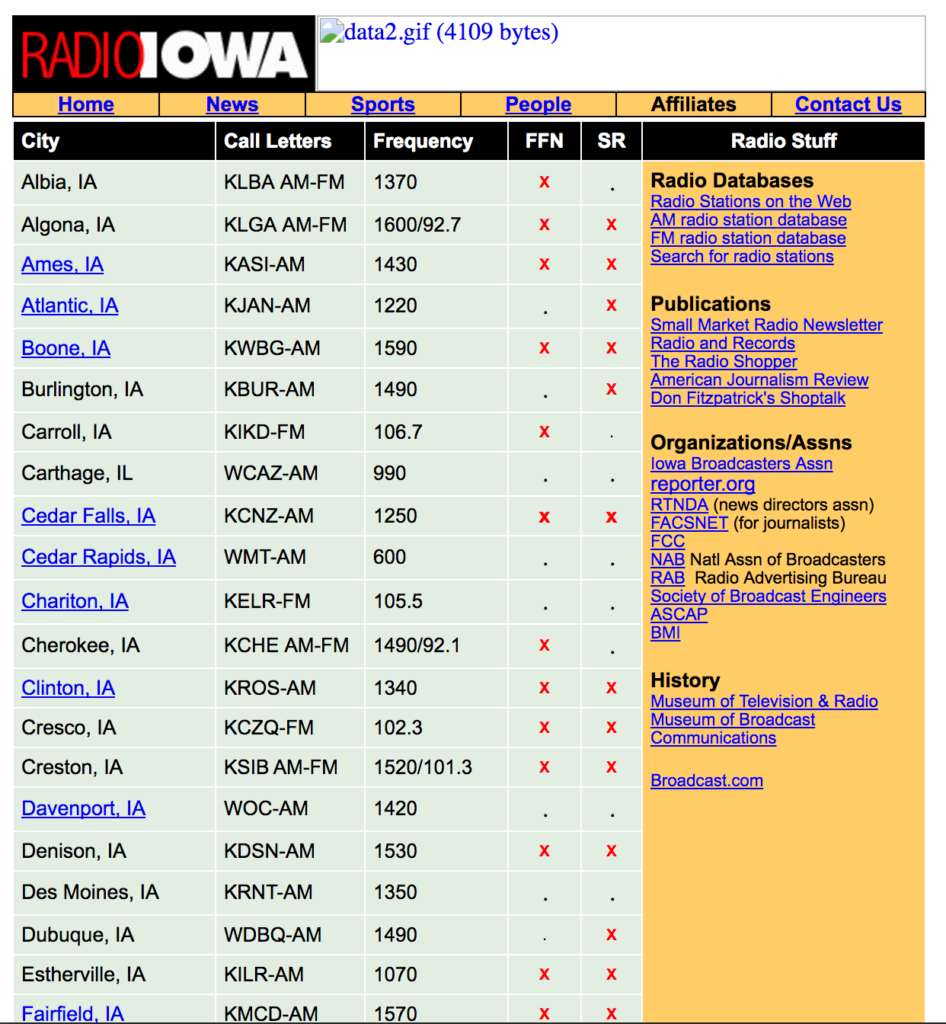
The design of the website is nothing to write home about (that’s on me) but he history is real and — thanks to the Internet Archive — preserved. (I made a donation and hope you will, too). From this screenshot (partial) of our Affiliates page and you can see that about half of the stations had websites in 1999.

In my experience, radio stations were slow to embrace the Internet. There were a lot of reasons for this. Some good and logical, some not. Most of the programming on small market stations was music and licensing and technical issues made it impractical to “stream.” I’m not sure we had that word in 1999. And why, many station managers asked, should I go to the expense and effort of creating a website when everyone we care about (advertisers and listeners) can hear our programing on the radio? Duh. And nobody was going to listen to music on a computer. (iTunes, the iPod, and XM Radio came along in 2001. Podcasting in 2004)

Early Learfield websites

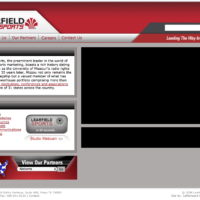
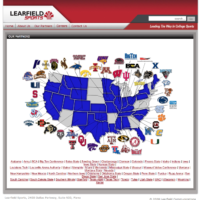
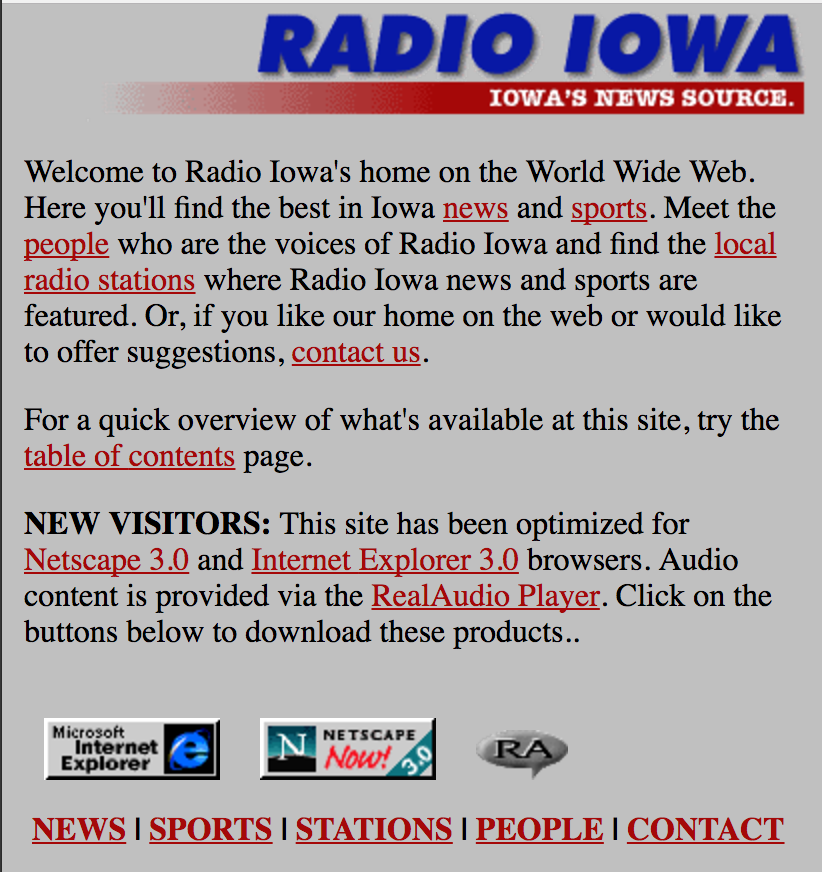
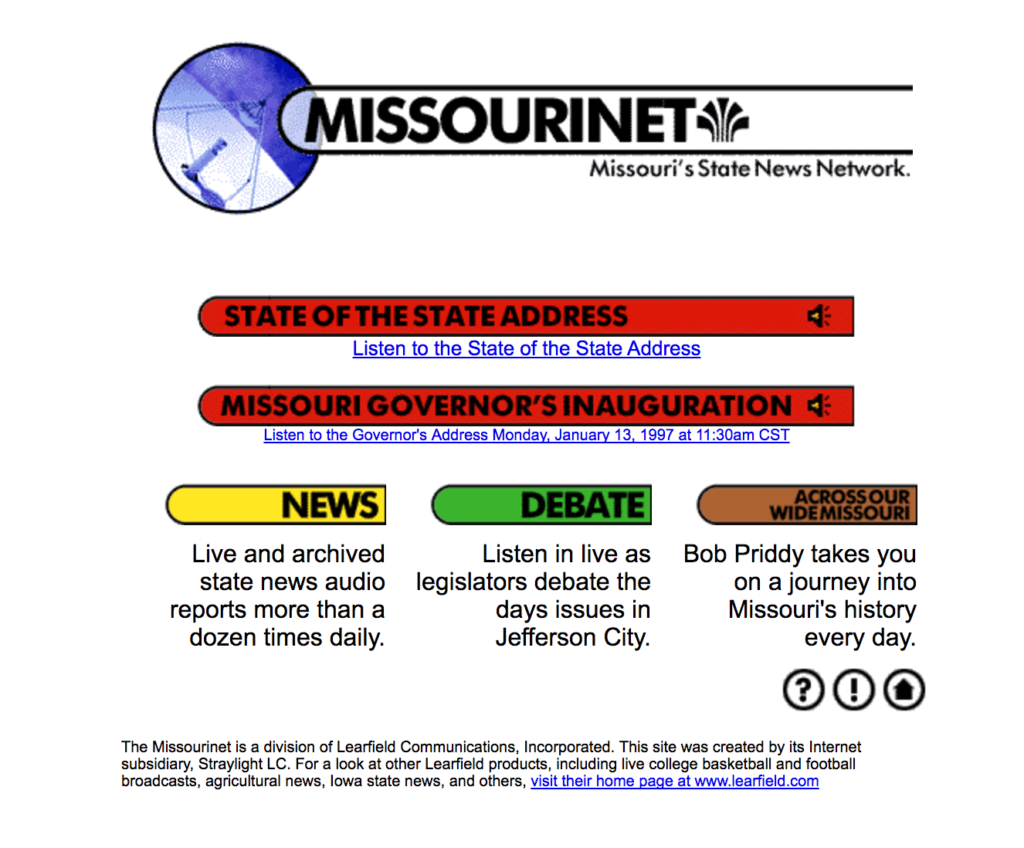
During the mid-90s I made a little career pivot that allowed me to work on our company’s Internet strategy although ‘strategy’ is too grand a term for what I/we were doing. I found and hired a couple of college kids who knew some html and created our first websites. The screenshots below (from the Wayback Machine) are from 1996-97.

A lot of websites looked like these in those days. Compared to many (most?) businesses, we were early to the game and registered domains for our networks in ’95 and ’96. I’m not sure having a one-word domain is a big deal these days. Or any domain for that matter.

My first BBS

I joined my first BBS (bulletin board system) on November 18, 1994. It was called Fun City and was operated by Kevin Diehl.

(Wikipedia) A bulletin board system, or BBS, is a computer server running software that allows users to connect to the system using a terminal program. Once logged in, the user can perform functions such as uploading and downloading software and data, reading news and bulletins, and exchanging messages with other users through email, public message boards, and sometimes via direct chatting. Many BBSes also offer on-line games, in which users can compete with each other, and BBSes with multiple phone lines often provide chat rooms, allowing users to interact with each other. Bulletin board systems were in many ways a precursor to the modern form of the World Wide Web, social networks and other aspects of the Internet. Low-cost, high-performance modems drove the use of online services and BBSes through the early 1990s. Infoworld estimated there were 60,000 BBSes serving 17 million users in the United States alone in 1994, a collective market much larger than major online services like CompuServe.