
How newspapers got into such a fix

A fascinating look at how U. S. newspapers got to where they are, by Paul Steiger who spent 26 of his 41 years in journalism at the Wall Street Journal. Thursday is his final day at WSJ.

“Next week I move over to a nonprofit called Pro Publica as president and editor-in-chief. When fully staffed, we will be a team of 24 journalists dedicated to reporting on abuses of power by anyone with power: government, business, unions, universities, school systems, doctors, hospitals, lawyers, courts, nonprofits, media. We’ll publish through our Web site and also possibly through newspapers, magazines or TV programs, offering our material free if they provide wide distribution.

Pro Publica is the brainchild of San Francisco entrepreneurs-turned-philanthropists Herbert and Marion Sandler, who along with some other donors are providing $10 million a year in funding.

The idea is that we, along with others of similar bent, can in some modest way make up for some of the loss in investigative-reporting resources that results from the collapse of metro newspapers’ business model.”
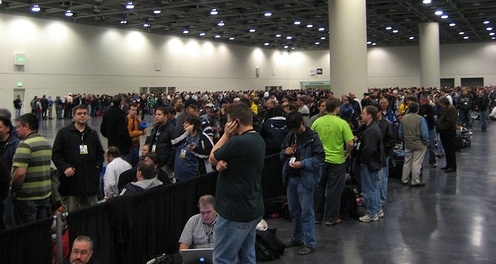
Macworld virgin

In couple of weeks I will attend my first Macworld in San Francisco. 60,000 rabid Mac fans gather for a week of… well, I’m not quite sure but look forward to finding out.

Three Macworld veterans are letting me tag along and their enthusiasm is infectious. These guys are my age and they’re as giddy as a GTO full of college sophomores on their way to spring break.

Macworld500b

They know the ropes and have planned our trip like a Delta Force strike. This morning at our planning meeting, I was informed that we’d be getting in line at 4:30 a.m. for the keynote by Steve Jobs.

Macworld sounds like a bouillabaisse of Burning Man, 60’s Be-In, and Jonestown (substitute microbrews for Kool Aid). Can’t wait.

Study on “State of the Media”

From survey (of 2,000+ Americans) commissioned by Deloitte & Touche (as reported at WebProNews):

“Close to 40 percent (38%) of Americans are watching TV shows online, 36 percent use their cell phones for entertainment and 45 percent are creating Web sites, music, videos and blogs.”

Boy, those numbers seem high to me. But then, most of the people I hang with are creating content of some sort so, maybe.

And this from Ken August, vice chairman and national sector leader for Deloitte & Touche’s media and entertainment practice:

“I think for advertisers one of the conclusions is you don’t make decisions to advertise either on television or the Internet when you want to hit all the demographics, but rather you need to have a multiplatform strategy. It shouldn’t be an either or proposition.”

And maybe a dash of radio?

Scott Adams: Why blogging is so popular

"I think the pleasure of completed work is what makes blogging so popular. You have to believe most bloggers have few if any actual readers. The writers are in it for other reasons. Blogging is like work, but without coworkers thwarting you at every turn. All you get is the pleasure of a completed task."

Once again, Mr. Adams is on the money.