Change Skilled

I expect to see more change and more dramatic, accelerated change in the next 10 to 15 years (yes, I expect to live that long) than I’ve seen in the previous 69 years. It will be tempting to characterize the changes as good or bad but if I’ve learned anything along the way, it’s those are meaningless terms.

I expect to say, “Whoa!” a lot in coming years. I mean, really, a car that fucking drives itself? Are you shitting me? Virtual realities that are indistinguishable from from “real realities.” (We’re gonna need new ways of talking)

I expect the pace and scope of these changes will kill some folks. Their heads will explode (but only on the inside). We’re seeing some of this now and the big stuff hasn’t started. As always, the young will adapt since they have less world to get rocked. But people my age? Baby Boomers? A lot of us will lose. their. shit.

My plan is to become change skilled. A phrase I first heard 30 years ago at a management retreat. It’s stuck with me. What a great skill to possess. To adapt to change. You can not do that if you’re holding on tight. But “letting go” is now a tattered old bumper sticker. Real hard to do.

I WANT THINGS TO BE THE WAY I WANT THINGS TO BE!

When my shit was all lined up just the way I like it… don’t anybody move… this is perfect. And then everything changed.

And when things were going horribly…

COME ON! COME ON! COME ON! LET’S GET SOME CHANGE UP IN HERE. WHAT THE FUCK IS THE HOLD UP?!

How does one become change skilled, you ask? Easy. You just endure a lot of change and try to unclench your anus. (I also find meditation helps).
The Rise and Fall of D.O.D.O.

I really wanted to like this book. Neal Stephenson has written some of the best stories I’ve ever read and I’ve read most of them two or three times. And how can I say I read 740 pages and didn’t enjoy the book? At least a little.

But it just did not work for me. Maybe it was the witches and time travel. Maybe it was writing with a co-author (Nicole Galland). I don’t think I’ve ever read a book written by two people that I really enjoyed. Wait! Not true! James S. A. Corey, the pen name of authors Daniel Abraham and Ty Franck. I love the Expanse series. But I can’t think of any others off the top of my head.

I struggle with the paradoxes inherent in stories about time travel. I appreciated the premise of Memento and Loopers but my mind kept drifting as I tried to work out the time stuff. No such problem, however, with William Gibson’s The Peripheral.

On a scale of 1 to 5 (with Cryptonomicon and REAMDE being 5’s), I’d rate this latest book a 3. Maybe. I do hope you enjoy(ed) it more than I.

Photo descriptions

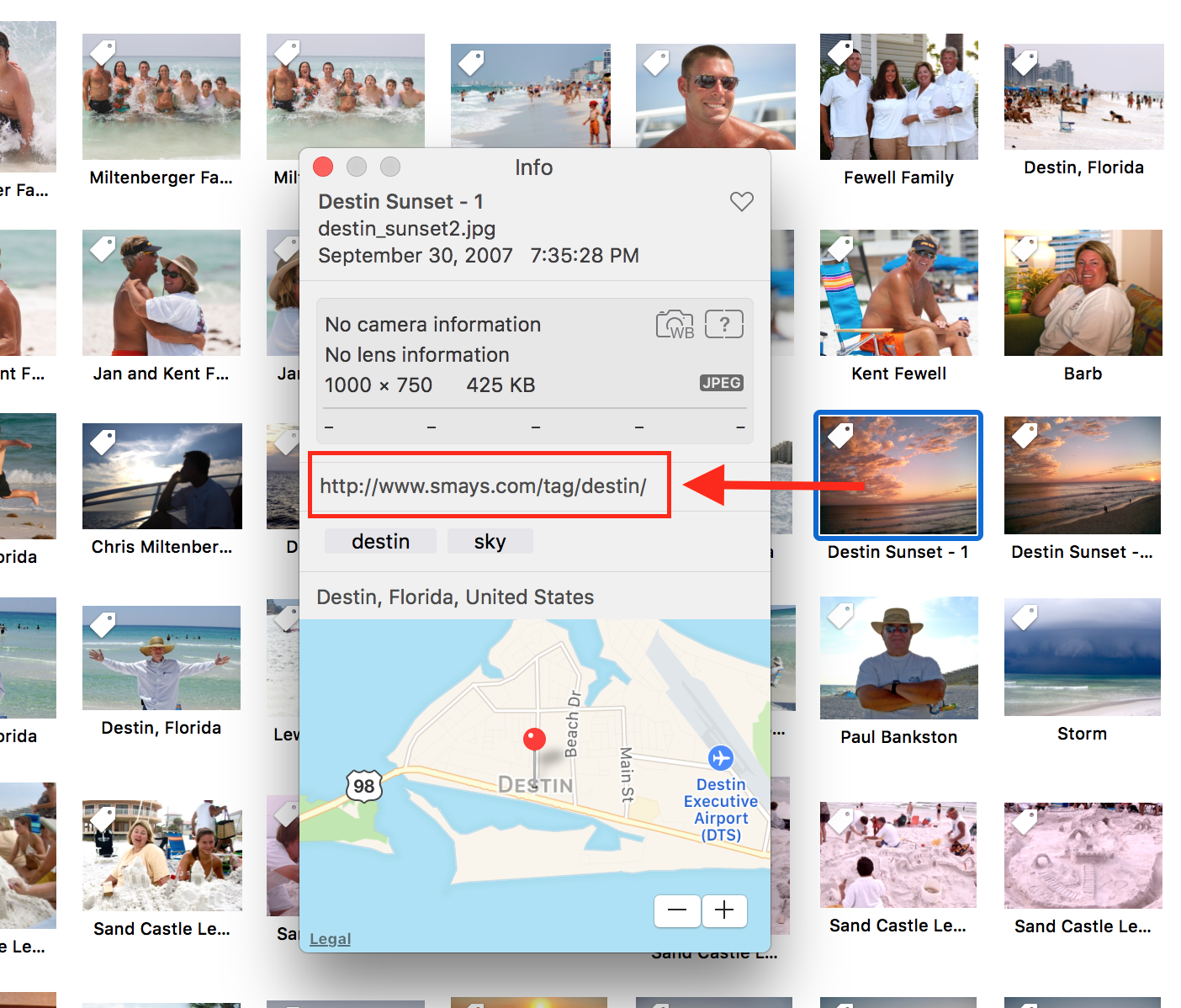
I’m still thinking about photos. Specifically, the story behind photos. The ease of taking, sharing and storing photos has created a tsunami of digital photos. The moment (and the photo that captures it) passes through our hands so quickly, there’s no time to consider the story behind the photo (if there is one). Besides, I know who’s in the photo and where it was taken and I’ll be around forever so why bother with descriptions and such. And there’s something to that. I have dozens of photos of the beach near our place in Destin, FL. There might be a story but there might not. Sometimes the photo IS the story.

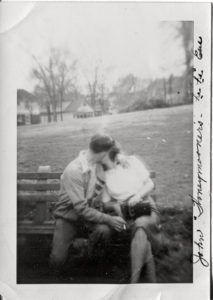
Our relationship with photos was very different when cameras used film. Days (weeks?) might pass between the time you took the photo and and when you held the print in your hands. It took some commitment to sit down with a stack of photos and make notes on the back about the people, the place, the event. Perhaps it comes down to who the photo is for. If it’s just for me, well, I know all that and when I’m gone, who cares. If you think of the photo as having a life longer than yours, the back story is priceless.

The photo of my mother and father kissing on a park bench (on their honeymoon) is a good example. What if my mom had written a few lines (on the back) describing where they were and what they had been doing?

I’m not going to write descriptions for the 1,900 photos in my collection. At least not all of them. But I have hit on a way to connect to the story behind the photos. My blog. I’ve been blogging for fifteen years and and have written (and tagged) 30 posts about Destin. I’ve added a link to those posts to the descriptions of the photos in my collection. I have a couple of hundred photos of KBOA and I’ll add http://www.kboa830.com to the description field of those photos. And so on. (If you’re a half-empty type, you’re thinking, “Yeah, but your blog will be gone when you die.” I’m working on that.)

This is all well and good if you’re retired with lots of time to manage your photos. True. But I think the case can be made that a photo that’s not worthy of a brief description might not be worth keeping. And a lot of them aren’t, in my opinion. Folks are fire-hosing photos to the cloud with little or no thought. Google Photos is an attempt to address this.

Fez pics from Gnomedex 2008

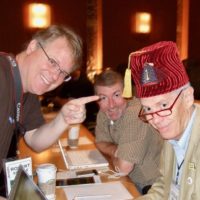
The Order of the Fez was in full blossom in 2008 so my pal Jamie Nelson and I agreed to bring the sacred headgear to the Gnomedex geekfest that year. One of the attendees was a professional photographer and we have him to thank for these fine image.