
L-R: Jamie and Spencer; Tonya; Alison; Blane; Ryan and Emily and Bowie. Desmond (Jamie and Spencer’s pup) is not pictured.

L-R: Jamie and Spencer; Tonya; Alison; Blane; Ryan and Emily and Bowie. Desmond (Jamie and Spencer’s pup) is not pictured.
From an article by Jean Twenge, a professor of psychology at San Diego State University, and author of a book on psychological changes across generations (Generation Me) and apparently has just published another (iGen).
“Around 2012, something started going wrong in the lives of teens. In just the five years between 2010 and 2015, the number of US teens who felt useless and joyless — classic symptoms of depression — surged 33 percent in large national surveys. Teen suicide attempts increased 23 percent. Even more troubling, the number of 13- to 18-year-olds who committed suicide jumped 31 percent.”
“In a new paper published in Clinical Psychological Science, my colleagues and I found that the increases in depression, suicide attempts and suicide appeared among teens from every background — more privileged and less privileged, across all races and ethnicities and in every region of the country. All told, our analysis found that the generation of teens I call ‘iGen’ — those born after 1995 — is much more likely to experience mental health issues than their millennial predecessors.”
“What happened so that so many more teens, in such a short period of time, would feel depressed, attempt suicide and commit suicide? After scouring several large surveys of teens for clues, I found that all of the possibilities traced back to a major change in teens’ lives: the sudden ascendance of the smartphone. All signs point to the screen.”
It’s been a few weeks since I got my first look at what I’ve started thinking of as “the Eldon truck.” It’s sitting outside the garage of a local mechanic who one day hopes to find the time to bring it back to life. In a bizarre example of cosmic coincidence, it’s the same year (’79) and model (Series III) as my Land Rover. While I’ve yet to get my hands on my truck, I have been allowed to poke around inside the Eldon truck.
The the owner of the truck (now deceased) reportedly bought it new in 1979 and wasn’t bashful about “enhancing” it over the years, the flyswatter and fan being to of my favorite mods.
As a general rule I tend to be clutter-averse. I like things tidy. But sitting in the driver’s seat of this old truck, it’s hard not to get a sense of performance art. There’s a Rube Goldberg Machine quality to all his little tweaks.
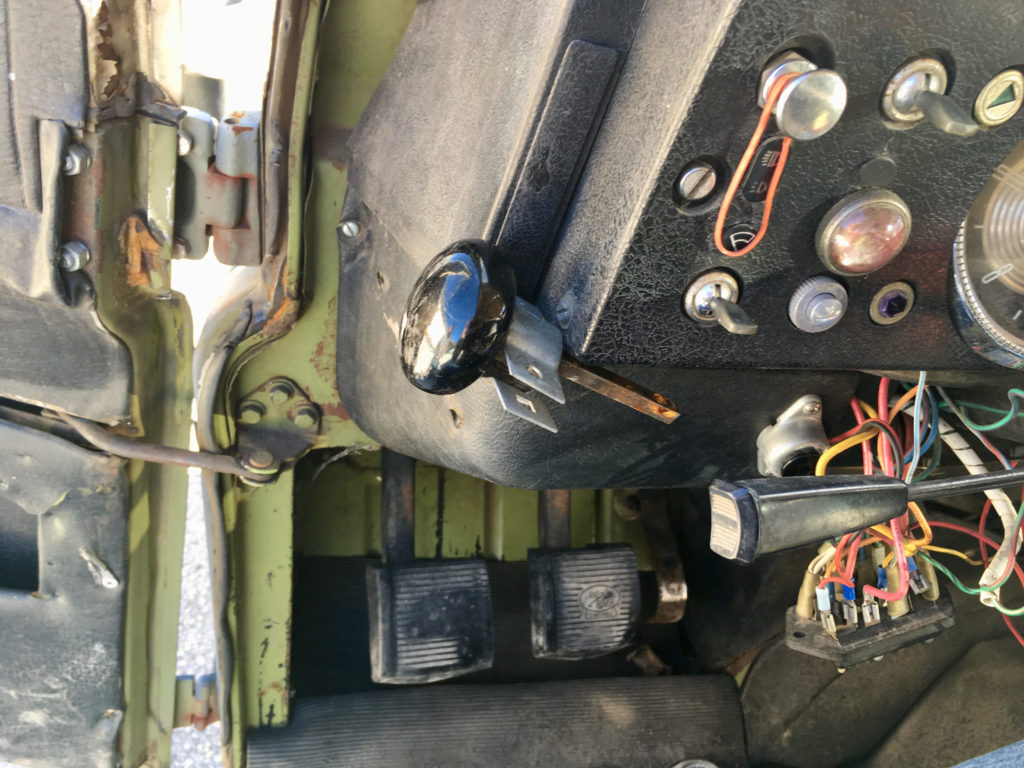
In the photo above, note the Mystery Knob. I don’t think this was merely decorative. It had some purpose but the old man took that with him when he went.
My truck will arrive in pristine condition. Seems unlikely I’ll live long enough to give it the character of this beauty. I’ll do my best.
Barb’s only had her iPhone X for a few days and is still getting the hang of new features. Today she played with some of the new photos options. Don’t know how they’ll look here but on my laptop (and her phone) they looked damned good. Not sure which setting were used for each photo but I can tell you I’ve never seen a photo taken with a phone that was this crisp and sharp. The new iPhones are just larger than I like so I’m hoping these new camera features come to some future SE model.





A couple of weeks back I posted about an old Land Rover (spotted by one of my coffee shop buds) wasting away in Eldon, MO, a small town about 30 miles southwest of Jefferson City. Since then another coffee shop pal purchased the the truck and it’s now sitting in the garage of another coffee shop friend who has the task of bringing the truck back to life.
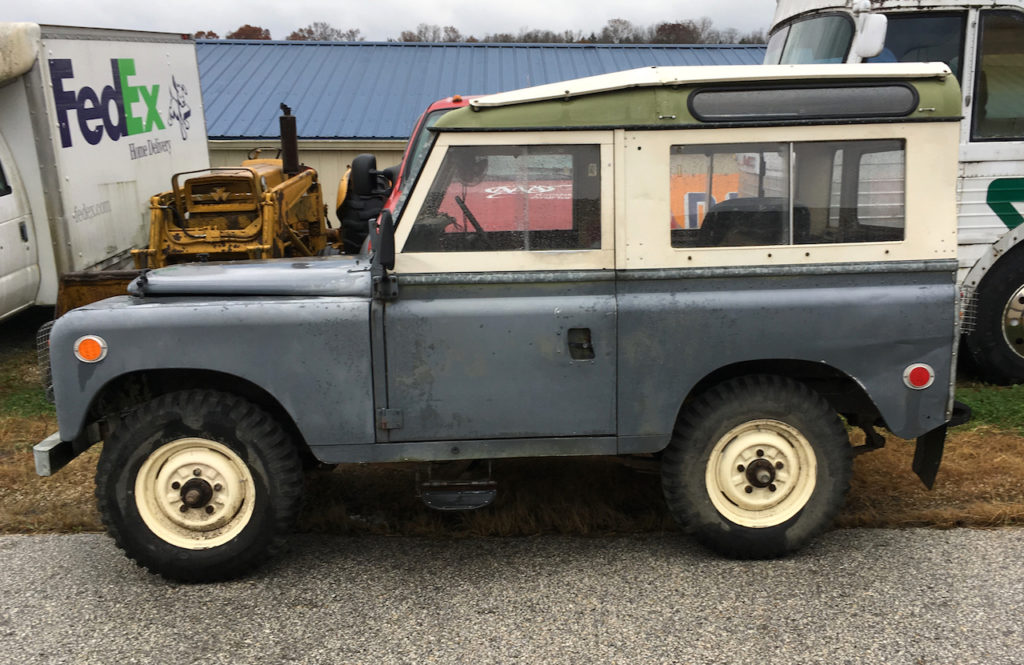
She needs some work but that’s a good thing. This is the exact year and model as my truck, right down to the 2.25 litre diesel engine. As pal #3 (a talented mechanic) works his magic, I’m hoping to watch (quietly) from a corner of the garage. (I assume I’ll have to pay for the privilege)
There has also been some question as to whether my truck would fit through my garage door. I kept hearing different measurements from the guys in San Diego. This is important because we don’t want a diesel engine sitting outside during mid-Missouri winters. I now know it will pass easily into my garage (84 in clearance).
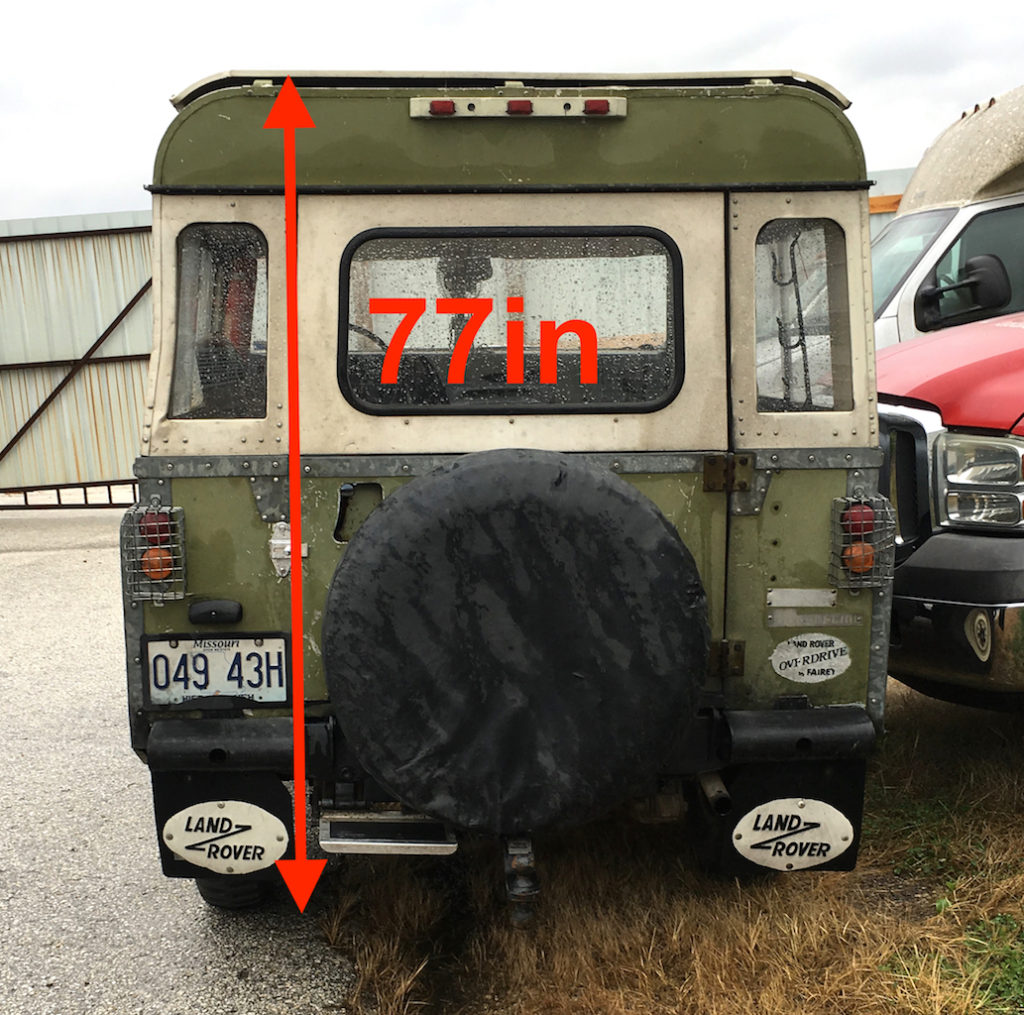
My truck scheduled to be transported from SoCal to NoCal this week.