
Recovery Rope

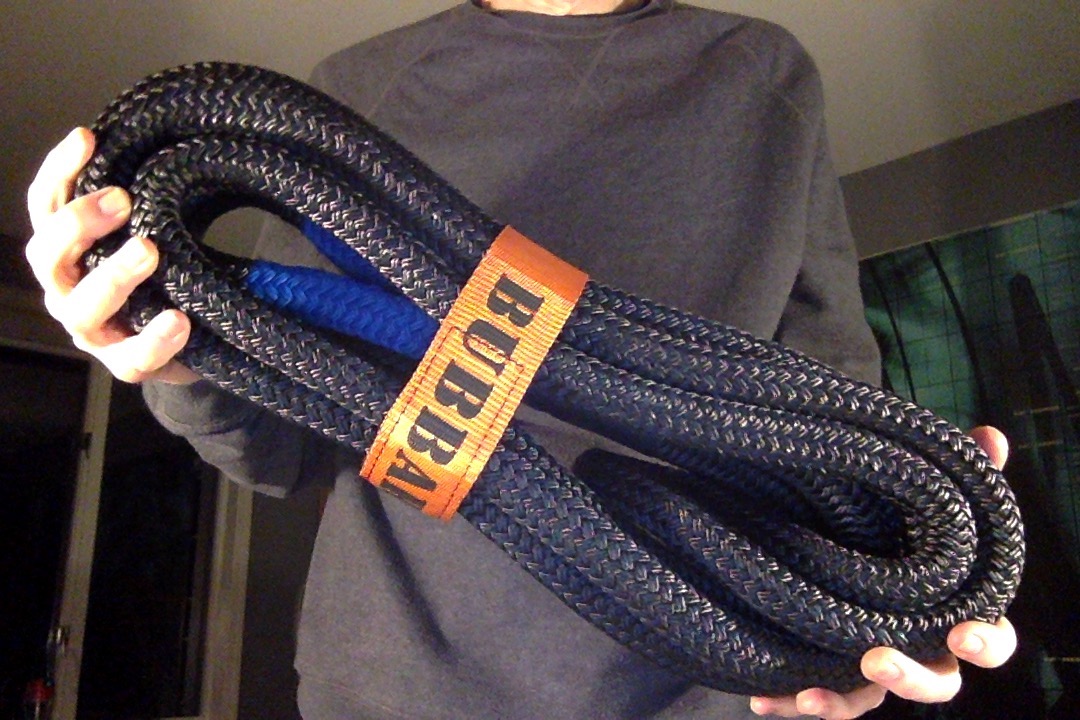
This is a BubbaRope Kinetic Energy Recovery Rope. 7/8” x 20’, breaking strength 28,600 pounds. I don’t plan to get in the kind of deep shit where you need one of theses but no self-respecting Land Rover owner would be without one. Mr. Wolf recommended the BubbaRope and it’s pretty impressive. There seems to be a difference between a “snatch strap” and tow rope but I’m still too new to the game to appreciate the difference.

Growing up in southeast Missouri it was not uncommon to see one vehicle towing another down the highway with a big old chain between them. (Can you say shrapnel?) But I found damned few photos of that so drivers have moved on to better solutions.

With space at a premium, I’ll probably keep this hanging on the wall of the garage and toss it in the back of the truck when I expect to be off-road. Along with a couple of Gator-Jaw shackles.
Mr. Wolf badge

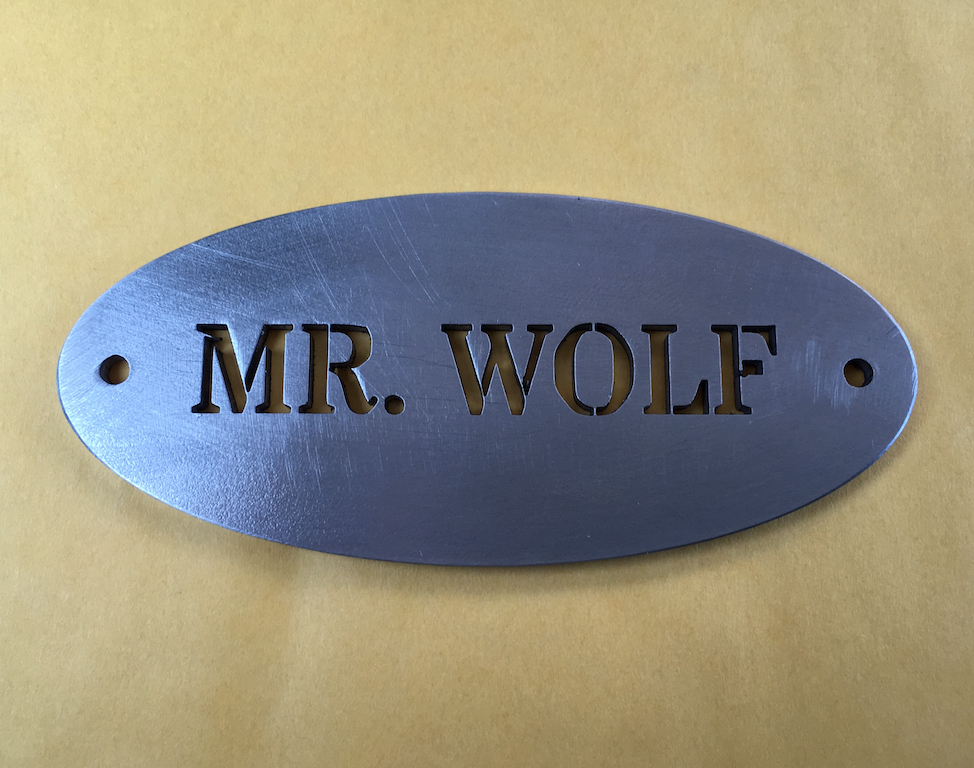
Everybody hates those badges car dealers bolt on to new cars. But nobody removes them. Except me and Mr. Wolf.

The folks that did the initial restoration on my truck stuck a couple of these on and I would have left them if they hadn’t been so sloppy with the restoration. I can’t, in good conscience, promote these guys. Mr. Wolf, on the other hand, has been my salvation so I had a little custom badge made. You can see the one we’re replacing in this photo.

Fire extinguisher for your vehicle

As The Great Truck Project draws to a close it’s time to think about what sort of tools and equipment gets to ride along (see previous post). I recently asked Mr. Wolf about fire extinguishers:

Dry chemical makes a huge mess. “Huge mess” actually doesn’t do it justice. If you discharge a dry chemical extinguisher inside a vehicle, it is a disaster. You will never get the grit and sticky junk out of the nooks and crannies. Worse yet, most (all?) dry chemical compositions are corrosive, so when it gets into the dashboard electrical bits, it ruins things. Not immediately, but over time. Is it better than just watching it burn? Sure. But most times undoing the damage done by the extinguisher takes more effort than repairing the damage done by the fire. Oh, also the powder that comes out is sort of sandy, I don’t know if it has silica in it or what, but if you spray the engine bay with it and the engine inhales the powder, major engine damage will follow.

So that leaves us with Halotron (the replacement for Halon 1211) and CO2. Both have risks (Halotron discharged in the cabin of a vehicle will suffocate you, CO2 will give you frostbite if you point it at yourself. Both scenarios seem avoidable…) CO2 is a bit cheaper to refill, and does a great job, so that’s the direction I would head.

The breadth and depth of Mr. Wolf’s knowledge continues to amaze.