If you really want to communicate with me… just pick up the phone and call me.
Yes, I regularly check email and love iMessage, but I much prefer real-time communication.

If you really want to communicate with me… just pick up the phone and call me.
Yes, I regularly check email and love iMessage, but I much prefer real-time communication.
Excerpts from Zucked: Waking Up to the Facebook Catastrophe by Roger McNamee.
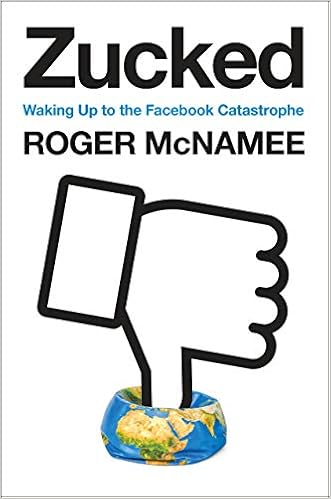
Imagine a stew of unregulated capitalism, addictive technology, and authoritarian values, combined with Silicon Valley’s relentlessness and hubris, unleashed on billions of unsuspecting users.
The most likely case is that the technology and business model of Facebook and others will continue to undermine democracy, public health, privacy, and innovation until a countervailing power, in the form of government intervention or user protest, forces change.
Surveillance, the sharing of user data, and behavioral modification are the foundation of Facebook’s success.
When users are riled up, they consume and share more content. Dispassionate users have relatively little value to Facebook.
Facebook is the fourth most valuable company in America, despite being only fifteen years old, and its value stems from its mastery of surveillance and behavioral modification.
It turns out that connecting 2.2 billion people on a single network does not naturally produce happiness for all. It puts pressure on users, first to present a desirable image, then to command attention in the form of Likes or shares from others. In such an environment, the loudest voices dominate, which can be intimidating. As a result, we follow the human instinct to organize ourselves into clusters or tribes.
The competition for attention across the media and technology spectrum rewards the worst social behavior. Extreme views attract more attention, so platforms recommend them.
Research suggests that people who accept one conspiracy theory have a high likelihood of accepting a second one.
Belonging is stronger than facts.
The Russians might have invented a new kind of warfare, one perfectly suited to a fading economic power looking to regain superpower status.
Technology tends to reflect the values of the people who create them.
When a company grows from nothing to 2.2 billion active users and forty billion dollars in revenues in only fourteen years, you can be sure of three things: First, the original idea was brilliant. Second, execution of the business plan had to be nearly flawless. And third, at some point along the way, the people who manage the company will lose perspective. If everything your company touches turns into gold for years on end, your executives will start to believe the good things people say about them. They will view their mission as exalted. They will reject criticism. They will ask, “If the critics are so smart, why aren’t they so successful and rich as we are?”
On Facebook, information and disinformation look the same; the only difference is that disinformation generates more revenue, so it gets much better treatment.
Huge amounts of data are available. Campaigns can buy a list of two hundred million voting-age Americans with fifteen hundred data points per person from a legitimate data broker for seventy-five thousand dollars.
Where Orwell worried about the burning of books, Huxley argued that the greater risk would be citizen no longer wanting to read.
Facebook is a threat to democracy.
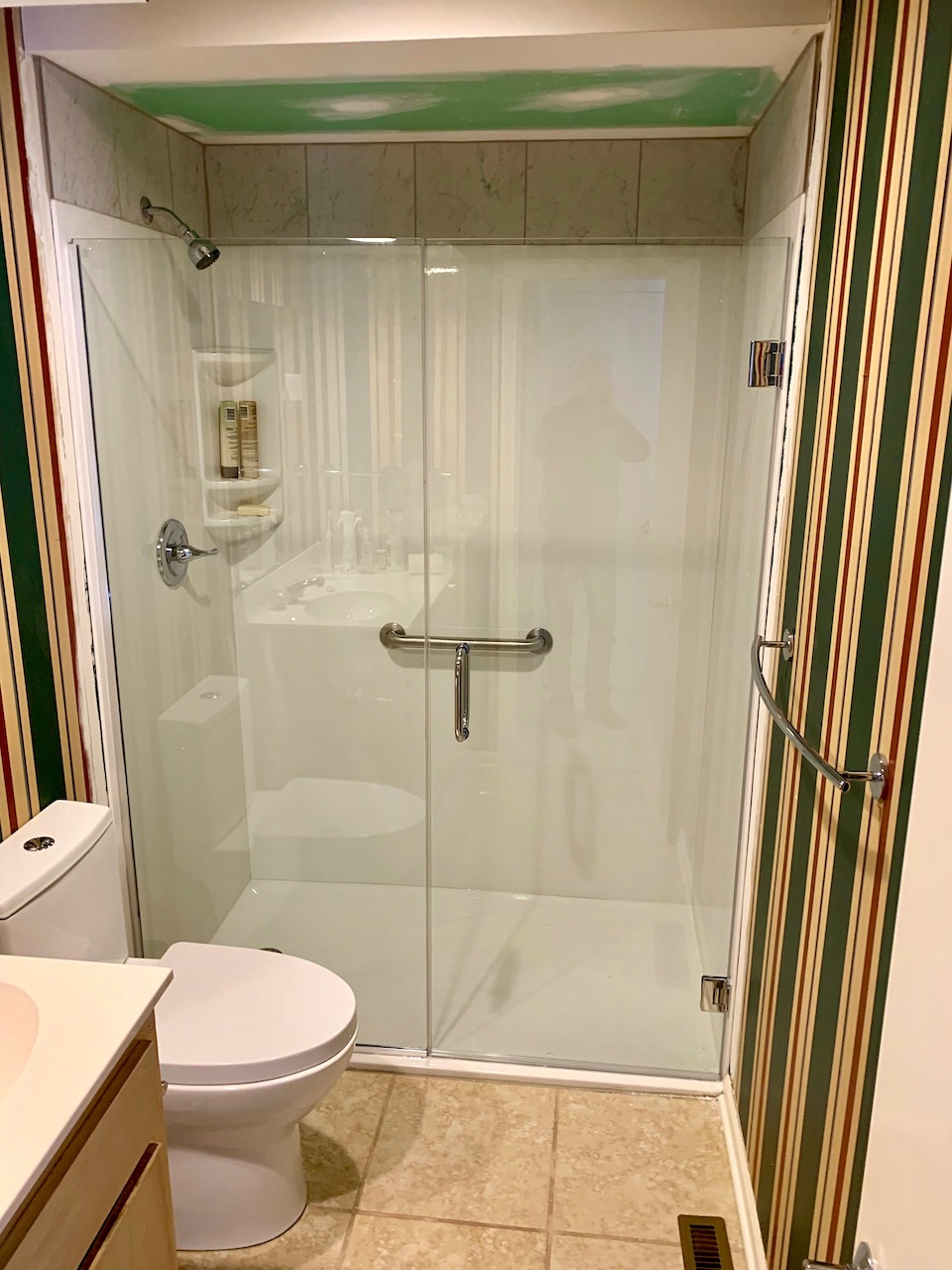
When we built our home (30+ years ago) we put one of those molded tub-shower things in the upstairs bathroom (the one I use). I’ve been stepping into and out of the tub to shower ever since. I never take baths. Earlier this year I decided I needed a walk-in shower and the workers finished it yesterday. Still have some painting and trim work to do but I can use the shower and I love it.
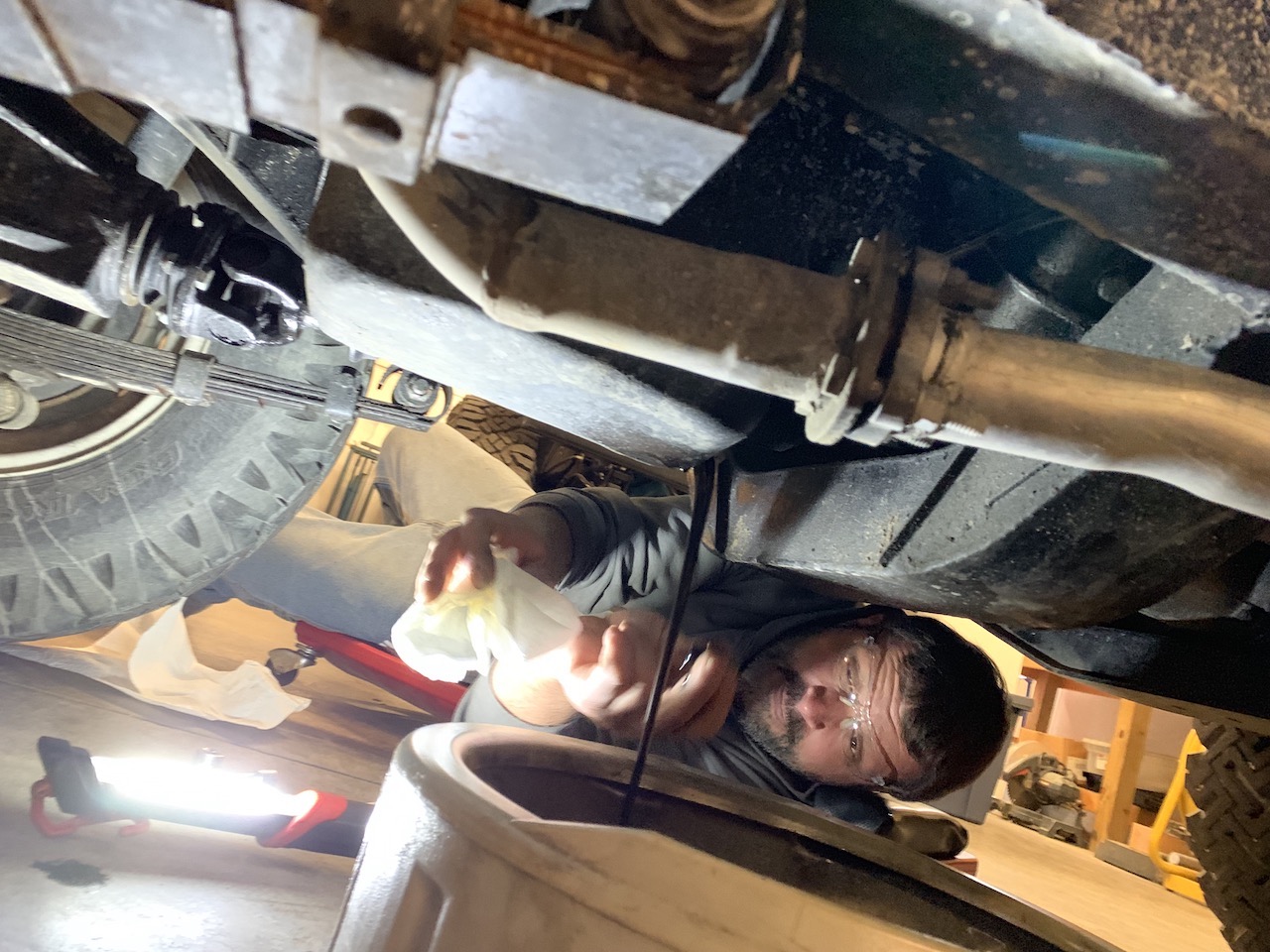
UPDATE February 19, 2019: Yesterday we drained transmission and transfer case (the transmission was very low on fluid) and refilled with the correct fluid. Wow, what a difference. Shifting gears now much quieter and feels almost ‘silky.’ Still have to do the diffs and there’s an issue with a leaky seal in one of the wheels. George Tergin did the work but I’m proud to report got some transmission fluid in my hair.
Coming up on six months since I took delivery of the Land Rover. Even as my daily driver I’ve only put 5,333 km (3,313 mi) on the truck so it really isn’t due (according to the manual) for a service until 10,000 km. But my mechanic pal George had a rare open window so we pulled it into his shop yesterday for a service and check up.
Those of a certain age will remember servicing your car every 3,000 miles. I think that’s frequency we’re gonna shoot for. Should work out to every six months and more often is more better.
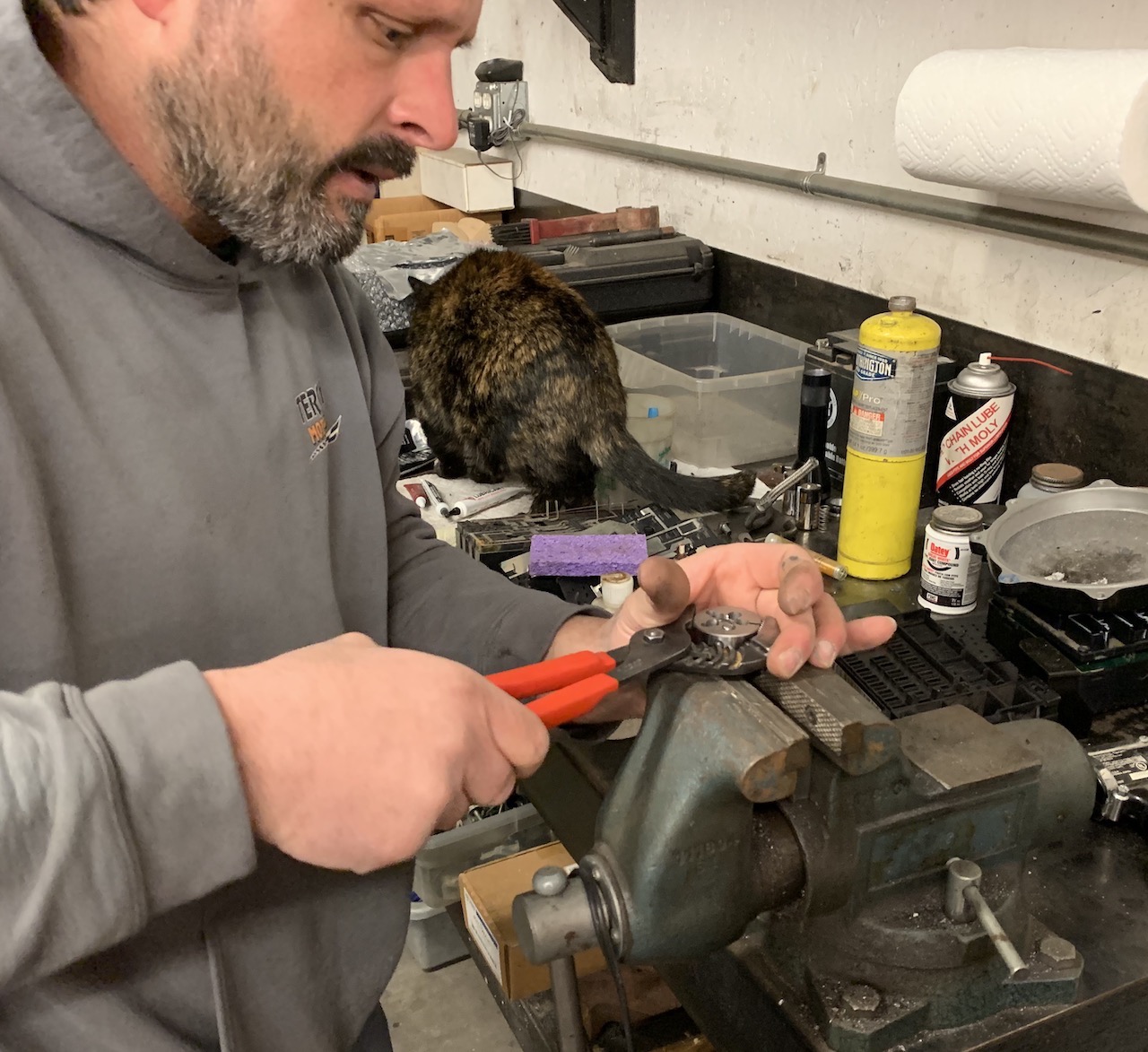
George is a meticulous mechanic. No detail too small to examine. Probably spent half an hour just on the oil pan drain plug. It was my dime so I instructed him to pretend he was working on his own vehicle.
The truck has an oil bath air filter and Philippe must have been double-jointed to make it fit with the newer engine. Once George got it out he explained how it worked. Simple yet effective technology.
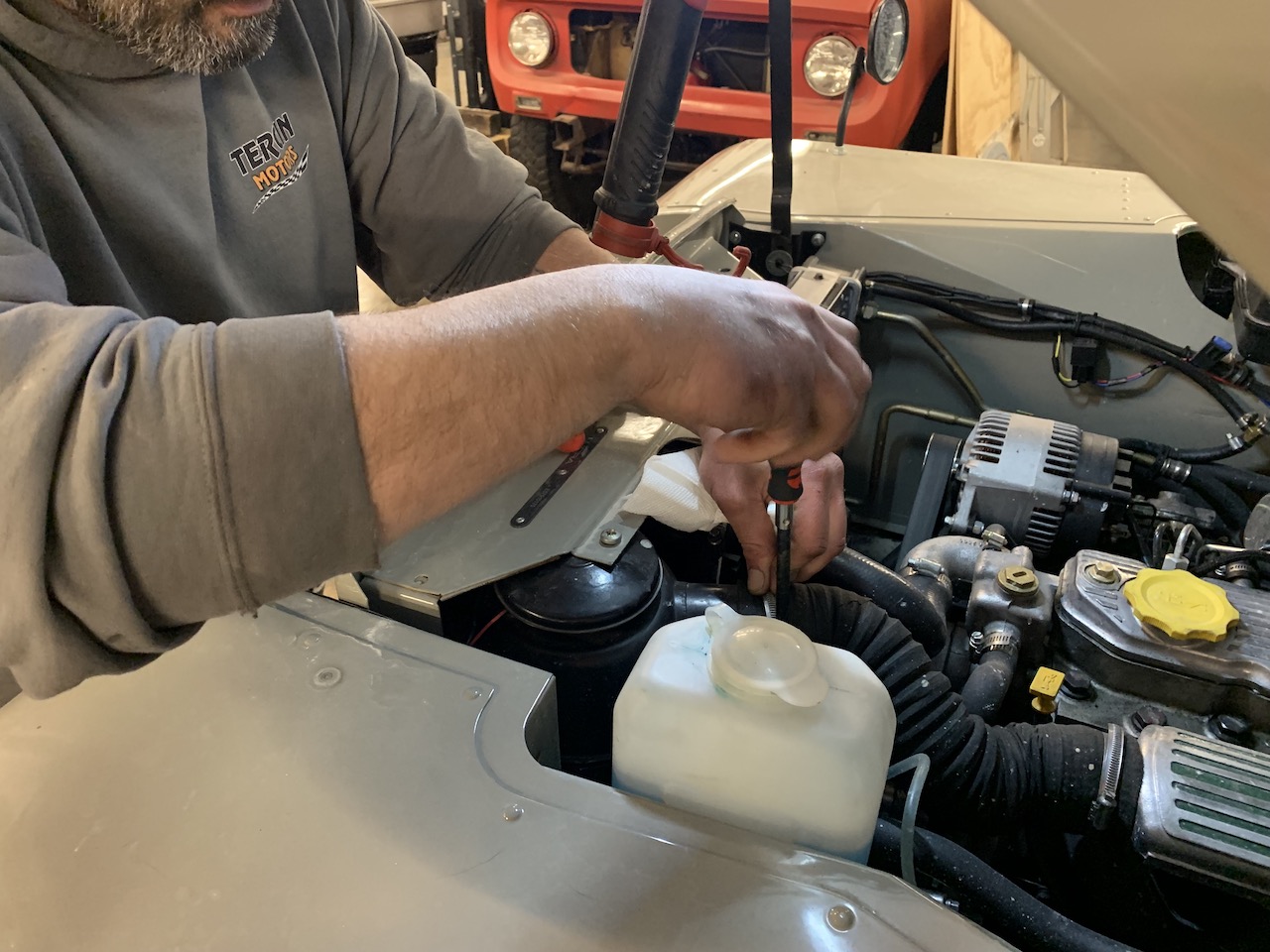
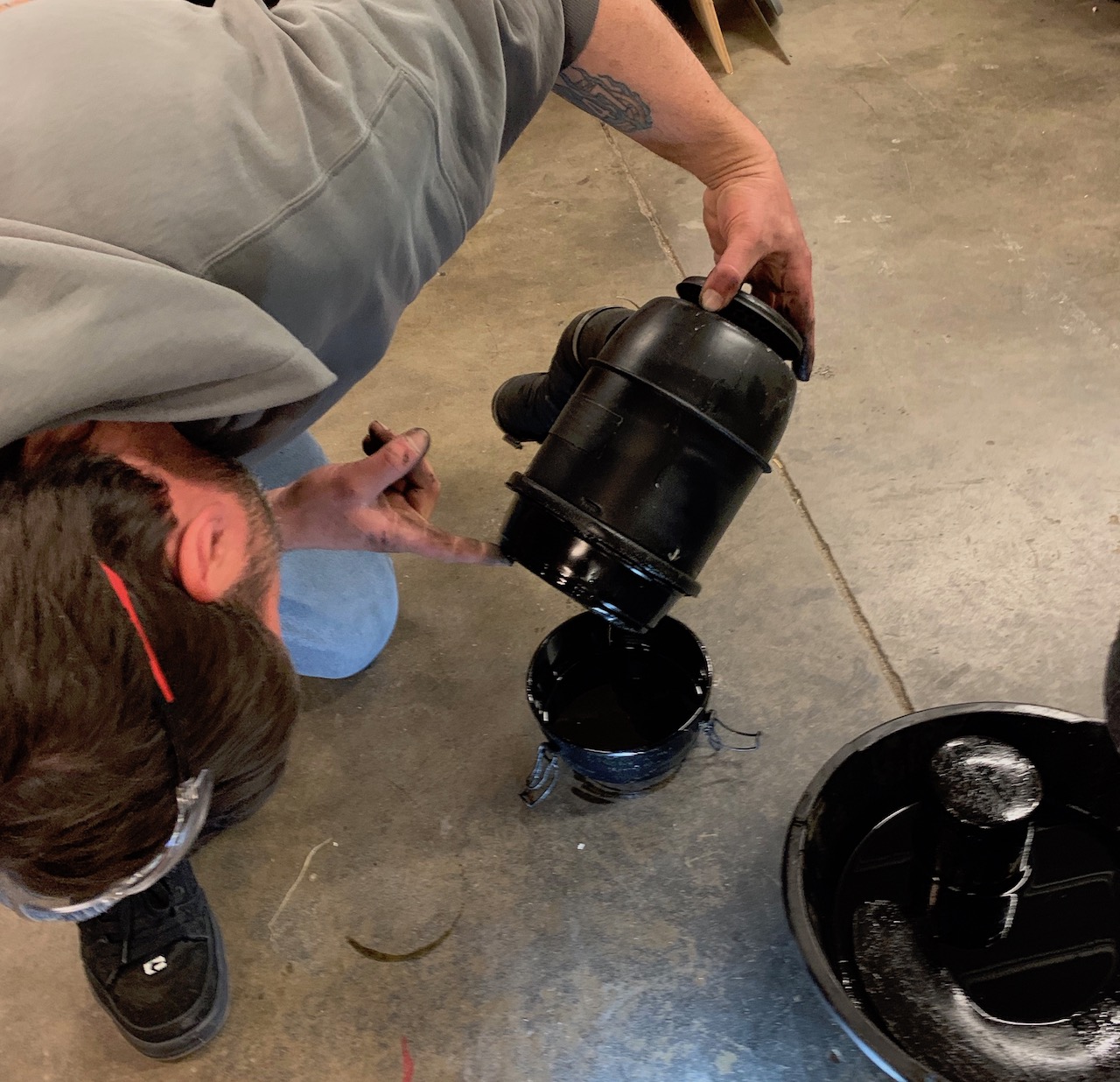
Replacing oil filter and fuel filter was pretty straight forward. The lubricant level in the front differential was little low so we topped that off.
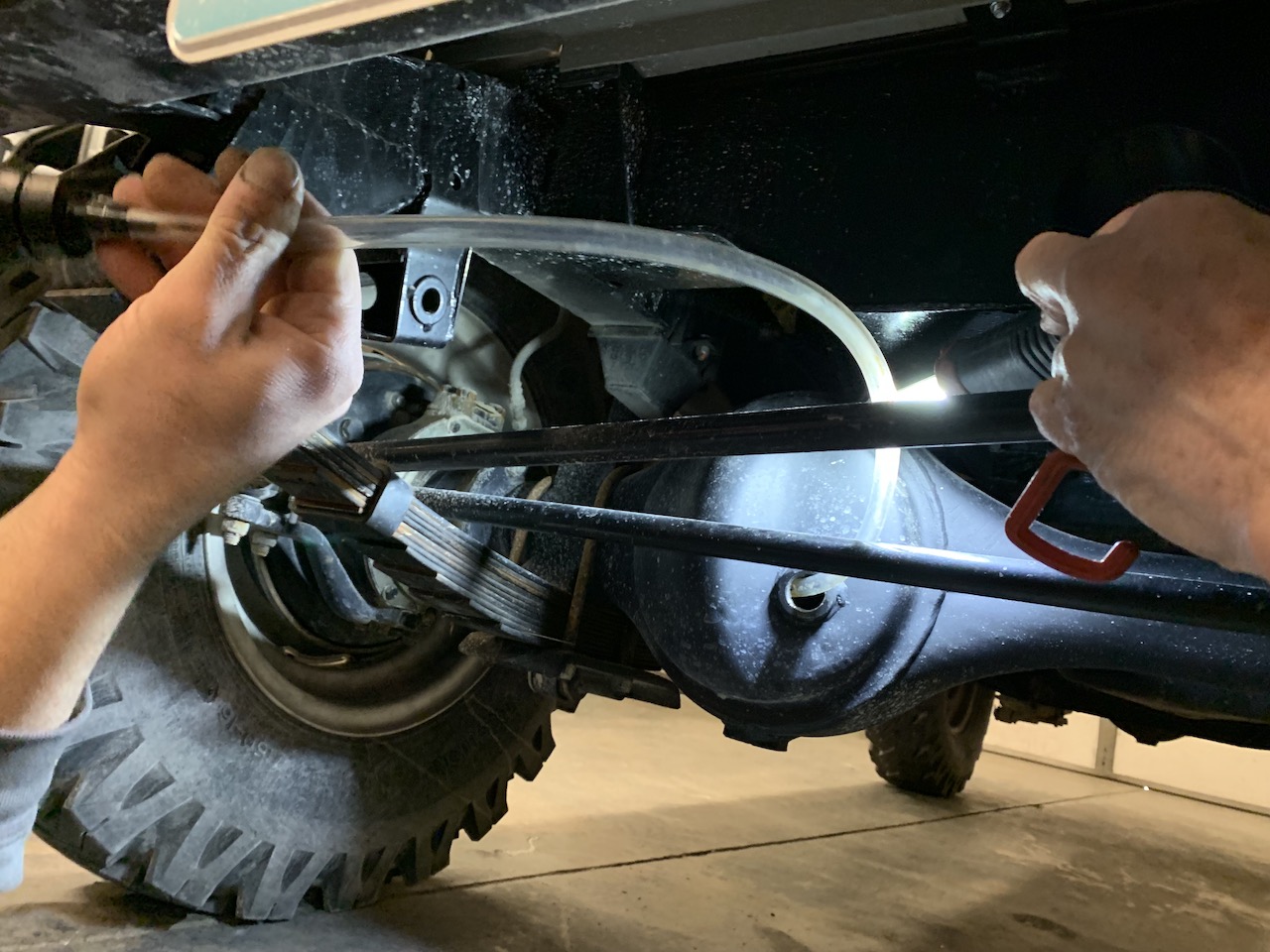
We hit a snag while checking level on the transfer case. I won’t bore you with details but it seems like the kind of thing the guys at JiffyLube might have missed. George is doing more research so the truck remains in his shop for a bit. Just the eventuality that prompted me to add the pickup to my fleet.
All in all a fun day. Having watched George I think I could probably change the oil and filters on the truck but I doubt I will. Much more fun — and educational — to do it with George.
“I cannot get used to seeing myriads of people in the street peering into little boxes or holding them in front of their faces, walking blithely in the path of moving traffic, totally out of touch with their surroundings. I am most alarmed by such distraction and inattention when I see young parents staring at their cell phones and ignoring their own babies as they walk or wheel them along.”
“Everything is public now, potentially: one’s thoughts, one’s photos, one’s movements, one’s purchases. There is no privacy and apparently little desire for it in a world devoted to non-stop use of social media. Every minute, every second, has to be spent with one’s device clutched in one’s hand. Those trapped in this virtual world are never alone, never able to concentrate and appreciate in their own way, silently. They have given up, to a great extent, the amenities and achievements of civilization: solitude and leisure, the sanction to be oneself, truly absorbed, whether in contemplating a work of art, a scientific theory, a sunset, or the face of one’s beloved.”