
I never tire of these. The face of each performer radiates joy.
Universal Driving Gestures
 As soon as I started driving my old Land Rover around town I started getting the “thumbs up” gesture from other drivers. Almost always with a smile. This gesture is clearly meant to convey something positive. They like/admire the Rover. Wikipedia has a page on the history of the gesture. I love getting the thumbs up and started wondering why there are not more universally (at least in English speaking countries) recognized gestures between motorists. The only other one I can think of is The Finger. The other end of the approval spectrum, if you will.
Land Rover hardtop back on
Doesn’t seem that long ago (April 29) we took the hardtop off the Land Rover and replaced it with the soft-top. We carefully stowed the hardtop in a storage unit where not quite a month later a tornado banged the shit out of it (and a bunch of other stuff in Jefferson City). More photos.
It’s still warm enough for the soft-top but the mornings are getting cool so I decided to put the hardtop back on and today some pals showed up to help.
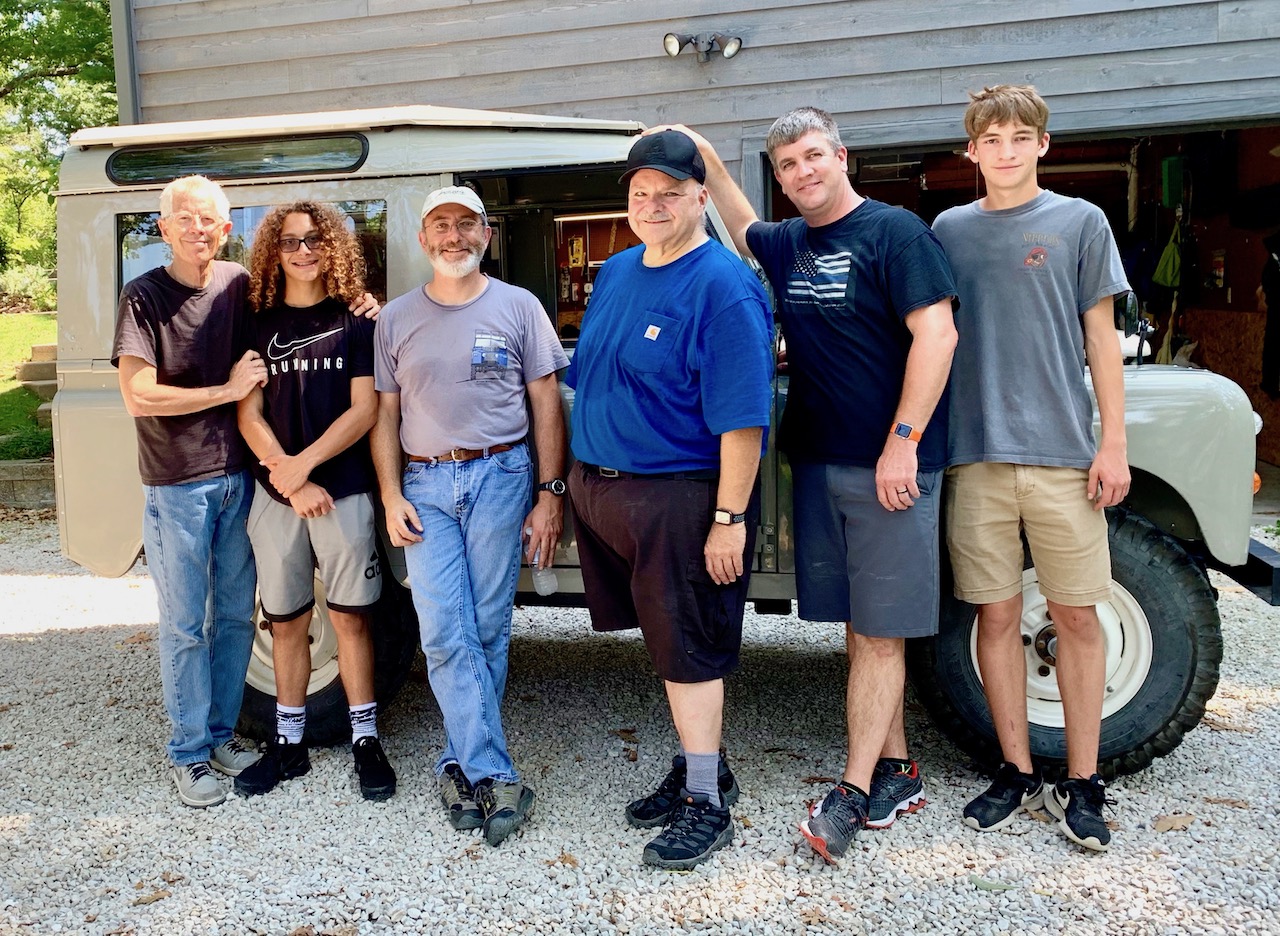
L-R: Me, Benjamin and John Middleton, George Kopp, Andrew and Ben Lear.
Traveling Vintage Bus Mechanic
My friend George has a thing for old buses. He has two, one in better shape than the other. But both need work and they are not the sort of vehicles you can put on a trailer and take to the shop. So George called the “Bus Grease Monkey.“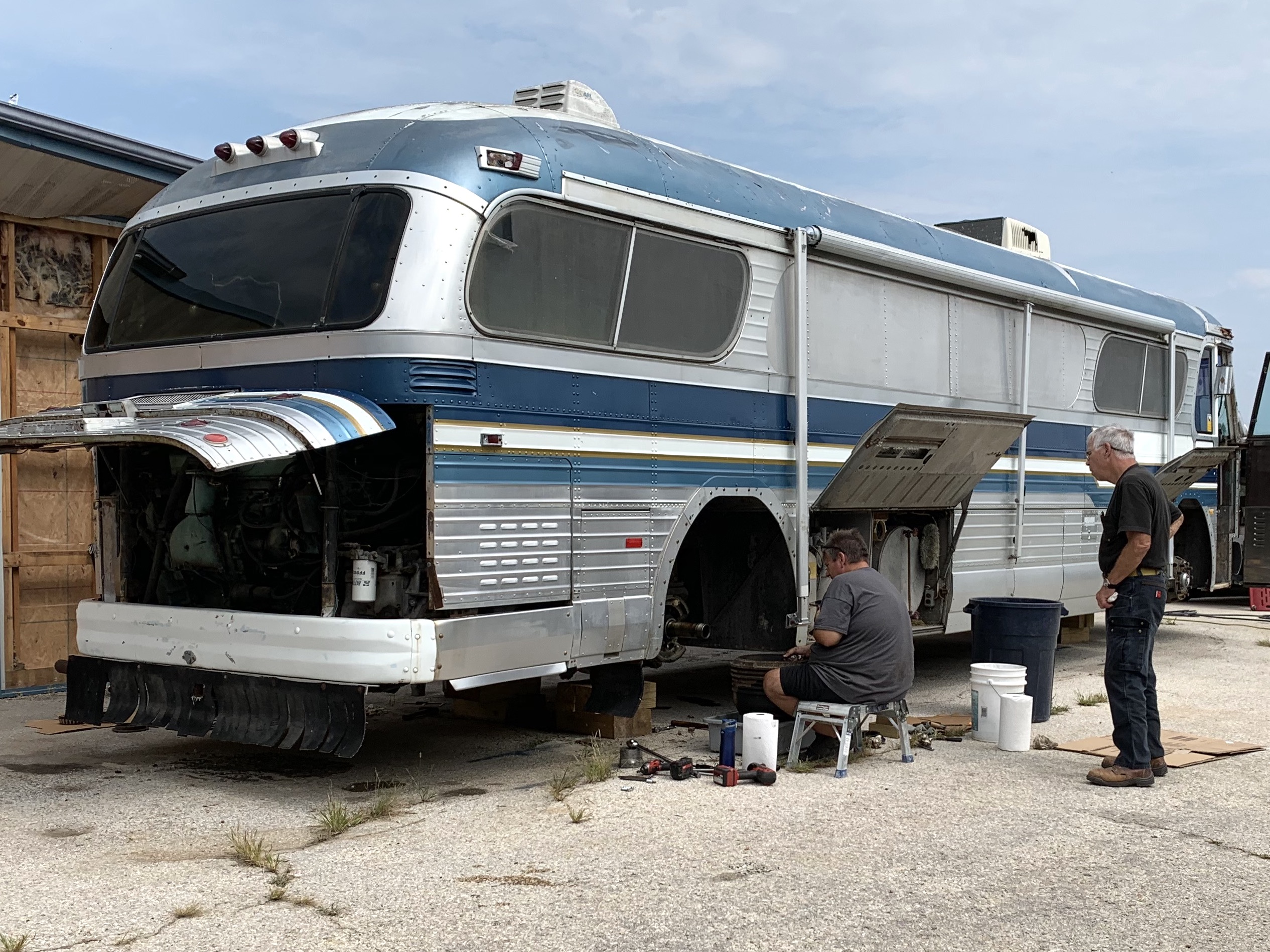 Scott travels all over the country, working on old buses. Appropriately, he travels in an old bus (below). Don’t miss his “How I got in this business” video.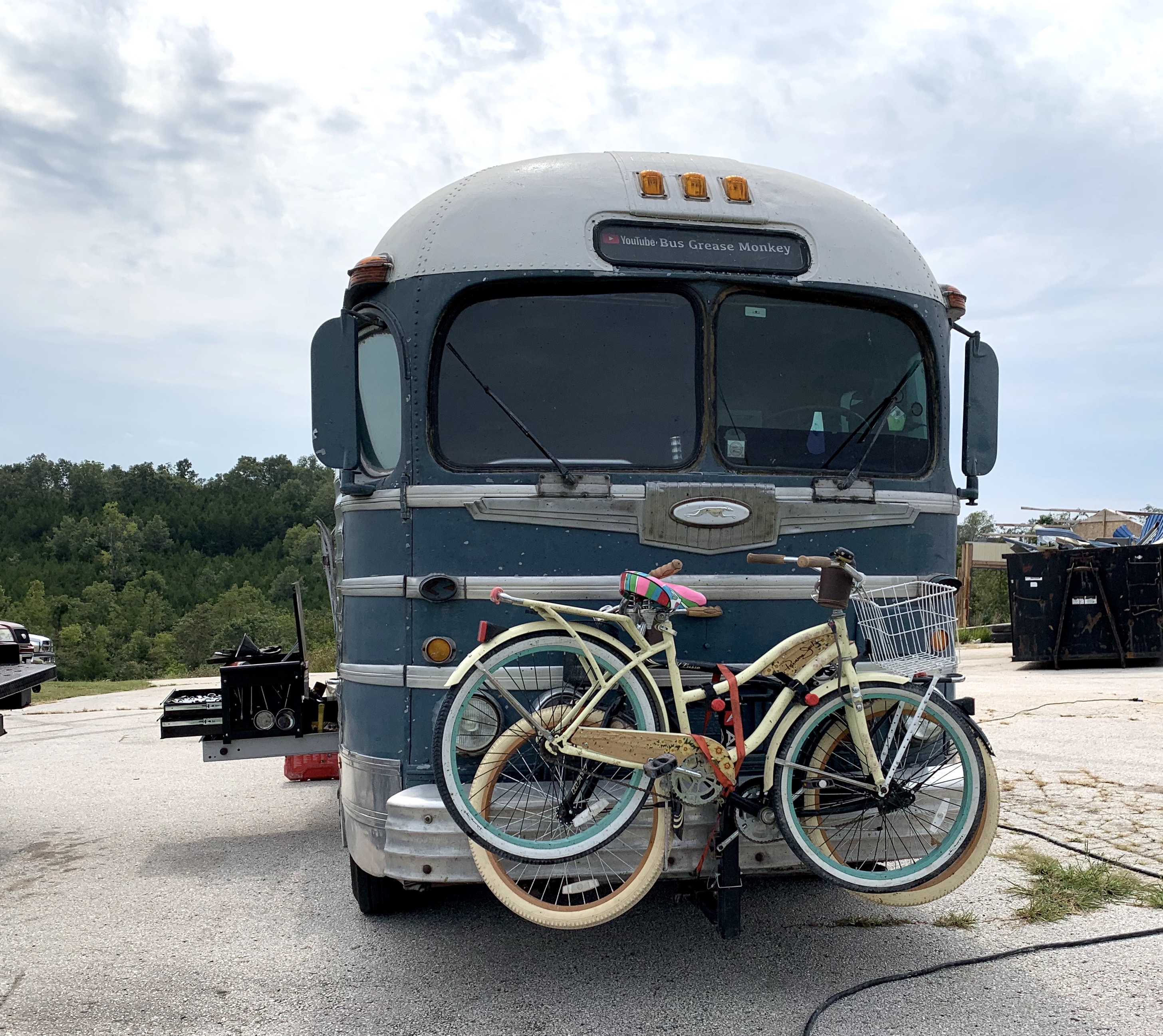
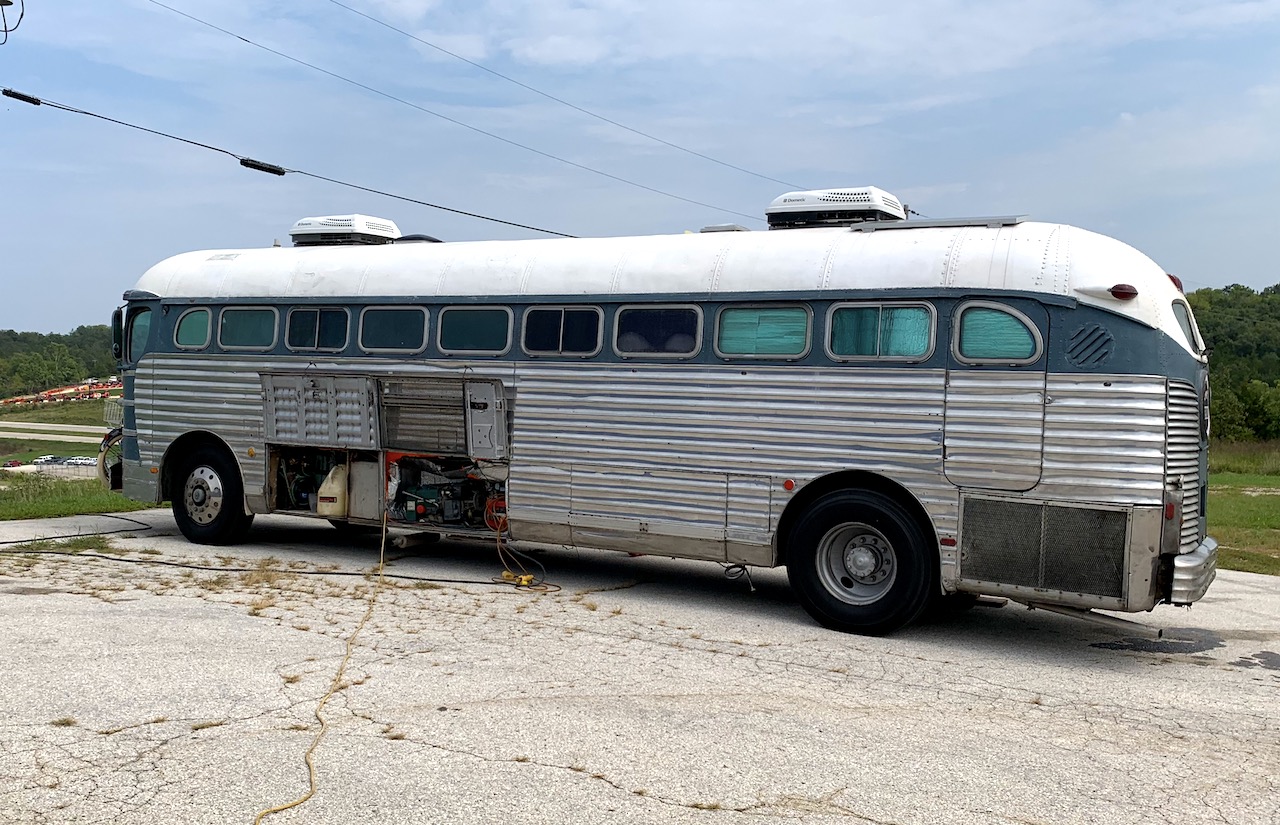 During the time I watched they were working on a wheel. Lots of phone calls trying to find parts for these ancient beasts. And everything is heavy.
I’m old enough to remember when a Greyhound or Trailways bus was a pretty nice way to get somewhere in a time before every man, woman and child had their own car. There are still a lot of these old buses out there. According to traveling bus mechanic, they built them really well until someone figured out they could sell more buses if they engineered in some planned obsolescence.
Update: Okay, I find this amazing. Scott has a very $ucce$ful YouTube channel. And after working his ass off yesterday in the mid-Missouri heat, he uploaded a couple of videos recounting the work he did on George’s video. And I think he was taking question live while streaming the video! Which is very detail and runs 30 minutes. This, my friends, is how you build a huge YouTube audience.