Before magnetic recording tape

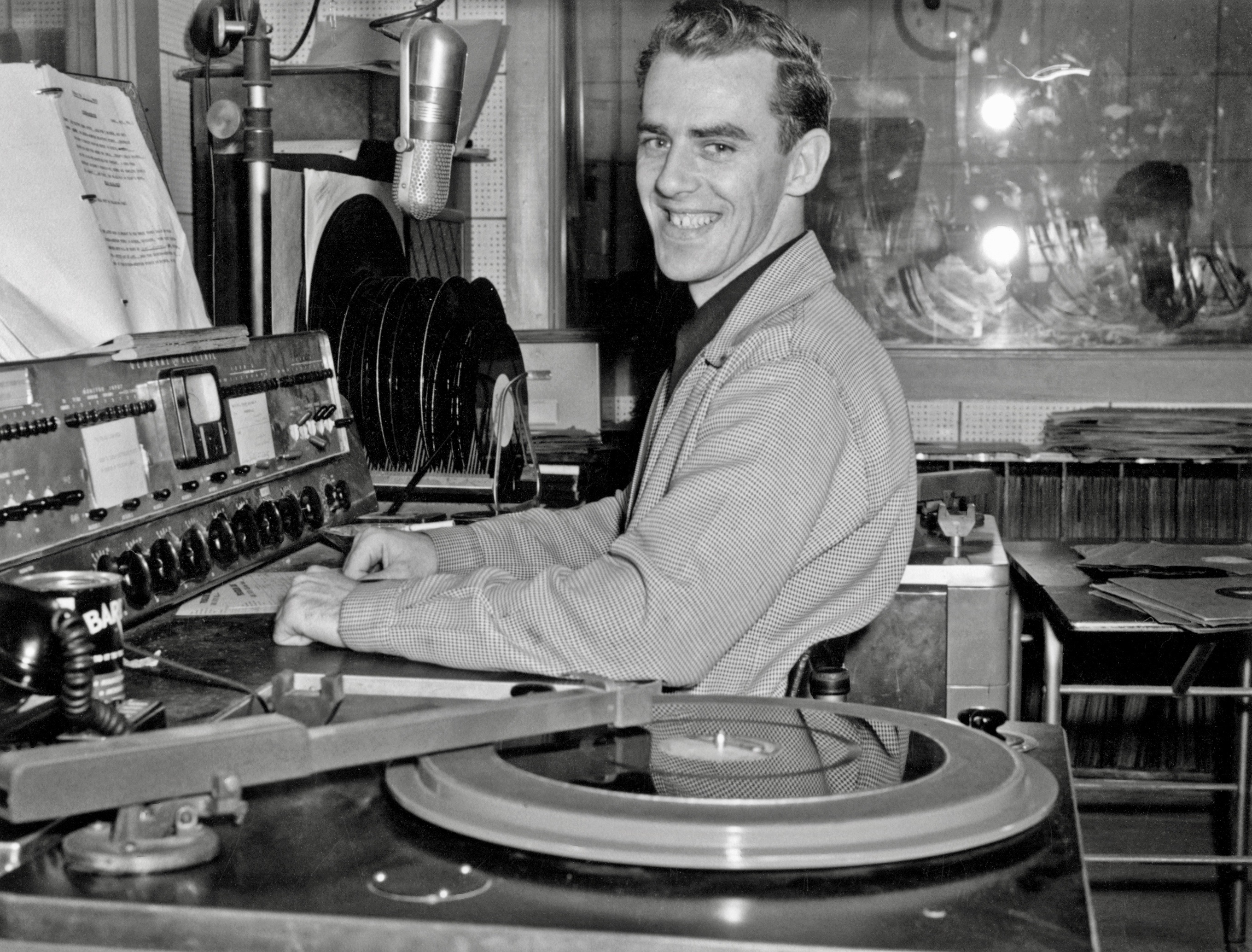
I’m not sure I’ve shared this photo of my old man. I’m blessed with a lot of great pics. It’s clear from this one how much he enjoys what he’s doing. Note the disc on the turntable in the foreground: just one track cut into the center of the disc. Probably a commercial. You can see more of these to the right of the control board. This is before magnetic tape and they “cut” these discs in the adjacent studio. If you fucked up while cutting, you put a piece of cellophane tape over that track and cut another one. I can’t even imagine trying find and cue these while doing a live shift. But the alternative was reading everything live. That would get old fast, for the announcer and the listener. Must have been an exciting time.

Photo descriptions

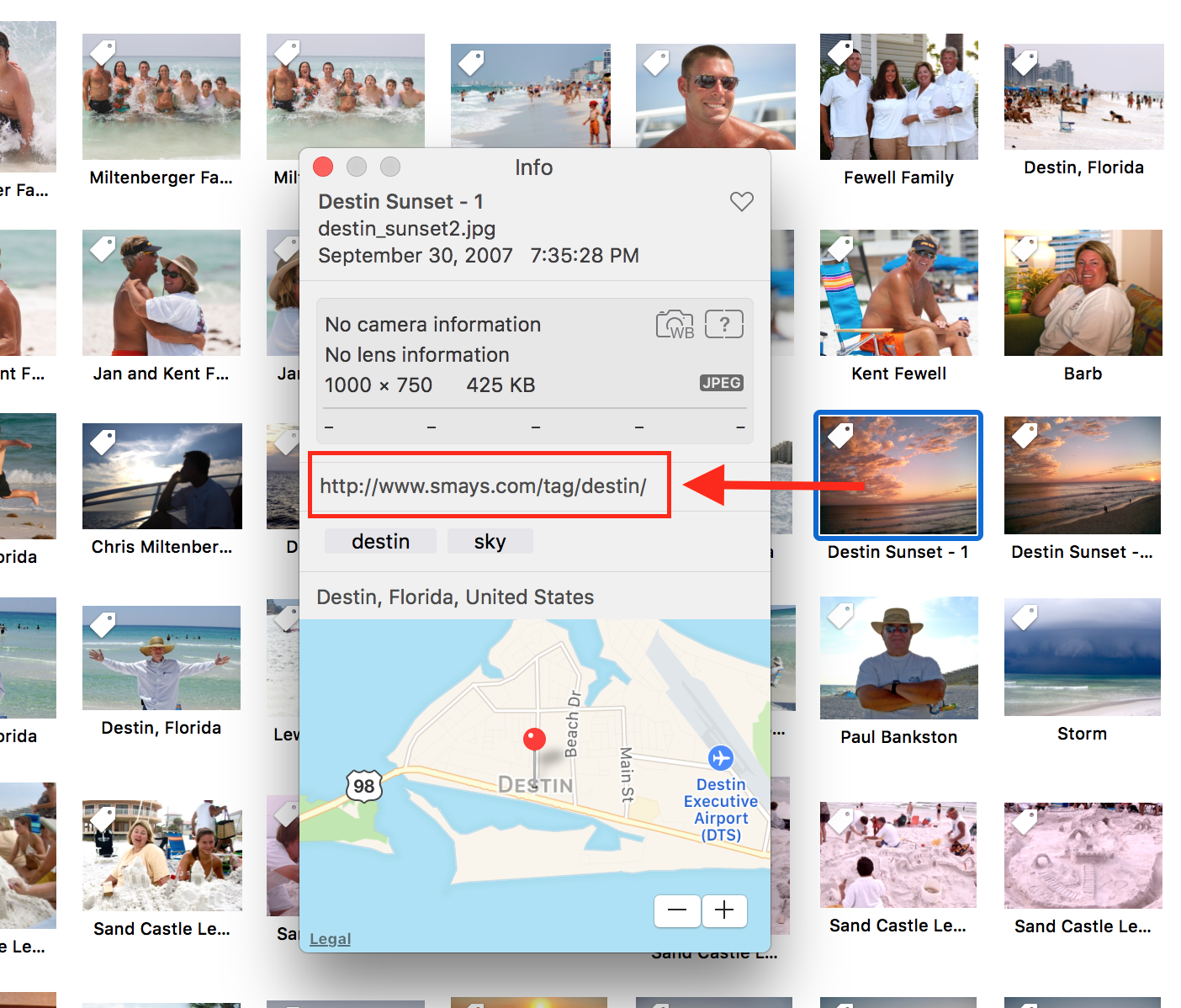
I’m still thinking about photos. Specifically, the story behind photos. The ease of taking, sharing and storing photos has created a tsunami of digital photos. The moment (and the photo that captures it) passes through our hands so quickly, there’s no time to consider the story behind the photo (if there is one). Besides, I know who’s in the photo and where it was taken and I’ll be around forever so why bother with descriptions and such. And there’s something to that. I have dozens of photos of the beach near our place in Destin, FL. There might be a story but there might not. Sometimes the photo IS the story.

Our relationship with photos was very different when cameras used film. Days (weeks?) might pass between the time you took the photo and and when you held the print in your hands. It took some commitment to sit down with a stack of photos and make notes on the back about the people, the place, the event. Perhaps it comes down to who the photo is for. If it’s just for me, well, I know all that and when I’m gone, who cares. If you think of the photo as having a life longer than yours, the back story is priceless.

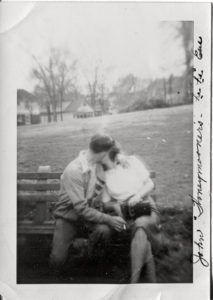
The photo of my mother and father kissing on a park bench (on their honeymoon) is a good example. What if my mom had written a few lines (on the back) describing where they were and what they had been doing?

I’m not going to write descriptions for the 1,900 photos in my collection. At least not all of them. But I have hit on a way to connect to the story behind the photos. My blog. I’ve been blogging for fifteen years and and have written (and tagged) 30 posts about Destin. I’ve added a link to those posts to the descriptions of the photos in my collection. I have a couple of hundred photos of KBOA and I’ll add http://www.kboa830.com to the description field of those photos. And so on. (If you’re a half-empty type, you’re thinking, “Yeah, but your blog will be gone when you die.” I’m working on that.)

This is all well and good if you’re retired with lots of time to manage your photos. True. But I think the case can be made that a photo that’s not worthy of a brief description might not be worth keeping. And a lot of them aren’t, in my opinion. Folks are fire-hosing photos to the cloud with little or no thought. Google Photos is an attempt to address this.

If you could only keep 2,000 photos

I’ve been collecting digital photos for years. Since photos became digital, in fact. Along the way I scanned a few thousand photos. More than once. In the early days of the web I wanted to keep images small so they could be uploaded to the web and viewed with molasses-slow dial-up connections. 72 dpi, 640×480. Shitty little things. As the online world improved and I realized my mistake, I scanned many prints again at nice high (600 dpi) resolution.

When I got my first Mac I started managing all my photos in iPhoto (now Apple Photo). I titled every photo and put them in albums and added keywords and then forgot about them. At one point I guess I had about 5,000 photos. That’s nothing compared to most users. Lot of folks have ten, twenty thousand photos. More.

I’ve tended to be a little obsessive compulsive about my photos. If I had 20 shots of the pond at the bottom of our hill and they were all so similar I couldn’t tell one from the other, I’d delete all but the best. In time, my collection was down to about 2,000 photos. But I’d made a conscious decision regarding each one.

I trimmed a few hundred more photos in the past week. Why, for example, did I need photos of the Golden Gate Bridge? The Chrysler Building. The Space Needle. If the photo featured friends or family, I kept it. If there was some personal connection to the subject of the photo, sure. But if the only reason I was keeping the photo was I took it… not a sufficient reason (for me).

Why bother, you ask. Tossing the chaff makes the remaining wheat more valuable. And a couple thousand photos are manageable. While going through my photos I saw that many could be improved. I tweaked and cropped and added meta data where needed. You just can’t do that with 10,000 photos.

I think this is part of the “a place for everything” itch I’ve been scratching for a few years. Keeping only thing things I really care about and getting rid of the rest. Even if I have room to keep it.

Now that I have my collection down to a manageable size, I’m more picky about what gets added. And I’m a little more careful about how I take photos. I went through a similar process with my books a few years ago. When I finish a book that was just so-so, it doesn’t make it to the shelf. It goes to the county library book sale.

I’d call this a zen thing but anything you call a zen thing is definitely not a zen thing.

“Texas Ed” Pinner (WSLM)

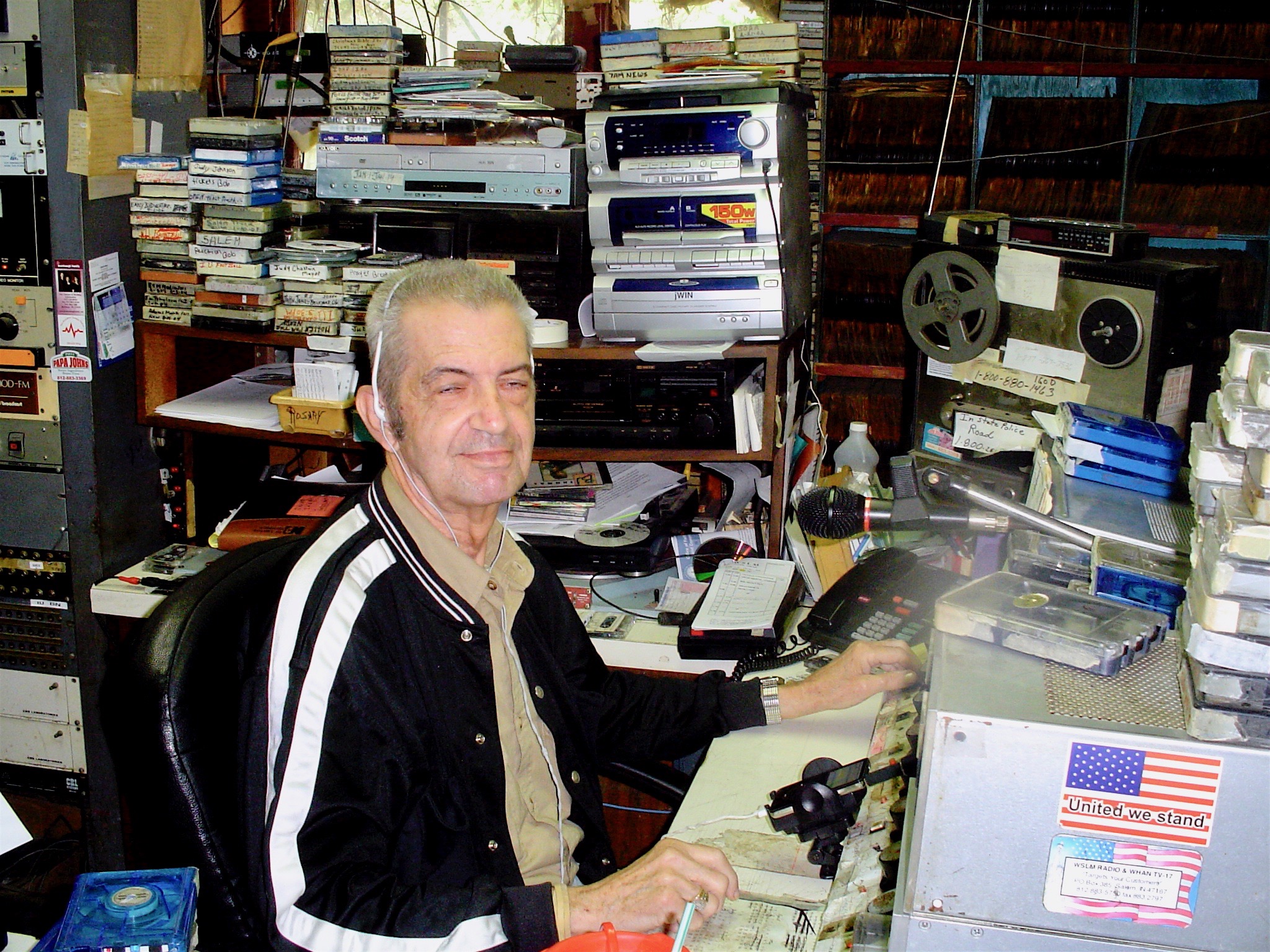
I have a lot of photos of radio folk but this might be my favorite. “Texas Ed” Pinner, WSLM, Salem, IN. There’s all this ancient tech jammed into every corner. Reel-to-reel deck; Fidelipac carts; CD players (alas, I don’t see any turntables) and propped up in front of the controls… almost too small to see… an early iPod. Texas Slip is playing the hits from his iPod. Sigh. (Photo by Mike Cady)