William Gibson’s drones

Yesterday’s drone flight has me in a drone state of mind. My first (of 25) blog post mentioning drones was in 2005, but some of those are references to military drones so not sure when I became aware of consumer drones. Last night I started reading (for the 10th time?) William Gibson’s 1988 novel, Mona Lisa Overdrive and found this passage:

“She was accompanied, on these walks, by an armed remote, a tiny Dornier helicopter that rose from its unseen rooftop nest when she stepped down from the deck. It could hover almost silently, and was programmed to avoid her line of sight. There was something wistful about The way it followed her, as though it were an expensive but unappreciated Christmas gift.”

The man has been incorporating drones into his stories for 30+ years. And this might not be the first instance.
Memories


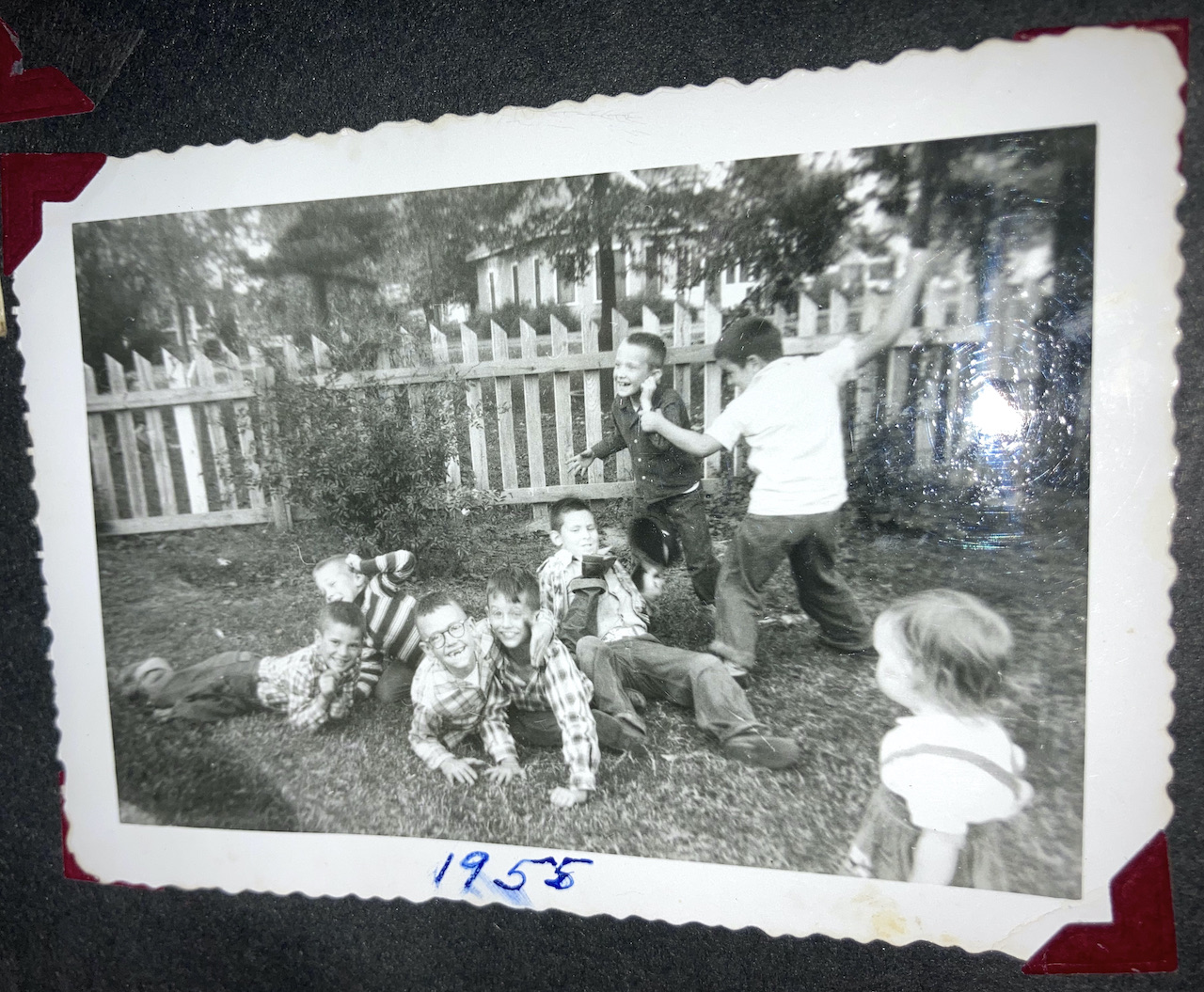
To some extent we are the sum of our memories. Or it feels that way. But neuroscience tells us that every time a memory is recalled, it is recreated by the brain, slightly different each time it’s retrieved. So, a memory of a memory. Of a memory. Imagine each memory as a photo in a shoebox. Everytime you pull one out, it’s just a little bit different. We’re not bothered by this because we are unaware of the change. We have no memory of the previous version. Neuroscience also tells us we are able to recall only a fraction of our experiences.

My conclusion: We are not our memories.

So who/what am I? Perhaps the most important question one can ask, and that few ever do. Are we our thoughts and feelings? If so, what are we in those rare moments when we are not thinking or feeling? I like Sam Harris’ description of such mental objects as “temporary patterns of energy.”

The Coming Technology Boom

“Politics is grim but science is working”

I’ve long believed technology would be our salvation. We’re not going to become better, more enlightened people. But our tech will get better and better, despite the efforts to “make America great again.” This NYT op-ed reinforced that (and made me feel good). Like all human progress, this will come with difficulties:

“What happens to people who work on ranches if labs take a significant share of the market? The political difficulties will be complicated by the fact that the people who will profit from these high-tech industries tend to live in the highly educated blue parts of the country, while the old industry workers who would be displaced tend to live in the less educated red parts.”

Like your mom told you: Study hard and stay in school.

“I prefer the term, Synthetic Person”


It’s impossible for me watch this and not believe we’ll see a day when it will be nearly impossible to distinguish between the best robots and humans. Oh sure, you be able Turing Test them and know which is which. But they don’t need to be human like to be very useful to humans.

Could one of these clean the hospital room of a COVID patient? Disarm that camper bomb in Nashville? Will one of these guys take me upstairs to my office when I’m no longer able to climb the stairs.

You an go all RoboCop and Terminator on this but I choose to believe we’ll find more good uses than bad. And perhaps the Boston Dynamics guys can build in some failsafes for when they’re misused.

PS: This video has been viewed almost 9 million times in the last 24 hours.

Seven Stages of Robot Replacement

  1. A robot/computer cannot possibly do the tasks I do.
  2. [Later] OK, it can do a lot of this tasks, but it can’d do everything I do.
  3. [Later] Okay, it can do everything I do, except it needs me when it breaks down, which is often.
  4. [Later] OK, it operates flawlessly on routine stuff, but I need to train it for new tasks.
  5. [Later] OK,OK, it can have my old boring job, because it’s obvious that was not a job that humans were meant to do.
  6. [Later] Wow, now that robots are doing my old job, my new job is much more interesting and pays more!
  7. [Later] I am so glad a robot/computer cannot possible do what I do now.

[Repeat]

The Inevitable by Kevin Kelly (2016)

Reel-to-reel

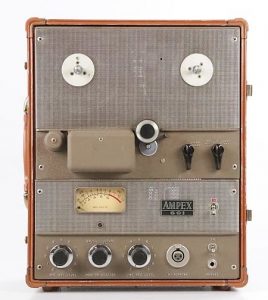
Got a nice jolt of nostalgia from this flickr photo of a reel-to-reel tape. Particularly the reference to speed (7.5 ips = inches per second). The on-air studio at KBOA had a portable Ampex reel-to-reel tape recorder wired into the board and one of the requisite skills was “cueing up” a tape while reading the weather or news or whatever.

“Originally, this format (reel-to-reel) had no name, since all forms of magnetic tape recorders used it. The name arose only with the need to distinguish it from the several kinds of tape cartridges or cassettes such as the endless loop cartridge developed for radio station commercials and spot announcements in 1954, the full size cassette, developed by RCA in 1958 for home use, as well as the compact cassette developed by Philips in 1962, originally for dictation.”Wikipedia