
Mark Ramsey interviews Seth Godin

Mark Ramsey has done another interview with Seth Godin that I highly recommend. Mr. Godin is promoting his new book, “Linchpin: Are You Indispensable?” I encourage you to listen to the interview. It isn’t long. Here are a few excerpts:

“…school was organized by the powers-that-be to turn the typical student into a compliant, quiet, sit-in-straight-rows, fill-in-little-circles-on-the-SAT, follow-the-path, go-to-the-job-you-get-at-the-placement-office kind of person. And there’s a reason for that: It’s that if you are the organization busy hiring people, the more people you have who want to do the jobs you’ve got, the cheaper you can get away with paying them. As a result, we’ve created a culture where a few people are able to drive the agenda and a lot of people end up working hard to fit in and have a lot of fear about doing anything but that.”

“You read about people who are making $80K, $90K, $200K a year as middle managers for Fortune 500 companies, and then they get laid off and can’t make $15,000 a year working at a 7-11, and the question I’d ask is: Where did the $70,000 worth of value go? Did the person change or just their income?”

“It’s a crisis because all these years that we were watching blue collar people lose their jobs, exported to China or wherever… All these years that we watched machines replace people on assembly lines, we just shook our heads and said that’s really sad but that’s not us, that’s them – good thing it’s not us. And now it’s us, now they’ve come for us.”

“Well, I think that broadcasters have now embraced the fact that spectrum is finally on its way to being valueless. It was an 80-year run, but there’s no intelligent person I know that says that in 10 or 15 years from now they are going to be glad they own 660 on the AM dial.”

“All those kids who are in school today, who are learning how to do the jobs of 1960 or 1970, they’re in big trouble. All those 40- or 50-year-old executives who are hoping they’re going to wait this thing out, they’re in really big trouble.”
Don’t interfere with the flow

“There is a profound Buddhist doctrine that speaks of a great river that flows through all of reality. Once you have found yourself, there is no more cause for action. The river picks you up and carries you along forever after. In other words, effort from the personal level, the kind of effort all of us are used to in daily life, becomes pointless after a certain point. This includes mental effort. Once you become self-aware, you realize that the flow of life needs no analysis or control, because it’s all you. The great river only seems to pick you up. Actually, you have picked yourself up — not as an isolated person, but as a phenomenon of the cosmos. No one gave you the job of steering the river. You can enjoy the ride and observe the scenery.”

I like that. I found it in a book by Deepak Chopra (“Reinventing the Body, Resurrecting the Soul”). I’m not recommending the book (you’ll read it if you’re supposed to). But this is where I jot done some of the lines and passages that I want to remember or find again.

Continue reading →

Bruce Sterling: State of the World 2010

Every year the Well (one of the early, pre-web, online communities) invites Bruce Sterling to chat about the state of the world. This year, he paints a grim picture of where the “present” is heading:

“Various entities and institutions have scrambled together safety pins and gobs of glue to rig the global economy so that it appears to be ambling along, but isn’t it a great conceptual Jenga, ready to fall if you move the wrong block? What kind of shuffling and reshuffling can we expect, if there’s a global economic meltdown? And has the collapse already happened – are we like the coyote, run far beyond the edge of the cliff, waiting for gravity’s effect?”

On Google News and Twitter:

“I’m looking over my Twitter stream here, because it seems a more useful barometer to me now than Google News. Google News definitely has that rickety Jenga feeling that JonL is talking about. Whenever you see something on Google News nowadays, you have to wonder: “who owns this so-called news organization now? What’s left of them financially? Is there even a shred of objective fact in this?”

Pick your decade: Frustration or Change

I should just point www.smays.com to Seth Godin’s blog. Maybe change to WhatHeSaid.com. Mr. G picks two important trends for the coming decade. I’m opting for “change” over “frustration,” but you should read the full post.

Change: The infrastructure of massive connection is now real. People around the world have cell phones. The first internet generation is old enough to spend money, go to work and build companies. Industries are being built every day (and old ones are fading). The revolution is in full swing, and an entire generation is eager to change everything because of it. Hint: it won’t look like the last one with a few bells and whistles added.

In my experience, the people who poo-poo the idea of radical change usually have the most invested in keeping things the same. Good luck.

Biocentrism

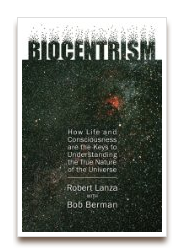
I’m reading a mind-stretching book. Biocentrism by Robert Lanza (with Bob Berman). I wouldn’t know where to begin describing what this book is about. Like John Sebastian said, “it’s like trying to tell a stranger ’bout rock and roll.”
The authors are very good at explaining the most complex concepts. Here’s a little riff on Time:
“Imagine that existance is like a sound recording. Listening to an old phonograph doesn’t alter the recording itself, and depending on wherethe needle is placed, you hear a certain piece of music. This is what we all the present. The music, before and after the song now being heard, is what we call the past and the future. Imagine, in like manner, ever moment and day enduring in nature always. The record does not go away. All nows (all the songs on the record) exist simultaneously, although we can only experience the world (or the record) piece by piece. We do not experience time in which “Stardust” often plays, because we experience time linearly.”
This book is not for everyone. If you have too much “reality” in you life to think about the possibility it’s all “in your head,” you can take a pass on Biocentrism. But it will get a spot on my nightstand as one of those books I’ll have to read again and again.

Screen shot 2009-12-14 at Mon, Dec 14, 8.15.12 PMI’m reading a mind-stretching book. Biocentrism by Robert Lanza (with Bob Berman). I wouldn’t know where to begin describing what this book is about. Like John Sebastian said, “it’s like trying to tell a stranger ’bout rock and roll.”

The authors, however, are very good at explaining the most complex concepts. Here’s a little riff on Time:

“Imagine that existence is like a sound recording. Listening to an old phonograph doesn’t alter the recording itself, and depending on where the needle is placed, you hear a certain piece of music. This is what we call the present. The music, before and after the song now being heard, is what we call the past and the future. Imagine, in like manner, every moment and day enduring in nature always. The record does not go away. All nows (all the songs on the record) exist simultaneously, although we can only experience the world (or the record) piece by piece. We do not experience time in which “Stardust” often plays, because we experience time linearly.”

This book is not for everyone. If you have too much “reality” in you life to think about the possibility it’s all “in your head,” you can take a pass on Biocentrism. But it will get a spot on my nightstand as one of those books I’ll have to read again and again.