Dave Winer’s proposal for a new kind of blog comment system

“I know some people think that blogs are conversations, but I don’t. I think they’re publications. And I think the role of comments is to add value to the posts. If you want to rebut a post, then you can create your own blog and post your rebuttal there.”

This makes a lot of sense to me. If there is ever an easy-to-implement version of Mr. Winer’s system, I’m there.

“The Internet Weakens Authority”

There are a handful of people I regularly read in an effort to understand what’s happening in the world: Scott Adams, Seth Godin, Clay Shirky, Bruce Sterling, William Gibson and Terry Heaton (I’ve left some out).

In this essay, Mr. Heaton explores what he calls the “second Gutenberg moment” we are experiencing:

“It isn’t technology that’s changing culture as much as it is the ability of people to act on long-held dissatisfaction. People, therefore, are the issue, empowered, connected and, yes, angry people. Nobody’s “in charge” of the revolution underway, but more and more people are realizing that if we’re going to fix what’s wrong, we’re going to have to do it ourselves.”

We’re sure to see some of that in November. And then there’s the question of who controls the knowledge:

“One-directional authority — especially that which is based in deliberately protected knowledge — cannot maintain control for long, once that knowledge is acquired and spread throughout its constituency. All that we know today in terms how we govern our lives will evaporate and be replaced by something very different in the decades to come.”

We see this in every institution: Busines, Religion, Education, Media, Medicine, Finance. I was certainly “guilty” of this when I was a Manager. Deciding what information got passed along and to whom. I still see it every day. But it’s getting harder.

Employees are connected. Nobody is walking around the office leaving memos on people’s desks. Email, Facebook, Twitter, texting… shit, the boss is often the last know something.

I’m confident I’ll be around for the disruptions to come and expect many will be painful, but necessary. I’m looking forward to them.


Cognitive Surplus

From Amazon: “For decades, technology encouraged people to squander their time and intellect as passive consumers. Today, tech has finally caught up with human potential. In Cognitive Surplus, Internet guru Clay Shirky forecasts the thrilling changes we will all enjoy as new digital technology puts our untapped resources of talent and goodwill to use at last.”

A few of my highlighted excerpts from Cognitive Surplus by Clay Shirky (more after the jump).

“The postwar trends of emptying rural populations, urban growth, and increased suburban density, accompanied by rising educational attainment across almost all demographic groups, have marked a huge increase in the number of people paid to think or talk, rather than to produce or transport objects.” – page 4

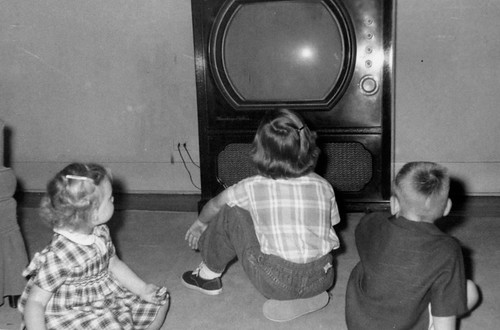
“Someone born in 1960 has watched something like fifty thousand hours of TV already, and many watch another thirty thousand hours before she dies.” – page 6

“…in the whole of the developed world, the three most common activities are now work, sleep, and watching TV.” – page 6

“Americans watch roughly two hundred billion hours of TV every year. … We spend roughly a hundred million hours every weekend just watching commercials.” – page 10

“As long as the assumed purpose of media is to allow ordinary people to consume professionally created material, the proliferation of amateur-created stuff will seem incomprehensible.” – page 19

“Imagine that everything says 99 percent the same, that people continue to consume 99 percent of the television they used to, but 1 percent of that time gets carved out for producing and sharing. The connected population still watches well over a trillion hours of TV a year; 1 percent of that time is mor than one hundred Wikipedias’ worth of participation per year.” – page 23

“In 2010 the global internet-connected population will cross two billion people, and mobile hone accounts already number over three billion. Since there are something like 4.5 billion adults worldwide (roughly 30 percent of the global population is under fifteen), we live, for the first time in history, in a world where being part of a globally interconnected group is the normal case for most citizens.” – page 23

Continue reading

“The internet: Everything you ever need to know”

This list — by John Naughton– is pretty good. If one of the Learfield Grown-ups came into my office and asked, “So, what do I need to know about this internet thing? Keep it to 10 things or less.”, I’d send him this article. Here are just a few nuggets. I encourage you to read and bookmark the page.

“We’re living through a radical transformation of our communications environment. Since we don’t have the benefit of hindsight, we don’t really know where it’s taking us. And one thing we’ve learned from the history of communications technology is that people tend to overestimate the short-term impact of new technologies — and to underestimate their long-term implications.”

“The trouble is, though, that everybody affected by the net is demanding an answer right now. Print journalists and their employers want to know what’s going to happen to their industry. Likewise the music business, publishers, television networks, radio stations, government departments, travel agents, universities, telcos, airlines, libraries and lots of others. The sad truth is that they will all have to learn to be patient. And, for some of them, by the time we know the answers to their questions, it will be too late.”

“HUXLEY AND ORWELL ARE THE BOOKENDS OF OUR FUTURE — Aldous Huxley believed that we would be destroyed by the things we love, while George Orwell thought we would be destroyed by the things we fear.”

As a tool for a totalitarian government interested in the behaviour, social activities and thought-process of its subjects, the internet is just about perfect.

“Copying is to computers as breathing is to living organisms.”

These snippits make the article seem more negative than it is. That probably says more about me than the list. I especially liked the survey asking folks in the German city of Mainz (in 1472) what they thought about the implications of Gutenberg’s printing press.

The $99 PC and cloud computing (1997)

In 1997 Po Bronson wrote The First $20 Million Is Always the Hardest. The novel was the story of some Silicon Valley types who set out to design a PC that would sell for $99. Here’s a bit of the plot from Wikipedia:

“The team finds many non-essential parts but cannot come close to the $99 mark. It is Salman’s idea to put all the software on the internet, eliminating the need for a hard drive, RAM, a CD-ROM drive, a floppy drive, and anything that holds information. The computer has been reduced to a microprocessor, a monitor, a mouse, a keyboard, and the internet, but it is still too expensive. Having seen the rest of his team watching a hologram of an attractive lady the day before, in a dream Andy is inspired to eliminate the monitor in favor of the cheaper holographic projector. The last few hundred dollars comes off when Darrell suggests using virtual reality gloves in place of a mouse and keyboard. Tiny then writes a “hypnotizer” code to link the gloves, the projector, and the internet, and they’re done.”

Does that “put all the software on the internet” part sound familiar. I mean, shoot, that was 13 years ago. Shows how long folks about been thinking about “cloud computing.”

I liked Mr. Bronson’s early work. The Nudist on the Late Shfit and What Should I Do With My Life (non-fiction) in particular.

“A business model in decay”

“…the creation of content that will be supported by ads is a business model in decay. Abundance isn’t the problem; it’s that the advertisers are now in the content business themselves, and this is a rapidly-growing sector of the advertising world. Advertising is in a full-blown revolution, as company after company discovers they don’t need media the way they used to, because they’ve become media companies themselves.”

Terry Heaton says there is no “content business” anymore and that’s not the business we (his clients) were in anyway.

“We’ve always been in the advertising business, although it sure looked and felt like we were in the content business. Our bottom lines were/are determined by advertising, and that’s the real business we’re in. Media companies need to accept that and move on to finding creative ways to enable commerce in our markets.”

Since posting the excerpts above, I’ve been remembering my days in small-market radio during the ’70s and early ’80s. I was an announcer and program director, but never in sales. We thought of ourselves as “talent.”

It was clearly understood by us that the advertising was the means to the end of creating the information and entertainment (mostly recorded music). We had to pay for all this wonderful stuff we were doing.

What the sales people believed –an management knew– was the news and music and all the rest was merely a way to attract ears for the commercials we sold to advertisers. We were not in the music business or news business… we were in the advertising business.

If you doubt that, go back and listen to this interview with Congressman Paul C. Jones to built the radio station. Or read the recollections of Joe Bankhead, who was one of the stations first salesmen. It was clearly about serving the businesses in the area. They were more than willing to put on any kind of programming that would attact enough listeners to satisfy a sponsor.

Cognitive Surplus: The Great Spare Time Revolution

“Someone born in 1960 has watched something like 50,000 hours of television already. Fifty thousand hours—more than five and a half solid years.”

Sweet Mother of God! I can tack another 7 or 8 years on that. That daunting stat is from an article in latest issue of WIRED Magazine in which Clay Shirky and Daniel Pink share some thoughts on what Mr. Shirky calls the “cognitive surplus”:

“Television was a solitary activity that crowded out other forms of social connection. But the very nature of these new technologies fosters social connection—creating, contributing, sharing. When someone buys a TV, the number of consumers goes up by one, but the number of producers stays the same. When someone buys a computer or mobile phone, the number of consumers and producers both increase by one. This lets ordinary citizens, who’ve previously been locked out, pool their free time for activities they like and care about. So instead of that free time seeping away in front of the television set, the cognitive surplus is going to be poured into everything from goofy enterprises like lolcats, where people stick captions on cat photos, to serious political activities like Ushahidi.com, where people report human rights abuses.”

“Cognitive Surplus.” I love the very idea of that. I’m not sure I would be a better person had I spent those 50,000+ hours blogging instead of watching Maverick, but I would be different. And if I had to choose today, it would be an easy call. Come to think of it, I am choosing.

Clay Shirky: The Collapse of Complex Business Models

I won’t attempt to summarize this post by Clay Shirky. The best I can do is pull a couple of quotes. If you’re in the media business, you’ll want to skip this one.

“…most TV is made by for-profit companies, and there are two ways to generate a profit: raise revenues above expenses, or cut expenses below revenues. The other is that, for many media business, that second option is unreachable.”

“When the value of complexity turns negative, a society plagued by an inability to react remains as complex as ever, right up to the moment where it becomes suddenly and dramatically simpler, which is to say right up to the moment of collapse. Collapse is simply the last remaining method of simplification.”

Philip Pullman on censorship and free speech

Philip Pullman is the author of His Dark Materials, the book I just finished reading. His latest book is titled The Good Man Jesus and the Scoundrel Christ. Pullman, addressing an audience at the Sheldonian Theatre in Oxford, was asked about whether his latest book, The Good Man Jesus and the Scoundrel Christ, was offensive. Here’s his reply:

“It was a shocking thing to say and I knew it was a shocking thing to say. But no one has the right to live without being shocked. No one has the right to spend their life without being offended. Nobody has to read this book. Nobody has to pick it up. Nobody has to open it. And if you open it and read it, you don’t have to like it. And if you read it and you dislike it, you don’t have to remain silent about it. You can write to me, you can complain about it, you can write to the publisher, you can write to the papers, you can write your own book. You can do all those things, but there your rights stop. No one has the right to stop me writing this book. No one has the right to stop it being published, or bought, or sold or read. That’s all I have to say on that subject.”