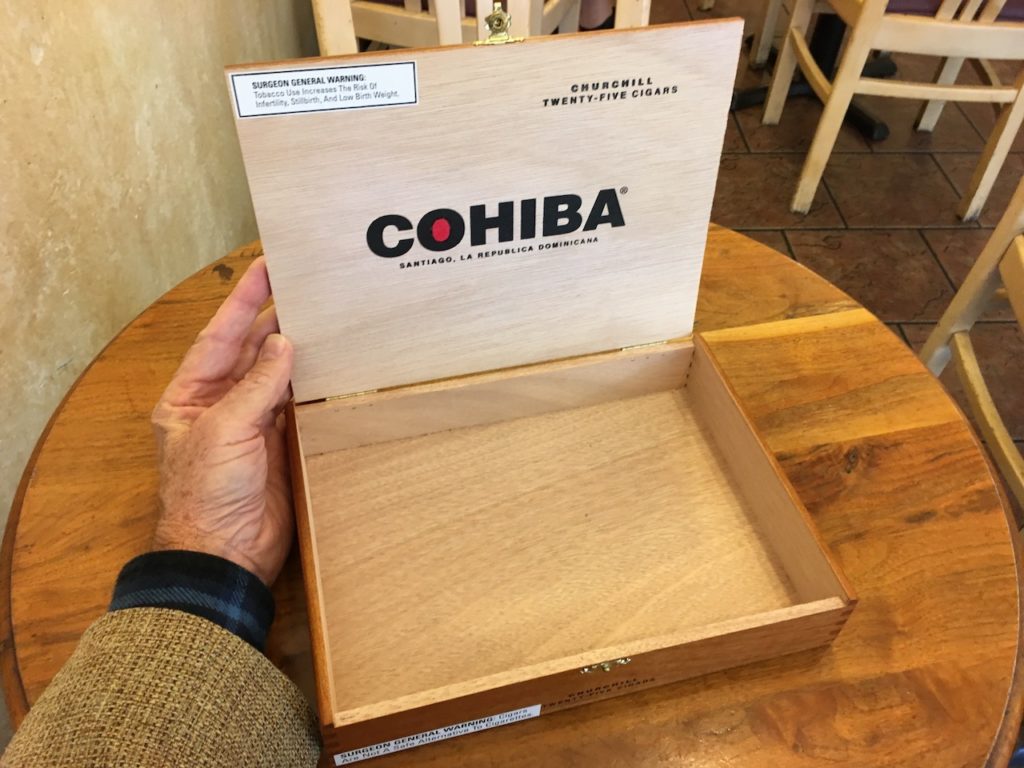
If you could only keep 2,000 photos

I’ve been collecting digital photos for years. Since photos became digital, in fact. Along the way I scanned a few thousand photos. More than once. In the early days of the web I wanted to keep images small so they could be uploaded to the web and viewed with molasses-slow dial-up connections. 72 dpi, 640×480. Shitty little things. As the online world improved and I realized my mistake, I scanned many prints again at nice high (600 dpi) resolution.

When I got my first Mac I started managing all my photos in iPhoto (now Apple Photo). I titled every photo and put them in albums and added keywords and then forgot about them. At one point I guess I had about 5,000 photos. That’s nothing compared to most users. Lot of folks have ten, twenty thousand photos. More.

I’ve tended to be a little obsessive compulsive about my photos. If I had 20 shots of the pond at the bottom of our hill and they were all so similar I couldn’t tell one from the other, I’d delete all but the best. In time, my collection was down to about 2,000 photos. But I’d made a conscious decision regarding each one.

I trimmed a few hundred more photos in the past week. Why, for example, did I need photos of the Golden Gate Bridge? The Chrysler Building. The Space Needle. If the photo featured friends or family, I kept it. If there was some personal connection to the subject of the photo, sure. But if the only reason I was keeping the photo was I took it… not a sufficient reason (for me).

Why bother, you ask. Tossing the chaff makes the remaining wheat more valuable. And a couple thousand photos are manageable. While going through my photos I saw that many could be improved. I tweaked and cropped and added meta data where needed. You just can’t do that with 10,000 photos.

I think this is part of the “a place for everything” itch I’ve been scratching for a few years. Keeping only thing things I really care about and getting rid of the rest. Even if I have room to keep it.

Now that I have my collection down to a manageable size, I’m more picky about what gets added. And I’m a little more careful about how I take photos. I went through a similar process with my books a few years ago. When I finish a book that was just so-so, it doesn’t make it to the shelf. It goes to the county library book sale.

I’d call this a zen thing but anything you call a zen thing is definitely not a zen thing.
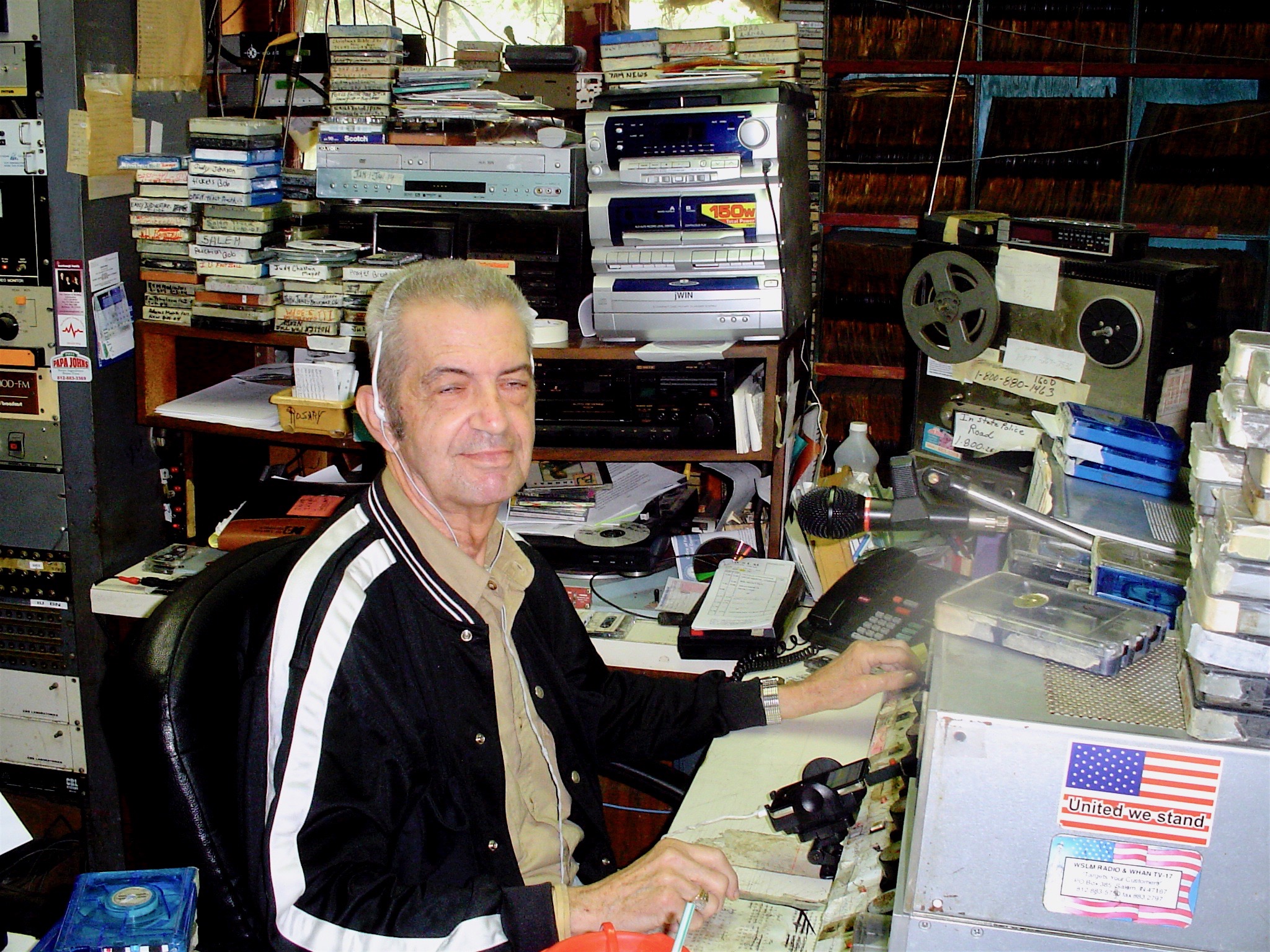
“Texas Ed” Pinner (WSLM)

I have a lot of photos of radio folk but this might be my favorite. “Texas Ed” Pinner, WSLM, Salem, IN. There’s all this ancient tech jammed into every corner. Reel-to-reel deck; Fidelipac carts; CD players (alas, I don’t see any turntables) and propped up in front of the controls… almost too small to see… an early iPod. Texas Slip is playing the hits from his iPod. Sigh. (Photo by Mike Cady)

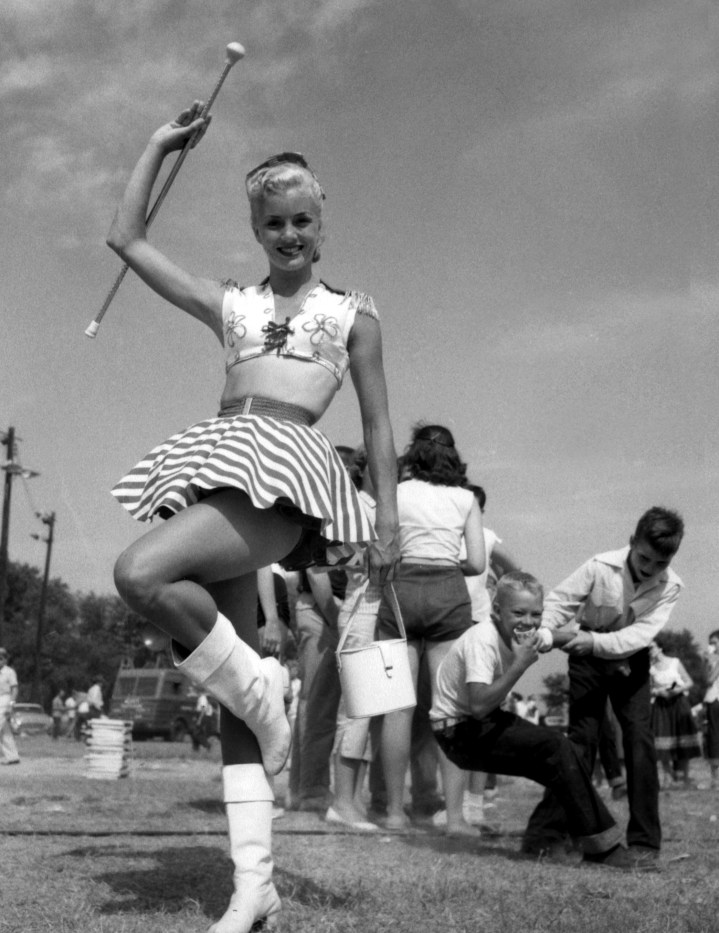
Who is the twirler?

The following is an excerpt from the Wikipedia entry for the film A Face in the Crowd, a 1957 film starring Andy Griffith, Patricia Neal and Walter Matthau, directed by Elia Kazan.

“Most of the film’s interiors were shot in New York at the Biograph Studios in the Bronx. The most involved location shoot was in Piggott, Arkansas (the fair and baton-twirling competition scenes). Five thousand extras were sought, to be fed and paid $1 hourly for a mid-August day’s work. Sixty baton twirlers were rounded up from NE Arkansas and SE Missouri, and musicians from six different high school bands were assembled. Remick reported spending two weeks in Piggott living with teen twirler Amanda Robinson and her family, working on her twirling and local accent. Some of her baton twirling scenes used a double. At the Piggott location shoot some 380 dogs were assembled from Missouri and Arkansas for the scene following Rhodes’ first mass-action call on his audience: to take their dogs to the home of a local sheriff who was running for higher office – Rhodes opining that people should first find out if a candidate is worthy of the office of ‘dog catcher’.”

I was nine years old in 1957 and not much interested the movies. But it sounds like the location shooting in Piggott was a pretty big deal. I struggled to identify the twirler and finally concluded it was Sandra Wirth, even though she isn’t listed in the cast on iMDB. Now I’m wondering if it might be Amanda Robinson.

UPDATE January 17, 2021: Thanks to John Carpenter for some much needed research on this photo.

“That photo, taken mid-August 1956 in Piggott, is indeed “Miss Florida 1955” and actress Sandra “Sandy” Wirth. She is also noted on the AFI page for “A Face In The Crowd.”

“Hollywood Reporter news items add the following actors to the cast: Sandra Wirth, Lloyd Bergen, Jay Sidney, Eva Vaughn, John McGovern, Kitty Dolan, Sandee Preston, Gus Thorner, Beverly Boatwright, Jane Baier and Gloria Mosolino.”

“I also looked up Amanda Robinson. There’s a brief article (New York Daily News – Thursday, September 20, 1956) on her and the two other local girls who made it into the film, and were even flown to New York to film a few scenes. All of them (despite the fuzzy photo) are brunettes:”

Here for a Twirl in the Movies. Three baton-carrying, 16-year-old Southern belles arriving at LaGuardia Field yesterday are (I. to r.), Suzanne Ballard, Amanda Robinson and Bunny McCollum. The gals, all from Piggott, Ark., will be in town for two weeks during the filming of new movie. They will play the parts of drum majorettes in the picture.

Jefferson City: 1920’s

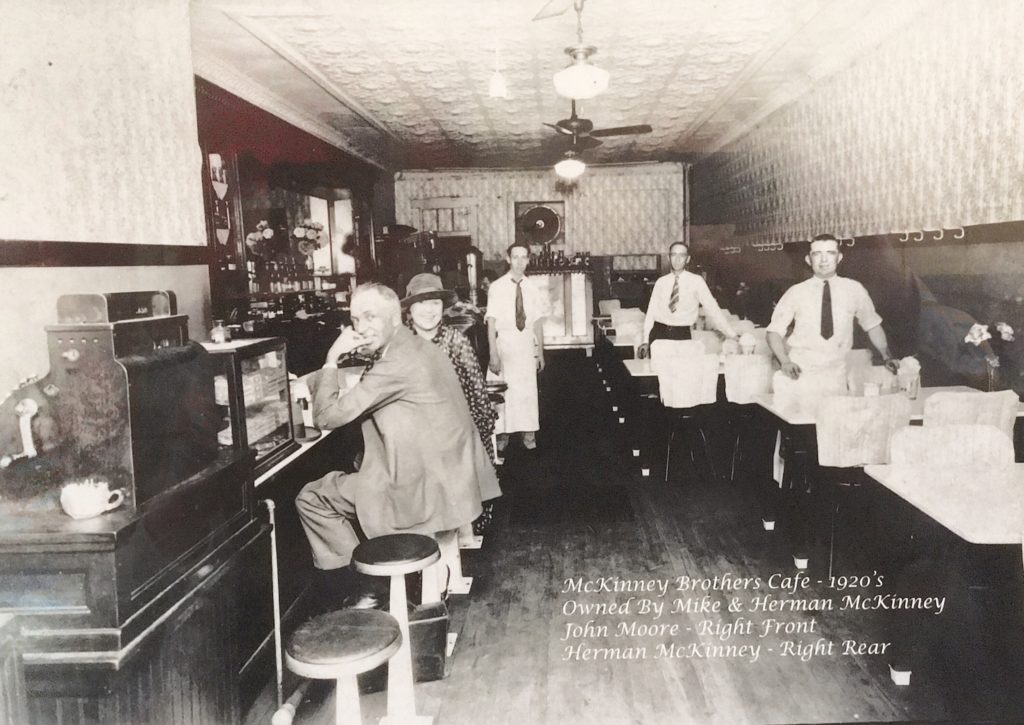
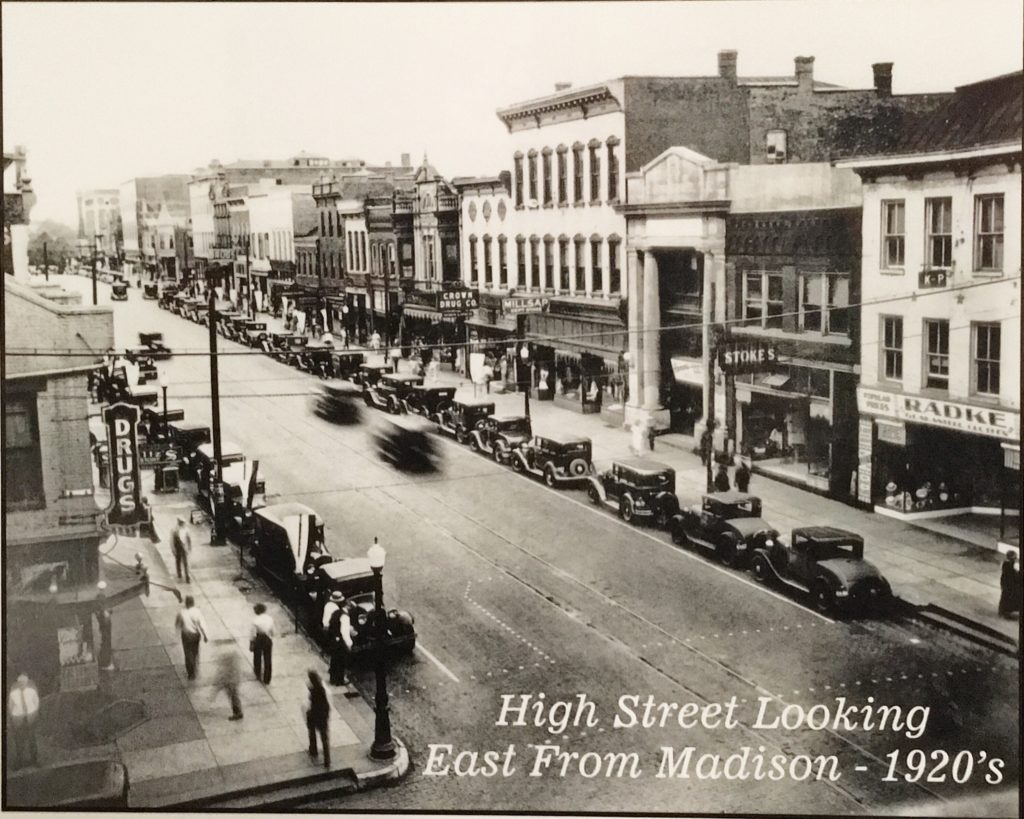
The two photos below are hanging (with 8 or 10 others) on the wall of a little cafe in Jefferson City, MO. I’ve noticed them before and recall thinking I’d like to scan them but they’re framed and (probably) bolted to the wall. This morning I remembered the PhotoScan app I recently added decided to give it a try. No bad. No glare from the glass. I’ll get some more when the place is less busy.

High Street is where the Coffee Zone is located (not on the block shown). The interior shot is the cafe.

RKO Pictures

rko-tower

Wikipedia: “RKO has long been celebrated for its series of musicals starring Fred Astaire and Ginger Rogers in the mid-to-late 1930s. Actors Katharine Hepburn and, later, Robert Mitchum had their first major successes at the studio. Cary Grant was a mainstay for years. The work of producer Val Lewton’s low-budget horror unit and RKO’s many ventures into the field now known as film noir have been acclaimed, largely after the fact, by film critics and historians. The studio produced two of the most famous films in motion picture history: King Kong and Citizen Kane. RKO Pictures is also a member of Motion Picture Association of America.”

This image brings back lots of great memories from my childhood.

Hamra’s Department Store

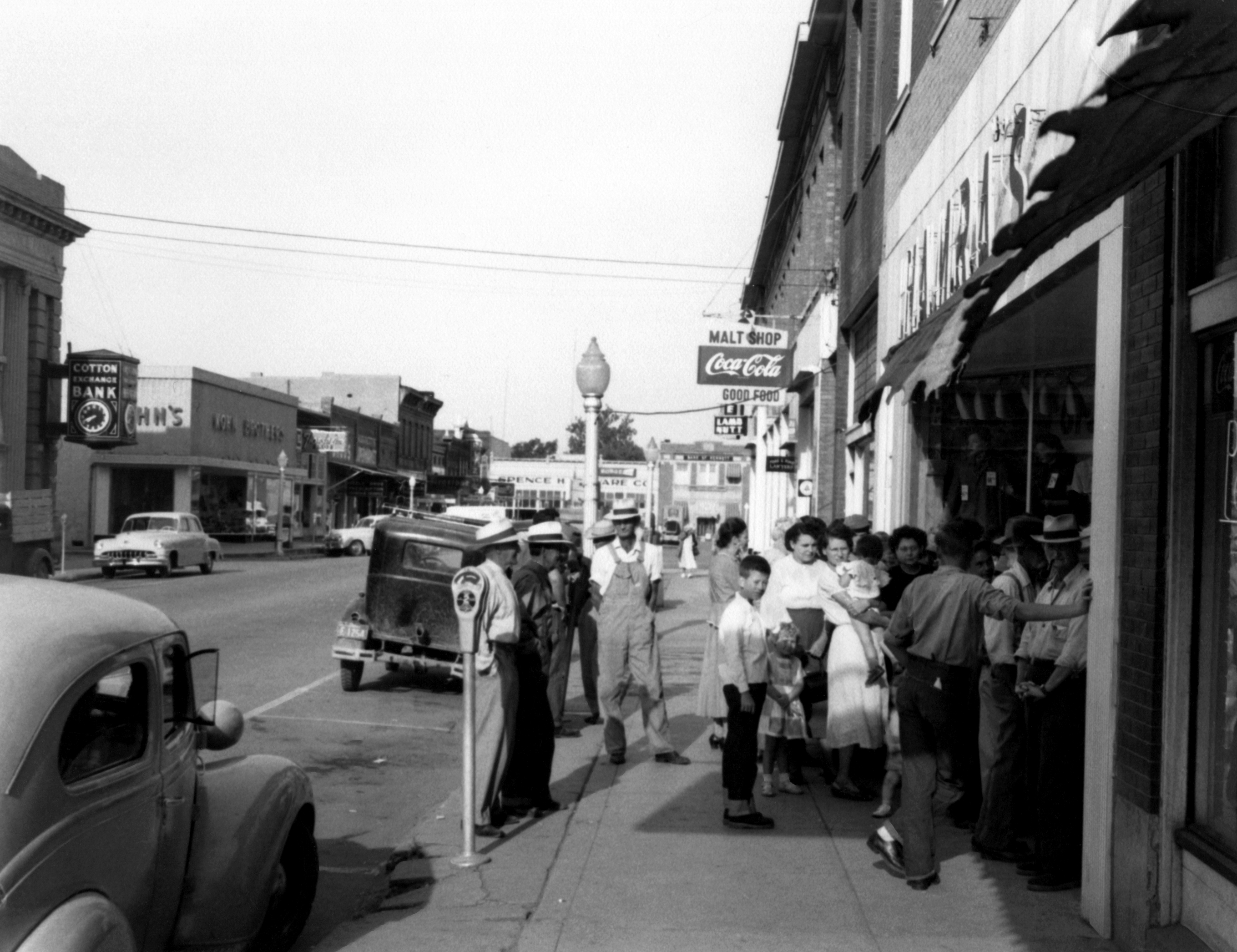
The photos below were taken by Johnny “Mack” Reeder, probably in the early 50’s but perhaps as early as 1948 or 1949 (maybe a vintage car buff can help me narrow that down). This just off the “courthouse square” in Kennett, MO. The first photo is facing West.

hamras-department-store_4778648292_o

I remember Hamra’s from my youth (born in 1948) but I’m hard-pressed to tell you exactly what they sold. Clothing and fabrics, obviously, and I recall a shoe store next to the main store shown in these photos. There were several stores like this in “downtown” Kennett. Graber’s, James Kahn’s, Penney’s and some I can’t remember.

hamras-department-store_4778649328_o

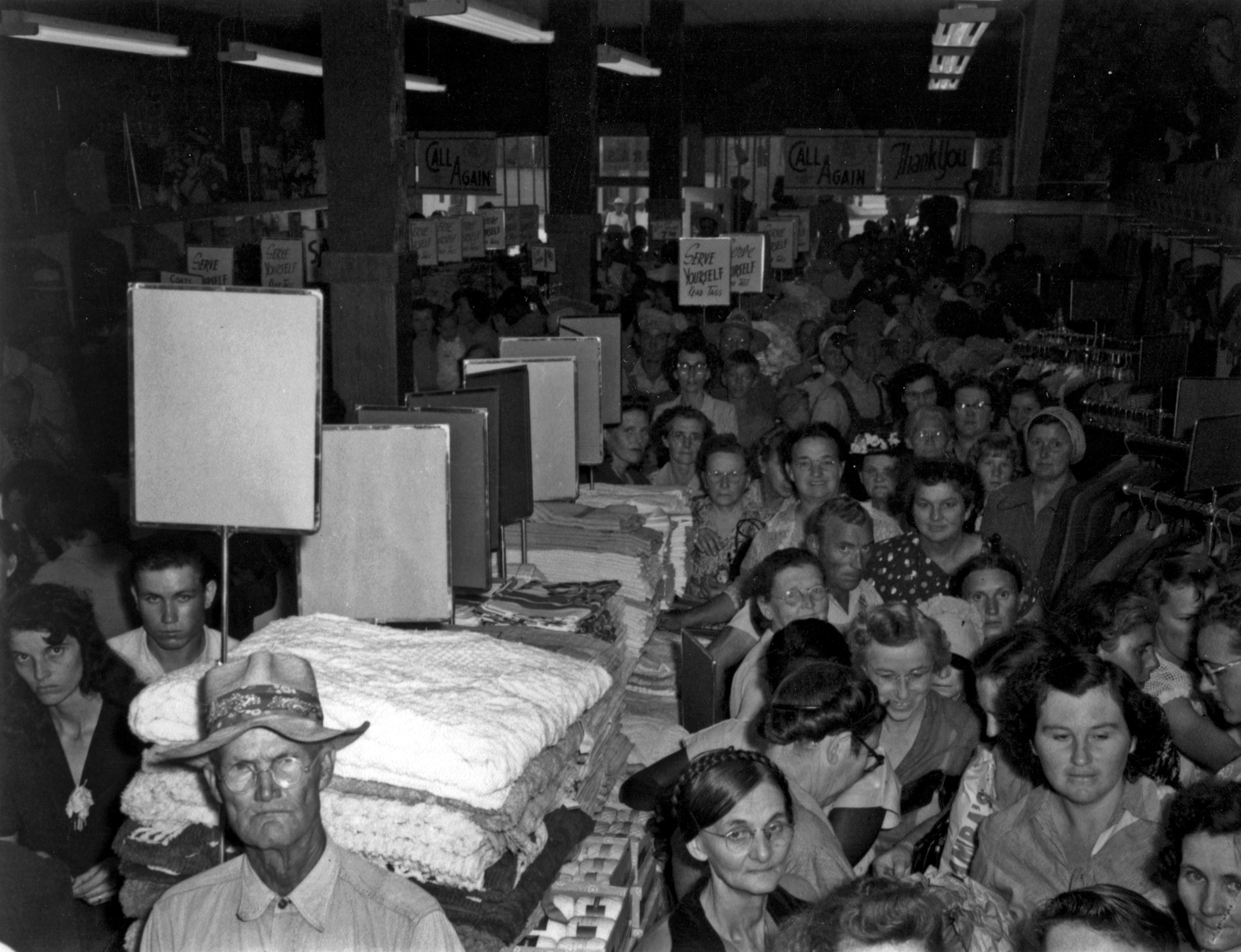
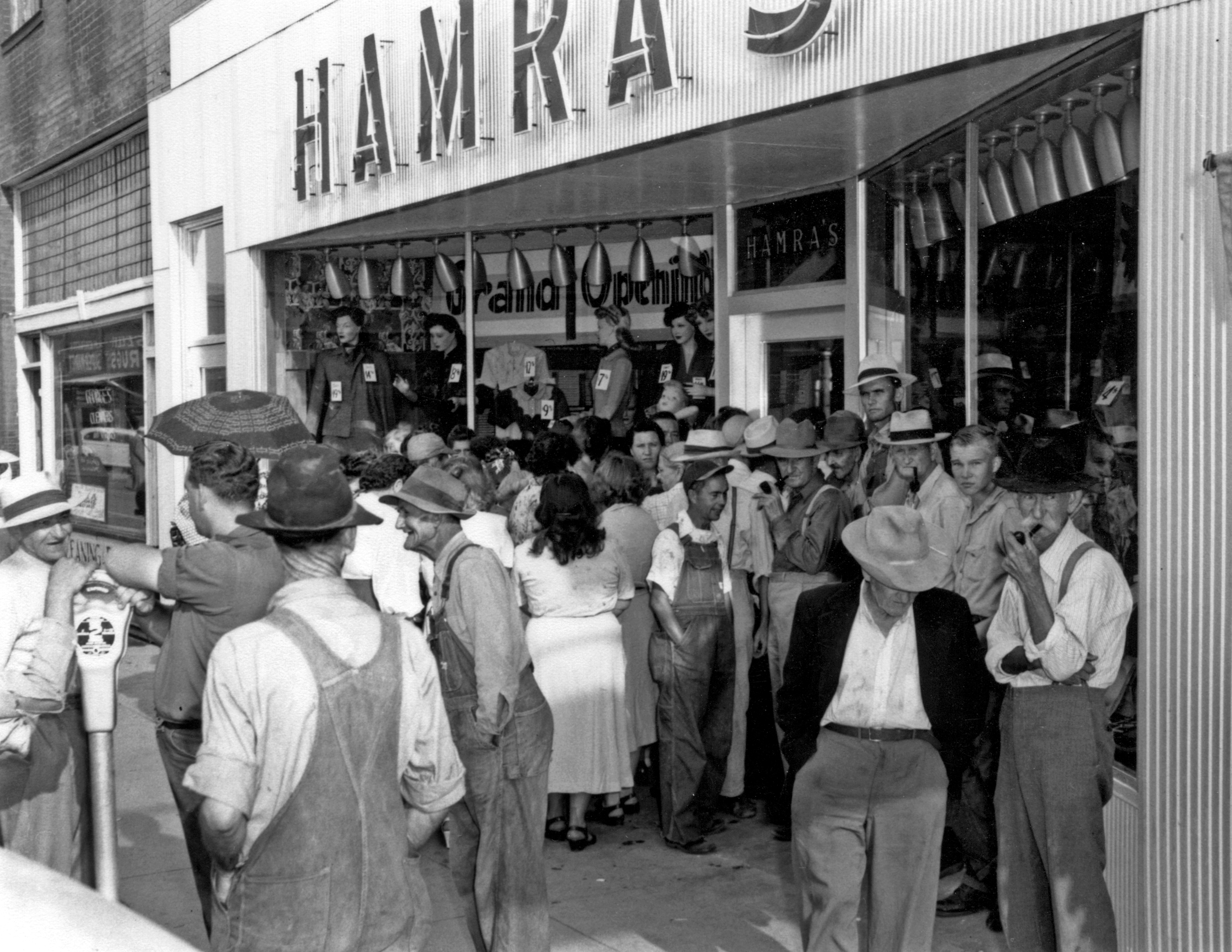
I don’t think this was a “grand opening” so I’m guessing this was some sort of special sale. The photographer was one of the original employees of KBOA (the local radio station) and might have been recording the big crowd that resulted from advertising.

hamras-department-store_4778011963_o

The third photo speaks to the rural flavor of our small town. Lots of bib overalls. I remember hearing stories about hundreds of people flooding into town on a Saturday to purchase supplies for the farms that made up the local economy in those days.