From Walter Isaacson’s The Innovators:
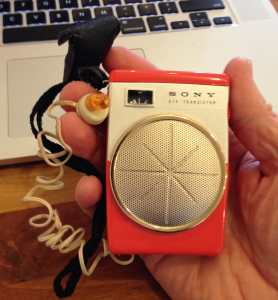 “Transistors were being sold in 1954 to the military for about $16 apiece. But in order to break into the consumer marker. Haggerty insisted that his engineers find a way to make them so that they could be sold for less than $3. They did. He also developed a Jobs-like knack, which would serve him then and in the future, for conjuring up devices that consumers did not yet know they needed but would soon find indispensable. In the case of the transistor, Haggerty came up with the idea of a small pocket radio. When he tried to convince RCA and other big firms that made tabletop radios to become a partner in the venture, they pointed out (rightly) that consumers were not demanding a pocket radio. But Haggerty understood the importance of spawning new markets rather than merely chasing old ones. He convinced a small Indianapolis company that built TV antenna boosters to join forces on what would be called the Regency TR-1 radio. Haggerty made the deal in June 1954 and, typically, insisted that the device be on the market by that November. It was. The Regency radio, the size of a pack of index cards, used four transistors and sold for $49.95. It was initially marketed partly as a security item, now that the Russians had the atom bomb. “In event of an enemy attack, your Regency TR-1 wiU become one of your most valued possessions,” the first owner s manual declared. But it quickly became an object of consumer desire and teenage obsession. Its plastic case came, iPod-like, in four colors: black, ivory, Mandarin Red, and Cloud Gray. Within a year, 100,000 had been sold, making it one of the most popular new products in history.”
“More fundamentally, the transistor radio became the first major example of a defining theme of the digital age: technology making devices personal. The radio was no longer a living-room appliance to be shared; it was a personal device that allowed you to listen to your own music where and when you wanted—even if it was music that your parents wanted to ban.”

 “Just as newspapers fell off a cliff, radio is about to follow. It’s going to happen faster than anyone expects. And of course, it will be replaced by a new thing, a long tail of audio that’s similar (but completely different) from what we were looking for from radio all along. And that audience is just waiting for you to create something worth listening to.”
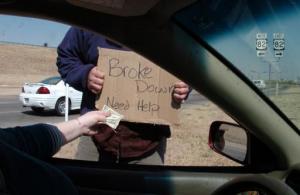 I suspect many people feel awkward when they find themselves stopped a few feet from a — what is the correct term — panhandler? Beggar seems harsh. Let’s go with panhandler. As you coast up the exit ramp you silently hope you make the light or get stuck far enough down the ramp to avoid having to engage with the man/woman. (“Can you help a brother out?”)