Keys

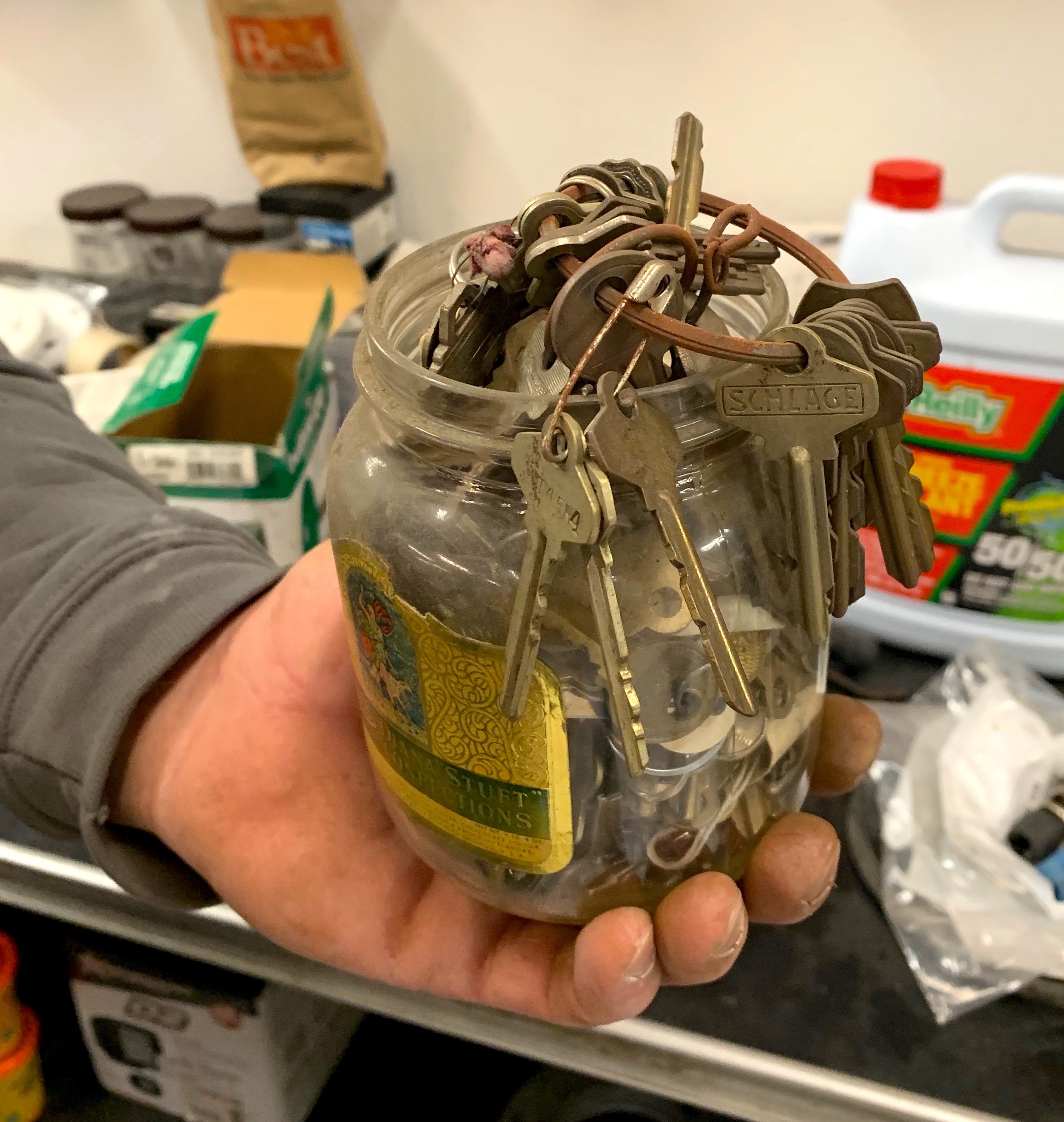
This jar of keys is a family heirloom, handed down from grandfather to father to son. Most of the keys, as I understand the story, were to apartment doors and mailboxes. The family owned apartment buildings and when a tenant got locked out the landlord would come with this jar of keys and and try them, one at a time, until he found the right key. At some point family members tried to bring a little order to this chaos by numbering the keys but the system never caught on. Somewhere — in a door or a landfill — there are locks for each of these keys.

Where are they now?

You know how some insanely popular rock group has a bunch of hits and then… just disappears. At least from the media mainstream. They didn’t get less talented overnight and, sure, tastes change but this always seemed odd to me. In reviewing blog posts from the early days of the web, I see something similar. Here are some of the people most influential (for me) from that era (in no particular order): Bruce Sterling, Chris Pirillo, Clay Shirky, David Weinberger, Doc Searls, Kevin Kelley, Jeff Jarvis, Seth Goden.

On second thought, I’ll bet the folks are still around but — like everyone else — have migrated to social media, abandoning their blogs. Perhaps the web they wrote about and — in some cases — predicted, disappeared/never happened.

Little Black Holes

“Every time someone in a group of people deploys a screen, the whole group is affected. Each disengaged person in a crowd is like a little black hole, a dead zone for social energy, radiating a noticeable field of apathy towards the rest of the room and what’s happening there.”

— The Simple Joy of “No Phones Allowed”

“Social media is making the world a better place”

I gave up Twitter two years ago, never did Facebook and said goodbye to Google+ recently. Social media seemed only slightly less afflictive than opioid addiction. But this post by Kevin Drum offers a glimmer of hope:

The internet boasts an immediacy that allows it to pack a bigger punch than any previous medium. But this is hardly something new. Newspapers packed a bigger punch than the gossipmonger who appeared in your village every few weeks. Radio was more powerful than newspapers. TV was more powerful than radio. And social media is more powerful than TV.

Broadly speaking, the world is not worse than it used to be. We simply see far more of its dark corners than we used to, and we see them in the most visceral possible way: live, in color, and with caustic commentary.

The money quote: “If you want to make things better, you first have to convince people that something bad is happening. Social media does that.”

25 Dying Professions

The most satisfying and fulfilling job I ever had was that of small town radio announcer. About a dozen years from the early 70s to the early 80s. We still played vinyl 45s and LPs on turntables. We recorded on magnetic tape. Nobody much cared (within limits) what we said. Looking back, I can see that I was fortunate to catch the tail end of radio’s best years. From Work+Money:

One in 10 of the nation’s 33,202 radio and television announcers are expected to see their jobs disappear by 2026. Consolidation in the industry, as well as increased use of syndicated content, is fueling the decline. There’s also the explosion of streaming music services. More and more listeners prefer that over their local, drive-time disc jockey.

Party DJs however, are seeing an uptick in business with demand for their services projected to grow about six percent by 2026. And they earn about the same – $32,000 – as their on-air counterparts.

I thought radio was a dying profession twenty years ago. The Bureau of Labor Statistics has some interesting data on the profession but, like the article above, they combine radio and TV announcers. I’d like to know how many of each.

GM secretly gathered data on radio listening habits

Every minute for three months, GM secretly gathered data on 90,000 drivers’ radio-listening habits and locations. (BoingBoing)

On September 12th, GM’s director of global digital transformation Saejin Park gave a presentation to the Association of National Advertisers in which he described how the company had secretly gathered data on the radio-listening habits of 90,000 GM owners in LA and Chicago for three months in 2017, tracking what stations they listened to and for how long, and where they were at the time; this data was covertly exfiltrated from the cars by means of their built-in wifi.

The company says it never sold this data, but the presentation to the advertising execs was clearly designed to elicit bids for it. Toyota has promised not to gather and sell telematics data, but GM seems poised to create a market in data gathered by your car, which can listen to you, follow you, take pictures of you and your surroundings, and even gather data on which passengers are in the car at different times by tracking Bluetooth beacons from mobile devices.

GM looked at station selection, volume and ZIP codes of vehicle owners. No radio in The Truck. Too noisy to listen if there were.

Stickers

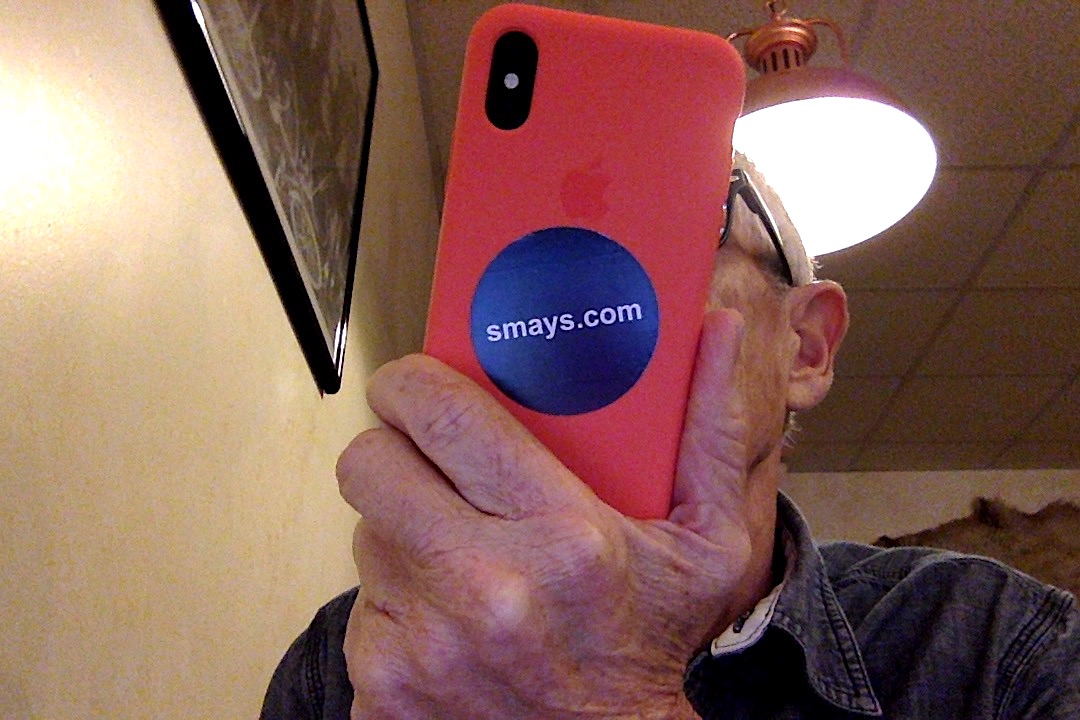
I had some folks in China make me some stickers. I wasn’t sure what I’d do with them when I placed the order but I’ve found a couple of spots. I put one on the back of my phone case with the thought that if I misplaced the phone, a finder wouldn’t have anyway of contacting me (assuming they wanted to return the phone). I could have put an email address on the case but I figured I’d just give the website a plug.

I stuck another one on the “Smoker’s Friend” on the sidewalk outside my local coffee shop. Inevitably I’m sitting down wind of the smokers taking those last few desperate tokes before ditching their smoke. Sort of a 21st century Kilroy Was Here.