Goodbye water filter

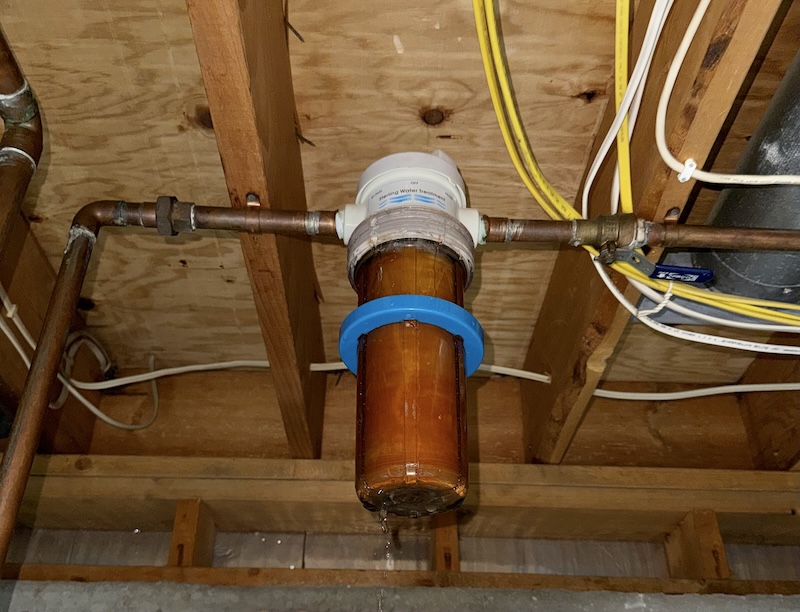
When we built our home ~40 years ago, we had a well drilled which necessitated a pressure tank and lots of pipes in our basement. And a filter that was supposed to be changed every few months (I didn’t always do that). This involved balancing atop a ladder and getting soaked to the elbows. Been doing this unpleasant chore for four decades.

Couple of weeks ago we had a plumber come out to work on the filter and he sent a sample of our water to a lab. A week later the report came back and they found nothing in our water. No need for a filter.
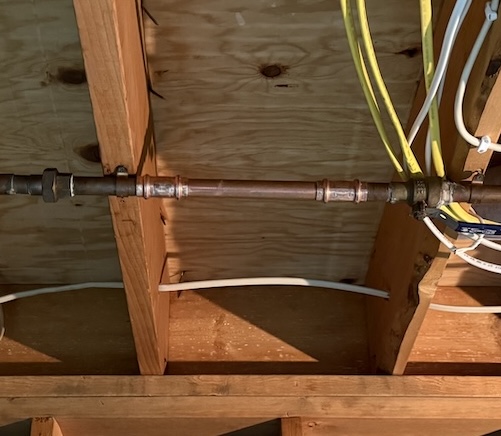
This might be the result of the new well we had drilled last year but who knows. All I know is I’m done with this messy chore.
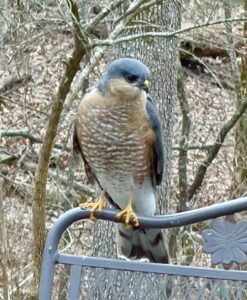
Sharp-shinned Hawk

Living on 10 wooded acres, we have lots of birds flocking to the four or five feeders we have hanging over our deck. Sometime after I retired, I took over the chore of keeping the feeders filled and have come to love watching the birds.

Yesterday, for the first time, this guy showed up. A Sharp-shinned Hawk (Accipiter striatus). Identification rests on several anatomical markers that distinguish it from its near-twin, the Cooper’s Hawk:


  • Head Shape: It has a “pin-headed” appearance with a rounded crown. It lacks the prominent supraorbital ridge (the “brow bone”) that gives Cooper’s Hawks a stern, angry expression.
  • Tail Structure: The tail is relatively square-tipped with a thin white terminal band. In a Cooper’s Hawk, the tail is typically rounded with a thicker white band.
  • Eye Placement: Centered on the side of the head, contributing to the “bug-eyed” look typical of the species.
  • Legs: Noticeably spindly, “pencil-thin” yellow legs.

Given the barred rufous chest and dark slate-gray back, this is an adult. These are specialized ambush predators, so if you have bird feeders nearby, its presence is purely tactical.

Goodbye old friend

The local electric co-op crew insisted on cutting the few remaining live limbs on our old Walnut tree and it wasn’t going to survive. So today we said goodbye. 

Based on several metrics, the tree was between 80 and 100 years old.

The equipment in the video is a knuckleboom loader (specifically a forestry/trash crane) mounted on a grapple truck. This specific configuration is commonly used by tree service companies (like “Korte Tree Care” seen on the door) to load heavy logs and brush into the truck for transport without requiring a separate loader or manual lifting. A complete grapple truck like the one in the video typically costs between $150,000 and $350,000 when purchased new.

Lifting heavy stuff

I’ve never been keen on lifting heavy stuff. When a friend was moving and asked me to help get his refrigerator in the truck or the mattress up the stairs… I took a pass. Offered to contribute to hiring a mover, but don’t lift heavy shit.

I’ve stacked a lot of logs, moved a bunch of rocks and helped Barb with some big ass flower pots. But I’m real careful about what and how I lift. 

I paid way too much for an electric winch (that was almost too heavy to lift!) and never did figure out how to use a come-along. 

I asked ChatGPT for ideas and she suggested a block and tackle (photo). I purchased a small one and gave it a try this afternoon by dragging a railroad tie up out of the woods. Continue reading