Earning your “Pedophile Badge”

“The Boy Scouts of America will be facing at least 82,000 claims of abuse as former scouts submit filings against the bankruptcy-bound organization, said a spokeswoman for the legal team representing the alleged survivors.”

“Based on what we are hearing from survivors, sexual abuse was a rite of passage in troops across the country, similar to other tasks where children had to … perform certain duties to earn their coveted merit badges,” he said in a statement.

CNN

Good news for the Vatican. Wonder if any of the QAnon assholes were scouts.

Going Postal

Once a month every company should survey (anonymously) all employees, asking which of their co-workers is most likely to come to work shooting. Maybe the top three most likely employees. Not sure what you’d do with that information but it wouldn’t surprise me if this woman’s name would have made the list.

Once ‘smarter’ AIs are running offices (monitoring all communication; video; etc) they’ll spot the shooters days in advance. Their metal detectors will know they’re packing when they walk through the door.

Now, take a few minutes to make your own list. The three people in your life most likely to go postal. You’re welcome.

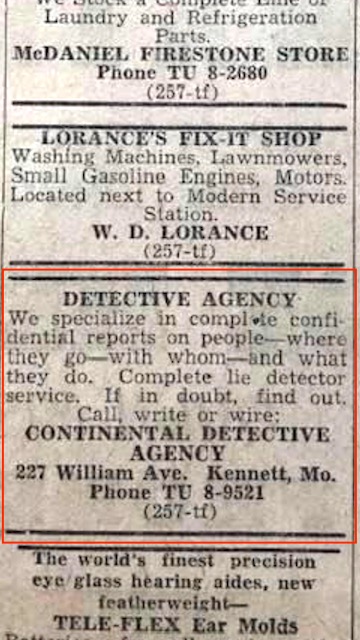
Kennett’s Flying Bank Robber

In January of 1976 I was on the air (noon hour?) at KBOA in Kennett, MO, when the police scanner in the studio went nuts. Someone (dispatcher? patrolman?) was yelling that someone had robbed the bank and “took off in an airplane!”

I grabbed a cassette recorder and dashed out of the station, yelling for someone to go up and take over the live studio. I got to the small motor bank before the police and got a few minutes of audio with the teller who had been robbed.

Police showed almost immediately and made me get out. I was pumped because I had some good stuff. When I pulled the cassette from the recorder it was hopelessly wound around the roller and gears and shit. No way to salvage. I nearly wept. Instead, I hung around long enough to get a little more information and then headed back to the station where I did a quick ad lib report live and then started writing up the story.

The satellite image above tells you most of what you need to know. The pilot taxied the small plane out to A where pilots always stopped to let their engines warm up before take off. He slipped out and ran across the highway to the small motor bank (Bank of Kennett). This was a tiny little facility. Room for maybe two tellers and a little lobby (6×10?) separated by glass and a door. The way I remember the story, he asked the teller for a chair and she opened the door to hand him one (he said he was waiting for a friend). He stuck a gun in her face, got the cash ($24K) and boogied back across highway (about 100 yards) and took off into the sunset. He was also charged with “interstate flight.” The FBI arrested 39 year old Dennis R. Holmes a few weeks later in Phoenix.

According to a story in the St. Louis Post-Dispatch, Joseph Appleyard, chief pilot at Dolphin Aviation in Sarasota, taught Holmes to fly a few months earlier. “He didn’t see like my average bank robber,” Appleyard said. Holmes rented the plane (in Sarasota) on the Thursday before the robbery, flew to Kennett on Saturday.

The plane was tracked on radar by the nearby Air Force base in Blytheville, AR, but lost him when it put it on the deck and disappeared. He had a range of about 700 miles.

Mr. Holmes was also arrested for holding up a bank in Arcata, CA in February. He fled in a car but quickly transferred to a small plane. He was also a suspect in a $55K stickup the previous October in Michigan. In that one the robber held up the bank just as the high school homecoming parade was about to begin, and he melted into the crowd.

If you’re out there, Dennis… if you’re reading this… how about an interview to make up for the one that got away?

Rise of the Robolawyers

From an excellent piece in The Atlantic by Jason Koebler:

In the past year, more than 10 major law firms have “hired” Ross, a robotic attorney powered in part by IBM’s Watson artificial intelligence, to perform legal research. Ross is designed to approximate the experience of working with a human lawyer: It can understand questions asked in normal English and provide specific, analytic answers.

Beyond helping prepare cases, AI could also predict how they’ll hold up in court. Lex Machina, a company owned by LexisNexis, offers what it calls “moneyball lawyering.” It applies natural-language processing to millions of court decisions to find trends that can be used to a law firm’s advantage. For instance, the software can determine which judges tend to favor plaintiffs, summarize the legal strategies of opposing lawyers based on their case histories, and determine the arguments most likely to convince specific judges. A Miami-based company called Premonition goes one step further and promises to predict the winner of a case before it even goes to court, based on statistical analyses of verdicts in similar cases.

A Silicon Valley startup called Legalist offers “commercial litigation financing,” meaning it will pay a lawsuit’s fees and expenses if its algorithm determines that you have a good chance of winning, in exchange for a portion of any judgment in your favor.

A company called Clause is creating “intelligent contracts” that can detect when a set of prearranged conditions are met (or broken). Though Clause deals primarily with industrial clients, other companies could soon bring the technology to consumers. For example, if you agree with your landlord to keep the temperature in your house between 68 and 72 degrees and you crank the thermostat to 74, an intelligent contract might automatically deduct a penalty from your bank account.

Wealthy LA convicts can upgrade to nicer jail

Wealthy LA convicts can spend extra to serve their time in fancy jails

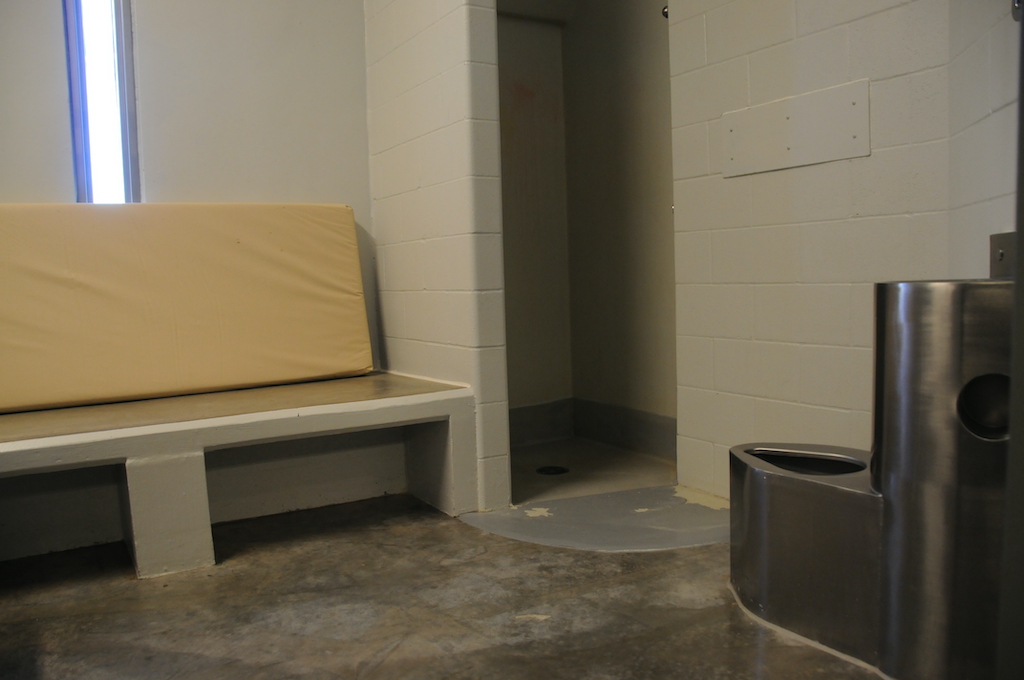
If some California inmates are not happy with their jail conditions, those who have money to spare can pay for an upgrade. Two counties in Southern California have at least 26 such “pay-to-stay” jails, a joint collaboration between The Los Angeles Times and The Marshall Project found.

Starting at $25 and going up to $251 a night, the program allows certain inmates to move into a “less intimidating environment,” as one jail in Santa Ana advertises on its website. The conditions differ from an eight-person dorm to one cell with two beds, a television, a phone and a separate refrigerator. The average inmate stayed in one of the rooms for 18 days, the Los Angeles Times and The Marshall Project reported.

Southern California’s “pay-to-stay” jail system, which brought in up to $7 million between 2011 and 2015, started in the 1980s as a way to fight overcrowding in the region’s jails.

Prison Radio

This might be an over-simplification but Prison Radio appears to be short (2-3 minutes) recordings made by prison inmates. I’m assuming these are made from phone calls the prisoners are allowed to make. That’s make take on the what, your guess is as good as mine on the ‘why’ but I’m assuming the idea is to give a voice to the incarcerated.

One of the prisoners recording these commentaries is James Keown. Mr. Keown is from Jefferson City, MO, the town where I live. In 2008 he was convicted of murder for poisoning his wife with Gatorade spiked with antifreeze. He’s serving a life prison sentence in Massachusetts.

In one of his three commentaries (Who Are You?) he describes being on the air at one of our local radio stations when, during a commercial break, he was arrested. I briefly met Keown a couple of times but didn’t know him.

I find these commentaries bizarre in a way I can’t quite put into words. Perhaps it’s the distinctive “announcer voice” Keown uses when making the recordings.

UPDATE (1/9/18): Keown has stopped updating his Prison Radio page. Just those three posts back in 2016. His appeal to the Massachusetts Supreme Judicial Court was rejected on October 23, 2017.

Missouri Death Row Audio

In the late ’90s I created a website called MissouriDeathRow.com. A Missourinet reporter had served as a witness (while covering) of every execution going back to 1989. There was no death row website because a) the web was still pretty new at the time and b) the Missouri Department of Corrections went to some lengths to avoid the term “death row,” even though prisoners sentenced to — and awaiting — execution were housed together.

At each execution, a packet of information was handed out to reporters and a stack of those were gathering dust in the Missourinet newsroom. News Director Bob Priddy and I began putting that information online and it quickly became the de facto site for information about capital punishment in Missouri. I maintained the site until I retired in 2012.

The site included a page with some of the history of capital punishment, including audio recorded by Missourinet reporters. As of this writing, much of that audio is no longer available on the site. The site was moved a few times, different servers, different platforms… files get misplaced or lost. My buddy Phil Atkinson did his best to find some of those and I’ve archived them here.

Death Row Audio

https://www.smays.com/death-row-audio/

Missouri hasn’t executed anyone in a couple of years but they had quite run at one point. The audio includes post-execution news conferences, interviews with victims’ families, opponents and proponents, and the condemned.

Live-streaming body cam video

bodycam“Taser plans to roll out live-streaming capabilities in 2017, and he expects facial recognition to become a reality someday so agencies can query police records or social networks in real time. An officer could patrol the Las Vegas Strip with a camera streaming to the cloud, “and there is real-time analysis, and then in my earpiece there is, ‘Hey, that guy you just passed 20 feet ago has an outstanding warrant.’”

Or that the guy you pulled over because he has “a wide nose” has NO outstanding warrants.

“The basic Axon camera must be activated manually, but departments can buy Axon Signal, which activates the device automatically in certain situations, such as when an officer flicks on the light bar on his car. For $10 per officer per month, another Taser service links Evidence.com files with existing dispatch and records software, so officers no longer need to individually tag files for retention or risk having an untagged file automatically deleted.”