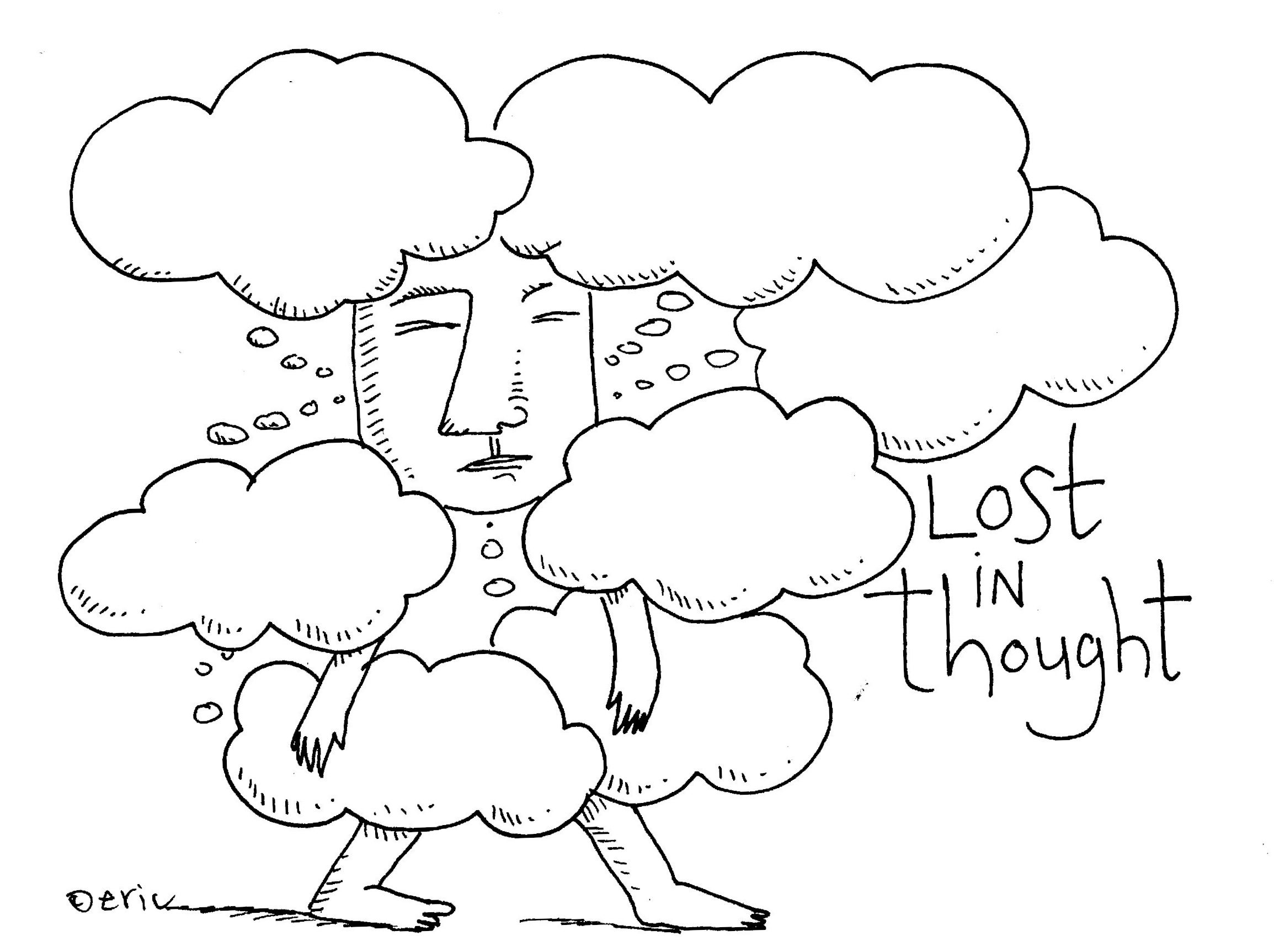
The (attention schema) theory explains why a brain attributes the property of consciousness to itself, and why we humans are so prone to attribute consciousness to the people and objects around us.
Consciousness is the window through which we understand.
Attention is a data-handling trick for deeply processing some information at the expense of most information. Awareness is the brain’s simplified, schematic model of the complicated, data-handling process of attention.
People have personal, quirky definitions of the term consciousness, whereas everyone more or less agrees on the meaning of the term awareness.
Not all information in the brain has awareness attached to it.
Consciousness refers both to the information about which I am aware and the process of being aware of it. Consciousness encompasses the whole of personal experience at any moment, whereas awareness applies only to one part, the act of experiencing.
Self-knowledge is merely another category of knowledge. How knowledge can be encoded in the brain is not fundamentally mysterious, but how we become aware of the information is. The awareness itself if the mystery.
Whatever awareness is, it musts be able to physically impact neuronal signals. Otherwise we would be unable to say that we have it.
Awareness is a description of attention. […] Attention is not data encoded in the brain; it is a data-handling method. It is an act. It is something the brain does, a procedure, an emergent process. […] In addition to doing attention, the brain also constructs a description of attention and awareness is that description. […] Awareness allows the brain to understand attention, its dynamics, and its consequences.
Awareness is the brain’s cartoon of attention.
The same machinery used to model another person’s attentional state in a social situation is also used to model one’s own attentional state. The benefit is the same: understanding and prediction one’s own behavior.
Attention is an active process, a data-handling style that boosts this or that chunk of information in the brain. In contrast, awareness is a description, a chunk of information, a reflection of the ongoing state of attention.
The unconscious machinery of the brain is so vast that it is like an elephant. Perhaps consciousness is a little boy sitting on the elephant’s head. The boy naively imagines that he is in control of the elephant, but he merely watches what the elephant chooses to do.
Your decision machinery does not have direct access to the real object, only to the information about the object that is encoded in the visual system. A perceptual representation is always inaccurate because it is a simplification.
The brain does attention but knows awareness.
(There is a ) distinction between being aware of something and knowing that you are aware of it.
Awareness is a schematized, descriptive model of attention. […] The purpose of (the) model in the brain is to be useful in interacting with the world, not to be accurate.
My awareness is located inside me. In a sense it is me. It is my mind apprehending something.
Your own private awareness and your ability to attribute awareness to someone else are products of the same machinery in your brain. That machinery computes the property of awareness and can attribute it to others.
Is it necessary to be aware of any specific information in order to be aware? Can you be aware, simply aware, without any target of the awareness? Can I be aware of being?
Consciousness (is) essentially a tale that the brain tells itself to explain what it is doing and why it is doing it. Consciousness is after-the-fact. We know about our mental states using the same tricks and inferences that we use to reconstruct the mental states of other people. We tell ourselves a story about ourselves. As a consequence, we routinely and confidently make up incorrect reasons for our own behavior.
Awareness is a model of the act of attention. […] Attention is not itself information. It is something that happens to information.
The only objective, physically measurable truth we have about consciousness is that we can, at least sometimes, report that we have it.
Consciousness is information that describes the process of attending to something.
Awareness is not knowledge about yourself as a person, or knowledge about your emotions, or knowledge about your thoughts; it is not remembering your past, or introspecting about your mood, or any other part of self-reflection. Awareness is equally present whether you are reflecting on yourself or looking out at the external world. It is present whether you are focused on your innermost feelings or on the grass and sky in the park on a nice day.
(One view of consciousness) Consciousness does not directly cause most of our actions but instead rationalizes them. In (this) view, free will plays a minor role, if any.
All consciousness is a “mere” computed model attributed to an object. One’s brain can attribute it to oneself or to something else. Consciousness is an attribution. (Consciousness) is not something a person has, floating inside. It is an attribution. […] To say that I myself am conscious is to stay, “My own brain has constructed an informational model of awareness and attributed it to my body.”
The most reasonable approach to spirituality is to accept two simultaneous truths. One, literally and objectively, there is no spirit world. Minds do not float independently of bodies and brains. Two, perceptually, there is a spirit world. We live in a perceptual world, a world simulated by the brain, in which consciousness inhabits many things around us, including sometimes empty space.
We will build computers that can construct their own awareness in the same way that the human brain does.
If I spend enough time (with him) and my friend gets to know me well, then he will construct a model in his own brain, an informational model of a mind filled with the quirks and idiosyncrasies that reflect me. His model of my mind will be the same general type of data run in the same general manner on the same general hardware architecture as my own conscious mind. It will be a copy, at low resolution, of my consciousness. In effect, I will have been copied over from one computer to another. […] Fuzzy copies of our conscious minds exist in all the people who knew us.
I consider it a technological inevitability that information will, some day, be scannable directly from the brain and transferrable directly to computers. As embarrassingly sci-fi as that sounds, no theoretical reason stands against it. If the attention schema theory is correct, then human consciousness is information processed in a specific manner. Don’t want to die? Download your consciousness onto a central server and live in a simulated world with all the other downloaded souls. When your body dies, the copy of your mind will persist. You need not know the difference. If the simulation is good, you should feel as though you are in a realistic universe. You can possess what seems to be a human body and can walk and live and eat and sleep on the familiar Earth, all simulated, all in the form of information manipulated on computer hardware. At the rate technology is advancing, give it a few centuries.
It has been said that people invented God. People will invent the afterlife too.
Across all cultures and all religions, universally, people consider God to be a conscious mind. God is aware. God consciously chooses to make things happen. […] The critical question is whether consciousness lies behind the events of the universe. If so, then God exists. If not, then God does not exist. […] The universe is conscious in the same sense that it is beautiful. It is conscious because brains attribute consciousness to it, and that is the only way that anything is ever conscious.

 Amazon