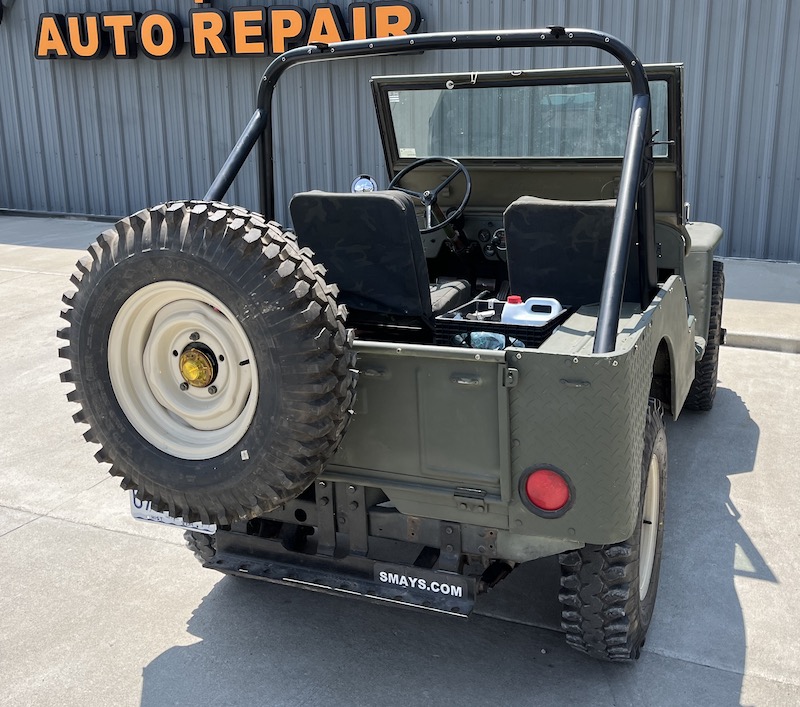
The Family Jeep

Steve Hoefer, an online acquaintance, shares his family’s Jeep story:

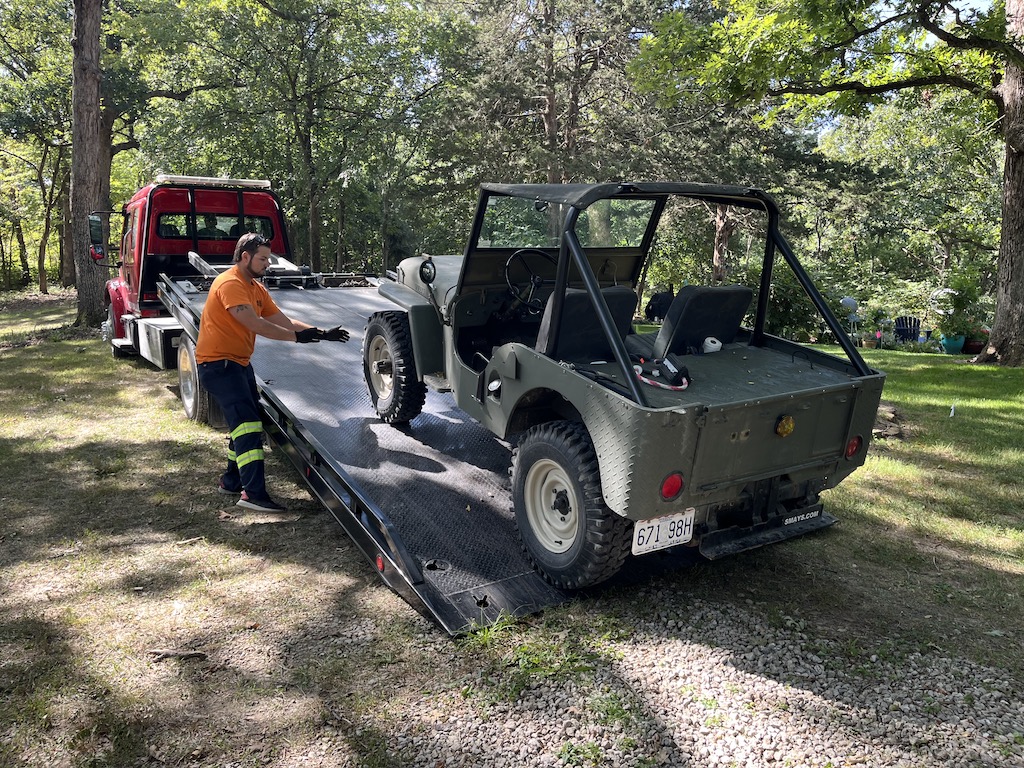
Ours is a 1946 Willy’s CJ-2A. Originally I believe it was Normandy Blue with yellow rims. I don’t think Dad bought it new, he’d have been a bit young in ’46, but he bought it for farming.

They stopped driving it before I was born, though apparently all of my siblings bounced out of it at some point or other. I’d always known it as a busted thing parked in an outbuilding, home to generations of raccoons. Around 1990 my dad decided to drag it out so he and a buddy could fix it up. He wasn’t interested in making it look new, I don’t even know how we’d have addressed the rust. It took quite a few parts and rebuilding the engine. When it works it sounds just like on MASH and handles like an unruly toddler. I’ve never had it above 30 mph because I don’t think I’d keep it on the road or me in the seat. Both dad and his buddy have passed now and none of the rest of us know engines enough to keep it in good repair. We do have the full service manual. If someone was motivated enough they could get it back into shape without too much trouble.

At one point my nephews made a potato cannon and we mounted it on top and pretended we were in Rat Patrol. (We put the windshield frame on, but never felt safe putting the glass in. Also we never found the front bumper so I bolted a piece of 4×4 to the front.)

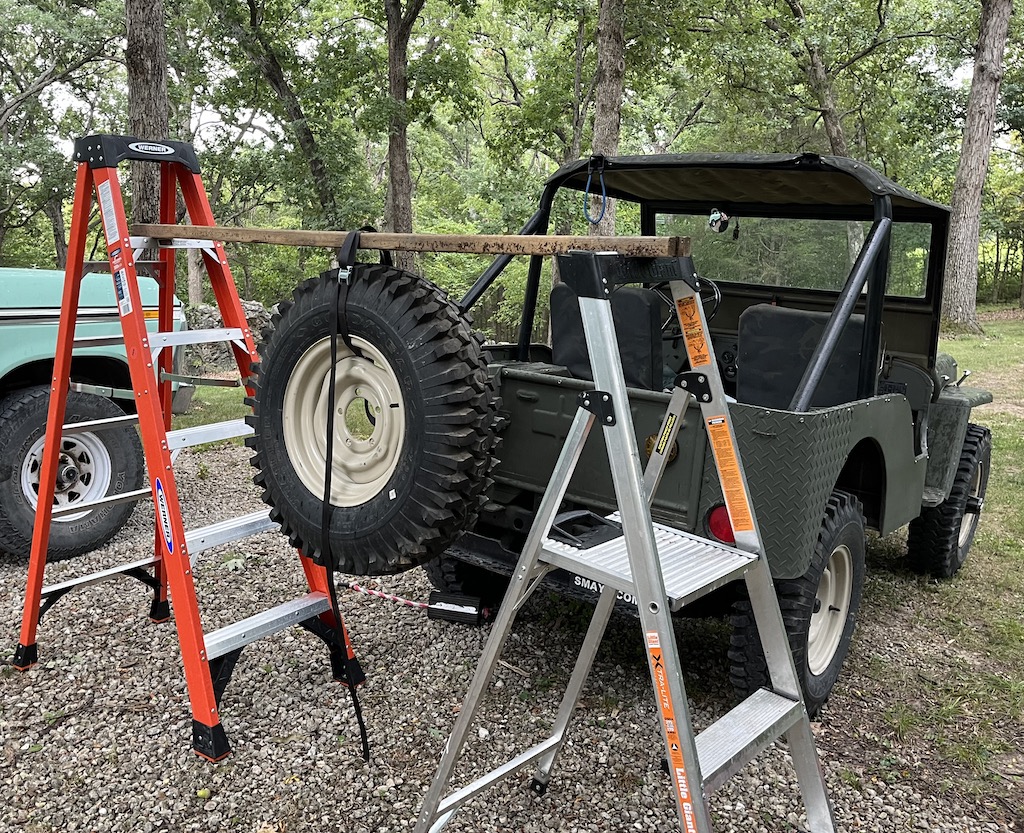
Jeep now topless

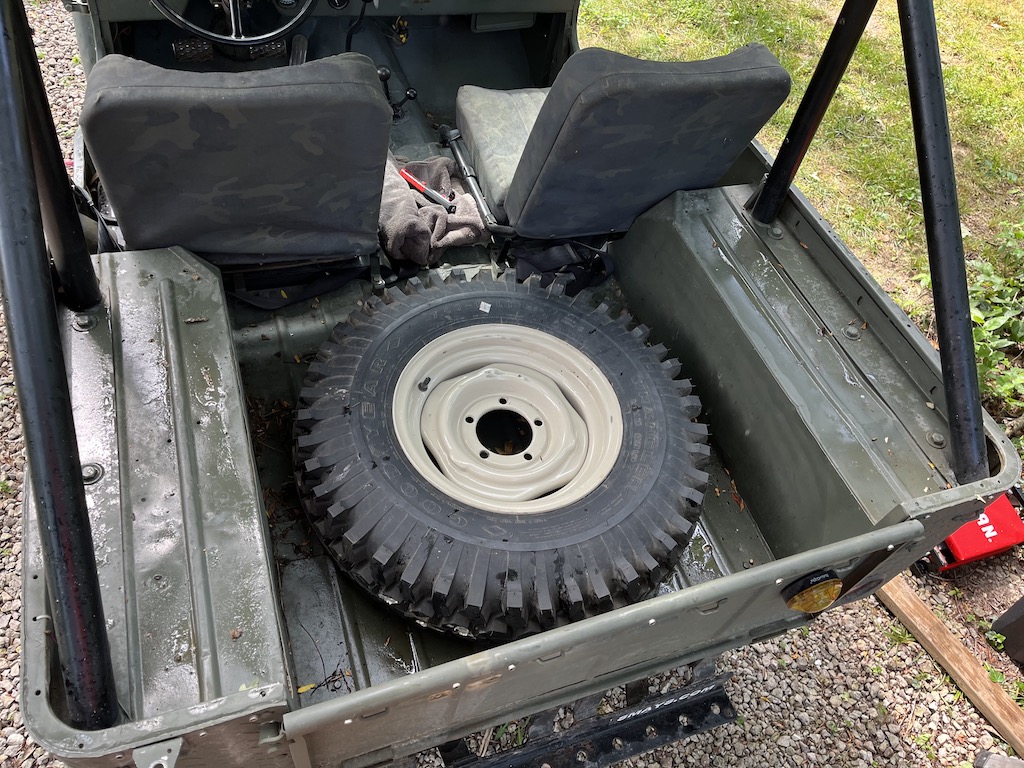
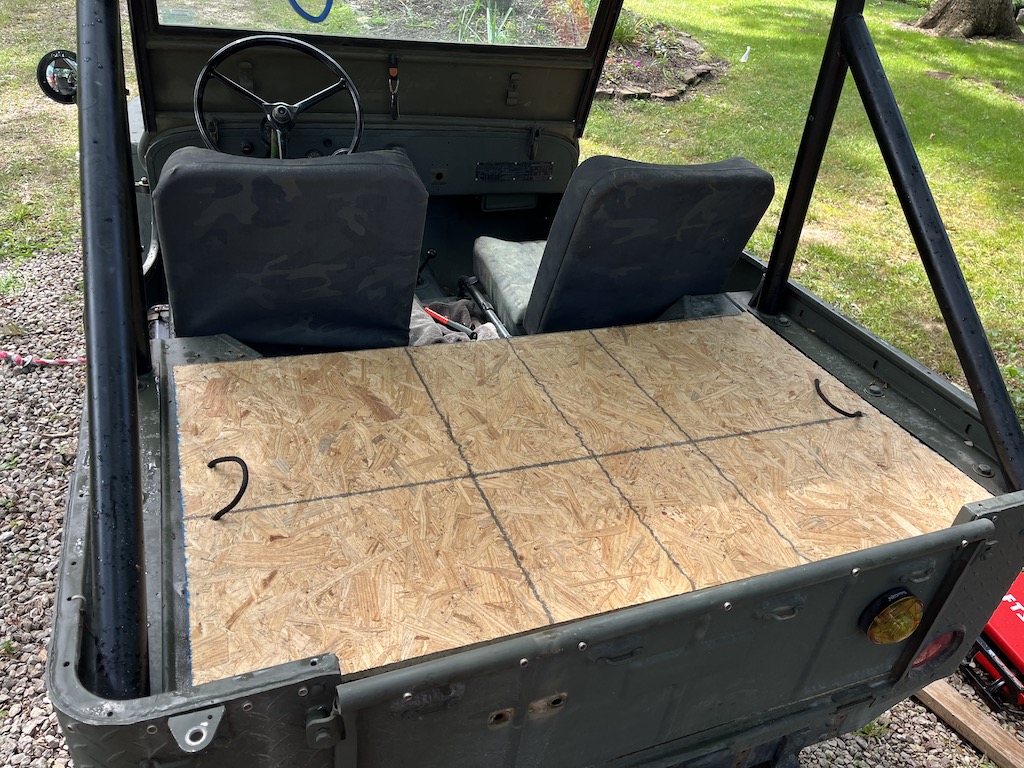
hate camo and all that phrase has come to connote. When I saw the Jeep for the first time I thought, cool Jeep. My second thought was, that camo is fugly! Paul made the Jeep look much better with a few cans of spray paint. I’m going to try to do the same for the canvas top.

Thought it would be a chore to get the top off but Paul and I did it in about five minutes. Turns out the previous owner had the top custom-made by some upholstery wizard. When it was off Paul said he thought the Jeep looked happier.

I spread the pieces out on the floor of the big room in the Annex and masked the plastic “windows” in preparation for painting tomorrow. Curious if this will work at all and how many cans it might take. If it comes out okay, I’ll probably put it back on and drive the Jeep some this winter.

I also learned today the previous owner had a cover made for the Jeep. I was expecting a big old bag that covered the entire vehicle but this item looks custom, too.

Difficult to tell from this photo but it appears this just covers the interior with those two pouch-looking things for the seat backs. I don’t expect to worry much about the Jeep getting wet but we’ll see how easy this is to get on and off.

I’ve cobbled together a “carport” of sorts by covering the top of the Land Rover rack with a heavy duty tarp in hopes of keeping the worst of the weather off. (:54 video)

Update February 2, 2023: The spray job on the canvas top came out better than expected. Close enough to the color of the Jeep body.

Jeep CJ2A instrument panel

There is just so much I love about vintage vehicles, simplicity being near the top of the list. While giving Barb her first look at the new toy (we’ve decided it’s my birthday present), I snapped this photo of the instrument panel. (The CB radio will be among the first to go)

The grey knob top/left is the choke; next to that is what looks like a cigarette lighter; no idea on the tiny toggle switch. “Speed” reads the speedometer, in a nice cursive font. Somewhere along the way, someone converted this Jeep from 6 volt to 12 volt. Not sure if the voltmeter is part of that update. Like my Land Rover, the Jeep has a “drum emergency brake.” The big silver handle. Down below are the oil pressure gauge and the temperature gauge.

The ignition is hidden behind the gear shifter. Some of the older Jeeps had a starter button on the floor but I don’t believe this one does.

I intend to learn more about these gauges over time. And behind the electrical wiring, four fuses (and a spare).

What is the essence of a Jeep?

Perhaps the better question is, do vehicles have an essence.

“the intrinsic nature or indispensable quality of something, especially something abstract, that determines its character.”

I put this question to a handful of people I know who might have given some thought to such a question.

I’ve been watching lots of videos about the history of the Jeep as well restoration projects. Seems there’s as much mystique and passion surrounding the Jeep as Land Rover.

The historical videos started with the initial development during WWII; then the transition to Jeeps made for the agricultural market; and on to the more mainstream civilian models.

The Jeeps I see on the road (and there seems to be a LOT) bear little resemblance to those early Jeeps. Looks like the name and the grill (maybe) is all that’s left. Which got me wondering… when did these models cease to be a “true Jeep?” If Mitsubishi purchased the brand and putting the Jeep name on one of their models, nobody would consider it a Jeep.

We saw this mindset at work with the Land Rover “Santana.” The forums were full of guys who insisted that is not a “real” Land Rover. I suspect no two Jeep owners could agree on this question. And I don’t particularly care, except from a philosophical standpoint.

If I get any takers on this question, I’ll share them in comments below.

Jeep promotional videos

YouTube: Willys, the “World’s Largest Manufacturer of Utility Vehicles,” presents the “Jeep Family of 4-Wheel Drive Vehicles and Special Equipment,” a circa 1954 black-and-white film promoting Jeeps produced for civilian use. (“One man with a Jeep can do the work of 100 men with shovels”)

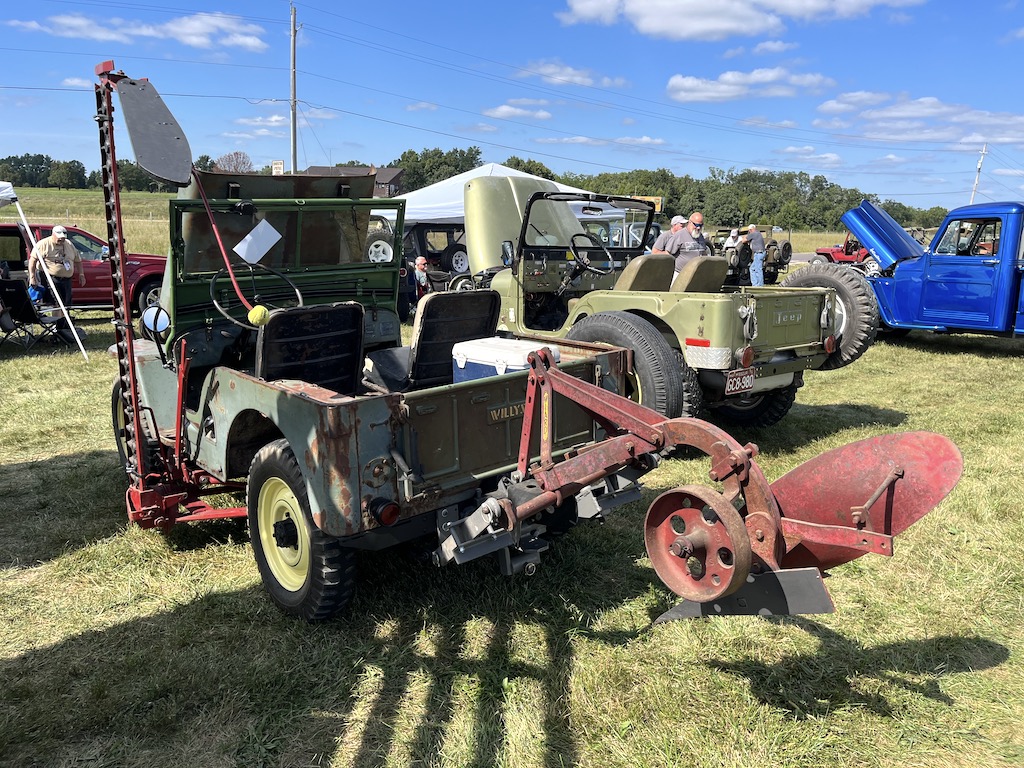
Because this video runs a tad over 20 minutes, I’m guessing it ran in theaters before feature films. I recall seeing newsreels like this as a child in the 1950s. Jeeps like mine (CJ2A) were aimed at the agriculture market and this video show one handy attachment after another.

The narrator pronounces Willys: WILL us … rather than WILL eez so I’m confident that is the correct way to say it.

YouTube titles the video below: Autobiography of a Jeep and the narrator is the “voice” of a Jeep during its development and the early years of WWII. The delivery is that Pete Smith Specialty style from the 40s and early 50s (you had to be there). A little corny but some excellent Jeep footage.

YouTube description: “A small company in Pennsylvania, Bantam, invented the Jeep, but the military needed more than Bantam could produce. So they turned to Willys and Ford and had these auto titans build Jeeps. Edsel Ford joins other Ford Motor Company officials as they demonstrate their vehicles for the military.” (this video has no sound)

Okay, one more. 1940 Ford Pilot Model GP-No. 1 Pygmy

Jeeps in the wild

I’ve been collecting these for a while. The last two (sand color) are the same Jeep. The first Jeep on the bottom row was on Paul Bandelier’s lot. Will ask him what happened it and update here.

1940’s Jeeps in Junkyards


“A look at vintage Willys Jeeps hidden away from the world in junkyards and barns across the United States. It’s amazing how much vintage iron out there needs rescuing. The Jeeps in this video range from pre-mass production WWII Jeep such as the 1941 Ford GP, to the standardized Willys MB, and of course post-war Jeeps such as the CJ2A, CJ5, and even a Korean-War era M38. They range from the 1940’s to the 1960’s.”

My friend John Middleton pointed me to a terrific YouTube channel called Turn N Burn. This young man has been restoring Jeeps since he was 17 and I’m finding his videos fascinating. The video below features a 1940’s Willys Jeep that as in a home garage when the place went up in flames and the Jeep burnt to the ground.”

After reviving the fire-surviving CJ2A, they take it to an off-road park for a proper break-in. I’ve yet to drive my new toy but watching these videos makes me think I might be a little more adventurous with the Jeep than I’ve been with the Land Rover.

Rebuilt carburetor for Jeep

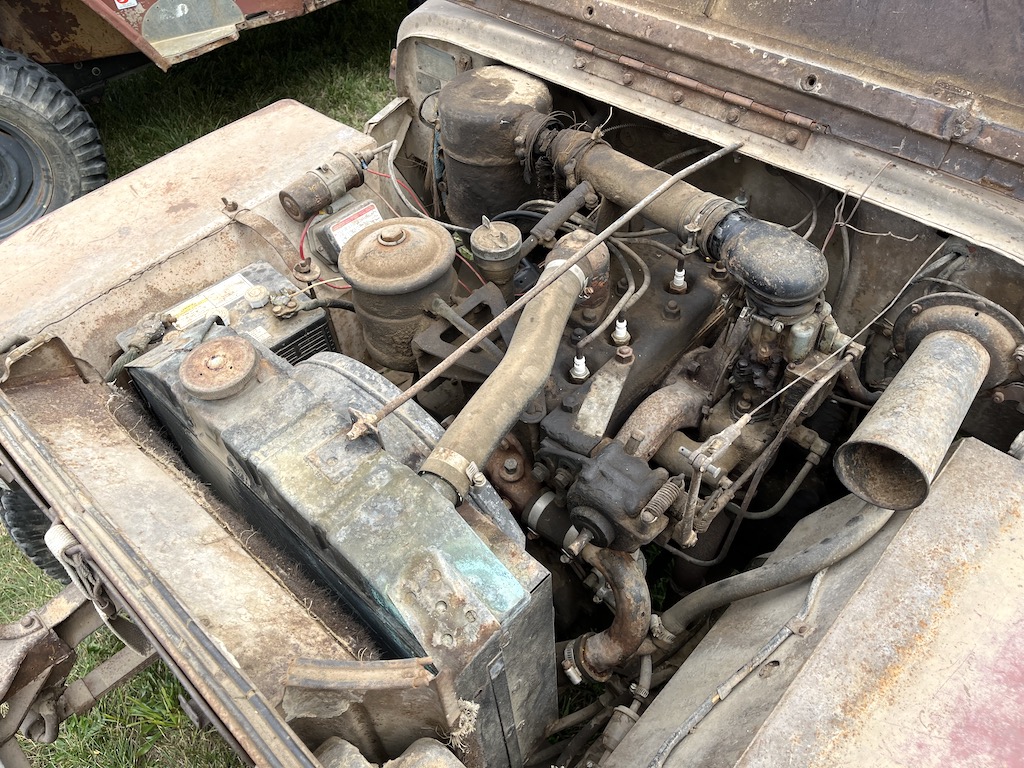
While the Jeep is in exceptionally good shape for a 76 year old vehicle, Paul decided to replace the carburetor with a rebuilt Carter.

Carter adapted carburetors for Willys Jeep four-cylinder engines, waterproofing them for water crossings and making it possible to keep the engine going even on a steep incline (the Y-S carburetor). (Wikipedia)

He found a guy who specializes in rebuilding these and tests them on a Jeep engine. All for a mere $310.00. (Old and new carb below)


Took a screwdriver, a spanner and about half an hour and the Jeep was running like a Singer sewing machine.

Paul declared this the quietest old Jeep engine he had seen/heard. He’s pretty sure the engine was rebuilt along the way. The odometer reads 2,932 miles and was probably reset following the rebuild. Just waiting on the new steering box. Watch this space.

Jeep: Steel Soldier

(YouTube) “Best video-history of the initial creation of the “Original Jeep”. The video shows the story of the “Jeep” from its original Bantam roots, all the way through its initial civilian use.” Should come as no surprise the Jeep has a rich a history at the Land Rover but I learn something new every time I watch one of these. And there seems to be a lot of them.

The history of the Jeep is at least as rich as that of the Land Rover. The first clip below is Bill Travers, a Jeep driver with the 87th Infantry Division. (45 sec) Below that a 2 minute clip about the CJ2A:


Jeep: A few repairs needed

Closed the deal on the Jeep today but won’t be driving it until a few repairs are made. Needs a new carburetor and a steering box.

In all fairness, the shaft (assuming it’s the original) lasted 76 years. And it would have been interesting if this had happened while I was motoring around town.

I’m learning more about this model Jeep. The engine –an L134– is a very reliable engine. No idea when I’ll drive this baby home but I’m looking forward to the adventure.