I’m reading Kurt Vonnegut’s Player Piano, his first novel, published in 1952.
(Wikipedia) “It is a dystopia of automation, describing the dereliction it causes in the quality of life. The story takes place in a near-future society that is almost totally mechanized, eliminating the need for human laborers. This widespread mechanization creates conflict between the wealthy upper class—the engineers and managers who keep society running—and the lower class, whose skills and purpose in society have been replaced by machines.”
I don’t recall the novel making much of an impact on me when I read it during college. The world just didn’t seem that mechanized to me back then. It sure seems timely 60+ years later. And it brings to mind my brief (2 weeks?) time working on the assembly line of the General Motors plant in St. Louis. Summer of 1968?
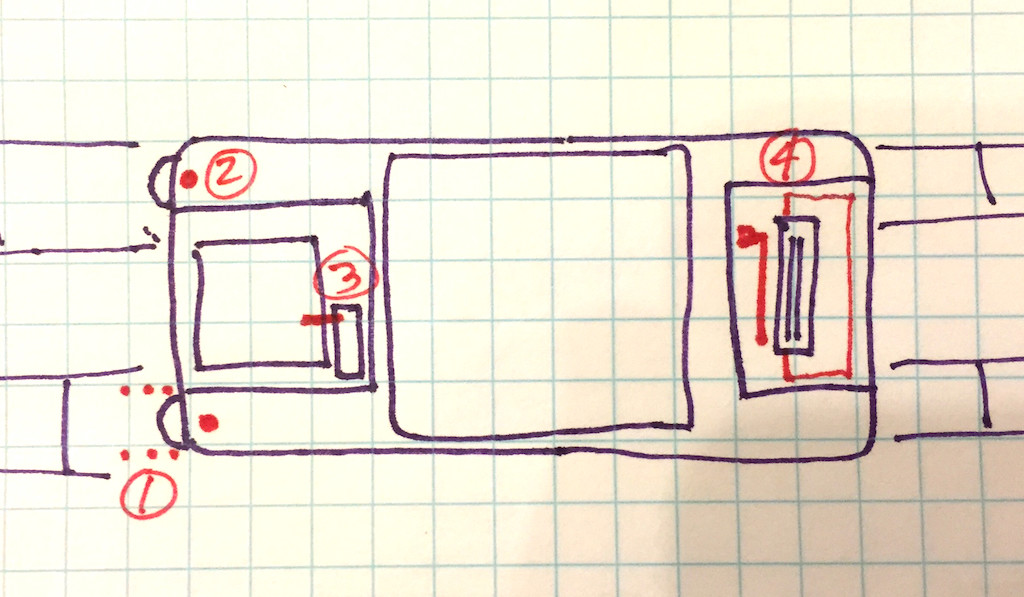
As I recall, every hour 62 cars passed my little work area. In that minute I put six screws into a thing around one of the headlights (1); put rubber bumpers on two little posts the car’s hood rested on (2); attached a little piece of rubber hose to… something (3); put the tire iron behind the spare tire and spread out the trunk mat (4).
I’m surprised I lasted two weeks but some of the guys on the line had been doing similar tasks for 20 years (and encouraged me to drop out of college to get a couple extra years of seniority).
Vonnegut died in 2007 so he saw some serious automation. As for the class conflict depicted in his novel, well, I think we might just be getting started.
Excerpt for Player Piano:
“Well—I think it’s a grave mistake to put on public record everyone’s I.Q. I think the first thing the revolutionaries would want to do is knock off everybody with an I.Q. over 110, say. Then the 100’s would go after the 110’s, the 90’s after the 100’s, and so on,” said Finnerty. “Things are certainly set up for a class war based on conveniently established lines of demarcation. And I must say that the basic assumption of the present setup is a grade-A incitement to violence: the smarter you are, the better you are. Used to be that the richer you were, the better you were. Either one is, you’ll admit, pretty tough for the have-not’s to take. The criterion of brains is better than the one of money, but”—he held his thumb and forefinger about a sixteenth of an inch apart—”about that much better.” “It’s about as rigid a hierarchy as you can get,” said Finnerty. “How’s somebody going to up his I.Q.?”
“I’m going to get myself a uniform, so I’ll know what I think and stand for.”

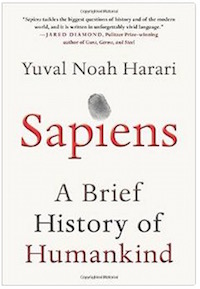 Amazon: “Most books about the history of humanity pursue either a historical or a biological approach, but Dr. Yuval Noah Harari breaks the mold with this highly original book that begins about 70,000 years ago with the appearance of modern cognition. From examining the role evolving humans have played in the global ecosystem to charting the rise of empires, Sapiens integrates history and science to reconsider accepted narratives, connect past developments with contemporary concerns, and examine specific events within the context of larger ideas.”