
Big St. Louis architectural firm getting their blog on

Clyde found this blogging success story in the St. Louis Business Journal. It’s about HOK a global architectural firm with headquarters in St. Louis (I assume). It’s a biggie, with $752 million in revenue in 2008.

A year ago they launched a blog (HOKLife.com) to put a more human face on the firm, which has 2,000+ employees, and to communicate with potential hires, clients and competitors.

It’s a group blog with three dozen contributors from their offices around the world, whose posts, by the way, are not edited. Senior writer John Gilmore:

“Young readers are very savvy, and they know when something’s not authentic. If hour’s not authentic, it’s the kiss of death for a corporate blog.”

True that. The Business Journal article included some findings of a 2009 survey (of companies with more than 1,000 employees). Among the findings, companies with blogs reported higher levels of customer satisfaction, employee satisfaction, greenness, revenue and market share.

The companies with blogs reported revenue per employee of $336,792, compared to $263,333 for those without blogs.

Despite success stories like this one, there remains –even in our company– pockets of resistance to blogging as a communications tool. And I’m convinced it comes down to control. Like HOK’s Gilmore said above, it’s got to be authentic and that means unfiltered and unedited. And that’s really difficult for managers who are centralized, command-and-control guys in their DNA.

If you have a subscription to the StL Biz Journal, you can read the full article here.
“All spokes and no hub”

Steve Rubel suggests the next big media company won’t have a website:

“Conceivably the next great media company will be all spokes and no hub. It will exist as a constellation of connected apps and widgets that live inside other sites and offer a full experience plus access to your social graph and robust community features. Each of these may interconnect too so that a media company’s community on Facebook can talk to the same on Twitter.

Facebook might be the first venue where this starts. It could become a mini news reader for millions who don’t care about RSS or Twitter. Over time this may obviate the need to create large news sites. It’s easier to create a rich interactive experience there than start a new news site and hope that people come to you. They won’t have time to find or visit.”

“Mass Roots Marketing”

Interesting post at AdAge.com on hyperlocal media and how one big media company –in this case NBC– is attempting to play “at the intersection of advertising, marketing and programming, potentially creating new kinds of content in the burgeoning local arena.”

“We’ll explore what the best solutions are to connect across all platforms. Maybe it’s finding a great blogger who lives in that community who becomes an on-air personality. It’s creating things for people to feel more connected to their community.”

“Local media is going to be the intersection of utility and entertainment and everyday life. As things are globalizing, local becomes even more vital. You have the same brands, the same food, etc., wherever you go now. Local is what makes things different; it gets to what people love about their neighborhood, why they decided to live there.”

“You start with an event or something that happens in a small community in one locale and you’re looking at it to amplify out from that. NBC Local is well-placed to help big marketers to put those new kinds of programs in place. You’ll still have people buying local 30-second spots, but more and more also putting together programs that make an impact on a very local level and have that radiate out in significant ways.”

Uh, isn’t this what local broadcasters and newspapers are doing? Or should be doing? Or used to do? Are the Big Guys planning on doing “local” better than local media?

Stay tuned.

Seth: “If you were starting your business today…”

“Your industry has been completely and permanently altered by the connections offered by the internet. Your non-profit, your political campaign, your service business. Not a little different, not just email enabled or website marketed, but overhauled.

Unfortunately, that’s hard to embrace. But it’s still true. What are you going to do about it? If you were starting your business today, knowing what you know now, how would you do things (very) differently?” — Seth Godin

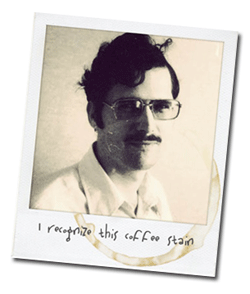
Rollip turns digital pix into Polaroids

rollipI loved Polaroids for the same reason I love small digital cameras. I got to see and share the photo immediately. No waiting for processing. And there was a space on the front of the photo to write name/date/place.

Rollip is a website that turns your digital photo into a faux Polaroid. I can probably do this faster in Photoshop but if you like this effect, Rollip is fun, easy and free.