Memory is fiction

A recurring theme in some of my recent reading has been the nature of subjective time. Among other insights, that the past and the future are delusions, created by the mind. This is a little easier to grasp for the future. Any ideas we have about what is going to happen is clearly fiction. But the past feels more “real.” It happened. I remember it. But that’s fiction as well.

“A memory is only as real as the last time you remembered it. The more you remember something, the less accurate the memory becomes. The larger moral of the experiment is that memory is a ceaseless process, not a repository of inert information. It shows us that every time we remember anything, the neuronal structure of the memory is delicately transformed, or reconsolidated.” — The Frontal Cortex

This reminds me of the scene in Blade Runner when Rachel discovers her memories are implanted. A disturbing thought because (for most of us) we ARE our memories.

But if that’s not really so, if our memories are fiction, who are we? Probably not who we think.
The goodness of GoodReader

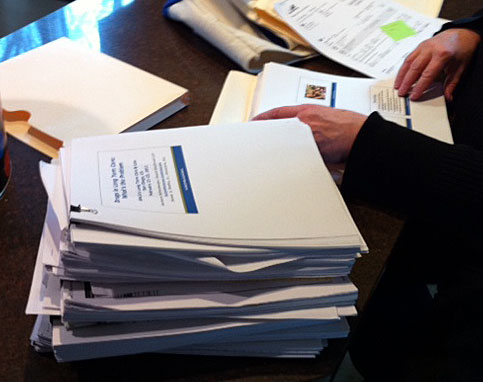
Barb is attending (and speaking at) a legal conference in San Diego this week. The photo shows some of the documents she insists she might need access to.

In the bad old days she might have shipped these to her hotel (and back). For this trip they are all neatly organized as PDFs in GoodReader on her iPad.

Super-thin displays are here

via singularityhub.com

Perhaps one day the Super Bowl could be televised uninterrupted by commercial breaks – the camera could simply zoom in on the quarterback’s AMOLED covered helmet during a time out. Or even better for advertisers, their commercials could play throughout the game, turning each helmet into a video display>

Watching the news to get high

That’s what I’ve been doing. For years. I didn’t realize it until reading this post by David Cain. The post is eerily close to the view of my friend Henry. A little more spiritual, perhaps, but they’ve wound up at the same place.

“A few years ago I quit watching the news, because I realized I only did it to get high. It felt good to feel outrage sometimes. It felt good to take up and defend certain mental positions about social issues, to hate people who did bad things. It also felt comforting to have some socially-acceptable TV to watch after dinner.

I did it because I was attracted to it, not because it actually gave me any advantages or improved my quality of life. When I think of all those hours spent watching the news, it’s hard to figure out quite what I gained in exchange. Those volumes of information about O.J. Simpson, Sarah Palin or any other Outrage of the Month haven’t done me a lick of good since the moment I absorbed it.

Because it was gratifying, I never had any incentive to examine what it was doing for me or what it cost me. In any case, I would tell myself I was “staying informed” like any responsible citizen, as the typical argument goes, but it was really a fairly useless indulgence that just made some part of me feel good at the time.”

So many of the things I do every day are mindless. I do them without being aware of doing them, certainly unaware of why I am doing them.

I’m going to try to skip the evening news to which I have so long been addicted. That’s a half-hour a day. An extra week each year? Wish me luck.

Advanced sign-in security for your Google account

I love most things Google. Gmail, Google Docs, Google Reader and most of the tools and services they’ve come out with (Wave and Buzz notable exceptions).

If someone hijacked my Google accounts, they’d have to take my belt and shoe laces. So I was eager to try their recently announced 2-step verification process. From the Gmail blog:

“…it requires the powerful combination of both something you know—your username and password—and something that only you should have—your phone. A hacker would need access to both of these factors to gain access to your account. If you like, you can always choose a “Remember verification for this computer for 30 days” option, and you won’t need to re-enter a code for another 30 days. You can also set up one-time application-specific passwords to sign in to your account from non-browser based applications that are designed to only ask for a password, and cannot prompt for the code.”

I’ll have a better feel for this in a few days but I’m willing to put up with a little extra hassle to know my account is safe.