
John and Evelyn (March, 1946)

I’ve read that memories are not retrieved or recalled but recreated. Sort of recompiled, changing slightly each time. Is a photo a memory? Only if I took the photo, was there to experience the moment captured. Is a photo history? Arguably more accurate than the one my brain creates.
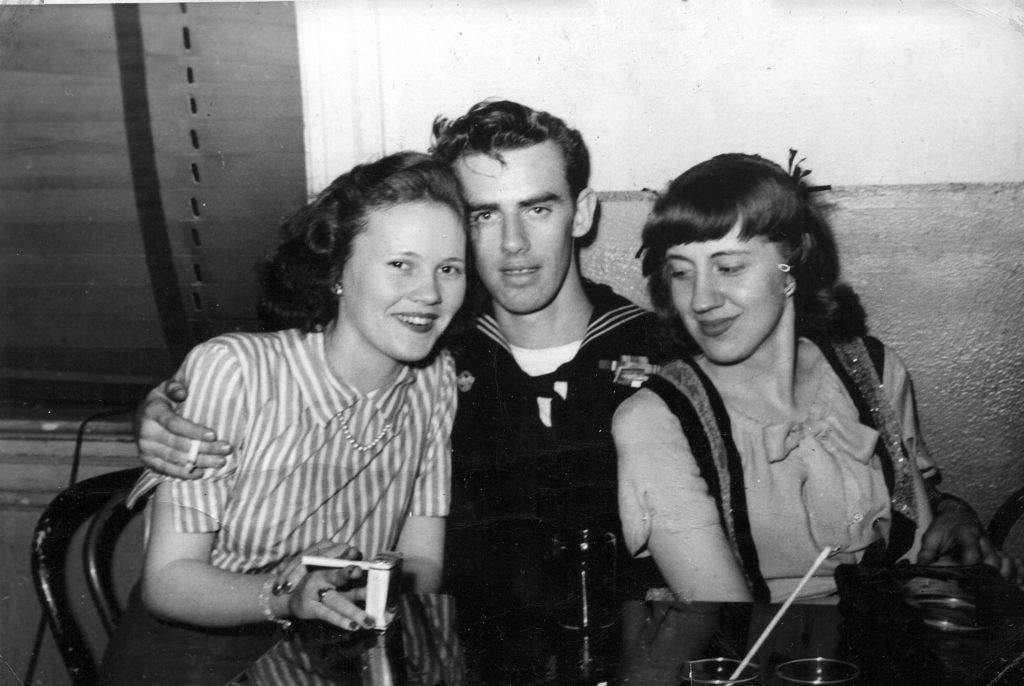
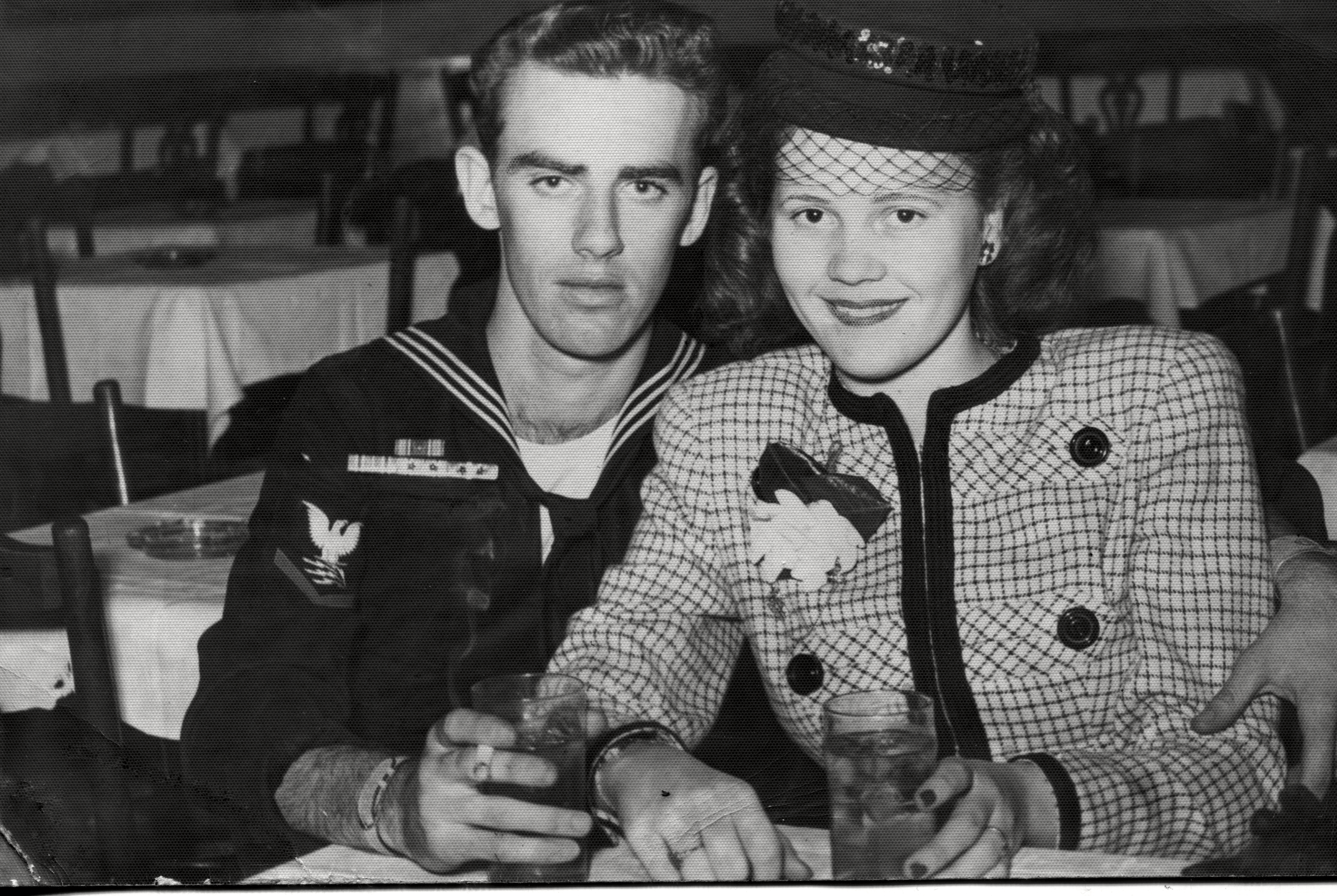
I’m not headed anywhere with this, just rambling. These two photos are of my mother and father (and an unidentified friend). Probably taken sometime in 1946. My father was discharged from the Navy on March 9, 1946. He married my mother on March 23, 1946. So, as mom often claimed, they knew each other for two weeks before taking the plunge. This suggests the photos below were taken in March of 1946.

I can never know the people in these photos. What that time was like for them. This is as close as I will ever come. One instant in time (two in this case). Where were they? How long had they known each other. When/where/how did they meet? Who took the photos and why? Then again, maybe it’s better not to know. We can create our own histories, which we do in any event.

For me There is powerful magic in old photos. Even if I don’t know the people.

Does William Gibson know what’s ahead?

“It’s the music of a disenfranchised, mostly white proletariat, barely hanging on in post-post-industrial America.” William Gibson’s All Tomorrow’s Parties was published in 1999 so the line above was written at least 17 years ago. More so than any other writer, I get the feeling Gibson somehow knows what’s ahead for us. Maybe he gave us a glimpse of that in The Peripheral. Perhaps that future is already here. I wish I could pick up the phone and call Mr. Gibson or Kevin Kelly or James Gleick or (insert name of really smart person here): “I’m sorry to bother you, but what do you think? Is everything going to be okay or not?”

Daydream (in two takes)

I’m struggling to memorize a few songs (rather than rely on the iPad for lyrics and chords). I seem to be able to remember one or the other, but not both. This recording is as close as I’ve gotten. I find the pain more bearable if we all share it. One day I’ll post a version in one take. But not today.

Five things you notice when you quit the news

I’ve been trying to kick the “TV news” habit for a while. I knew it wasn’t good for me but just couldn’t turn it off. If you’d asked me why I’d have been hard-pressed to tell you. But, once again, David Cain does a nice job of explaining things I cannot. He stopped watching for 30 days and shares some insights:

“If you quit, even for just a month or so, the news-watching habit might start to look quite ugly and unnecessary to you, not unlike how a smoker only notices how bad tobacco makes things smell once he stops lighting up. […] What you can glean about the world from the news isn’t even close to a representative sample of what is happening in the world. […] Once you’ve quit watching, it becomes obvious that it is a primary aim of news reports—not an incidental side-effect—to agitate and dismay the viewer.”

And this little gem: “As it turns out, your hobby of monitoring the “state of the world” did not actually affect the world.”

This Friday will be 30 days since I watched TV news (or listened to NPR news). No Twitter and I never did Facebook. I still post a few things to Google+ (where I have some folks I like chatting with) but don’t get much “news” there and have muted all politics. I’ve never felt better.

Patterns and nodal points

“Speaking of nodal points in history, of some emerging pattern in the texture of things. Of everything changing. Laney is a sport, a mutant, the accidental product of covert clinical trials of a drug that induced something oddly akin to psychic abilities in a small percentage of test subjects. But Laney isn’t psychic in any non-rational sense; rather he is able, through the organic changes wrought long ago by 5-SB, this drug, to somehow perceive change emerging from vast flows of data.”

—All Tomorrow’s Parties (William Gibson)

Patterns (and nodal points) in “vast flows of data” is a recurring theme in Gibson’s stories, going back to a time before the Big Data we hear so much about these days. If we had all the data (whatever that might mean) and the horsepower to process it, could we know where we are and, perhaps, where we’re headed? As I said to the cute TSA agent, search me. A few passing references to the Tao (in the book above) suggests that Gibson sees this ocean of data as something we live in, that we are part of, waves we can ride but not steer.

We think we can see the patterns but it’s just the motion of change we feel.

“In constant motion we no longer notice the motion. […] We are constantly surprised by things that have been happening for 20 years or longer. […] Sometimes we didn’t see what was becoming because we didn’t want it to happen that way.” The Inevitable by Kevin Kelly (PDF)