The Singularity Is Near

“The technological singularity is a theoretical future point of unprecedented technological progress, caused in part by the ability of machines to improve themselves using artificial intelligence.” [Wikipedia]

I’m clawing my way through Ray Kurzweil’s The Singularity is Near. It’s not an easy read. Lots of charts and graphs and stuff I skipped in college. But it’s a wonderfully optimistic view of the near future.

“I set the date for the Singularity –representing a profound and disruptive transformation in human capability– as 2045. The nonbiological intelligence created in that year will be one billion times more powerful than all human intelligence today.”

“Despite the clear preponderance of nonbiological intelligence by the mid-2040s, ours will still be a human civilization. We will transcend biology, but not our humanity.”

I’m only about a third of the way through the book but I think “transcend biology” might be good news if I’m still around in 2045. I’ll be 93 and in serious need of a tune-up.

I originally posted this on 8/13/08 and re-post here with some of my a-ha’s.

Continue reading

Latest news consumption survey

The latest Pew biennial news consumption survey is out and offers no big surprises. Two new (to me) terms caught my eye: Integrators and Net-Newsers:

“Integrators, who get the news from both traditional sources and the internet, are a more engaged, sophisticated and demographically sought-after audience segment than those who mostly rely on traditional news sources. Integrators share some characteristics with a smaller, younger, more internet savvy audience segment – Net-Newsers – who principally turn to the web for news, and largely eschew traditional sources.”

I certainly think of myself as “engaged” and “sophisticated,” but long to be “younger” and “savvy.” Sigh.

These surveys often make no mention of radio. I was pleased to see that radio is hanging in, at least against TV.

“Notably, radio news also is an important element in Integrators’ news diet. Nearly half of Integrators (46%) listen to news on the radio during a typical day. While the internet is the main news source for Integrators during the course of the day, about as many in this segment rely on radio news as TV news during the day (32% radio vs. 36% TV news).”

The Big Question (assuming it is still up for question) is what happens when the Integrators have all gone to that Community Center In The Sky?

Biography

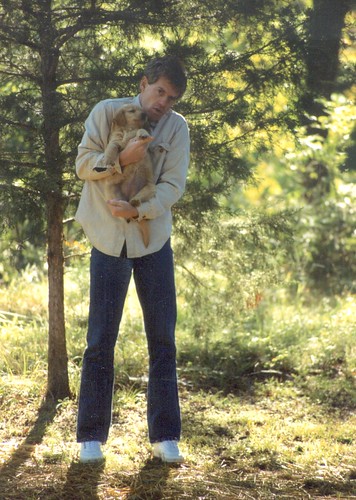
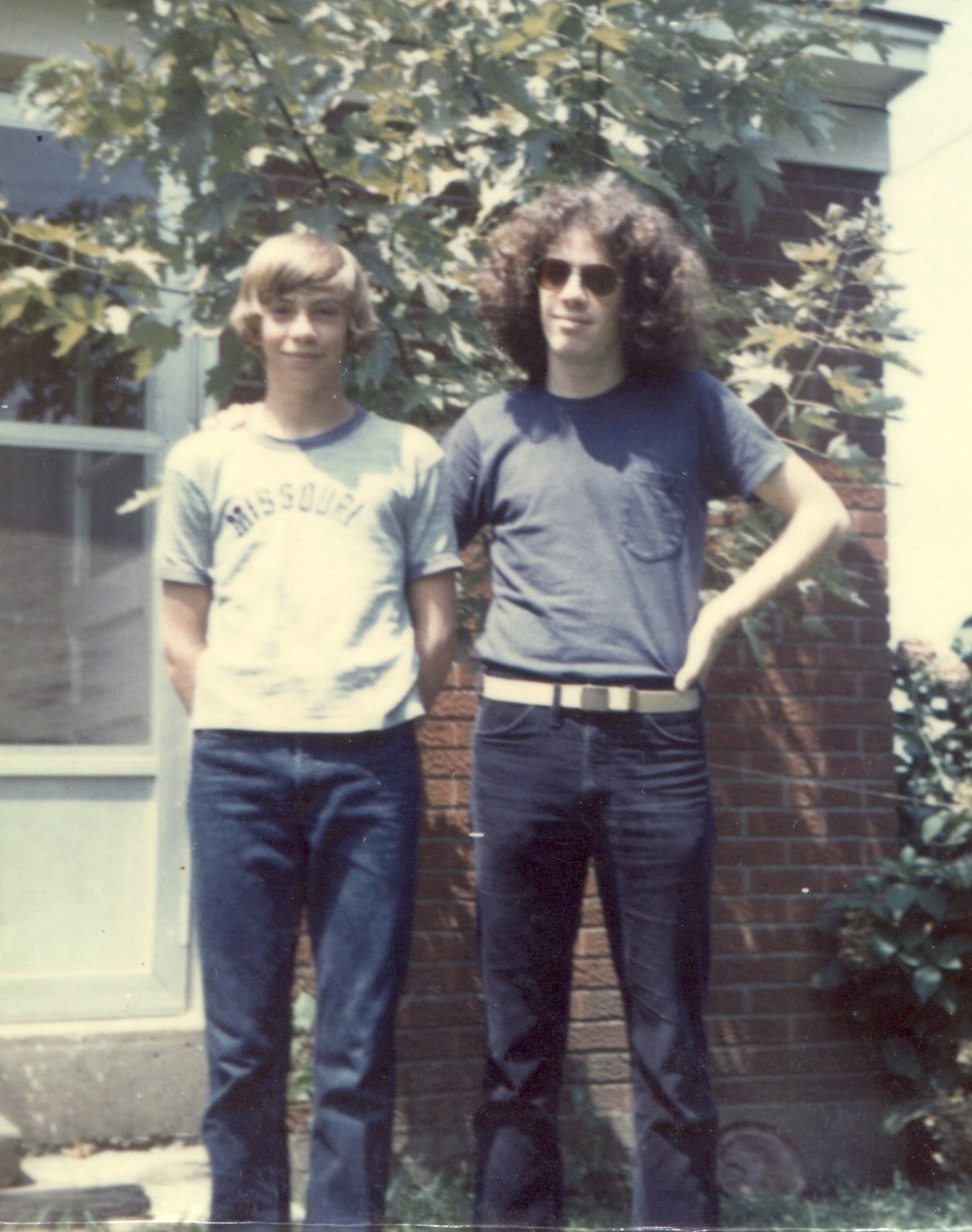
Mom was a farm girl. Dad was a city boy. The war was over and they met in St. Louis. I was born in 1948 in Poplar Bluff, Missouri, and grew up in Kennett (about an hour to the south). Dad was a “radio announcer” and mom worked for the “welfare department.” Job titles that –like my youth–vanished years ago.

A little piece of shrapnel from the Baby Boom, I watched a lot of TV. In the early 50’s I sat two feet from the Motorola, staring at the Indian-head test pattern until the afternoon programming got underway. The spirit of Norman Rockwell hovered over me through a near-perfect childhood.

The Beatles released I WANT TO HOLD YOUR HAND in the US just after Christmas in 1963 and it a very big deal by February of ’64. Hard to imagine a better time to be a high school sophomore. We weren’t paying much attention to Viet Nam, yet.

By the time I started college in the fall of 1966, getting and keeping a draft deferment was top of mind. I quickly switched my major from Business to Theater. Guys were coming back from Viet Nam and bringing good drugs and great music and protesting was catching on, even in the Midwest.

I was part of the first draft lottery and drew number 210, just low enough to be dangerous. Following graduation in 1970, I goofed off all summer before –at my father’s suggestion– entering law school at the University of Missouri-Kansas City. I attended classes and kept my deferment until Nixon froze the draft (in December of 1970) at lottery number 195. I quit law school the following week, just before finals.

In the spring of 1971, I went to work for the U.S. Postal Service as a Postal Inspector. After three months of training in D.C. I was sent to Pendleton, Oregon, where I audited small post offices in Oregon and Washington. I counted stamps and money orders for almost a year and investigated exploded rural mail boxes (a federal crime). Like law school, not what I had in mind.

In early ’72 I returned to the Midwest and hung around Memphis for a few months before returning to Kennett in early summer. In July, I started working at KBOA on the overnight shift and found my true calling. For the next dozen years I spun records and MC’d the Little Miss Christmas Belle Pageant.

In March, 1973, I met Barb at Tommy’s North-End Cafe and fell in love. We dated for six years and married in 1978.

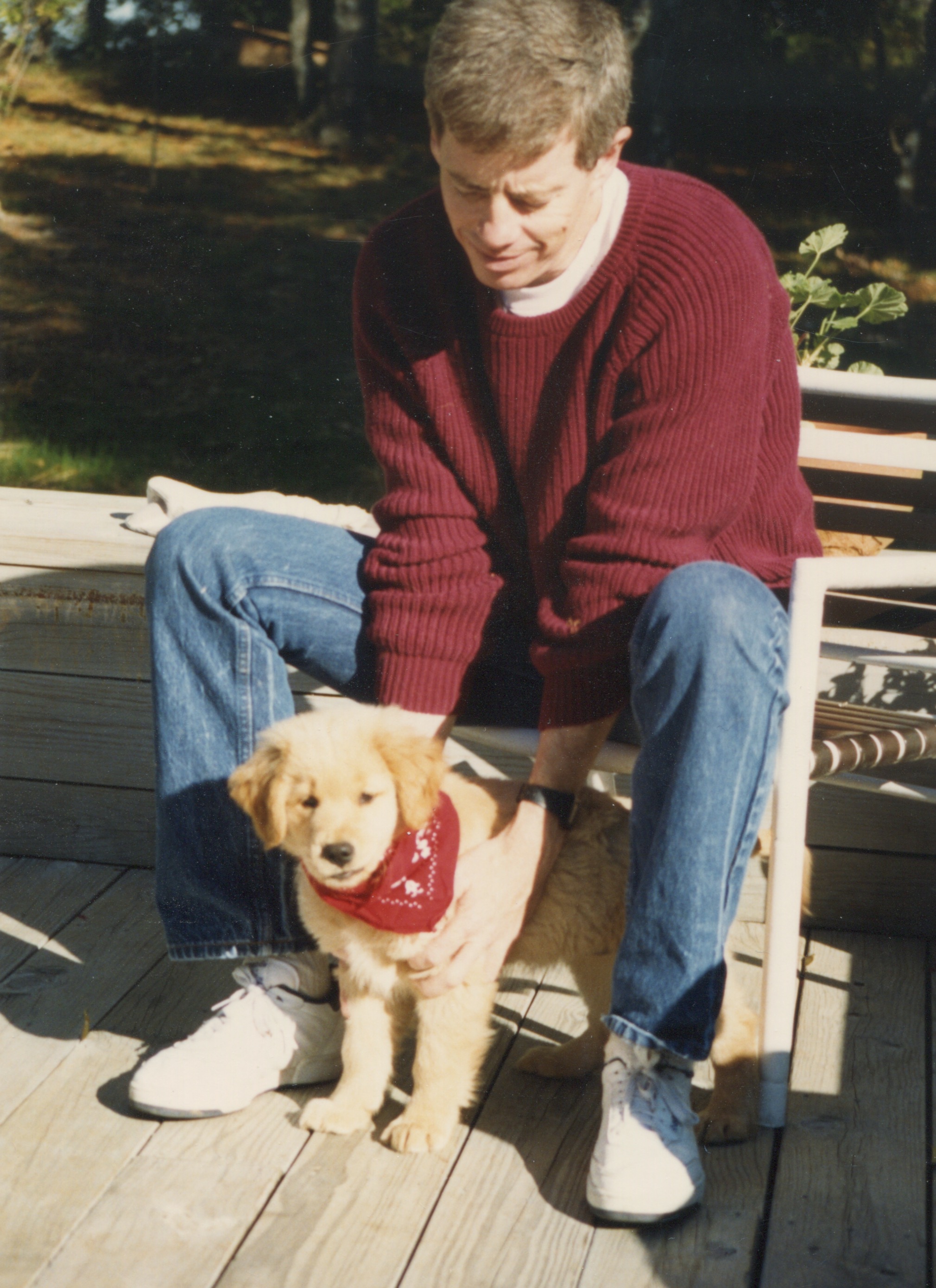
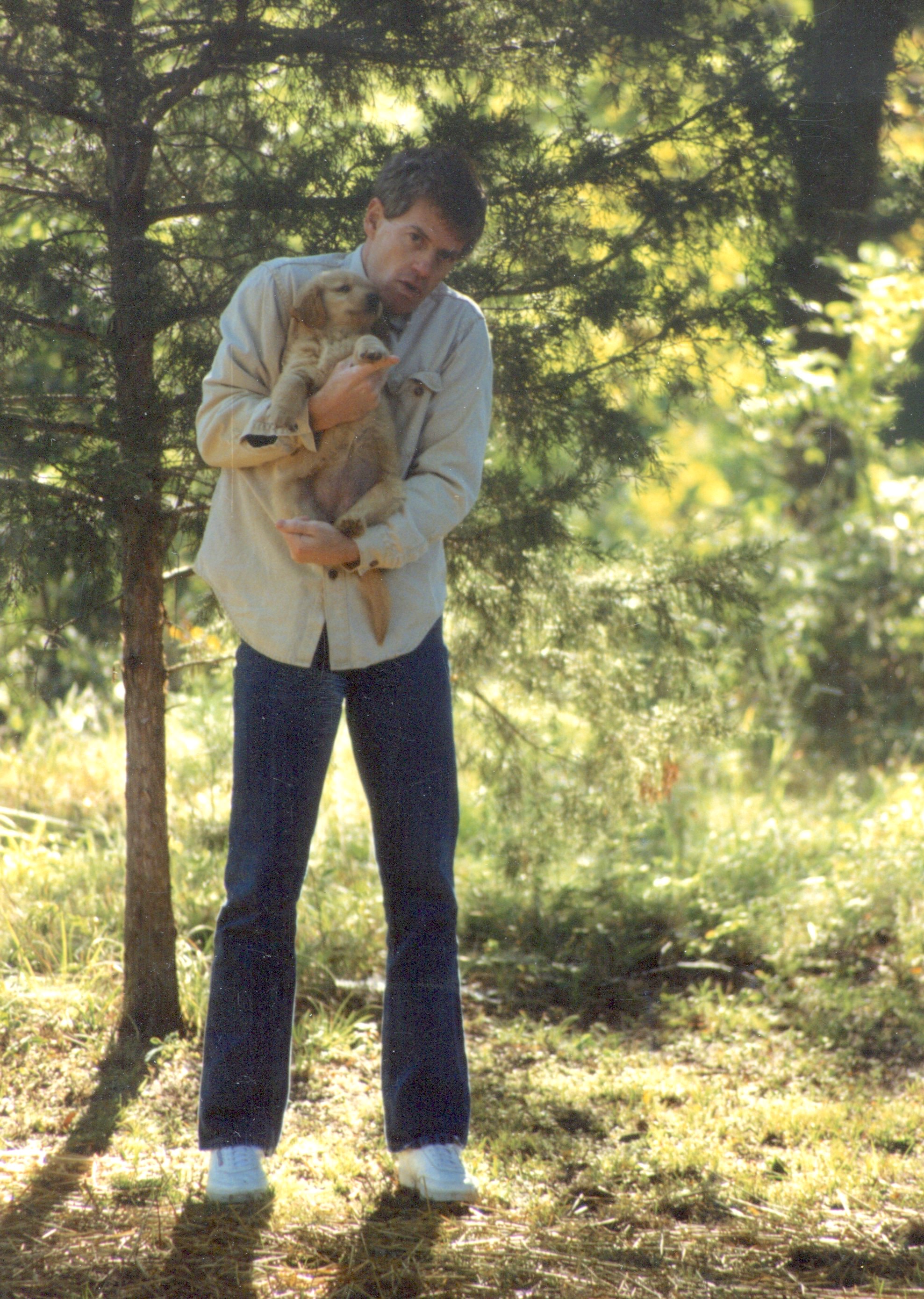
In June, 1984, we moved to Jefferson City, Missouri, to work for Learfield Communications. For the next 15 years or so, I handled affiliate relations for the company’s various radio networks. When the Internet came along, I got the bug and slowly started migrating in that  direction. I now spend most of my waking hours online –with periodic breaks for Barb and the dogs–and look forward to every day.

March 8, 2003

Jon Stewart most trusted man in America?

This New York Times story wonders if Jon Stewart is the most trusted man in America?

“When Americans were asked in a 2007 poll by the Pew Research Center for the People and the Press to name the journalist they most admired, Mr. Stewart, the fake news anchor, came in at No. 4, tied with the real news anchors Brian Williams and Tom Brokaw of NBC, Dan Rather of CBS and Anderson Cooper of CNN.

Offices for “The Daily Show” occupy a sprawling loftlike space that combines the energy of a newsroom with the laid-back vibe of an Internet start-up: many staff members wear jeans and flip-flops, and two amiable dogs wander the hallways. The day begins with a morning meeting where material harvested from 15 TiVos and even more newspapers, magazines and Web sites is reviewed. That meeting, Mr. Stewart said, “would be very unpleasant for most people to watch: it’s really a gathering of curmudgeons expressing frustration and upset, and the rest of the day is spent trying to mask or repress that through whatever creative devices we can find.”

After reading the full story I took a moment to try to come up with some public figure I trust more… and coud not.

News bureau redefined

Picture_1

CNN announced on Tuesday that it would assign journalists to 10 cities across the United States, a move that would double the number of domestic cities where the cable news network has outposts.

But in a reflection of the way television networks are reinventing the way they gather news, the journalists will not work from expensive bureaus — rather, they will borrow office space from local news organizations and use laptops to file articles for the Internet and TV. When news happens, they will use Internet connections and cellphone cameras to report live.

A new breed of reporter, sometimes called a “one-man band,” has become the new norm. Though the style of reporting has existed for years, it is being adopted more widely as these reporters act as their own producer, cameraman and editor, and sometimes even transmit live video.

Marcus Wilford, vice president for international digital at ABC News, recalled that when he was hired 20 years ago, the news division’s Paris bureau had three camera crews, three producers, two correspondents, drivers, and a chef in a house with a view of the Eiffel Tower. Today the ABC News presence in Paris consists of a lone staff producer.” — NYTimes.com

Public Access TV in a YouTube world

If you watch any TV or cable news, you hear references to this or that video on YouTube. It reminds me of the days when the big three networks referred something on CNN. YouTube is starting to feel like another network. NBC doesn’t want to cover my speech? No problem. I’ll just post it to YouTube.

My next thought was the similarity to public access TV. Let the record show I know almost nothing about public access TV. I think it works something like this:

The local cable company (or someone) sets aside a channel for the public to produce programming. I assume there is a local board or committee that manages the channel and decides what programming to air and when.

Putting Tivo aside for a moment, the public access channel is limited to 24 hours of programming each days. And to keep the math simple, let’s say every program is an hour long and airs once a week. That’s 168 programs a week. And many of those would “air” in the middle of the night.

I think it would be difficult to fill that much time. And what if I had something that was only 5 or 10 minutes long?

Here’s my question: Why won’t YouTube (and similar services) make public access television obsolete? [This is where I show my ignorance of PATV] If local relevance is the raison d’etra of PATV, why not just invite the people of your community (or people who visit your community) to post their videos to YouTube and tag them with the name of the city/town?

But wait, what about our live coverage of the weekly city council meeting? It runs 2 hours or longer and YouTube limits videos to 10 minutes.

Hmm. I guess I’d stream it on Ustream and then pull “highlights” and post those on YouTube.

I expect the Big Question would be, “What about all the people who don’t have computers and access to the Internet?” For the answer, see: “What About People Who Don’t Have TV Sets?”

Don’t misunderstand. I’m not suggesting for a moment that public access TV isn’t a good or necessary thing. There must be people who watch it or it wouldn’t exist. It just feels like one of those things –like classified adds– that would work better and cheaper online.

My friend Jeff knows a LOT about public access TV and I encourage him to comment and help me understand how technology is evolving in this area.

Can Congress tweet?

“A political spat erupted in Washington, D.C., earlier this month over rules governing how members of Congress may use the Internet. House Republicans argued that proposed changes to the rules amounted to “new government censorship of the Internet,” while Democrats said the charges were exaggerated. Whichever side is right or wrong, the fact remains that current rules governing official communications prohibit members of Congress from using video-sharing or social networking sites like YouTube, Flickr, or Facebook. As a result, many House members, including Speaker Nancy Pelosi (D-CA), are currently in violation of the rules.

Rep. John Culberson (R-TX), a pioneer in using new media to communicate with constituents, sounded the alarm over the new rules via Twitter. Culberson has made a name for himself twittering from the House floor, broadcasting live video from the White House using Qik, and hosting regular “town hall” meetings using live video-streaming and chat on Ustream.

In a later statement, Culberson argued that new media should not be treated any differently than old. “When I am interviewed for a newspaper article or a television story, or have a conversation on a radio show, my interview/conversation is going to appear in the same publication/broadcast as a campaign or commercial ad,” he said. — Ars Technica

The Onion: “Local Idiot To Post Comment On Internet”

“After clicking the ‘submit’ button, I will immediately refresh the page so that I can view my own comment. I will then notice that my comment has not appeared because the server has not yet processed my request, become angry and confused, and re-post the same comment with unintentional variations on the original wording and misspellings, creating two slightly different yet equally moronic comments,” he said. “It is my hope that this will illustrate both my childlike level of impatience and my inability to replicate a simple string of letters and symbols 30 seconds after having composed it.”

The Onion

When nobody controls the cameras

NYTimes.com: "When Congress adjourns, so do C-Span’s live broadcasts because the sole cameras that record the sessions of the Senate and the House of Representatives are controlled by the members of Congress.

On Friday, when several dozen Republicans decided to stay on the House floor and discuss energy legislation after the House adjourned for a five-week summer recess, the cameras and microphones were turned off. So the first source of video was a congressman who streamed live pictures to the Internet using his cellphone camera."

Just one more (small) example of how things are changing. If any feature prompts me to break down and buy a real mobile phone, it will be the ability to stream live video when there’s no wifi.

12seconds.tv

“12seconds is the best place online for video status updates. It’s a super easy way to share what you’re doing with your friends and family using short video clips. You can use your web cam or mobile phone. Show your friends where you are, share your thoughts, or tell them how you’re doing. We are building a video status platform that will help you keep up to date with your friends 12 seconds at a time.”

Why only 12 seconds?

“Because anything longer is boring. The scientists here at the 12seconds dodecaplex have conducted countless hours of research to determine the precise amount of time it takes for boredom or apathy to set in during typical Internet video viewing. Our patent pending Electro-Tear-Duct Prongers have determined that exactly 12 seconds of video is the ideal amount of time to keep anything interesting.”

The thing that caught my attention was how 12seconds.tv. integrates with Twitter. You’re walking down the street and spot to dogs doing the wild thing. You whip out your camera phone and shoot 12 seconds of video and off it goes to your page on 12seconds.tv. With corresponding tweet.

This reminds me of Twitpic, a similar service for still images. And eyejolt, which makes it easy to email short videos to friends. Not sure why I couldn’t get it to work with Twitter but I’ll fiddle some more. This is the kind of app that might get my to buy a phone that can shoot/send video.

On a down note, I didn’t think quality of the resulting video was very good.