
I’ve ordered one but it will be a few months before I get it. It got a mention in Digital Minimalism. Yeah, I could have got me one of those Jitterbug phones but I’m way too cool for that. This gizmo will work with my iPhone. Uses the same number.
Author Archives: Steve Mays
Digital Minimalism: Choosing a Focused Life in a Noisy World by Cal Newport
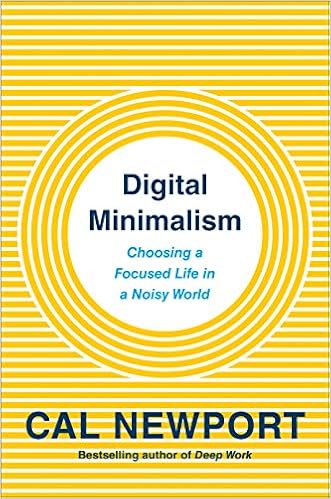 “Minimalism is the art of knowing how much is just enough. Digital minimalism applies this idea to our personal technology. It’s the key to living a focused life in an increasingly noisy world.” (Amazon)
I’ve been creeping in this direction for a while. Never on FB; deleted my Twitter account back in 2016; and said goodbye to Google+ last year. But my world is still noisier than I’d like and I got some good ideas from this book. Here’s a few excerpts:
“Philip Morris just wanted your lungs. The App Store wants your soul.”
“Checking your “likes” is the new smoking.” — Bill Maher
“(Smart phones are) slot machines in our pockets.”
“What’s the single biggest factor shaping our lives today?” (Our screens)
“We didn’t sign up for the digital lives we now lead. They were instead, to a large extent, crafted in boardrooms to serve the interests of a select group of technology investors.”
“The iPod provided for the first time the ability to be continuously distracted from your own mind.”
“You cannot expect an app dreamed up in a dorm room, or among the Ping-Pong tables of a Silicon Valley incubator, to successfully replace the types of rich interactions to which we’ve painstakingly adapted over millennia. Our sociality is simply too complex to be outsourced to a social network or reduced to instant messages and emojis.”
“A life well lived requires activities that serve no other purpose than the satisfaction that the activity itself generates.”
“Assuming that you use Facebook, list the most important things it provides you—the particular activities that you would really miss if you were forced to stop using the service altogether. Now imagine that Facebook started charging you by the minute. How much time would you really need to spend in the typical week to keep up with your list of important Facebook activities?”
Day Three of Land Rover service
UPDATE (February 22, 2019): Spent a few more hours with George at Tergin Motors today and finished up the first service on the Land Rover. I hesitate to call this a “service” because George was so exhaustive (in a good way) in going over the truck front-to-back. All told, more than 20 hours over the three days and he let me watch every minute. This was not some wham-bam-thank-you-ma’am GoofyLube service. George approached this like it was his own truck and along with the routine maintenance, he found some stuff that wasn’t done right during the restoration (go figure) and could have been big problems down the road.
I’m confident the truck is now in the best shape it has been since it rolled off the assembly line in Spain back in 1979. We’ll do follow-up inspection but the truck is already driving better.
 What started out as a routine service has turned out to be more like a visit to Mayo Clinic. But in a good way. Several times today George exclaimed, “Oh shit!” as he found several things that were done poorly by the people that did the original restoration. Something of a regular occurrence.
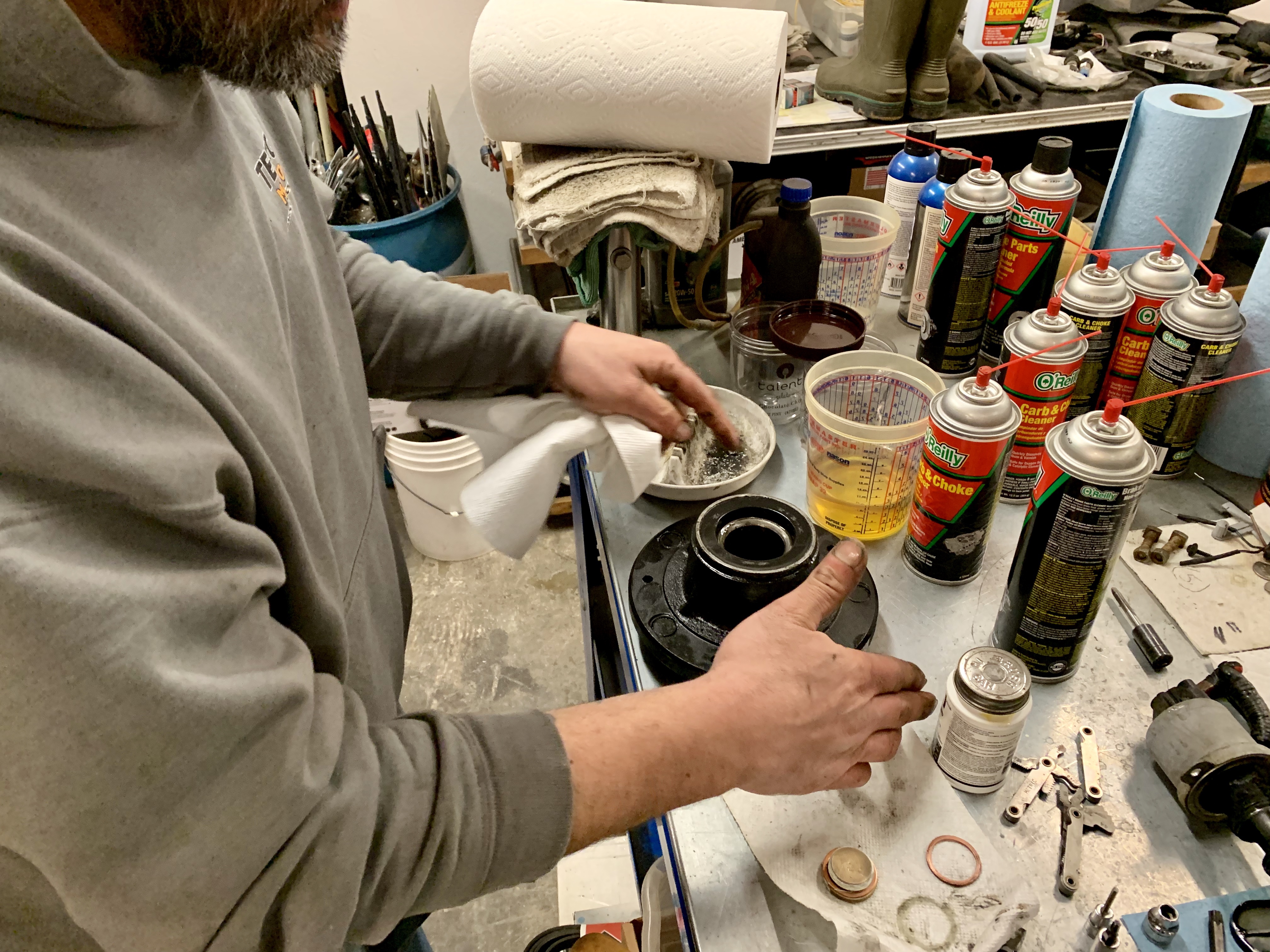

We drained and filled the front and rear diffs as well as the front swivel joints.
While I pumped (I’m now an expert), George patiently and carefully fixed each problem. He took the leaky rear wheel apart — right down to the axel — and replaced seals.
We should finish up tomorrow and then we’ll follow up on the transmission/transfer box issue. Do we have a bad seal between the two or was it a matter of having the wrong gear lube, improperly filled. Stay tuned.
Rotary Dial Telephone
If you really want to communicate with me… just pick up the phone and call me.
Yes, I regularly check email and love iMessage, but I much prefer real-time communication.
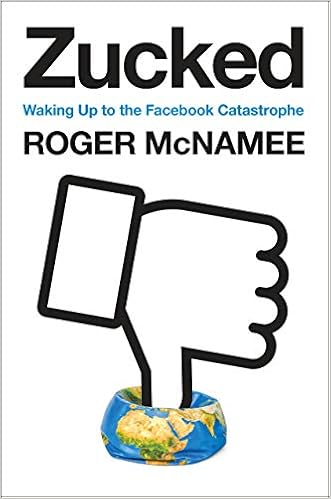
Zucked: Waking Up to the Facebook Catastrophe
Excerpts from Zucked: Waking Up to the Facebook Catastrophe by Roger McNamee.
Imagine a stew of unregulated capitalism, addictive technology, and authoritarian values, combined with Silicon Valley’s relentlessness and hubris, unleashed on billions of unsuspecting users.
The most likely case is that the technology and business model of Facebook and others will continue to undermine democracy, public health, privacy, and innovation until a countervailing power, in the form of government intervention or user protest, forces change.
Surveillance, the sharing of user data, and behavioral modification are the foundation of Facebook’s success.
When users are riled up, they consume and share more content. Dispassionate users have relatively little value to Facebook.
Facebook is the fourth most valuable company in America, despite being only fifteen years old, and its value stems from its mastery of surveillance and behavioral modification.
It turns out that connecting 2.2 billion people on a single network does not naturally produce happiness for all. It puts pressure on users, first to present a desirable image, then to command attention in the form of Likes or shares from others. In such an environment, the loudest voices dominate, which can be intimidating. As a result, we follow the human instinct to organize ourselves into clusters or tribes.
The competition for attention across the media and technology spectrum rewards the worst social behavior. Extreme views attract more attention, so platforms recommend them.
Research suggests that people who accept one conspiracy theory have a high likelihood of accepting a second one.
Belonging is stronger than facts.
The Russians might have invented a new kind of warfare, one perfectly suited to a fading economic power looking to regain superpower status.
Technology tends to reflect the values of the people who create them.
When a company grows from nothing to 2.2 billion active users and forty billion dollars in revenues in only fourteen years, you can be sure of three things: First, the original idea was brilliant. Second, execution of the business plan had to be nearly flawless. And third, at some point along the way, the people who manage the company will lose perspective. If everything your company touches turns into gold for years on end, your executives will start to believe the good things people say about them. They will view their mission as exalted. They will reject criticism. They will ask, “If the critics are so smart, why aren’t they so successful and rich as we are?”
On Facebook, information and disinformation look the same; the only difference is that disinformation generates more revenue, so it gets much better treatment.
Huge amounts of data are available. Campaigns can buy a list of two hundred million voting-age Americans with fifteen hundred data points per person from a legitimate data broker for seventy-five thousand dollars.
Where Orwell worried about the burning of books, Huxley argued that the greater risk would be citizen no longer wanting to read.
Facebook is a threat to democracy.