
Willoughby: Black Pioneer Came to Kennett as a Slave
By DANA GREEN, Democrat Youth Co-Editor
Nelse Willoughby was the first black resident of Kennett, according to local tradition and family records.
Willoughby was born a slave in 1847, but the exact location of his birth is unknown. He and four other children born under the surname Owen were sold away from their mother at an early age. Willoughby was taken to Shelby County, Tenn., where his master gave him the surname of Willoughby.
Willoughby was brought to Kennett at approximately the age of nine by the grandfather Bill Ballard Bragg. He lived and worked on his master’s farm near Kennett.
Willoughby lived in Kennett until 1908. He then moved his wife, Abbey, and his family to Caruthersville because there was no school for black students in Kennett at that time. His wife died in 1913 and then he moved with his family back to Kennett. He was so well liked by the local residents that he was able to get his same home back. His home was at 714 North Vandeventer, a three-room house in Kennett. The house is still standing and is occupied today.
Willoughby worked at several jobs to support his 16 children. He drove a horse-drawn mail hack from Kennett to Clarkton before trains came to the area. He farmed, drove pumps, slaughtered hogs, and was a janitor at the Presbyterian Church and the county courthouse.
Willoughby stayed in Kennett the rest of his life. He died in 1945 at the age of 98. He was survived by four of his 16 children. Florence Jones, his oldest daughter, and Hurl Willoughby, his youngest son, died within the next few years. Only two of his children long survived him: Mary Ivy and Carrie Brown, both of whom were still living in Kennett at the time of the article. Mary Ivy was 82 years old and Carrie Brown was 76 years old.
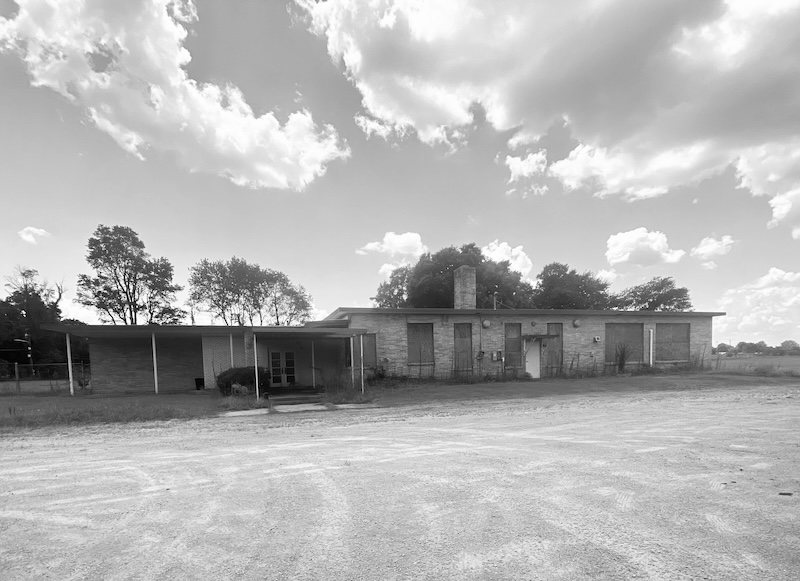
Willoughby founded the first black Methodist church in Kennett in 1920. It was called Willoughby Chapel and is now known as the St. John A.M.E Church. In 1952 Willoughby School, for black students, was founded and named in his honor. The school is now part of the Kennett Public School system, attended by kindergarten students. Willoughby Park and Willoughby Cemetery were also named for Kennett’s first black resident.
Willoughby was survived by 12 grandchildren, four of whom were living in Kennett: Bettye Pulley, Oscar Willoughby, Carrie Brooks, and Mary Allen. Catherine Willoughby was a resident of Poplar Bluff. Guy Willoughby, Fred Willoughby, and Tom Willoughby were all residents of New York City, and Harry Willoughby lived in Washington, D.C.
(Editor’s note: In observance of Black History Week in Kennett, The Daily Dunklin Democrat’s Youth Co-Editor, Dana Green, has written a synopsis of the life of Kennett’s first black resident. Green is the great-granddaughter of Nelse Willoughby.)
The town I grew up in (Kennett, MO) was very segregated in the 1950s. Not “Mississippi Burning” segregated, but our black citizens lived in what everyone called “colored town.” It had its own school everyone just called “Willoughby.” I never gave a thought to the name or its history. I was in high school when integration finally made it to our town.
My friend John came across this newspaper clipping while researching the history of the 1st United Methodist Church.