
06/04/2007

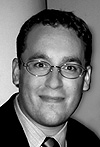
Interview with Dave Shepherd

Dave Shepherd Fifty years ago, Jerrell Shepherd mastered a form of broadcasting alchemy that turned small town radio lead into gold. It wasn't much of a secret, however, since he readily shared it with countless radio station owners and managers who made the pilgrimage to Moberly, Missouri, in hopes of bringing some of Shepherd's sales and programming magic back to their stations.

While most small market broadcasters were content to get "their fair share" of local advertising budgets (the bulk went to the local newspaper), Shepherd's sales reps were trained to ask for it all and believed in their hearts they deserved it.

Mr. Shepherd's approach to programming his stations was deceptively simple: report anything and everything that happened in each of the communities covered by his stations' signals. The KWIX and KRES "Red Rovers" showed up just about every high school football game, junior high choral concert and chamber of commerce ribbon-cutting. And the Shepherd stations put it all on the air. Always with local sponsors. Lots of local sponsors.

Dave Shepherd grew up in the radio business and built on his father's success, growing The Shepherd Group to 16 stations before selling them to a Florida-based company called GoodRadio.TV, for $30 million earlier this year.

I got Dave on the phone for a little chat and he talked about where small market radio has been... and where it's going. He shared some thoughts on the Internet, iPods, HD, satellite and Google Radio.

He says he decided to sell because it just wasn't as much fun as it used to be. And, in the next breath, he wondered if some of his father's small town magic might work in The Big City.

Download MP3 (25 min)

08/10/2005

New Convergence program at MU J-School

Mike McKean heads up the new Convergence program at the University of Missouri School of Journalism. This fall he begins his 20th year teaching at the J-School. Once upon a time, he was a reporter for The Missourinet, one of the state news networks owned by the company I work for. Mike and I get together every few months to talk about radio and journalism and the Internet and stuff like that. Today I took my recorder along and asked him about: Teaching journalism in 2005; podcasting; blogs; radio; advertising; newspapers; "citizen journalism" and some other stuff. [AUDIO: 22 min, 8 meg MP3 file]

This is the latest installment in what I've come to think of as my "Future of Radio" series, which includes earlier interviews with Dan Shelley and Mary Quass.

06/03/2005

Interview with Mary Quass

Mary Quass has been doing the radio thing for a long time. She bought her first station in 1988 and was right in the thick of the consolidation "land rush" of the late '90s. Mary's from a small town in southeast Iowa (Fairfield) and got her first radio job in 1977 selling advertising at KHAK in Cedar Rapids. She became sales manager of the station for two years (1979-82) and then served as GSM at KSO Des Moines until she returned to Cedar Rapids to purchase KHAK.

Ten years later, Quass Broadcasting merged with Capstar to form Central Star Communications, and Mary oversaw all aspects of the radio stations in her region. In July 1999, when the company merged with Chancellor Media to become AMFM Inc., Central Star Communications consisted of 66 stations in 14 midwest markets.

I've known Mary for a long time and she's been a good friend to our company. Mary is one smart lady and she doesn't think out of the box because she doesn't know there is a box. So I called to get her take on what's happening "out there." I asked her about satellite radio, podcasting, consolidation, blogs, Internet radio and a bunch of other stuff. The interview runs about 30 min (12 meg mp3). And it appears she was just on the cover (for the second time?) of Radio Ink magazine.

Correction and update: I knew that Mary had been interviewed by Radio Ink in 2003 --and mentioned it in the interview-- but when I went back to check a couple of things I thought I was looking at a new interview. I wasn't. But I found a couple of interesting nuggets while re-reading the piece. Remember, this was two years ago.

"We cant just stick our heads in the sand and think that the Internet wont have an impact on Radio. This is the first technology to mean that anybody can have a radio station as good as, if not better than, whats out there today  and it has nothing to do with a license. I want to be in and out of the business by then. When I was growing up, I could tell you my favorite radio station, and I was adamant about it. Well, a 12-year-old today can tell you the artists, but they may or may not have a Radio station where they know the DJs. Im very concerned about this, because we havent remained relevant to these people."

"As an industry, we got away from that and have lost sight of the fact that we must give people product that they cant get everywhere else. If we dont differentiate our product when the Internet becomes wireless, it will be a whole new ball game for all of us. We had better be ready, or the frustration we feel will only grow."

05/29/2005

Sheryl Crow Aquatic Center dedication ceremony

Kennett, Missouri hasn't had a public swimming pool since they demolished the ancient, above-ground monster that people my age grew up with. But thanks to the generosity of hometown-girl-turned-superstar Sheryl Crow (and others), they now have the Sheryl Crow Aquatic Center. The nine-time Grammy winner came to take part in the dedication ceremonies on Saturday and Barb and I were there for the big splash.

I don't know Sheryl Crow (I don't know any big stars) but she seems like one very classy, very smart, very down-to-earth lady. She still sees herself as a Kennett girl. That's home. And she's concerned that the little town has fallen upon hard times, economically. So she wrote 'em a check for a million bucks to build a municipal swimming pool just off the downtown "square." Which is slowly dying. Some would say dead.

But Ms. Crow is giving more than her money to help revitalize the town. She's giving her time and her name and a little of her wonderful talent. She performed a few songs with a local band, The Usual Suspects. Her daddy, Wendell, plays guitar in the band when he's not lawyer'ing.

I'm terrible at estimating crowds because I avoid them like the plague, but I'd guess there were three or four hundred [The DDD reports 4,000] folks on hand and it was a beautiful morning. I got to see a lot of old friends, many of whom I had not seen in 20 years. I took a bunch of photos while Barb manned the camcorder. We'll get some video posted as soon as I have time to edit.

Following the performance, Sheryl held a little pool-side news conference [audio: 5 min, 2meg mp3] for the half dozen TV and radio stations on hand. (Big Rumor: A crew from ABC's 20/20 was following Sheryl around for some upcoming segment) When no one could come up with a coherent question, Sheryl took over and explained why she got involved in the project. Not sure if you'll be able to hear it, but I thought the best question came from Barb, who wanted to know Sheryl's best stroke when she was on the high school swim team (breast stroke).

I don't know that a new swimming pool will save my old home town but I'm proud of all those folks for trying.


Special thanks to Kennett correspondent Charles Jolliff for link to photos of Kennett's old municipal pool. UPI Super Photog Bill Greenblatt for the photo above and others. And Jan McElwrath and Randy Morgan with the Kennett Chamber of Commerce for organizing a great a event making us feel so welcome.

05/05/2005

RTNDA's Dan Shelley gets it

Dan Shelley is a long-time and valued friend. For a dozen years he ran one of best (probably THE best) radio newsrooms in Missouri. In 1995 he moved to Milwaukee to become the news director of WTMJ. A year ago he was elected chariman of the Radio-Television News Directors Association (RTNDA) and took over those duties a couple of weeks ago at the association's annual meeting in Las Vegas. In his first speech as chairman, he outlined five challenges or issues facing "electronic journalists." He talked about those challenges in this, his first blog interview. We also asked him about blogging, podcasting and satellite radio. The interview runs about 30 minutes [10.8 meg mp3]

I'm not sure Dan --or any other mere mortal-- is capable of taking broadcast journalists where they need to go but he's the right guy at the right time..

December 2008

Sun Mon Tue Wed Thu Fri Sat
  1 2 3 4 5 6
7 8 9 10 11 12 13
14 15 16 17 18 19 20
21 22 23 24 25 26 27
28 29 30 31      

Office Cam


  • Office Cam

Photos


  • www.flickr.com
    This is a Flickr badge showing public photos from smays. Make your own badge here.

My Library


Search smays.com


Creative Commons

Blog powered by TypePad